REVIEW · BAVARIA
Sightseeing flight Zugspitze Neuschwanstein Castle Alps Munich Augsburg
Book on Viator →Operated by ALPEN AIR · Bookable on Viator
That view comes fast. This sightseeing flight strings together Munich, the Alps, and King Ludwig II’s Neuschwanstein all in about two hours. You get big-window views of lakes, peaks, and famous landmarks, with a pilot who narrates what you’re seeing along the way.
Two things I especially like: the route is tightly packed, yet it still gives you time to actually look and take photos; and the flight feels deliberately small-scale, with a maximum group size of 4. One thing to consider is that this trip depends on weather, and in the Zugspitze area the altitude can briefly reach about 3,250 meters, so bring layers and plan for possible schedule changes.
In This Review
- Key Things I’d Bookmark Before You Go
- Augsburg to Munich: where the flight pattern starts
- Munich from the air: Allianz Arena, Marienplatz, BMW World, and Olympic Park
- Chiemgau and Chiemsee: lake time with Herrenchiemsee and Fraueninsel
- The Northern Alps stretch: Kampenwand, Wilder Kaiser, and the Inn Valley
- Over Walchensee and Kochelsee: turquoise water framed by peaks
- Zugspitze and Eibsee: the high point comes into reach
- Neuschwanstein from the air: Lake Forggensee adds the fairy-tale framing
- The Five Lakes Region: Starnberg, Andechs, Ammersee, and Wörthsee
- Pilot-led safety and narration: what makes the experience feel smooth
- The $767.81 value: what you’re really paying for
- Who should book (and who should think twice)
- Should you book this Alpen Air Bavaria flight?
- FAQ
- How long is the sightseeing flight?
- Where does the flight start and end?
- What sights are included in the route?
- Is the tour offered in English?
- How many people are in the group?
- How high do you fly over Munich and in the Alps?
- What are the operating hours?
- What if weather is bad?
- Is free cancellation available?
- What if I’m pregnant or have physical or mental limitations?
Key Things I’d Bookmark Before You Go
- Max 4 travelers means a quieter, less crowded flight experience.
- English-guided narration plus a clear, safety-first briefing set the tone early.
- Low altitudes over Munich and the Five Lakes Region (up to 1,500 m) make landmark spotting easier.
- Alpine routing with lots of lakes: Chiemsee, Eibsee, Walchensee, Staffelsee, and more.
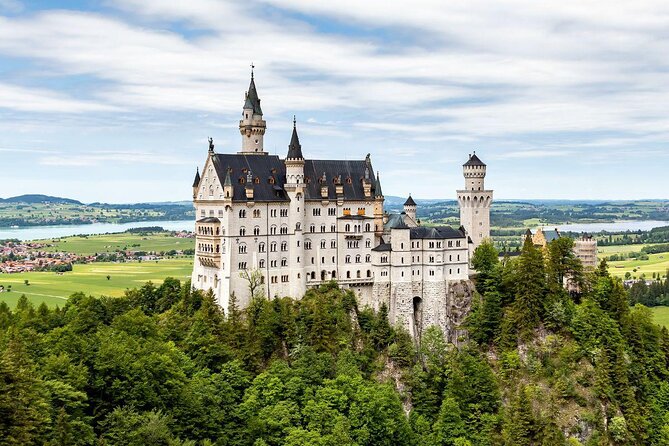
- Neuschwanstein from the air, framed by Lake Forggensee for a strong “storybook” moment.
- Pilot-led pacing with shallow climbs and descents to keep pressure changes as low as possible.
Augsburg to Munich: where the flight pattern starts
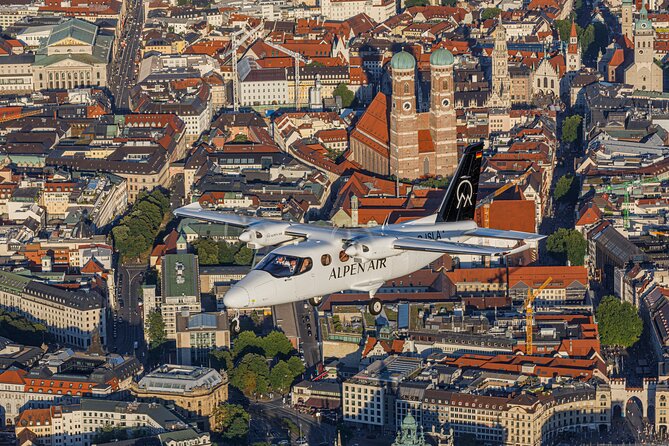
Your day begins at Flughafenstraße in Augsburg, then you lift off toward Dachau and onward to Bavaria’s capital. After takeoff, the experience quickly shifts from “we’re flying” to “we’re sightseeing,” because you’re already stacking recognizable landmarks into your view.
A big plus is how the flight is timed around the Munich area. You’re said to be around 600 meters above sea level over Munich, which is low enough to make buildings feel readable, not just like shapes. You’ll glide over major sights such as the Allianz Arena of FC Bayern Munich, with the city coming together visually in layers.
The pilot doesn’t just point. The way this is designed, you get a running sense of geography: the English Garden, the German Museum, and central landmarks like Marienplatz and the Frauenkirche appear in sequence as the plane drifts and circles at a slow speed.
One practical tip: Munich looks easiest when you grab a steady seat position and keep your camera ready early, before the plane turns. A lot of the best angles happen during those slow passes over the center.
You can also read our reviews of more tours and experiences in Bavaria.
Munich from the air: Allianz Arena, Marienplatz, BMW World, and Olympic Park
Over Munich, the flight reads like a quick aerial photo tour—without feeling like a checklist. You’ll see how the city’s green spaces and historic center sit side by side. The English Garden is the kind of detail that’s hard to “get” on the ground, but from above it’s suddenly obvious why it’s such a signature area.
Then come the iconic center points: Marienplatz and the Frauenkirche. From the plane, it’s less about architecture study and more about orientation—understanding where everything sits relative to the rest of the city.
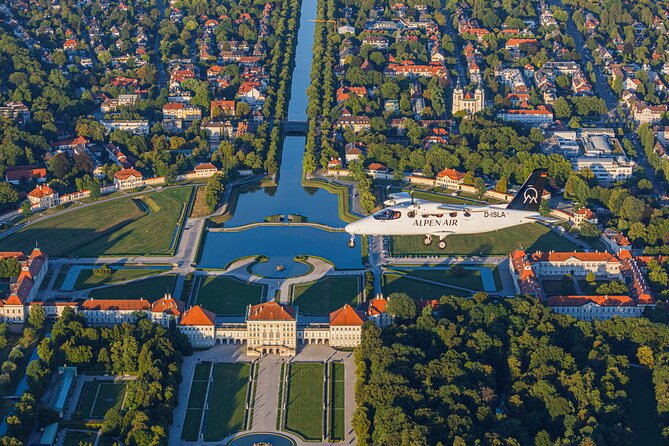
You’ll also pass over Nymphenburg Castle, plus circle around BMW World (described as futuristic) and Olympic Park with its 291-meter Olympic Tower. Even if you know Munich only in broad strokes, seeing Olympic Tower towering over the surrounding complex helps everything “click” in your head.
This part is where the flight’s value is clear. A normal day of sightseeing often means long transit and constant walking. Here, the plane does the transit for you in minutes, keeping you focused on views instead of logistics.
Chiemgau and Chiemsee: lake time with Herrenchiemsee and Fraueninsel
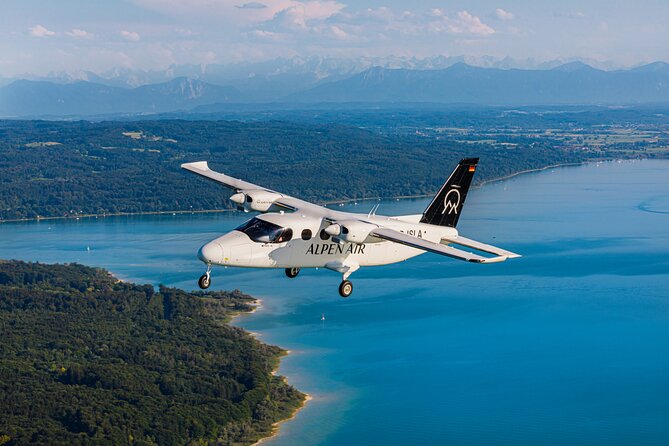
Next you move from the urban grid to water and horizon lines. You fly past Simssee toward Chiemsee, and the view changes fast: broad lake surfaces, small islands, and a coastline that looks almost theatrical from above.
Chiemsee is often described as the Bavarian Sea, and that nickname makes sense when you can see it all at once. The flight route is designed so you pass key sightlines like Herrenchiemsee Castle and Fraueninsel (the island detail matters here—this isn’t just “look at a lake,” it’s “spot the landmarks on the lake”).
A practical consideration: lake views are very dependent on wind and sky clarity. On brighter days, these stretches are photo magic. If the weather is hazy, the shapes may still be visible, but contrast drops. Since the flight is weather-dependent overall, you’re trading certainty for a higher reward.
The Northern Alps stretch: Kampenwand, Wilder Kaiser, and the Inn Valley
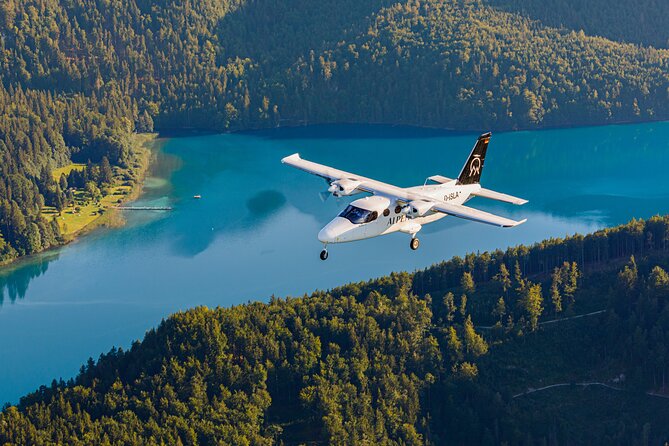
After the lakes, the plane starts climbing into the alpine rhythm. You’ll look through large windows at peaks including Kampenwand and the Wilder Kaiser. Then you fly about 150 kilometers along the northern Alps, staying focused on what the mountain belt looks like from above.
This is one of the most satisfying sections because the route is layered with repeating patterns: valley, peak, lake, then another valley. You pass areas including the Inn Valley, then Wendelstein, and you’ll see lake after lake—Thiersee, Schliersee, and Spitzingsee, plus Tegernsee.
From a “why this matters” standpoint: mountains feel different when you can compare them side by side. From ground level, you might see one range and assume it’s representative. From the air, you get actual scale—how far the valleys extend, and how the peaks step into the distance.
If you care about photography, this is your zone. Keep an eye out for the moments when the plane levels out briefly—those are the times when lake color and shoreline curves come through sharpest.
Over Walchensee and Kochelsee: turquoise water framed by peaks
As you continue, the itinerary brings in the Isar crossing and more water signatures. You’ll see Sylvensteinsee and then a chain of mountain names that help you map what you’re seeing: Brauneck and Benediktenwand first, then Kochelsee and Walchensee.
The tone here is very clear: lake surfaces are deep and color shifts are dramatic. Walchensee is described as green-turquoise, and from the air, that kind of color usually shows strongest when the sun angle is right. This is also a good reason to bring sunglasses—on bright days, reflections on the window can be intense.
One more practical point: because the flight altitude in the Alps is on average around 2,000 meters (and can briefly climb higher near the Zugspitze area), your horizon line changes through the day. That means your best photo angle isn’t always the same. Reframe as you go—don’t lock yourself into one camera position for the whole alpine segment.



Zugspitze and Eibsee: the high point comes into reach
Then the mountain moment arrives. The Karwendel massif appears in the distance, and behind Garmisch, Germany’s highest mountain rises: Zugspitze, at 2,962 meters. The text indicates the summit is within reach as you fly past, and that’s exactly the kind of payoff this flight is built for.
Right after, you get the Eibsee—described as deep blue—shining up from the valley. The combination matters: a peak like Zugspitze is one kind of view, but pairing it with a lake that looks almost unreal gives you a “two-sides-of-Bavaria” feeling in one sweep.
Also note the altitude reality here: the Alps section averages around 2,000 meters, but around Zugspitze it can briefly reach 3,250 meters above sea level. That doesn’t automatically mean discomfort, but it’s worth planning for. Bring a light layer and consider how you usually handle altitude, especially if you’re sensitive to changes.
Neuschwanstein from the air: Lake Forggensee adds the fairy-tale framing
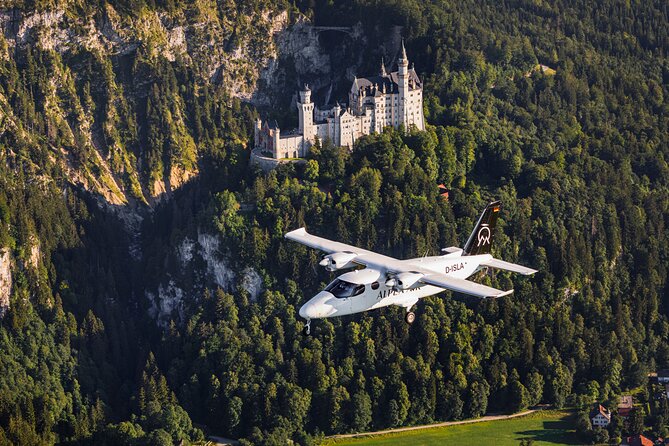
After the higher mountains, the flight drops back into a softer, storybook mood. Neuschwanstein Castle comes into sight as a highlight, described as rising at the foot of the mountains with a view of Lake Forggensee.
From the air, Neuschwanstein isn’t just a single structure—it becomes a whole composition: castle shape, mountain base, and the lake acting like a visual anchor. If you’ve ever seen photos where the castle looks like it’s sitting on a postcard, this is where you understand how the geography creates that illusion.
This segment is also a good reminder of how the flight’s value works. You aren’t trading time to walk up to the castle viewpoint, wait in lines, or shuttle between spots. You’re taking in the “big picture” quickly, then letting the details land through the window views.
The Five Lakes Region: Starnberg, Andechs, Ammersee, and Wörthsee
Once you leave the Alps, the route turns into a string of lakes around southern Bavaria. You’ll see Murnauer Moos, then Lake Staffelsee, then Riegsee and the Easter lakes. The flight continues over the Five Lakes Region, starting with Starnberg and moving toward the Rose Island area.
You’ll also spot Andechs Monastery on the Holy Mountain. This is one of those “recognizable from above” moments that makes the flight feel guided instead of random sightseeing. After that, Lake Ammersee appears, then later Pilsensee and Wörthsee, with the description calling the water Caribbean-turquoise.
The practical magic of the last part is the pacing. Since you’re heading back toward Augsburg, it feels like a final scenic reel that ties together what you learned earlier about Bavaria’s geography—city to lakes to peaks to castles, then back to calm water.
Pilot-led safety and narration: what makes the experience feel smooth
This flight is built around the idea that safety comes first, and it shows in the approach. The plan includes shallow climbs and descents to keep pressure changes low. The written guidance also notes you won’t exceed 1,500 meters above sea level on the Munich and Five Lakes Region segments, while Alps altitudes average around 2,000 meters and can briefly rise near Zugspitze.
One standout detail from the experience reports is the pilot style. The name that comes up strongly is Moritz Reuter, described as calm, confident, and local in his knowledge—also with a friendly sense of humor. When your pilot acts like a guide, you tend to understand what you’re looking at instead of just guessing.
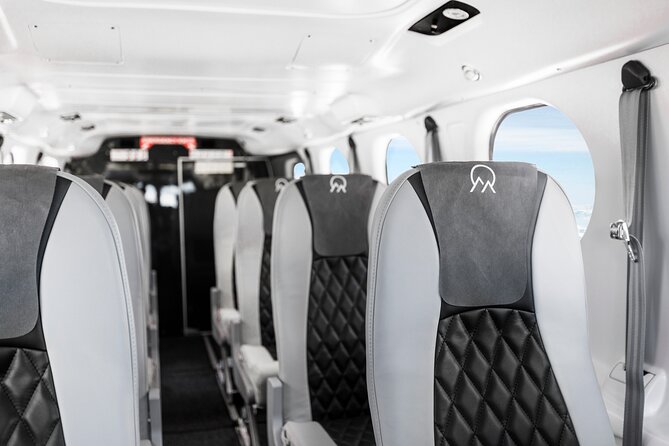
There’s also a “small operation” feel. With a maximum of four travelers, you avoid the mass-tour atmosphere. You’re not fighting for time, and the plane feels more like a private sightseeing tool than a scheduled cattle route.
The $767.81 value: what you’re really paying for
At $767.81 per person for roughly 1 hour 45 minutes to 1 hour 50 minutes, the price looks steep if you compare it to bus or train tickets. But compare it to what you get: Munich highlights, Chiemsee landmarks, a long alpine stretch with repeated lake views, Zugspitze, Neuschwanstein, and then more lakes around the Five Lakes Region.
This is where the math tends to make sense. In under two hours, you’re covering distances and viewpoints that would normally take a full day with multiple drives and viewpoints—especially if you want both city center landmarks and high alpine views.
You’re also paying for a certain kind of access: aerial perspective. Even if you visit these areas on land, you won’t replicate the way lakes and peaks stack visually from the air.
If you’re cost-conscious, this is the decision rule I’d use: only book if you truly want the view from above, not just the names of places. If the idea of a plane-window sightseeing reel excites you, the price starts to feel fair.
Who should book (and who should think twice)
This flight suits people who:
- Want a fast, big-view overview of Bavaria’s variety—city, lakes, and mountains.
- Like photography from elevated angles and want strong “spot the landmark” passes.
- Prefer a small group experience instead of a crowd.
You might want to think twice if:
- You’re very sensitive to altitude changes or pressure sensations. While the flight keeps pressure changes low with shallow climbs/descents, the Zugspitze area can briefly reach higher altitudes.
- Your schedule cannot flex if weather cancels or delays the flight.
Also, if you’re pregnant or have physical or mental limitations, the guidance is to contact the team before booking. The final call on safe transportation rests with the pilot.
Should you book this Alpen Air Bavaria flight?
If your dream is one day where you see Munich icons, the alpine lake chain, Zugspitze, and Neuschwanstein—all from the sky—then yes, I’d lean toward booking. The route is packed, the group size is small, and the pilot-led narration is a major part of why it feels like more than a quick aerial drive.
The main reason not to book is weather risk. This isn’t a “rain or shine” promise. If you can be flexible with dates and you want the aerial perspective badly enough to accept that tradeoff, you’re likely to come away happy with your choice.
FAQ
How long is the sightseeing flight?
The duration is listed as about 1 hour 45 minutes to 1 hour 50 minutes.
Where does the flight start and end?
It starts at Flughafenstraße, 86169 Augsburg, Germany, and ends back at the same meeting point.
What sights are included in the route?
You fly over Munich (including Allianz Arena, English Garden, Marienplatz, Frauenkirche, and Nymphenburg Castle), then toward Chiemsee (including Herrenchiemsee Castle and Fraueninsel), through the Alps with many lake views, past Zugspitze and Eibsee, and then over Neuschwanstein and the Five Lakes Region.
Is the tour offered in English?
Yes. The experience is offered in English.
How many people are in the group?
The activity has a maximum of 4 travelers.
How high do you fly over Munich and in the Alps?
You won’t exceed about 1,500 meters above sea level over Munich and the Five Lakes Region. In the Alps, the altitude averages around 2,000 meters, and near the Zugspitze area it can briefly reach about 3,250 meters.
What are the operating hours?
Opening hours are listed from 9:00 AM to 8:00 PM, Monday through Sunday, within the date range 10/16/2023 to 03/01/2027.
What if weather is bad?
This experience requires good weather. If it’s canceled due to poor weather, you’ll be offered a different date or a full refund.
Is free cancellation available?
Yes. You can cancel up to 24 hours in advance for a full refund. If you cancel less than 24 hours before the start time, the amount paid is not refunded.
What if I’m pregnant or have physical or mental limitations?
You’re asked to contact the team before booking so they can advise and try to enable the flight if safety permits. The final decision rests with the pilot.