REVIEW · FUSSEN
Füssen: Private Guided Walking Tour
Book on GetYourGuide →Operated by Travmonde OÜ · Bookable on GetYourGuide
Füssen feels made for slow walking. This private 90-minute tour is a great way to connect the dots between what looks pretty and what’s actually important: I love the High Castle story of the prince-bishops of Augsburg, and I love how the guide brings St. Mang’s Benedictine monastery (plus Magnus of Füssen) into focus. One potential drawback: the walk isn’t suitable for mobility impairments or wheelchair users, so you’ll need to handle cobbles and uneven steps.
I also like that you’re not stuck with a big crowd. Your local guide stays with your group only (up to 15 people), and you can tour in English or German, with a bit of flexibility on the spot. It’s a smart warm-up if Neuschwanstein is on your list next, since Füssen gives you the local background for what you’ll see.
In This Review
- Key points worth knowing before you go
- Entering a town that’s built for walking
- Starting at Schrannenplatz and setting the pace
- Medieval alleys, the turquoise river, and old-town texture
- Roman roots of Füssen: early layers under your feet
- The town wall and the logic of a walled place
- High Castle: prince-bishops and summer politics above Füssen
- St. Mang’s Benedictine monastery and Magnus of Füssen
- Treaty of Füssen: politics that changed ambition
- Romantic Road context: why Füssen fits the bigger route
- Neuschwanstein day planning: use Füssen as your warm-up
- Price and value for a private 90-minute guide
- Practical stuff you should not ignore
- Should you book this Füssen guided walking tour?
- FAQ
- How long is the Füssen private guided walking tour?
- Where is the meeting point?
- What languages are available for the live guide?
- Is the entrance fee included?
- Is this tour private?
- Is the tour suitable for wheelchair users or people with mobility impairments?
- Can the tour be customized?
Key points worth knowing before you go
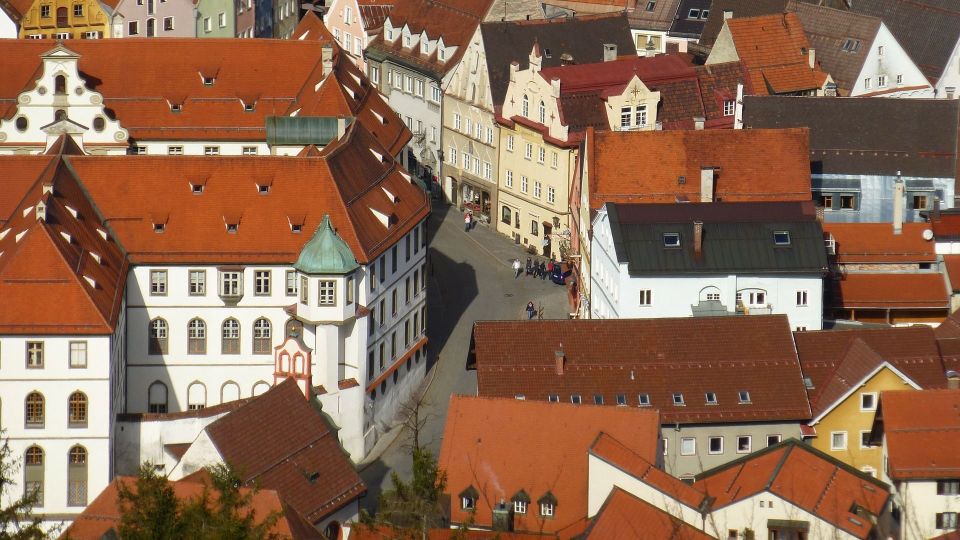
- High Castle, explained clearly: Learn why this hilltop summer retreat mattered to the prince-bishops.
- 9th-century St. Mang’s: You’ll get the big backstory for one of the town’s anchor landmarks.
- Magnus of Füssen: The patron saint’s legacy shows up in how people talk about the town’s identity.
- Roman roots in the mix: Even the earliest layers of Füssen get woven into the walk.
- Treaty of Füssen and the Romantic Road: History isn’t just dates—it’s also how the region remembers itself.
- Comfortable shoes matter: The old-town vibe comes with cobbled lanes and medieval surfaces.
Entering a town that’s built for walking
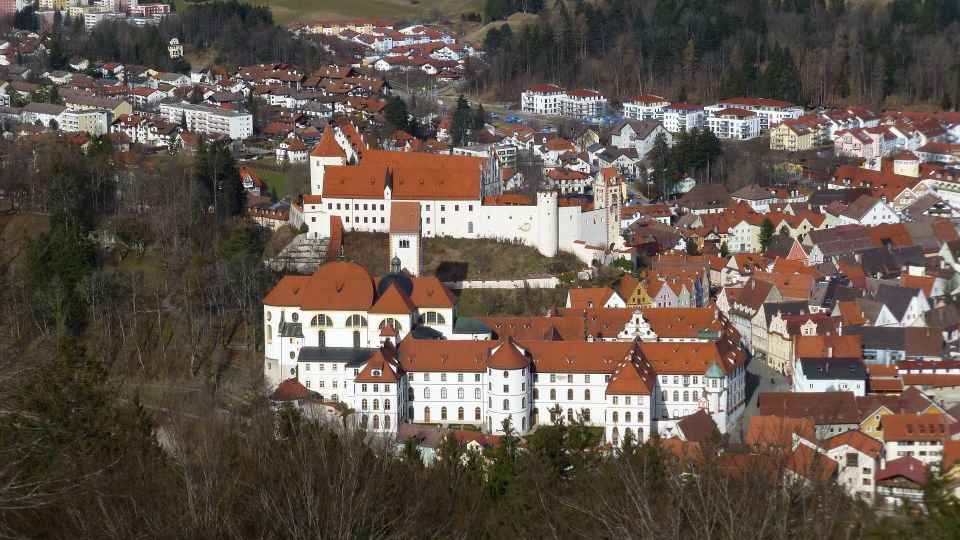
Füssen’s charm isn’t only in the views. It’s in the layout: medieval alleys, a town wall feel, and a river running through the center that gives the streets that postcard look without needing a long commute.
I especially like tours that treat a walking town like a storybook you can read in the right order. This one starts by setting the stage, so High Castle and the churches don’t feel like random landmarks you tick off. You’ll also pick up a fun bit of local wordplay—the town name Füssen is tied to feet—so you understand why the “walking town” idea is more than marketing.
One reason this works well is timing. With just 90 minutes, you’re getting the main themes: early roots, religious life, political history, and then how it all connects to the broader Romantic Road route.
You can also read our reviews of more walking tours in Fussen

Starting at Schrannenplatz and setting the pace
You’ll meet at Schrannenplatz, Schrannengasse 10, 87629 Füssen. From there, expect a compact loop of old-town sights where the guide uses quick orientation moments to keep you oriented on foot.
This is the kind of tour where the guide’s pacing really matters. When it’s done well, you feel like you’re moving through places, not just standing in front of them. And if the weather turns, you’ll want to be ready—one guide, Sandra, was even equipped with umbrellas during a rainy moment, which made the walking part much easier.
Because it’s private, your group can often adjust. That can be a big deal if you’re trying to line up Neuschwanstein tickets or you just don’t want the schedule to steamroll your day.
Medieval alleys, the turquoise river, and old-town texture
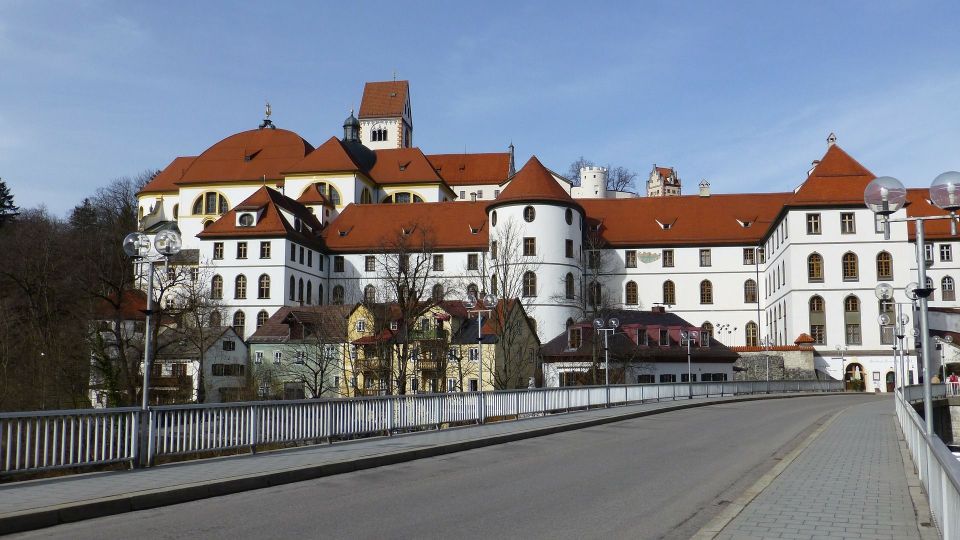
What makes Füssen feel romantic isn’t only the buildings. It’s the slow choreography of the streets: cobbled lanes that force you to slow down, baroque churches with strong presence, and museums that add texture when you pass by rather than treat as a full stop.
You’ll also notice the river early. The route keeps you near the center where that sparkling turquoise water gives the town a bright, airy feel even when the streets are narrow. Then the guide helps connect that physical beauty to meaning—how a town like this functioned when travel was slower and local power mattered more.
If you’re the kind of person who loves “small scenes” more than big monuments, this part is for you. The tour uses the street-level details to make the later landmarks land with more impact.
Roman roots of Füssen: early layers under your feet
Füssen didn’t start as a medieval postcard. A highlight of the walk is learning about its ancient Roman roots, and how those earliest layers still shape the way people understand the town.
This is one of those stops where the guide’s job is interpretation, not just information. Roman history can feel abstract in places where you can’t point to a sign reading Roman Street. In this tour format, you’re guided to understand what those roots mean for how Füssen evolved into the walled, church-linked town you see today.
And that’s the value here: you’re not learning facts in a vacuum. You’re learning why a place turns into the place it becomes.
The town wall and the logic of a walled place
Füssen’s old-town feel includes the sense of a defended settlement. As you trace the medieval alleys and the town wall atmosphere, it helps to think about what walls actually do: they shape travel routes, protect key areas, and influence where power concentrates.
The guide ties this into later themes without turning the walk into a history lecture. You get the practical sense of the town’s structure—how you’d move through it, what likely mattered most, and where the big story points will be as you head toward High Castle.
If you enjoy “why is this here” questions, this portion will click. The walk keeps you engaged by linking the physical layout to the political and religious stories the rest of the tour covers.
You can also read our reviews of more guided tours in Fussen


High Castle: prince-bishops and summer politics above Füssen
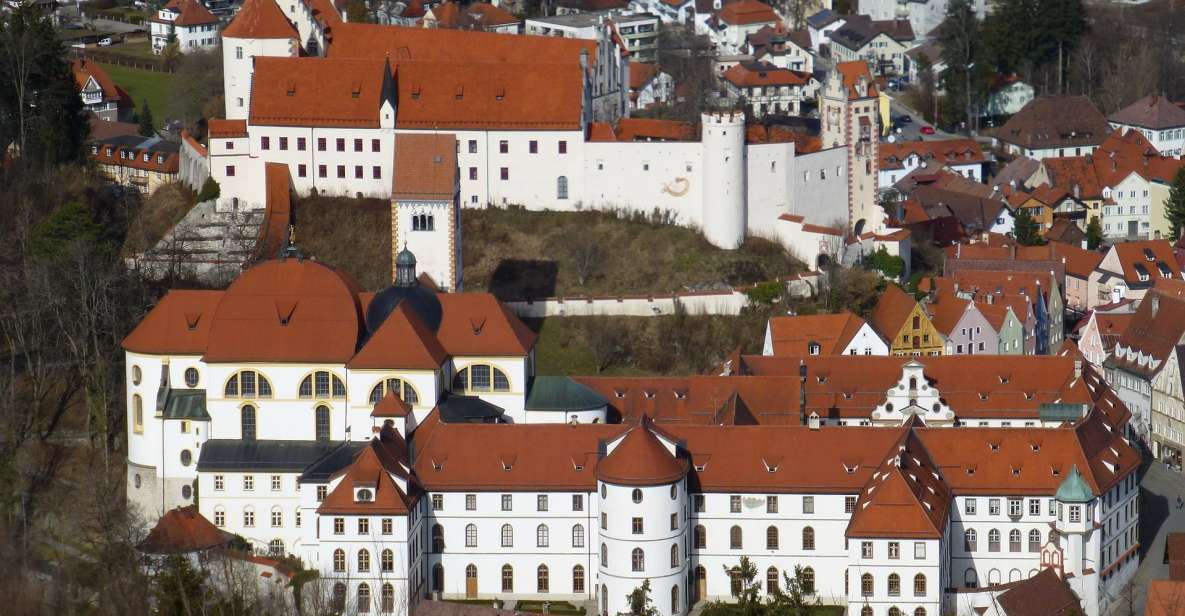
Now for the star. The tour includes the High Castle, once the summer residence for the prince-bishops of Augsburg. This isn’t just a castle stop for views; it’s a way to understand how church power worked in the region.
Here’s what I think makes this part especially worthwhile: the guide connects the castle to real authority. Prince-bishops weren’t distant figures. They influenced decisions, patronage, and what got built. When you learn that context, the grandeur makes more sense. It’s not only stone and height—it’s status and control.
You’ll also be able to connect High Castle to the “Romantic Road” framing later in the tour. The Romantic Road image can sometimes feel like pure scenery. This helps you see the people and institutions behind it.
Plan for walking around the area rather than expecting a long inside visit. Entrance fees aren’t included, so if you want to go deeper into specific interior rooms, you’ll need to handle that separately.
St. Mang’s Benedictine monastery and Magnus of Füssen
Two of the most praised parts of the tour are the religious and cultural anchors. You’ll hear about St. Mang’s Benedictine monastery and its 9th-century history, and you’ll also uncover the legacy of Magnus of Füssen, the town’s patron saint.
This is a powerful combo because it gives you both dates and meaning. The monastery history gives you the timeline—how far back this community’s story reaches. Then Magnus adds the human center: how a patron saint becomes part of local identity over centuries.
In a town like Füssen, churches and monasteries can look similar from a distance. The guide’s job is to separate them by story, and this tour does that. You leave with a better sense of why certain sites become repeat stops for both locals and visitors.
This section also fits well with your bigger plan. If you’re pairing Füssen with Neuschwanstein, understanding the religious and historical backbone makes the whole day feel more connected rather than like you’re bouncing between isolated highlights.
Treaty of Füssen: politics that changed ambition
You’ll also learn about the Treaty of Füssen and how it ended imperial ambitions. That’s a short phrase, but it matters, because it helps explain why the region’s story doesn’t only move forward through kings and battles.
On this tour, the treaty isn’t presented as a random footnote. It’s part of the explanation for why Füssen shows up in the wider political memory of Bavaria and beyond. You’ll likely find yourself looking at the town with a different lens afterward: not only a pretty stop, but a place where decisions shifted plans for power.
If you like history that connects to places you can walk to, this is a strong point. It takes you from romance to consequences without dragging you into an exam.
Romantic Road context: why Füssen fits the bigger route
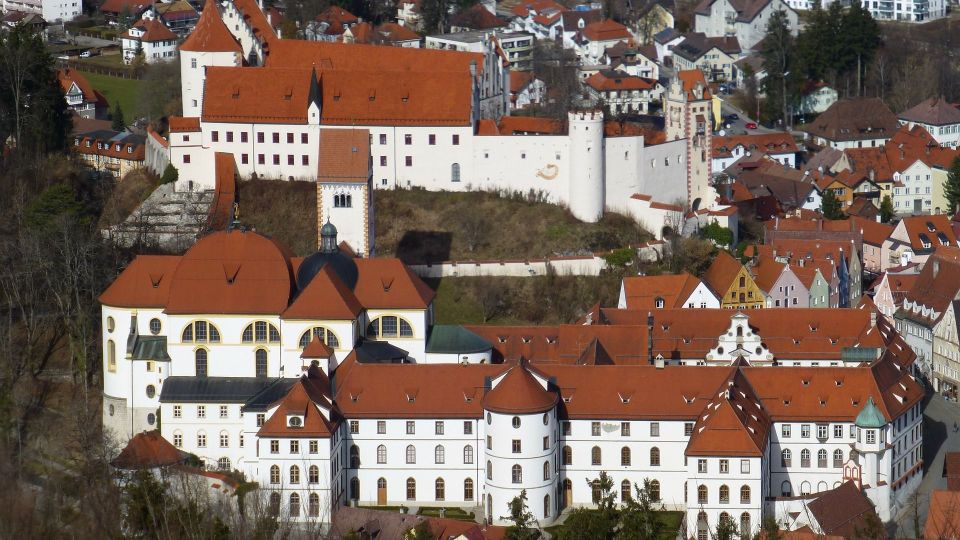
One of the tour’s clever ideas is tying Füssen to the Romantic Road. The Romantic Road can sound like a marketing label until you understand what it’s built from: towns with layered identities, strong architectural styles, and histories that shaped what you see today.
As you trace the town’s steps, the guide helps you place Füssen in that chain. That makes your future stops easier to appreciate, because you start noticing patterns: how architecture and authority show up repeatedly across the route.
This also helps with planning. If you’re doing the “castle day” approach, it’s easy to treat Füssen like a waiting room. This tour nudges you to treat it as the prologue.
Neuschwanstein day planning: use Füssen as your warm-up
Füssen is the nearest town to Neuschwanstein Castle, and that makes it a smart base. But it’s also a trap if you only think about the next checkpoint.
This walking tour gives you something better: background. When you later see Neuschwanstein, you’re not starting from zero. You’ve already learned about local power, church history, and regional political shifts—so the castle becomes more meaningful rather than just scenic.
There’s also practical payoff. A good guide can point you to meals that fit your timing. One example: Sandra was recommended as a friendly, helpful guide, and people appreciated her advice for lunch and dinner right after the tour. Even if you don’t follow every suggestion, you’ll still leave with ideas that match the area instead of generic tourist traps.
Price and value for a private 90-minute guide
The price is $310 per group for up to 15 people, for 90 minutes. That can sound steep if you’re thinking per person. But private walking tours work like this: the value depends on how many people are in your group.
Here’s the quick math: if you have 2 people, you’re paying about $155 each. If you have 4, it’s about $77 each. With 10 people, you’re around $31 each. With larger groups, it gets much easier to justify—especially since the guide stays with your group only.
What you’re paying for:
- A local guide just for your group
- The chance to customize on the spot
- A tightly focused storyline in a short window
Entrance fees are not included, so the best value comes when you treat this as a guided orientation and context-builder. If you want to do ticketed interiors at additional sites, budget for that separately.
Bottom line: this is best value for families, small groups of friends, or anyone who wants a more personal pacing than a public tour.
Practical stuff you should not ignore
Bring comfortable shoes. This is an old-town walk with cobbles and medieval surfaces. Even if the stops are close together, the ground can slow you down fast.
Also, be honest with your mobility needs. This tour is not suitable for people with mobility impairments or wheelchair users, so don’t plan around it if you need step-free access.
Finally, check your expectations about entrances. The tour includes explanation and sightseeing, but entrance fees aren’t part of the package. If you want inside time somewhere specific, plan for that cost.
Should you book this Füssen guided walking tour?
I’d book it if you want a fast, coherent introduction to Füssen’s history—especially if you’re planning to see Neuschwanstein soon. The tour is built for people who like walking, want context, and prefer a guide who can connect big themes (politics, religion, early roots) to the actual streets and landmarks you’re seeing.
I’d skip it or look for an alternative if your group needs step-free routing, or if you’re expecting a heavy focus on ticketed interiors since entrance fees aren’t included.
If you do book, pick this mindset: arrive ready to walk, and let the guide steer you through the stories. You’ll leave with a much clearer sense of why Füssen looks the way it does, and why its history matters when you head onward.
FAQ
How long is the Füssen private guided walking tour?
The tour runs for 90 minutes.
Where is the meeting point?
The meeting point is Schrannenplatz, Schrannengasse 10, 87629 Füssen, Germany.
What languages are available for the live guide?
The live guide is available in English and German.
Is the entrance fee included?
No. Entrance fees are not included.
Is this tour private?
Yes. It’s a private group tour, with your local guide staying with your group only (up to 15 people).
Is the tour suitable for wheelchair users or people with mobility impairments?
No. It is not suitable for people with mobility impairments or wheelchair users.
Can the tour be customized?
Yes. There’s possible customization on the spot with your local guide.