REVIEW · MUNICH
Mystic Munich – Sagas and Legends of the Old Town
Book on GetYourGuide →Operated by DIE STADTSPÜRER® · Bookable on GetYourGuide
Mystic Munich turns Munich’s famous squares into a story map. You get a guided Old Town walk paced to legends, not facts dumps, and it stays focused on the sights you’ll actually see. Two things I really like: you get a strong lineup of iconic stops, and the guide mixes saga and legend with the real city details behind them. One practical drawback: the tour is in German only, so non-German speakers may feel shut out.
If you like cities best when they come with character, this one fits. You’ll hear why the Lindwurm story is tied to the New Town Hall, how the Marian column links to Putti, and why Old Peter gets a devil-stopping tale. Still, it’s around 105 minutes, so it moves at a steady pace and you’ll need to keep close to your group in busy areas.
Key Points to Know Before You Go
- Legend-first storytelling that points you to the exact landmarks in Munich’s core
- Multiple major sights in one run: Marienplatz, Old Peter, Frauenkirche, and more
- Monster and saint motifs you can spot with your own eyes as the dusk light changes
- German-only guide with an experienced local voice
- A small gift at the end of the tour
- Worth it at $26 when you want guided context for several famous stops in a short time
In This Review
- Marienplatz at Dusk: How the Tour Makes Munich Feel Like a Story
- Finding the Start at Marienplatz 15 (Toy Museum Entrance)
- 105 Minutes of Old Town Legends: The Pace and the Promise
- New Town Hall and the Lindwurm: Dragon Stories With a Real Address
- Marian Column and Putti: Monsters in Public Art
- Old Peter and the Devil: A Story That Changes How You Face a Church
- St. Onuphrius: Why You Should Look Straight at It
- Old Town Hall and Marienplatz: Famous Names, Meaningful Details
- Old Court and Frauenkirche: Big Architecture, Specific Story Angles
- What About the Guide? German Storytelling That Gets Praised
- Price and Value: $26 for 105 Minutes of Guided Legend Stops
- Who Should Book Mystic Munich (and Who Might Skip)
- My Booking Call: Should You Book This Legends Walk?
- FAQ
- FAQ
- How long is the Mystic Munich tour?
- What language is the tour guide in?
- Where do I meet for the tour?
- What’s included in the price?
- How much does the tour cost?
- Is the tour wheelchair accessible?
- Can I cancel if my plans change?
Marienplatz at Dusk: How the Tour Makes Munich Feel Like a Story
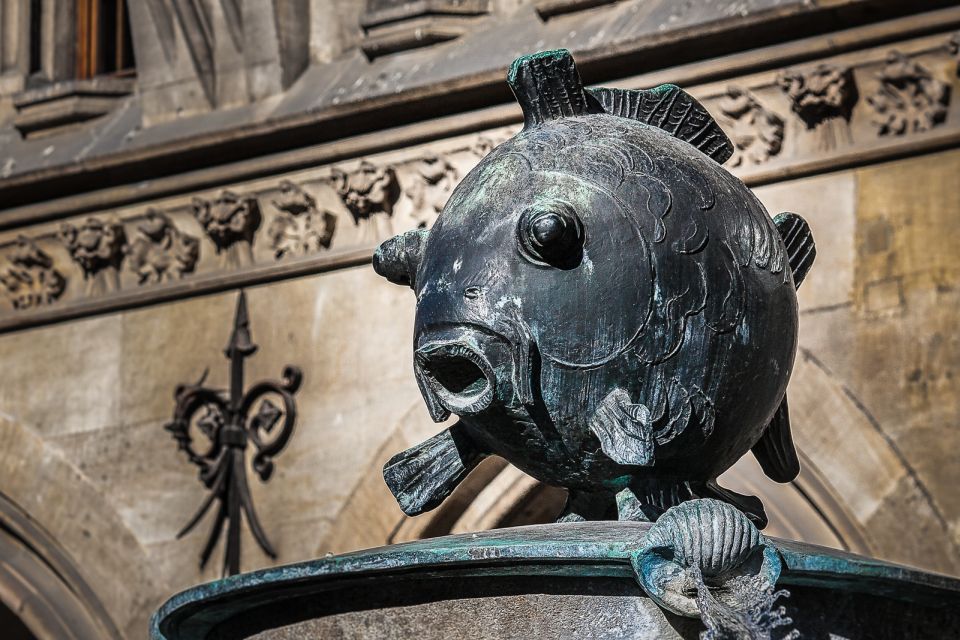
Munich’s center can feel like a postcard machine if you just hurry from landmark to landmark. What makes Mystic Munich different is the framing: the Old Town becomes a sequence of questions. Why does this building have a dragon-like legend attached to it? Why does a column have a monster story? Why do certain statues get people staring straight at them?
I like that the tour doesn’t ask you to take myths on faith. It nudges you toward the reality behind the mystery. That matters because legends lose their power when you treat them like random campfire stories. Here, you’re shown where the legends live in the streets and facades, then you’re given the explanation style the city uses to keep these stories breathing.
And yes, the timing is built for atmosphere. The tour runs at dusk, which helps the whole experience feel darker and more cinematic. Even if you’re not chasing spooky vibes, dusk is when Munich’s big squares stop looking like “daytime sightseeing” and start looking like lived-in town space.
Finding the Start at Marienplatz 15 (Toy Museum Entrance)
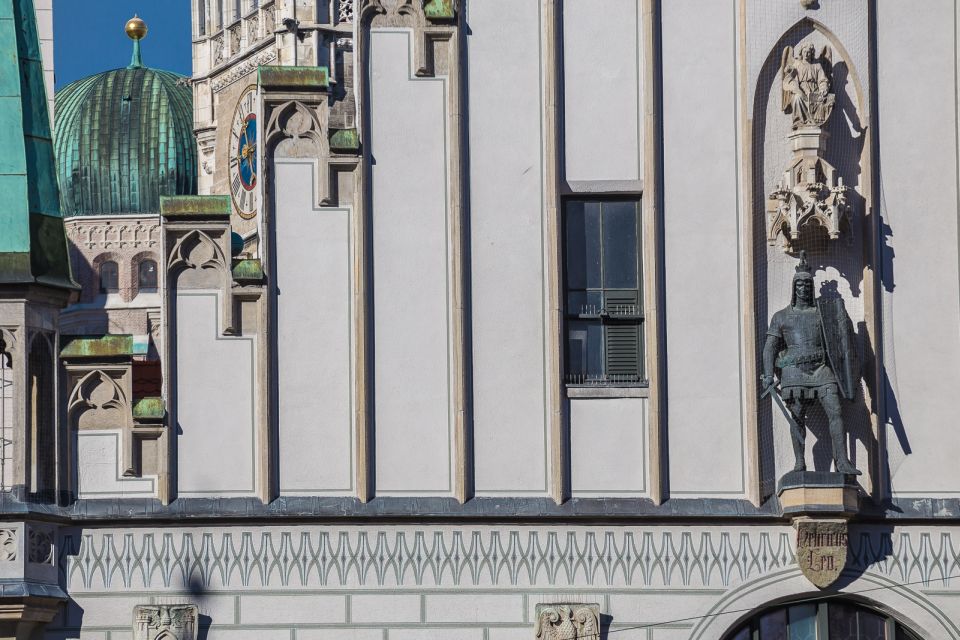
You’ll meet at Marienplatz 15, in front of the entrance of the Toy Museum. The key detail: the toy museum entrance is under the Old Town Hall, between Marienplatz and Tal.
That location is convenient. You’re starting right in Munich’s busiest historic hub, so the walk is naturally efficient. You also get immediate context for why legends cluster here. Marienplatz isn’t just scenic; it’s the kind of place where people gathered, argued, prayed, and watched events unfold. That’s exactly the setting where stories about monsters and devils grow roots.
One more practical thought from how these tours typically run: when it’s cold or dark, it’s easy to drift a few steps and then lose the guide in a crowd. If you go to the 17:30 slot (or any late start), plan to stay close and keep your eyes on your guide’s position, not just on the sights.
You can also read our reviews of more tours and experiences in Munich.


105 Minutes of Old Town Legends: The Pace and the Promise
The tour lasts about 105 minutes. That timing is ideal if you want real storytelling without burning half a day. It’s also long enough to connect several stops into one theme: how the city built meaning into art, architecture, and public spaces.
The format is a walking tour with an experienced local guide, and it’s conducted in German. There’s also a small gift included, which is a nice touch for something this short. You’ll cover selected mysterious places in Munich’s Old Town, with stops that align with big, recognizable names you can still find on your own later.
The big promise is not just that you’ll see famous buildings. You’ll understand the kinds of stories that got attached to them over time, and you’ll learn what people should notice when they look at the details. That makes the tour useful even after you leave, because you’ll spot things you would normally miss.
New Town Hall and the Lindwurm: Dragon Stories With a Real Address
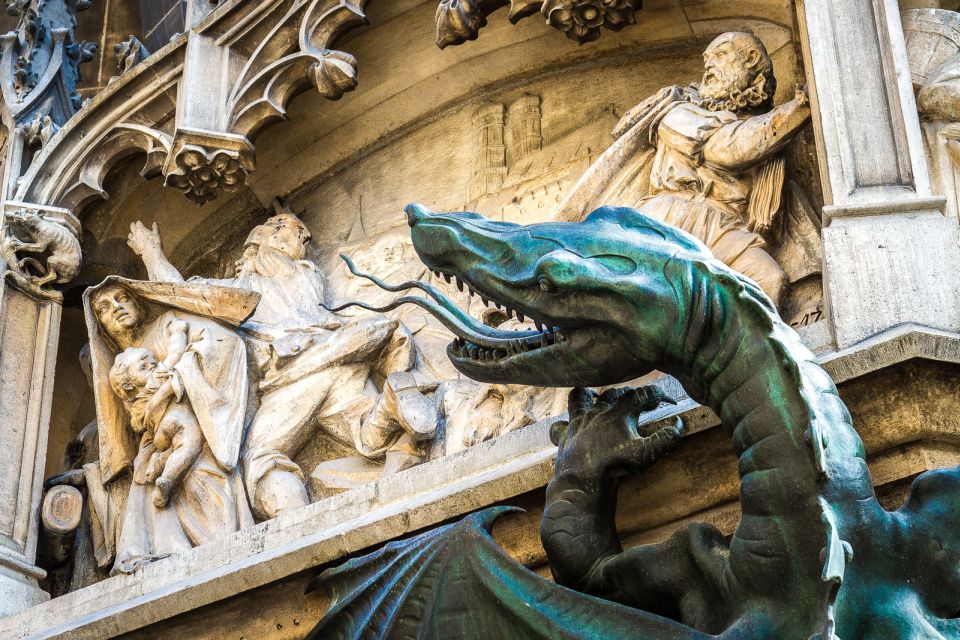
One of the signature stories connected to the route is the Lindwurm at the New Town Hall. The Lindwurm legend is exactly the kind of myth that fits Munich: a monstrous figure tied to a very specific place, not a vague “legend of the region.”
Why this works for you as a visitor: it gives you a concrete target for your attention. Instead of “look at the building,” you’ll know what to look for. When legends map onto architecture, they turn the building into a clue. You’re not just taking in a facade; you’re learning why certain motifs get remembered.
If you’re the type who likes symbolism, this stop is especially satisfying. Even if you don’t become a legend expert, you’ll leave knowing that Munich didn’t just decorate buildings for beauty. It also built narratives into public landmarks so people could remember them.
Marian Column and Putti: Monsters in Public Art
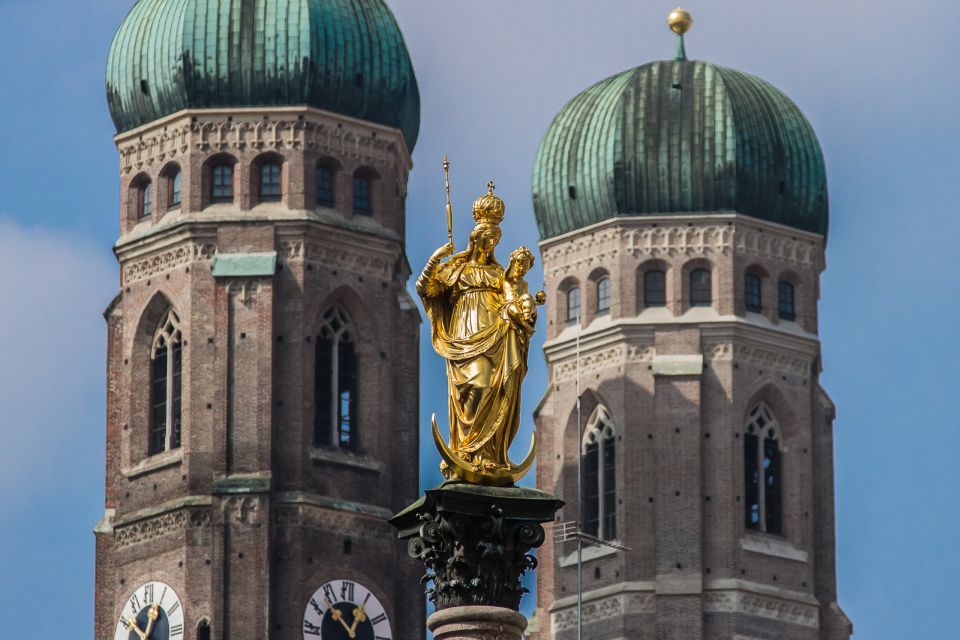
Another highlight centers on the Marian column and the hero Putti fought. This is the kind of story that feels dark in the best way because it links sacred imagery with aggressive, monster-style action.
For practical sightseeing value, this stop changes how you look at public sculpture. You’ll likely see the column in a totally different light afterward, because you’ll know the story pattern: good figures vs. threatening forces, told through art that people would see day after day.
This matters because art in town squares is not just background. It’s information. A column like this is a city announcement built in stone and bronze. When your guide explains the Putti connection and the monsters involved, you understand why people paid attention to these details rather than walking past them.
Old Peter and the Devil: A Story That Changes How You Face a Church
Old Peter is another stop that anchors the tour in something you’ll recognize quickly. The tour connects Old Peter to a devil story: how it was possible to stop the devil from destroying it.
This is a smart inclusion, because it’s easy to stand in front of a church and treat it like a photo spot. But a devil-themed explanation turns the church into a defensive, protective symbol. Suddenly the building isn’t just “nice architecture.” It’s part of a moral map.
If you like city storytelling that’s a bit theatrical, this is your moment. And if you prefer less drama, you’ll still get value because the guide ties the tale to how Munich understood danger, protection, and public faith.


St. Onuphrius: Why You Should Look Straight at It
One of the most specific instruction-style parts of the tour is about St. Onuphrius. You’ll hear why you should look St. Onuphrius straight in the eye.
That kind of detail is more than a gimmick. It tells you the tour expects you to engage with the physical artwork or figure, not just listen. That’s a big reason this experience lands well: you’re not stuck in “walk and talk” mode. You’re invited to do a small act of attention.
It also helps you slow down at exactly the right time. In a short tour, guides often rush you to keep schedules. Here, a stop with a clear instruction gives you permission to pause, look, and register details. That improves the whole walk because you’re not just collecting facts; you’re building memory.
Old Town Hall and Marienplatz: Famous Names, Meaningful Details
You’ll also stroll past and explore well-known core landmarks including the Old Town Hall and Marienplatz. These are the high-visibility anchors of Munich’s Old Town, and they work as a reset point between heavier stories.
Here’s why this part matters: legends feel more convincing when you see how they fit into a living civic center. Marienplatz isn’t a remote attraction. It’s where everyday life intersects with the grand stuff—so myths survive because people encounter the space constantly.
The Old Town Hall stop adds structure to the stories around city identity. When you’re hearing about Lindwurm lore and other legendary motifs, you’re also learning how Munich’s city-center spaces helped define what the city believed about itself.
Old Court and Frauenkirche: Big Architecture, Specific Story Angles
You’ll make time for the Old Court and the Frauenkirche. These two stops round out the tour by covering the kind of landmarks people usually go to on their own.
The difference here is that you’re not arriving empty-handed. You’re getting a story angle before you look at the stone. That turns a “check the box” visit into something more personal: you notice details because you know they connect to themes you were already hearing.
Women’s Church stories and Old Court symbolism tend to carry emotional weight, even if you don’t know the background. When your guide weaves legend into what you’re viewing, the buildings start to feel like characters too.
And because the tour happens around dusk, the visual mood helps. You see the shapes and lines more dramatically than in bright midday light, and the legend framing makes your brain connect those visuals to the darker parts of the stories.
What About the Guide? German Storytelling That Gets Praised
A big part of why this tour scores well is the guide’s delivery. One review specifically praises Patricia for making the stories engaging, clear, and fun. That’s the sweet spot you want: a guide who can handle both the saga side and the reality behind it without turning either into a lecture.
Since the tour runs in German, I’d treat language as your main compatibility filter. If you understand basic German, you’ll likely catch the shape of the story even if you miss a few words. If you don’t read or speak German, you might still enjoy the walking and landmark focus, but you’ll lose the core value, which is the storytelling.
If you do speak German, this kind of local legend tour can be a fast way to understand how Munich thinks about itself—through saints, monsters, public art, and the moral drama of the city center.
Price and Value: $26 for 105 Minutes of Guided Legend Stops
At $26 per person for about 105 minutes, this is priced like a short special-interest walking tour. The value case is simple: you’re paying for a guide who ties together multiple high-profile landmarks into a single themed experience.
If you were to do this on your own, you’d likely spend time looking up background for each stop. Here, that research is handled for you, and you get it while you’re standing in the right spot to understand why the story fits.
Also, because the tour includes a small gift, it adds a little “moment” beyond just the walk. It’s not a huge cost driver, but it makes the experience feel like an actual curated outing rather than a generic stroll.
So the deal works best when you want context at multiple stops but don’t want to spend hours planning or reading in advance. For one evening, it’s a solid way to make Munich’s Old Town feel less like sightseeing and more like story geography.
Who Should Book Mystic Munich (and Who Might Skip)
This tour is a good fit if:
- You enjoy stories tied to real places, not abstract history lectures
- You like walking between central landmarks without needing to design your own route
- You want a darker, legend-leaning perspective on Munich’s famous center
- You read signs and want your “what am I looking at?” questions answered on the ground
You might skip it if:
- You need an English-language tour, since the guide speaks German
- You dislike walking in groups in crowded central areas, especially at dusk
My Booking Call: Should You Book This Legends Walk?
I’d book Mystic Munich if you want a short, guided way to see central Munich with meaning attached. The combination of Marienplatz, Old Peter, Frauenkirche, and the New Town Hall makes it efficient, and the legend framing turns those stops into story nodes instead of simple photo targets.
If you speak German or are at least comfortable catching the gist, this is a fun value play at $26 for 105 minutes. If you don’t, consider whether you’d rather use that time for an English-led tour or do self-guided sightseeing with a guide app.
FAQ
FAQ
How long is the Mystic Munich tour?
The tour lasts around 105 minutes.
What language is the tour guide in?
The tour is in German.
Where do I meet for the tour?
Meet at Marienplatz 15, in front of the entrance of the Toy Museum (the entrance is under the Old Town Hall between Marienplatz and Tal).
What’s included in the price?
It includes a 1.75-hour guided tour, an experienced local guide, and a small gift from the tour.
How much does the tour cost?
The price is $26 per person.
Is the tour wheelchair accessible?
Yes, it is listed as wheelchair accessible.
Can I cancel if my plans change?
Free cancellation is available up to 24 hours in advance for a full refund.