REVIEW · MUNICH
Munich: Third Reich & WWII Walking Tour
Book on GetYourGuide →Operated by Munich Walk Tours · Bookable on GetYourGuide
Munich has another side, and it is heavy. This 2.5-hour walk traces how Hitler’s movement took root in Bavaria’s capital, using landmark addresses to connect postwar chaos with the Third Reich that followed.
I especially like the focus on specific sites tied to key moments, from the early mass meeting at the Hofbräuhaus to the public staging at Königsplatz. And I like that the guides are praised for clear, loud delivery and respect—names like Michael and Steve show up repeatedly in reviews, along with guides such as Josh, Florian, and Danielle who keep the story moving.
One consideration: it’s a walking tour through city squares, so you’re mostly outside. Bring comfortable shoes and dress for cold wind and crowd noise, especially in winter when you’ll really feel it.
In This Review
- Key things to know before you go
- Walking Munich’s Dark Timeline: 165 Minutes, Real Places, Real Consequences
- Hofbräuhaus: Where a Movement Learned to Perform in Public
- Feldherrnhalle: The Attempt to Seize Power, Up Close
- Königsplatz Rally Ground: How Public Space Can Sell an Idea
- Hofgarten and the White Rose: Resistance, Courage, and a Different Kind of Politics
- Guide Quality Makes or Breaks a Tough Subject
- Price and Value: When $31 Buys a Focused City Story
- Timing, Pacing, and What to Wear in Munich Cold Weather
- Where You’ll End Up: A Handy Follow-Up in the City Center
- Should You Book This Munich Third Reich Walking Tour?
- FAQ
- How long is the Munich Third Reich and WWII walking tour?
- How much does it cost?
- Where is the meeting point?
- Is the tour wheelchair accessible?
- What languages are offered on the tour?
- What should I bring?
- Can I get a refund if my plans change?
- Is there a private group option?
Key things to know before you go
- A tight 165-minute timeline, focused on how Nazism spread in Munich, not a vague general overview
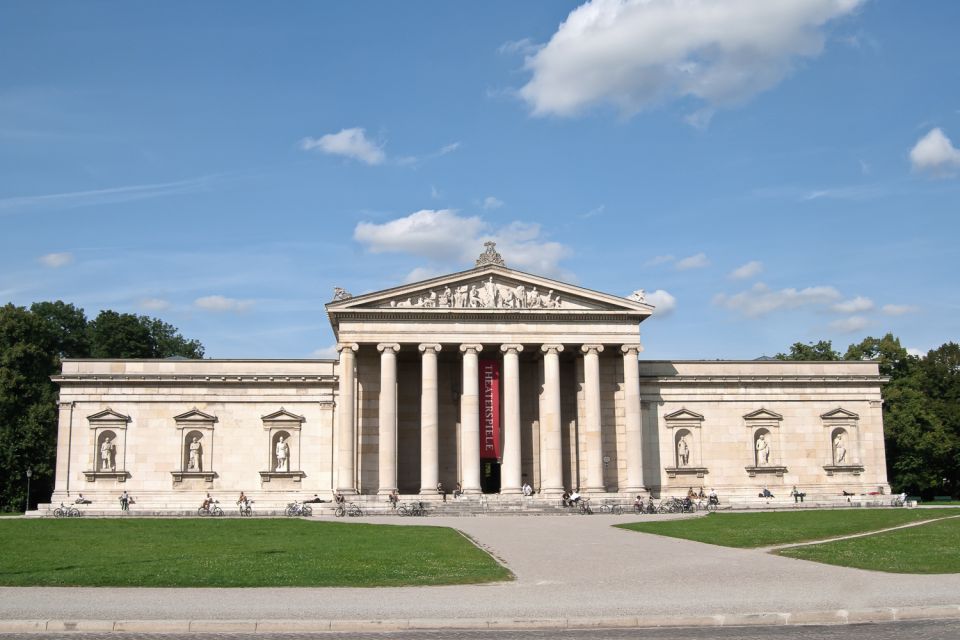
- Landmarks you can actually point to: Hofbräuhaus, Feldherrnhalle, Königsplatz, and Hofgarten
- White Rose Resistance Movement gets real attention in the Hofgarten stop, not tacked on at the end
- Guide delivery matters here, and multiple guides are praised for being easy to hear and easy to follow
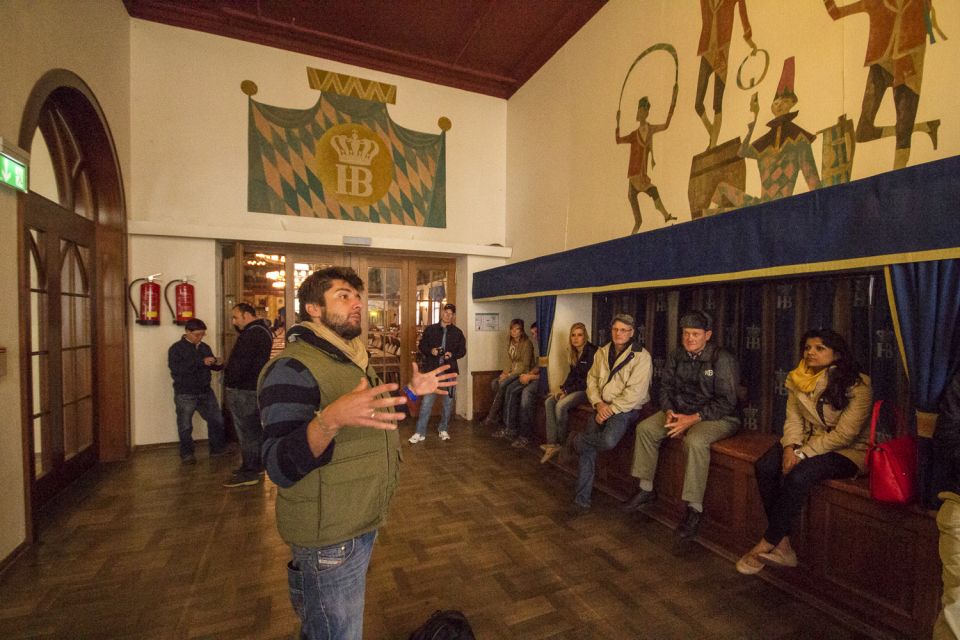
- Expect frequent pauses (and sometimes small indoor moments when weather turns rough)
Walking Munich’s Dark Timeline: 165 Minutes, Real Places, Real Consequences
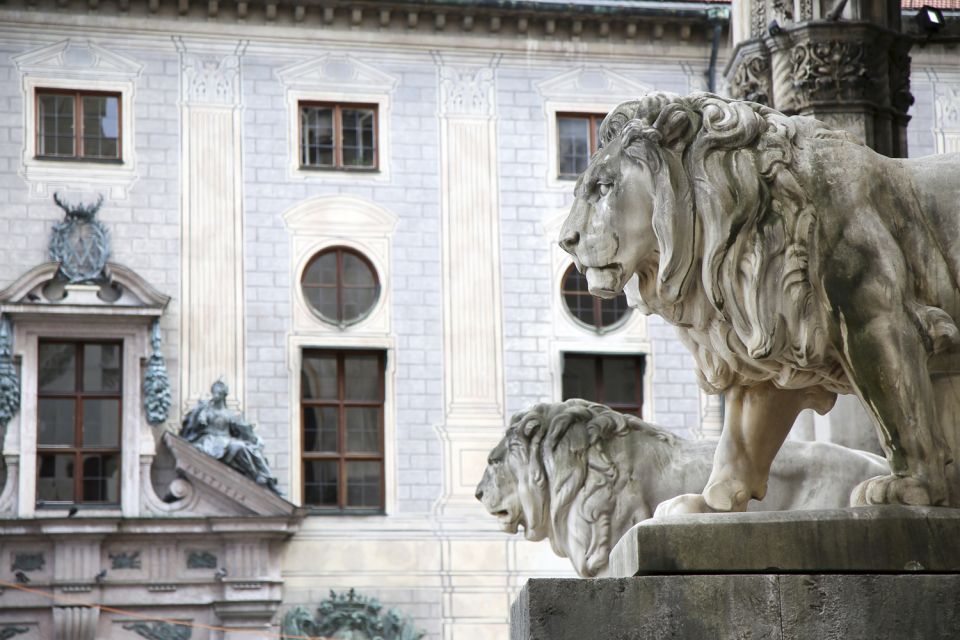
This tour is built around a simple idea: ideas don’t float. They grab space, repeat slogans, recruit people, and use public buildings like tools. In Munich, you’ll follow that process through key addresses tied to Hitler’s rise and the movement’s growth across the city.
The story starts in 1919, when Germany was reeling from World War I as a defeated nation. Munich gets described as a place where hyperinflation, revolution, and political violence created a terrible opening for extremist messaging. From there, you trace the Nazi movement’s early rise in Bavaria’s capital—how it went from meetings and rallies to an attempted seizure of power.
You’ll also end with the bigger, grim arc: the Second World War’s destruction and the long wounds left across Germany. This isn’t a tour that treats the topic like a museum exhibit. It’s more like a guided map of how a city’s spaces helped make a catastrophe possible.
You can also read our reviews of more walking tours in Munich
Hofbräuhaus: Where a Movement Learned to Perform in Public
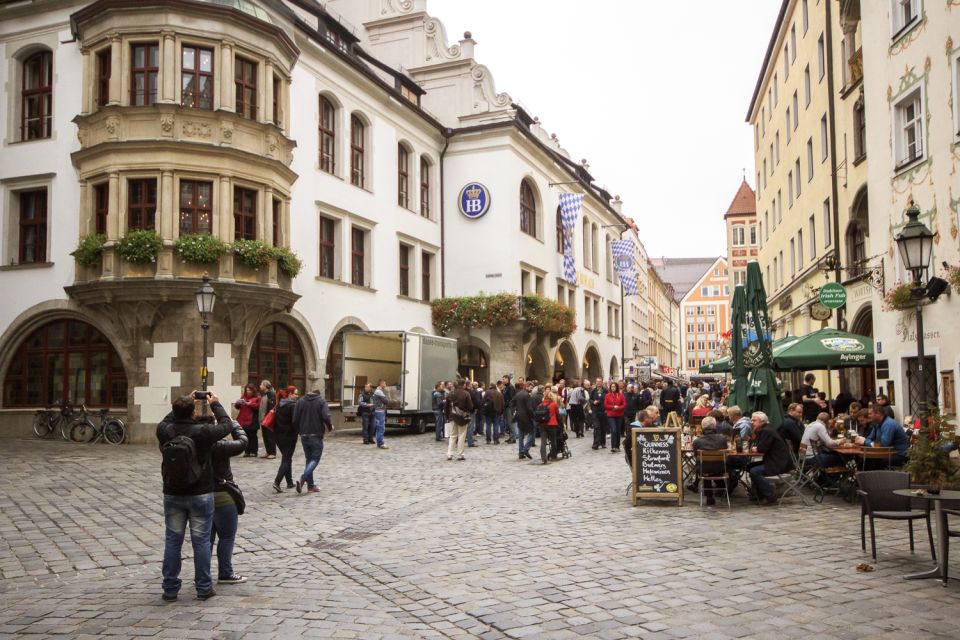
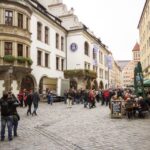
The Hofbräuhaus stop matters because it shows how public persuasion works. The tour frames it around the first mass meeting at the Hofbräuhaus, when the early Nazi movement used a big, recognizable setting to draw attention and convert anger into momentum.
When I think about why this stop is so effective, it’s the combination of scale and familiarity. Even if you’ve seen the Hofbräuhaus mentioned in travel books for beer-hall reasons, the tour helps you look at the same place through a different lens: crowds, repetition, and the careful staging of politics.
What you’ll get here is not just names and dates. You’ll connect the meeting to the broader mood of postwar Munich—defeat, economic strain, and a political environment primed for violent change. It’s one reason this tour can feel intense: it’s not only about what happened; it’s about why it could catch fire.
A small practical tip: this is a place where other tour groups may also be around, especially during busy hours. Keep close to your guide so you don’t lose the thread in the noise.
Feldherrnhalle: The Attempt to Seize Power, Up Close
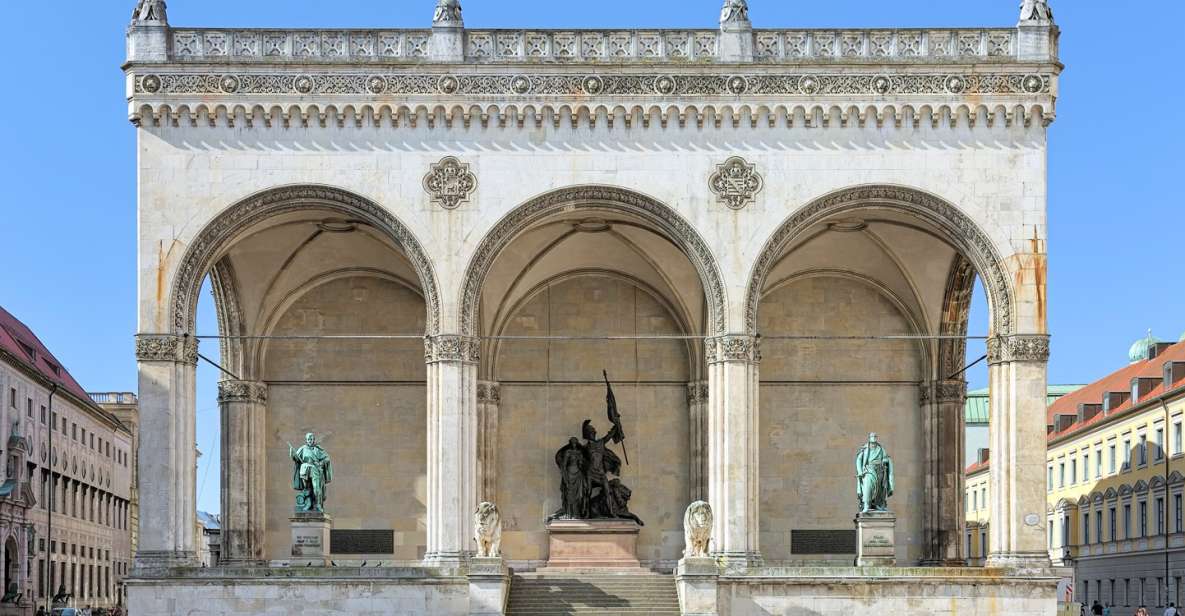
Next comes the Feldherrnhalle, tied to the failed attempt to seize power. This is where you’ll feel the shift from political theater to confrontation—how the movement pushed harder, took bolder actions, and tried to force control rather than just persuade.
The stop is valuable because it puts you in front of a dramatic public space and asks you to think about leverage. Big monuments and central squares can do more than look impressive. They can signal authority, permanence, and a claim on the future.
You’ll likely hear the story as a sequence: the movement grows, then tests its power. That’s the key takeaway here. The tour keeps showing you that extremist politics don’t appear fully formed. They develop, adapt, and try again when they meet resistance.
One caution: since this is a narrative about escalation, the pace can feel quick as the story turns darker. If you’re sensitive to that, you might want to mentally plan a breather before the next square—step to the side, check your bearings, and then rejoin when you’re ready.
Königsplatz Rally Ground: How Public Space Can Sell an Idea
Königsplatz is one of the tour’s headline stops. You’ll spend time at the site associated with party rallies, and the tour uses it to show how ideology gets marketed through architecture, geometry, and mass gatherings.
This is where the “why” becomes clearer. When groups want people to believe they are part of something big, they often need a stage. Königsplatz gives you that stage: open sightlines, ceremonial feel, and space for coordinated crowds. Standing there with the narrative in your head, you can see how the movement could make itself feel inevitable.
What I like about this part is how it turns a city map into an argument. The tour doesn’t treat the Nazi rise as a faraway event happening only in documents. It links the movement’s success to where it chose to stand and how it chose to gather.
This stop also sets up the emotional contrast later with the White Rose story. The same city that hosted huge rallies became home to people who resisted those ideas—sometimes at huge personal cost.
If you’re taking photos, do it between points, not while your guide is talking. In busy urban settings, it’s easy to miss the lines that make the site come alive.
Hofgarten and the White Rose: Resistance, Courage, and a Different Kind of Politics
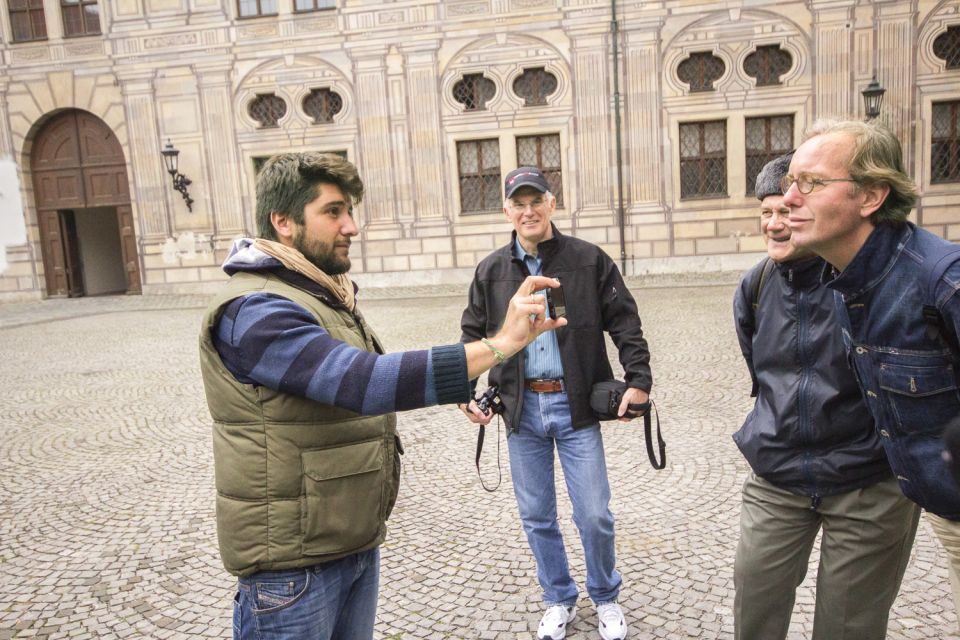
Then you get a crucial counterweight: a stop in the Hofgarten to talk about the White Rose Resistance Movement. This is one of the most important moments of the tour because it prevents the story from turning into one long march of power.
The White Rose segment reframes what strength can look like. Instead of focusing only on how a movement spread, you also learn about how people pushed back. That matters, because it gives the ending moral dimension, not only historical weight.
In terms of value, this is the moment that helps you carry the tour beyond Munich. The rise of Nazism isn’t just a local chapter; it’s a warning about propaganda, peer pressure, and how cruelty can be normalized. The White Rose adds another lesson: opposition can be intelligent, principled, and organized, even when it’s dangerous.
Practical note: Hofgarten time can feel slower than the rally squares, depending on your group and how your guide paces the story. That’s a good thing. Let your brain catch up after the stark imagery of earlier stops.
Guide Quality Makes or Breaks a Tough Subject
For a topic like this, the guide isn’t just a fact source. The guide sets the tone. And in the feedback you’re given, guide delivery shows up again and again.
I’d pay attention to the repeated praise for guides like Michael, Steve, Josh, and others such as Florian, Ulrich, Aileen, Danielle, Alex, and Brigit Muller. Many guests mention things that matter in real life: a strong voice so you can hear over crowds, clear explanations that don’t ramble, and respectful storytelling.
Some specific details that stand out from the feedback:
- Guides are praised for making complex history understandable without turning it into a lecture monologue.
- Multiple reviews mention extra care for cold days, including hot tea or help for people sitting on outdoor ledges.
- A few mention humor used carefully—enough to keep the group engaged, without losing seriousness.
- Several guides answer questions directly, which helps if you have follow-up curiosity about Munich, WWII, or the broader context.
If you’re someone who learns best by asking questions, this tour is set up for that. If you struggle with listening in open public spaces, pick a spot close to the guide at each stop. That small choice can make the difference between understanding the story and missing key points.
Price and Value: When $31 Buys a Focused City Story
At $31 per person for about 2.5 hours (165 minutes), you’re paying for guided time plus the concentrated route through major locations tied to the Nazi rise and the White Rose story. That can be real value if you’re visiting Munich with limited time and want more than a generic WWII overview.
Here’s how I think about the value:
- You’re not just seeing one museum stop. You’re moving through multiple sites tied to the origin and spread of Nazism in Munich’s public life.
- A good guide turns those sites into context, so the walk feels like a narrative rather than a checklist.
- The tour is long enough to cover story arcs—early mass meeting, the failed attempt at power, rally space, then resistance.
Is it “cheap” because it’s short? Not really. It’s priced as a guided walking experience with significant interpretive work. If the topic is meaningful to you, that interpretive layer is the point.
Timing, Pacing, and What to Wear in Munich Cold Weather
The tour runs about 2.5 hours. That’s long enough to notice the city, but short enough to keep your attention from drifting—assuming your guide keeps control of the group pace.
From the feedback, one practical pattern shows up: stops happen often enough that you don’t feel stuck marching for long stretches. That’s helpful, especially in winter. Several reviews specifically mention cold weather and the value of warm clothing.
So bring:
- Comfortable shoes (the tour data calls for this)
- Warm layers if you’re visiting in colder months
- A readiness to stand still at some stops while your guide explains what you’re seeing
Also, if you’re easily thrown by crowds, be aware that big central squares can get busy. Move with the group and don’t try to watch from far away.
Where You’ll End Up: A Handy Follow-Up in the City Center
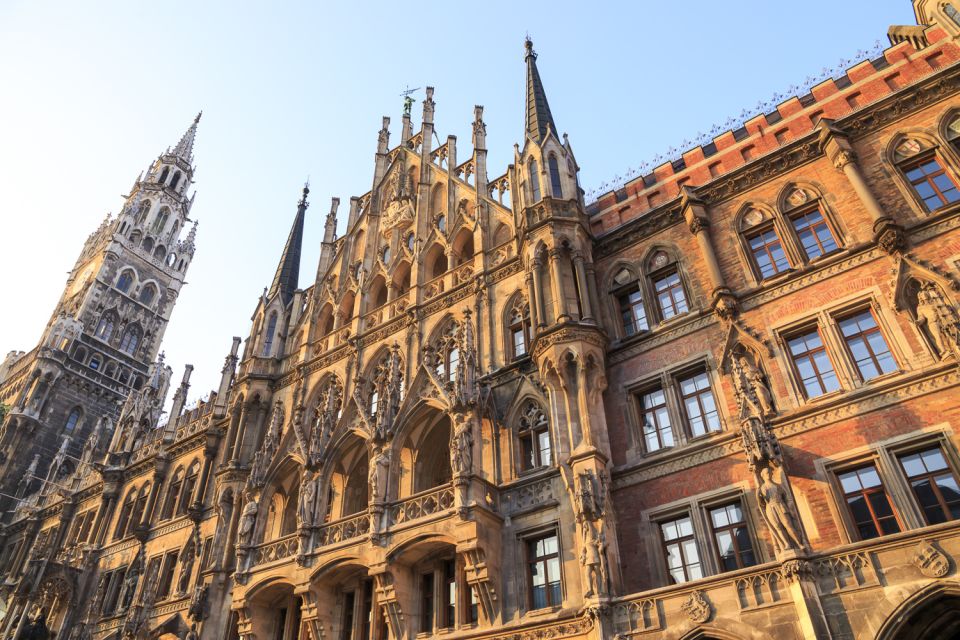
One nice bonus with tours like this is what you can do right after. A review notes that the tour ends near the Dokumentationszentrum-München, which can be a smart next step if you want more context.
Even if you don’t plan a museum stop, you’ll likely leave with a clearer sense of Munich’s WWII-era story. That makes it easier to connect what you see later—memorials, plaques, or even street layouts—to the bigger historical events that shaped modern Germany.
Should You Book This Munich Third Reich Walking Tour?
Book it if you want a structured, site-based way to understand Hitler’s rise in Munich’s political environment and you appreciate a guide who can handle hard history with clarity and respect. The strongest reason to go is the pairing of the Nazi origin story with the White Rose Resistance Movement, which keeps the tour from becoming one-note or purely grim.
Skip it if you know you don’t do well with outdoor walking in cold weather, or if hearing in noisy public spaces is a real problem for you. In that case, you might prefer a museum-based approach where you can control the sound and pace.
If your goal is to use Munich’s streets as a learning tool, this tour fits that mission well: focused stops, a clear timeline, and guides praised for bringing the story to life without losing sensitivity.
FAQ
How long is the Munich Third Reich and WWII walking tour?
It lasts about 2.5 hours, or 165 minutes.
How much does it cost?
The price is listed as $31 per person.
Where is the meeting point?
The meeting point may vary depending on the option booked.
Is the tour wheelchair accessible?
Yes, it is wheelchair accessible.
What languages are offered on the tour?
The live tour guide is available in English and German.
What should I bring?
Wear comfortable shoes, since it is a walking tour.
Can I get a refund if my plans change?
Free cancellation is offered, with cancellation up to 24 hours in advance for a full refund.
Is there a private group option?
Yes, private group options are available.