REVIEW · MUNICH
Munich 4hr Private Walking Tour with Certified Guide
Book on Viator →Operated by Japan Guide Agency · Bookable on Viator
Munich rewards slow looking, and this private walk helps you do it. You’ll get a certified English-speaking guide and a route you can shape around what you care about most, from Marienplatz landmarks to the calmer edges of the English Garden. In one guest experience, guide Vanessa brought a high-energy love for the city and even walked through how to use the bus/train app for tickets.
Two things I like a lot: the pace (steady, not rushed) and the practical local advice that makes your next meal and ride easier. One drawback to plan around: you’re not covering every big sight in town. The tour is built around selecting 2–3 stops, and some major attractions have separate entrance tickets.
In This Review
- Key highlights you’ll feel right away
- A 4-hour private walk that keeps Munich efficient
- Price and value: what $391.40 per person buys you
- How the tour actually works: choosing 2–3 stops from the menu
- Marienplatz and the New Town Hall Glockenspiel moments
- Peterskirche and Frauenkirche for green-domed and twin-dome views
- Viktualienmarkt: a food and culture stop you can actually use
- English Garden: park time with beer gardens and the Eisbach wave
- Royal Munich: Residenz München and Nymphenburg Palace
- Asamkirche and Theatinerkirche St. Kajetan: Baroque that feels dramatic
- Deutsches Museum and Alte Pinakothek for science and European art
- BMW Museum and Olympiapark: modern Munich with big views
- What the guide does beyond facts (and why you’ll notice it)
- Who this tour fits best
- Quick practical tips before you book
- Should you book this Munich private walking tour?
- FAQ
- How long is the Munich private walking tour?
- Is this tour private or a shared group?
- What language is the guide?
- Is pickup included?
- Are entrance fees included?
- Can I customize which sights I see?
- Do I need to bring paper tickets?
- What if the weather is bad?
- How do cancellations work?
Key highlights you’ll feel right away
- Private, small-group feel: meet your guide on foot and move at a pace that fits you
- Pick 2–3 stops from a strong Munich lineup, instead of a one-size route
- Tower views built in: Peterskirche and Frauenkirche let you see Munich from above
- City-center icons in one loop: Marienplatz, the New Town Hall, and the Glockenspiel moments
- Mix of old and modern: Baroque churches, royal palaces, and even BMW or Olympic Park options
A 4-hour private walk that keeps Munich efficient
This is a 4-hour Munich walking tour with a certified local guide, designed for people who want more than a checklist. The big win is that you don’t have to follow a rigid flow. You choose the sites, then your guide helps you connect them with efficient walking and smart timing.
That matters in Munich’s historic center. Marienplatz and the cathedral-area streets can feel tight and overlapping, especially if you’re trying to read signs and orient yourself. A good guide helps you get your bearings fast, then you can focus on details: facade carvings, small art inside churches, and the way squares and lanes connect.
Also, it’s truly private in the sense that only your group participates. That means you can ask questions without the pressure of keeping up with a dozen strangers. And if you want to linger for photos or a quick sit, you can usually work that into the plan.
You can also read our reviews of more walking tours in Munich
Price and value: what $391.40 per person buys you
At $391.40 per person, this isn’t a budget tour. The value comes from three places: a certified guide, flexibility, and time efficiency.
First, you’re paying for expert interpretation in real time. Munich has layers, and a guide can explain why a church looks the way it does, why a clock mechanism became a crowd magnet, and what the royal-palatine buildings meant in everyday life.
Second, the tour is customizable: you pick 2–3 sites from the available list. That choice is where the money makes sense. If you only care about churches and parks, you’re not forced into museums you won’t enjoy.
Third, there’s a practical edge. One guest described how Vanessa helped with local transportation basics and showed how to use the bus/train app for tickets. That’s the kind of thing you don’t get from a printed brochure.
If your goal is to see everything in one day, this might not be the best match. It’s a great “high-quality highlights” format, not a full Munich takeover.
How the tour actually works: choosing 2–3 stops from the menu
The itinerary list gives you lots of options, and in a typical booking you’ll select 2–3 sites to fit the time and your interests. Many stops are marked around 15 minutes, with some longer options (like Theatinerkirche St. Kajetan running about 30 minutes).
Between stops, you’re walking through Munich’s real streets, not just stepping between ticket booths. That’s why the “small private group” model works: you can keep the flow without feeling like a swarm, and your guide can adjust the order so you spend less time backtracking.
Here’s what each major option brings, plus the small considerations I’d think about when building your selection.
Marienplatz and the New Town Hall Glockenspiel moments
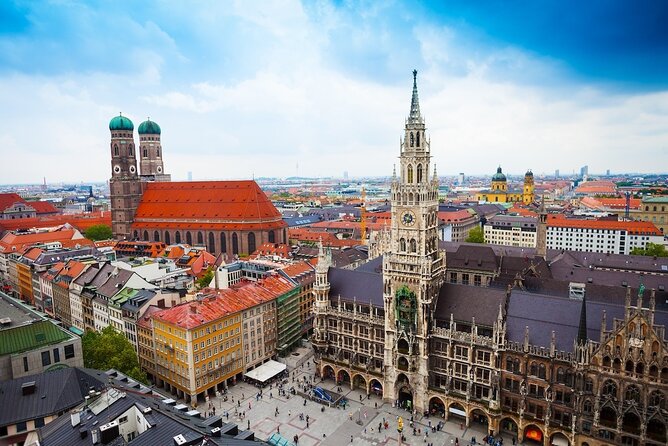
Start with Marienplatz, Munich’s central square. This is where the city’s daily rhythm shows up: crowds, architecture, and lots of little photo angles that you miss when you rush.
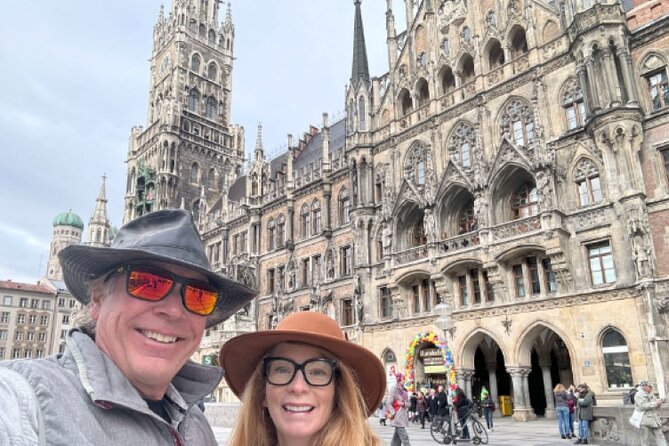
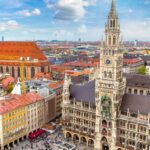
Next is the New Town Hall (Neues Rathaus), a Gothic Revival landmark with a facade full of fine details. What people most associate with it is the Glockenspiel, an animated clock feature that runs two times each day and reenacts scenes from Munich’s past.
What I like here is that it’s not just sightseeing. It’s time-sensitive and sensory—sound, movement, and a crowd that gathers for a reason. If you’re choosing only a few stops, Marienplatz plus the Glockenspiel is one of the highest payoff combos.
Possible consideration: the Glockenspiel has fixed daily timing (the guide can help you plan around it), so if you choose other stops that push the schedule, you might miss the performance.
Peterskirche and Frauenkirche for green-domed and twin-dome views
If you like churches that are more than a quick glance, you’ll probably love the next pairing.
St. Peter’s Church (Peterskirche) is Munich’s oldest church. The standout visual is the green dome, and the interior includes Baroque-style richness. The real practical reward is the tower: climbing (when open) gives you panoramic views and a sense of Munich’s layout, including the Alps on a clear day.
Then there’s Frauenkirche, the Cathedral of Our Dear Lady, famous for its twin onion domes. Inside, you’ll see stained glass and a very “Munich icon” feeling. Like Peterskirche, it’s a place where climbing the tower is part of the appeal for skyline views.
What to consider: both are “quick” on paper (about 15 minutes each), but a tower moment can stretch your time if you take photos or linger inside first. When I’m choosing 2–3 stops, I plan one church-and-view slot and keep the rest lighter.
You can also read our reviews of more guided tours in Munich



Viktualienmarkt: a food and culture stop you can actually use
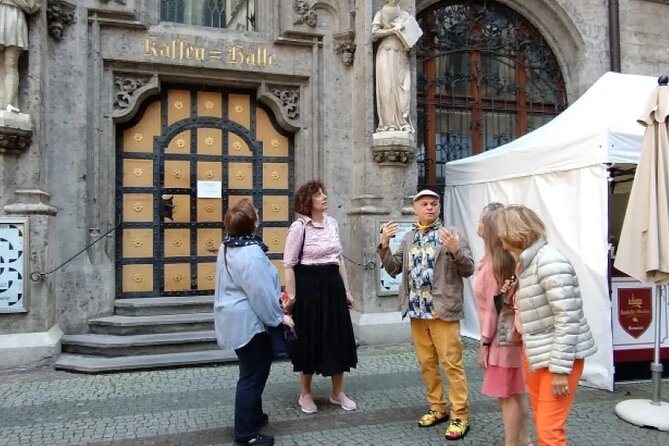
Viktualienmarkt is an open-air market that’s been a food hub since the early 19th century. This stop works because it’s both cultural and practical.
You can browse Bavarian specialties, snack as you go, and use it to map your next move for lunch or dessert later. Even if you don’t buy much, it’s one of the easiest ways to understand Munich’s everyday taste.
A possible consideration: markets are busy and you may be standing and walking more than you expect, so if your group has mobility limits or you want a quieter pace, you might shorten time here and let the guide steer you toward easier moments.
English Garden: park time with beer gardens and the Eisbach wave
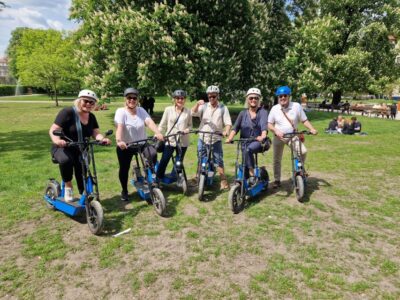
One of the best ways to balance city icons is to switch gears to the English Garden (Englischer Garten). It’s described as one of the largest urban parks in the world, and the appeal is simple: it’s space. Winding paths, green meadows, and places to slow down.
A uniquely Munich detail is the Eisbach wave, the spot where surfers ride in the river within the park area. It’s a memorable contrast to the baroque and gothic buildings around it.
If you’re designing your 2–3 stops, English Garden is a strong choice if you want a break from ticketed interiors. It also pairs well with earlier center stops because you can end with calmer strolling instead of closing the day in museums.
Possible consideration: it’s outdoor time. Good weather helps, and this experience requires good weather overall (so plan for at least one realistic weather check in the days before).
Royal Munich: Residenz München and Nymphenburg Palace
If your interests tilt toward power, art rooms, and old-school elegance, the royal stops are there for you.
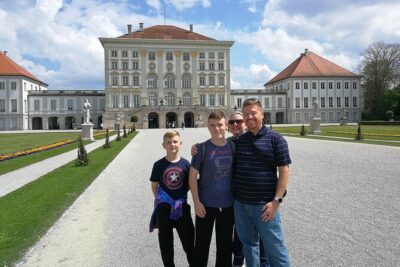
Residenz München is the grand palace complex tied to the Wittelsbach dynasty. Expect opulent rooms, art collections, and gardens. It’s a strong stop if you want to connect Munich’s architecture with the people who shaped it.
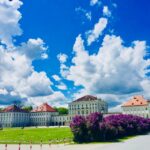
Nymphenburg Palace is the summer residence of Bavarian kings, with baroque grandeur and a major park setting. The experience here is less about one room and more about the overall site: galleries, opulent interiors, and small pavilions spread across the grounds.
Important timing note: both of these are marked as Admission Ticket Not Included in the options list you’re choosing from. That means you should budget for the entrance tickets separately.
If you’re debating between them, here’s a simple way to choose: pick Residenz if you want city-political closeness and museum-like rooms; pick Nymphenburg if you want palace grounds and gardens as a big part of the day.
Asamkirche and Theatinerkirche St. Kajetan: Baroque that feels dramatic
Two churches in Munich really lean into theatrical detail: Asamkirche and Theatinerkirche St. Kajetan.
Asamkirche (Asam Church) is known for Bavarian Rococo with dramatic interior design. Built by the Asam brothers in the 18th century, it’s all about ornate altars, frescoes, and a ceiling that draws you upward.
Theatinerkirche St. Kajetan has a striking yellow facade and a richly decorated interior with frescoes, ornate altars, and a dome. It also hosts concerts and events throughout the year, which adds an extra layer to what the building is for beyond just architecture.
Both are marked as Admission Ticket Free in the options list, which makes them high value if you want something special without adding ticket costs.
Possible consideration: church interiors can be visually intense. If you’re already museum-heavy, you might choose just one church-stop and give the second slot to outdoors time or food.
Deutsches Museum and Alte Pinakothek for science and European art
Munich can do museums in a big way, and two classic choices show up here.
Deutsches Museum is science and technology on a huge scale. The options list specifically calls out hands-on displays and areas like physics, aviation, and renewable energy. If you have teens or love interactive learning, this is the kind of place where time can disappear fast.
Alte Pinakothek is art for people who want the “named painters” layer. You can see works by Rembrandt, Rubens, and Dürer, covering art from the Middle Ages to the 18th century. The gallery’s architecture matters too, and the experience is built around looking.
Both are marked as Admission Ticket Not Included in the options list, so plan for ticket costs. Also, both can be time-hungry. In a 4-hour structure, I’d pick one museum as your main event rather than trying to cram both unless you’re prepared to move quickly.
BMW Museum and Olympiapark: modern Munich with big views
Two options add a different flavor: technology and sports architecture.
BMW Museum follows the brand story through design and technology. You get interactive exhibits and displays of classic and modern cars. The museum’s sleek architecture also adds to the feel of the place.
Olympiapark comes from the 1972 Summer Olympics and now works as a sports and entertainment hub. You can enjoy its lake and gardens, plus an Olympic Tower for panoramic views if you want the “look over the city” moment again but with a modern setting.
BMW Museum is marked Admission Ticket Not Included in the options list, while Olympiapark is marked Admission Ticket Free there. If your group wants modern Munich without ticket costs, Olympiapark is the cleaner pick.
Possible consideration: museums are indoor and sometimes require more than the short 15-minute window suggested in the list. If you choose one of these, I’d treat it as a serious stop, not a quick photo break.
What the guide does beyond facts (and why you’ll notice it)
A walking tour guide isn’t just describing buildings. The best ones help you predict what you’ll feel in each location and how to keep your day smooth.
From the experiences shared, Vanessa showed two strengths that make a difference: she kept the day fun and she matched pace. One guest described her as on time and balanced—not too fast, not too slow. Another mentioned she even met them farther out and walked them through using the bus/train app for tickets and how to ride public transit.
That’s the kind of support that turns a “sightseeing day” into a “I understand this city now” day. And since you can pick your 2–3 stops, your guide can steer you toward the details that matter for your interests, not the ones that fill a standard group schedule.
Who this tour fits best
This tour is a strong match if you:
- want high-quality guidance in Munich’s center instead of a crowded group march
- like churches, architecture, parks, and a mix of old and new
- care about making your day run smoothly with local practical tips
- prefer choosing 2–3 anchors rather than rushing between 12+ locations
It’s probably less ideal if you want to check off every major museum and palace in one day. The structure is built for fewer, better stops.
Quick practical tips before you book
- Budget for ticket costs at the stops marked Admission Ticket Not Included (like Residenz München, Nymphenburg Palace, Deutsches Museum, BMW Museum, and Alte Pinakothek).
- If towers are a priority (Peterskirche and Frauenkirche), treat those as the “time anchor” and build the rest around them.
- Since the experience requires good weather, try to keep an eye on forecasts so you can enjoy the park and outdoor areas as planned.
Should you book this Munich private walking tour?
I’d book it if you want a guided, flexible 4-hour day that focuses on the parts of Munich that most people remember: Marienplatz, iconic churches, and at least one change of pace—market food or English Garden calm. The price is steep, but you’re paying for certified guidance and the ability to shape the day around what you actually want to see.
Skip it only if your goal is maximum quantity—every big attraction, every ticketed museum, every palace room—because the 2–3 stop design won’t stretch that far.
If you’re the type who enjoys asking questions, taking photos, and getting practical tips for getting around, this is a very solid way to do Munich in a short window.
FAQ
How long is the Munich private walking tour?
The tour duration is about 4 hours.
Is this tour private or a shared group?
It’s a private tour/activity, and only your group participates.
What language is the guide?
You’ll have a certified local English-speaking guide.
Is pickup included?
Pickup is offered.
Are entrance fees included?
Some options list admission as free, while others are marked as admission ticket not included. The tour information also notes transportation fees and entrance fees are not included.
Can I customize which sights I see?
Yes. The tour is customizable, letting you choose 2–3 sites from the available options.
Do I need to bring paper tickets?
A mobile ticket is included.
What if the weather is bad?
The experience requires good weather. If it’s canceled due to poor weather, you’ll be offered a different date or a full refund.
How do cancellations work?
You can cancel for a full refund if you cancel up to 24 hours in advance of the experience start time.