REVIEW · MUNICH
Third Reich Walking Tour Munich
Book on Viator →Operated by Radius Tours GmbH · Bookable on Viator
Nazi history has an address in Munich. This 2.5-hour walking tour follows the geography of the Third Reich, using Königsplatz and other real-world landmarks to explain how propaganda and power played out on Munich streets.
I love the way the tour connects the early rise of the Nazi Party to the lead-up to World War II in clear, plain English. I also like that it doesn’t stop at architecture and speeches; it includes memorials for people who opposed Nazi ideology.
One drawback to plan for: it’s an outdoors walk. On cold or grey days, you’ll want proper layers, because there’s a lot of time on the street.
In This Review
- Key highlights to know before you go
- A 2.5-hour walk through Munich’s Nazi-era geography
- Meeting at Radius Tours: easy start, small group, real street time
- Königsplatz: where the Nazi message tried to look permanent
- Odeonsplatz and the marches: how public squares became political tools
- Hofbräuhaus stop: when politics borrowed the energy of everyday life
- Old Town Hall and Marienplatz: seeing politics in Munich’s center
- Memorial moments: honoring victims and resistance, not just dates
- English storytelling, smart pacing, and questions that don’t get brushed off
- Price and value: what $45.95 buys you in Munich
- Who this tour is best for (and who should think twice)
- Should you book the Third Reich Walking Tour in Munich?
- FAQ
- FAQ
- How long is the Third Reich Walking Tour in Munich?
- What language is the tour offered in?
- Where do I meet the guide?
- Where does the tour end?
- Is this a walking tour only?
- What’s the maximum group size?
- Do I get a mobile ticket?
- What if the weather is bad?
- What is the cancellation window for a full refund?
Key highlights to know before you go
- Königsplatz: a major site tied to the Nazi Party’s public image
- Odeonsplatz: a square used for Nazi marches and memorials
- Hofbräuhaus area: how even famous beer halls fit into political gathering culture
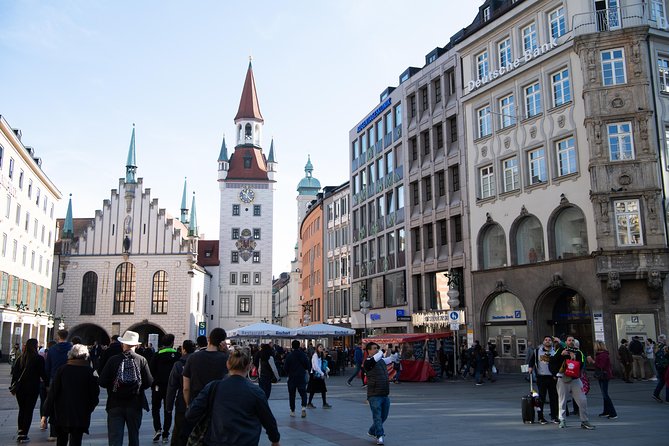
- Old Town Hall and Marienplatz: iconic civic and city-center backdrops for big political moments
- Memorial stops: time set aside to honor victims and resistance to Nazi ideology
- Small group size (max 25): easier for questions and a smoother pacing
A 2.5-hour walk through Munich’s Nazi-era geography
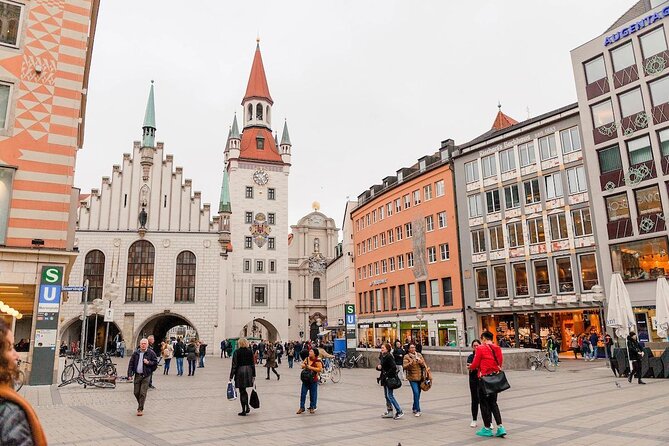
This tour is built on one simple idea: you learn faster when the facts sit in front of you. In Munich, Third Reich history is not in a single museum room. It’s in squares, façades, and street layouts—places where public life happened and where propaganda tried to look normal.
You get about 2 hours 30 minutes of walking, which is long enough to build a storyline, but short enough that you’re not trapped all day. The ending point is in the city center at Marienplatz, so you can keep exploring right after—grab a coffee, check out the Frauenkirche area, or connect to other transit.
The subject matter is heavy. That’s the point. The tour’s structure leans toward explanation and remembrance rather than spectacle, with stops that pay tribute to those who suffered or lost their lives opposing the Nazi regime.
You can also read our reviews of more walking tours in Munich
Meeting at Radius Tours: easy start, small group, real street time
You’ll meet at Radius Tours, Dachauer Str. 4, 80335 München. The check-in is quick, and the tour uses a mobile ticket, which makes it straightforward when you’re navigating in a new city.
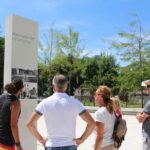
This is a walking tour with a maximum of 25 travelers. That small size matters. It usually means you get more chance to ask questions, and the guide can keep the group moving without constant waiting. Several guides on this route are described as open to questions, including the uncomfortable ones, which is exactly what you want for this topic.
Also, it’s near public transportation. So if your plans shift—museum timing, weather change—you’re not stuck far from your next option.
Königsplatz: where the Nazi message tried to look permanent
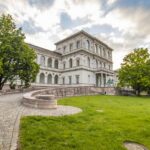
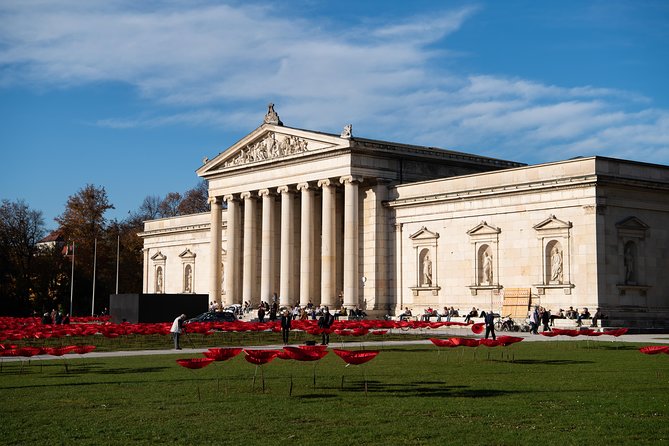
One of the most important stops is Königsplatz, a landmark tied to the Nazi Party. This is where your guide connects the dots between ideology and the built environment. You’re not just seeing a square. You’re seeing a stage that helped sell a political vision.
What I think makes this stop valuable is how it teaches you to read the setting. Large, planned spaces are not neutral. They can make crowds feel unified and history feel inevitable. When a regime uses that kind of location for its messages, it turns public space into political theater.
A good guide here will also help you understand why this mattered in the broader lead-up to World War II. It’s not only about one moment. It’s about momentum—how public persuasion, ritual, and repetition can make extreme ideas feel like the new normal.
If you prefer your history grounded in physical place, this is the stop where it clicks.
Odeonsplatz and the marches: how public squares became political tools
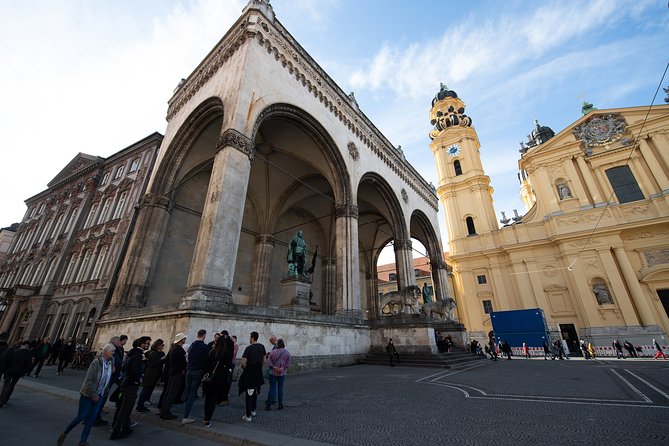
Next up is Odeonsplatz, another space used by the Nazi Party for marches and memorials. This stop helps you see how the regime leaned on ceremony and public display. March routes, crowd visibility, and symbolic locations were part of how the movement grew.
The practical payoff: after you walk through a place like this with context, you start noticing city geometry everywhere. You’ll think differently about how streets funnel people, where leaders wanted eyes to go, and how crowds create pressure.
This is also the part of the tour where a sensitive guide can make the experience more digestible. In the feedback I saw, guides like Jake, Michael, and Nicola were praised for balancing heavy material with a way of explaining that keeps the group engaged. Humor, when used carefully, can be a pacing tool—not a way to soften the truth.
Hofbräuhaus stop: when politics borrowed the energy of everyday life
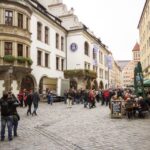
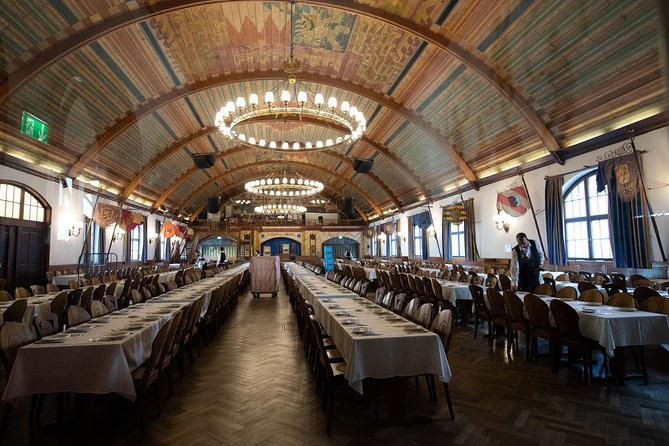
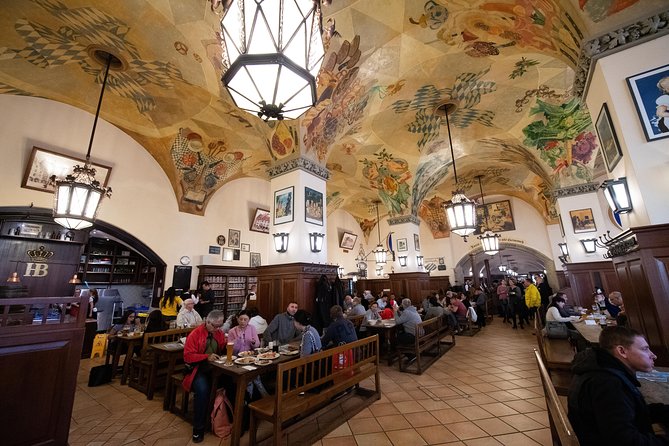
You’ll also stop by the Staatliches Hofbräuhaus area. Even a place so associated with Bavarian beer culture was tied into the Nazi political world.
This is where the tour becomes a lesson about control of social space. Regimes don’t only rely on propaganda posters and speeches. They also target the places people already gather. When political leaders show up in everyday spaces, the message becomes less like an interruption and more like part of life.
There’s a subtle takeaway here for you: once you understand how Nazis used meeting places, you can better recognize the general pattern of how extremist ideas try to normalize themselves. Not everything is a huge rally. Sometimes it starts with a handshake in a familiar room.
Old Town Hall and Marienplatz: seeing politics in Munich’s center
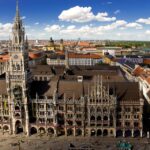
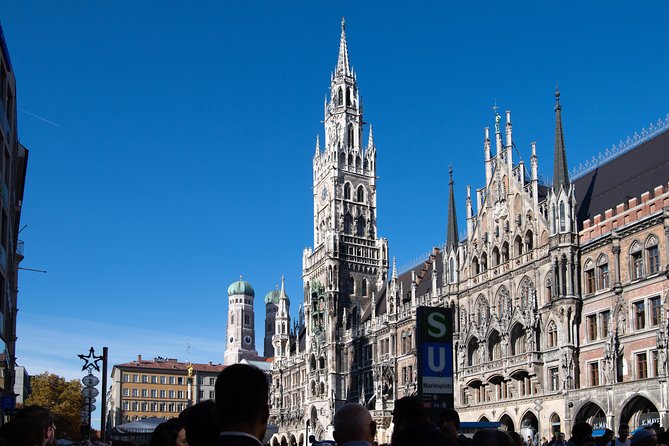
As the route moves toward Old Town Hall and then to Munich Marienplatz, the tour shifts from specific Nazi-era spaces into the broader heart of the city. Old Town Hall gives you a civic anchor—government and public authority in the same frame as political movements. Then Marienplatz closes the loop by dropping you right back into Munich’s most recognizable center.
These end sections are useful because they help you connect the Nazi-era story to the city you’ll actually keep enjoying afterward. You’re not left stranded at a random edge of town with no way to continue.
A lot of good walking tours end with information. This one ends with location, which means you can take that knowledge and look around with sharper eyes. When you get back out at Marienplatz, your brain is already mapping what you saw: squares, sight lines, and how power tried to present itself as public common sense.
Memorial moments: honoring victims and resistance, not just dates
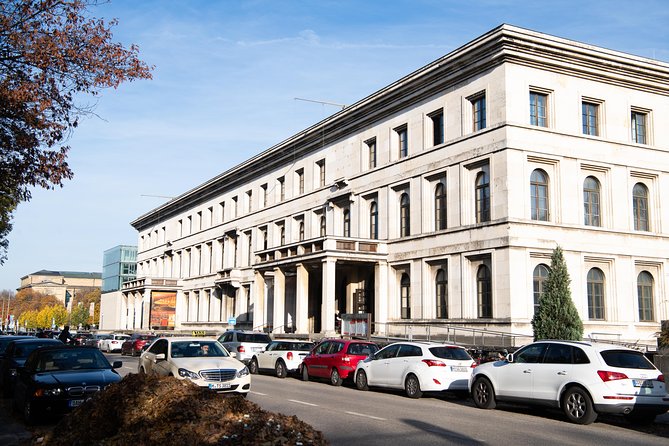
A key feature of this tour is that it includes memorials for those who died opposing the hate-filled Nazi ideology. That matters because Nazi history is not only about leaders and events. It’s about people—targeted groups, people who resisted, and communities destroyed.
The guides on this tour are described as thoughtful with the tone. Some accounts mention guides being sensitive to the group and even building in a break midway for bathroom and coffee. That kind of pacing helps you absorb difficult content without burning out.
Look for a guide who explains why memorials exist where they do. A memorial isn’t only a marker. It’s a decision about memory—what a city chooses to remember, and how it tries to prevent repeats.
If you’re the type of traveler who wants history with a moral center, this part is the reason to do the tour rather than just reading about the Third Reich online.
English storytelling, smart pacing, and questions that don’t get brushed off
The tour is offered in English, and the guides tend to teach in a way that’s easy to follow, with real clarity. Several guides were specifically praised for using photos to connect the story to what you’re seeing on the ground. That is a practical upgrade. You’re walking, you’re looking, and the guide can show how things looked back then.
You’ll also notice a theme in the feedback about interaction. Guides were described as patient, open to questions, and willing to answer honestly—even when the topics are uncomfortable. That’s a big deal on this subject. You don’t want a script that dodges the hard parts. You want someone who can keep the conversation respectful and accurate.
Finally, plan for breaks. One review mentions the guide polled the group and took a vote for a bathroom/coffee break halfway through. Even if you don’t need it, that tells you the pacing isn’t just nonstop marching.
Price and value: what $45.95 buys you in Munich
The price is $45.95 per person, and you get about 2 hours 30 minutes with a local guide. On paper, that sounds like a lot for a walking tour. In practice, the value depends on one thing: how well the guide turns street corners into understanding.
You’re paying for:
- Context that connects multiple sites into one story
- The ability to interpret symbolism and public space
- Time saved, since you’d otherwise need to research each location separately
- A guide who can answer questions and keep the tone respectful
The group size capped at 25 also helps value. Smaller groups usually mean less wasted time and a more focused experience.
If you’re doing a short Munich visit, this tour can be a smart “foundation move.” It gives you a framework you can carry into other stops around the city—so you spend less time guessing what you’re looking at and more time seeing how everything fits.
Who this tour is best for (and who should think twice)
This is a strong fit if you:
- Like history that’s grounded in real places
- Want a guided explanation rather than self-guided reading
- Prefer an English tour with time for questions
- Care about remembering victims and resistance, not just leaders
It may feel like a harder choice if you:
- Don’t do well with emotionally heavy topics
- Want a light, sightseeing-first day
- Are very sensitive to weather, since it’s outdoors for most of the experience
A final practical note: bring good walking shoes. You’ll cover enough distance to make footwear matter.
Should you book the Third Reich Walking Tour in Munich?
Yes, if you want a guided, place-based understanding of how the Nazi Party took root in Munich—and you want the story tied to memorials that honor those who resisted. For many visitors, it’s the best way to get beyond dates and headlines and start reading the city with context.
I’d hesitate only if you’re looking for a casual, short, and upbeat activity. This tour is educational, but the subject is grim. If you can handle that, the structure and pacing make the experience manageable, and the route ends right in Marienplatz so you still get a full day in Munich after.
If you’re in Munich for a limited time, booking ahead is also smart. On average, this tour is commonly reserved about a month in advance.
FAQ
FAQ
How long is the Third Reich Walking Tour in Munich?
It runs for about 2 hours 30 minutes.
What language is the tour offered in?
The tour is offered in English.
Where do I meet the guide?
You meet at Radius Tours, Dachauer Str. 4, 80335 München.
Where does the tour end?
The tour ends at Marienplatz in Munich.
Is this a walking tour only?
Yes, it’s a 2.5-hour walking tour.
What’s the maximum group size?
The tour has a maximum of 25 travelers.
Do I get a mobile ticket?
Yes, the tour includes a mobile ticket.
What if the weather is bad?
This experience requires good weather. If it’s canceled due to poor weather, you’ll be offered a different date or a full refund.
What is the cancellation window for a full refund?
You can cancel up to 24 hours in advance for a full refund. If you cancel less than 24 hours before the start time, the amount paid is not refunded.