REVIEW · MUNICH
Dachau Memorial Site Tour With Small Group
Book on GetYourGuide →Operated by Alun Evans Personal Tour Guiding Munich · Bookable on GetYourGuide
Dachau demands respect, and good guidance helps. This 5-hour trip from Munich turns a day trip into something more like a guided lesson with space to think, not just a checklist. You’ll meet the group at Marienplatz under the Glockenspiel at 9:00 AM, then travel north with your guide handling tickets and keeping everyone together.
I like that the tour is led with a memorial-licensed guide who stays objective and factual while still inviting questions. You’ll get a guided walk that covers victims, survivors, and even the SS perpetrators and complicity, and you’ll also receive time to explore the museum exhibit on your own. The one possible drawback: the subject matter is emotionally heavy, and there’s a moderate walk (about 2 to 2.5 km), plus the site has rules like no large bags—so plan for a day that asks for both stamina and focus.
In This Review
- Key highlights you’ll feel right away
- Why Dachau is worth the trip from Munich
- Meeting at Marienplatz and the train/bus ride north
- The memorial grounds tour: respectful, factual, and question-friendly
- Your private museum time: how to use it for reflection
- Price and value: what $72 buys you in real terms
- Timing and logistics you can plan around (and a couple gotchas)
- Who this tour fits best
- Should you book this Dachau small-group tour?
- FAQ
- What time does the tour start?
- How long is the tour?
- Where do I meet the guide?
- Is the tour in English?
- What’s included in the price?
- Is food provided?
- Are children allowed?
- Are there rules about luggage or smoking?
Key highlights you’ll feel right away
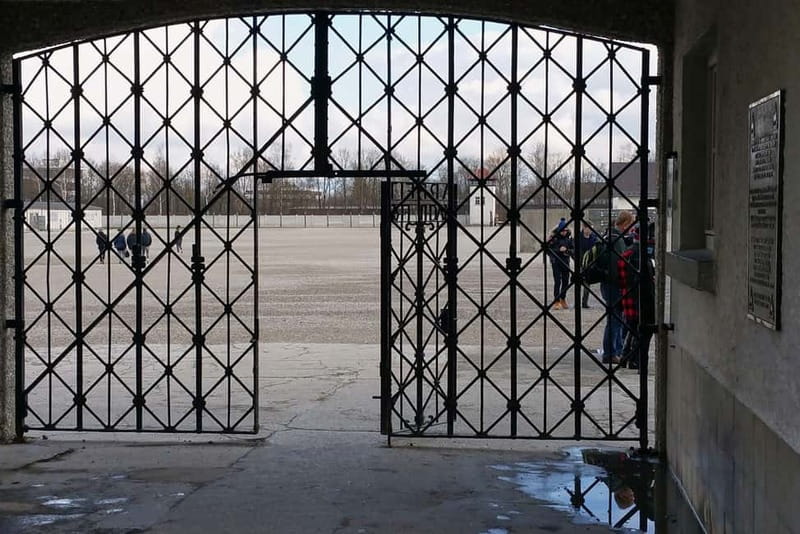
- Memorial-licensed guide escorting you through the grounds and keeping the tone respectful
- Munich to Dachau transport handled with train tickets arranged by the guide
- Route that mirrors what prisoners endured via train plus a short bus ride
- 3 hours on-site with a guided component and planned quiet time afterward
- Time in the museum exhibit for your own reading and reflection
- Small group size (up to 15) for better pacing and easier navigation
Why Dachau is worth the trip from Munich
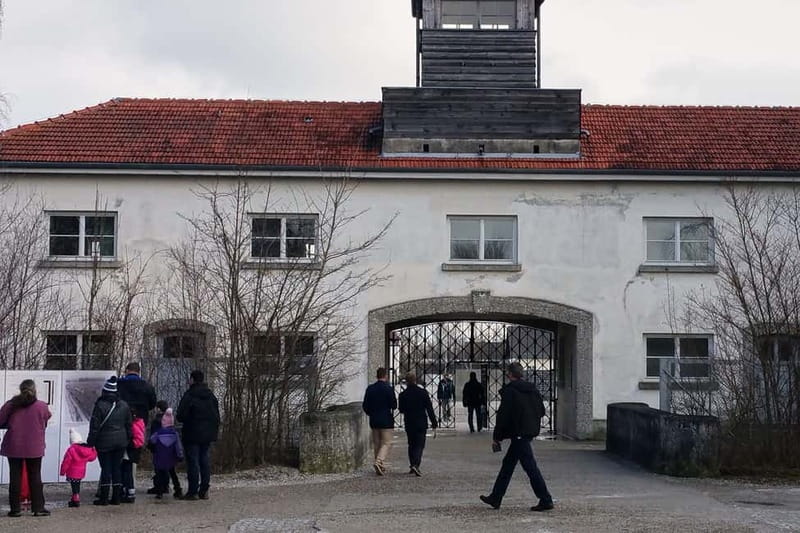
Dachau isn’t a place you rush. It’s a memorial site tied to real suffering, and the value of going with a small group is that you get structure. From Munich, you’re only a short distance away, but the day feels like it belongs to history, not sightseeing.
This tour centers on what happened when the Nazis opened the first state concentration camp at Dachau on March 22, 1933. Today it functions as a memorial and a place of education and self-reflection. That matters, because the best visits don’t just show you what’s there—they help you understand what the site represents.
I also appreciate the way the guidance aims for a balance: it focuses on the plight of victims and survivors, but it doesn’t ignore the perpetrators. The tour explains the SS role and examines complicity, which can be unsettling, but it’s part of telling the whole story without pretending it was simple or distant.
One more point: the schedule is built so you finish with time for your afternoon plans back in Munich, rather than leaving you drained and stranded. The return is around 2:00 PM, so you can still do something normal afterward—if you have the energy.
You can also read our reviews of more tours and experiences in Munich.

Meeting at Marienplatz and the train/bus ride north
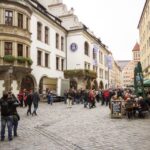
Your day starts in central Munich. You’ll meet at 09:00 AM outside the Tourist Information Center and underneath the famous Glockenspiel on Marienplatz. It’s easy to find because it’s right by the S-Bahn and U-Bahn station at Marienplatz. Your guide will be holding a white placard with Dachau Tour on it.
Then comes one of the practical wins of this experience: the guide takes care of the travel tickets and rides with you using the local train system. That means you’re not juggling schedules or figuring out which platform to use while also trying to mentally prepare for the day.
The journey itself is straightforward. You take a train for about 45 minutes, then continue with a short bus ride. That bus ride is designed to follow the route that prisoners would have taken, which gives the trip a somber context from the start. It’s not just transportation; it’s part of the experience of understanding.
From a comfort standpoint, that matters. You’re only doing moderate walking once you’re at the memorial site, and the guided transport keeps the group together. If you’ve ever visited a major site and spent the first hour just regrouping your bearings, you’ll appreciate how tightly this is run.
The memorial grounds tour: respectful, factual, and question-friendly
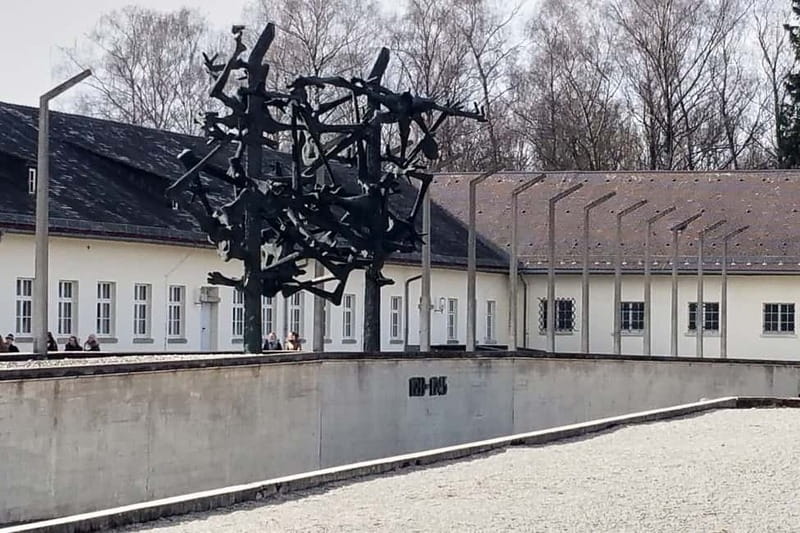
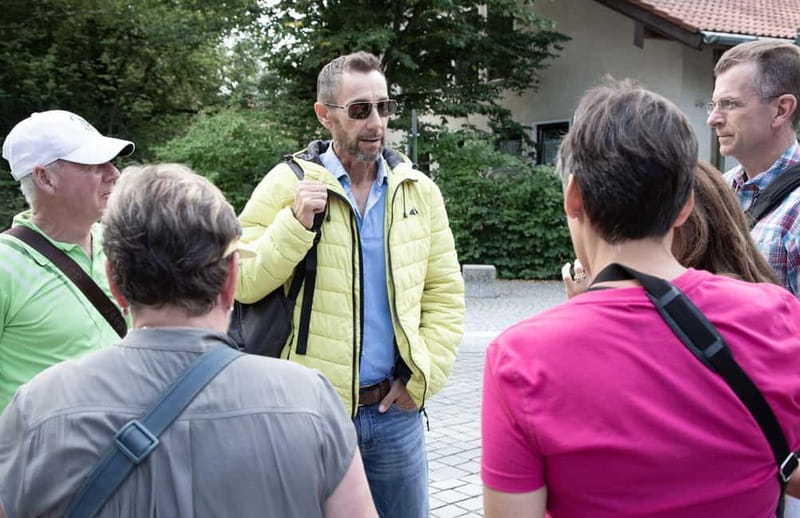
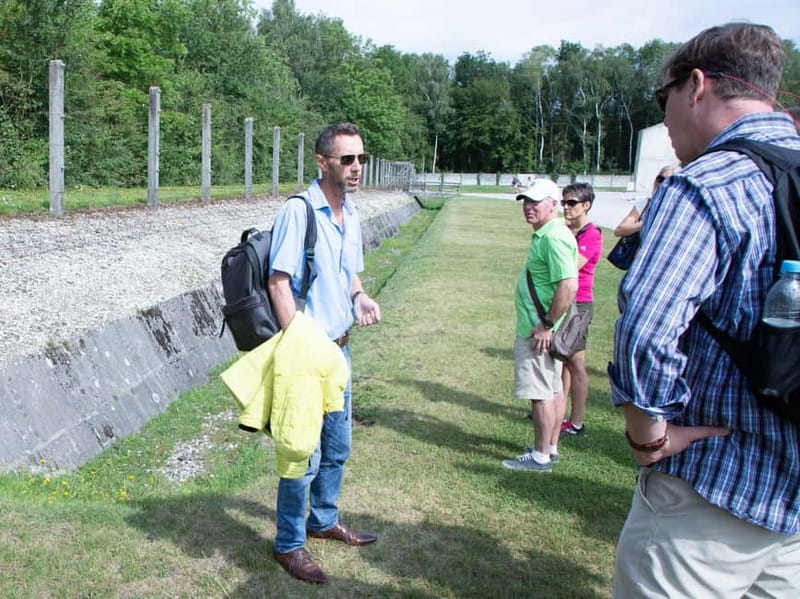
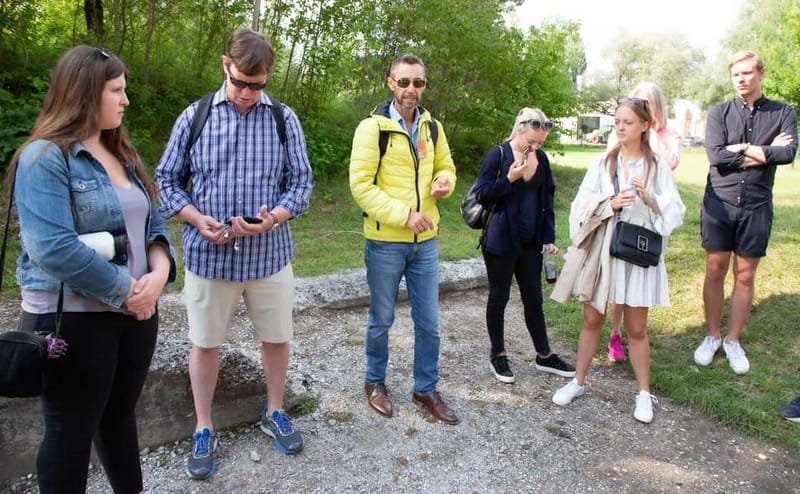
Once you arrive, you begin the core of the visit: about 3 hours of guided coverage of the Dachau Concentration Camp Memorial Site. Your guide escorts you the entire time and is keen to provide factual information in an objective manner. The tone is sensitive, but it’s not vague.
What I think works especially well here is the balance between structure and human scale. The tour focuses on individual prisoners and first-hand experiences—so it doesn’t stay abstract. At the same time, it doesn’t avoid the perpetrators. The SS is discussed, including the way those crimes could be carried out and how people reconciled themselves with what they were doing. That part can be heavy, but it’s important if you want the visit to mean something beyond emotion.
Another strong point: your guide actively encourages questions and discussion. This isn’t a lecture where you’re expected to stay silent. If something confuses you, or if you find yourself wondering why certain choices were made, you have a way to ask and get a direct answer.
You should also expect the pace to be deliberate. This is a site where the details matter, and the guide’s job is to keep you oriented while still giving you space to process what you’re seeing. If you prefer to read on your own, you’ll get that time later—so the guided portion is more about clarity and context.
Your private museum time: how to use it for reflection
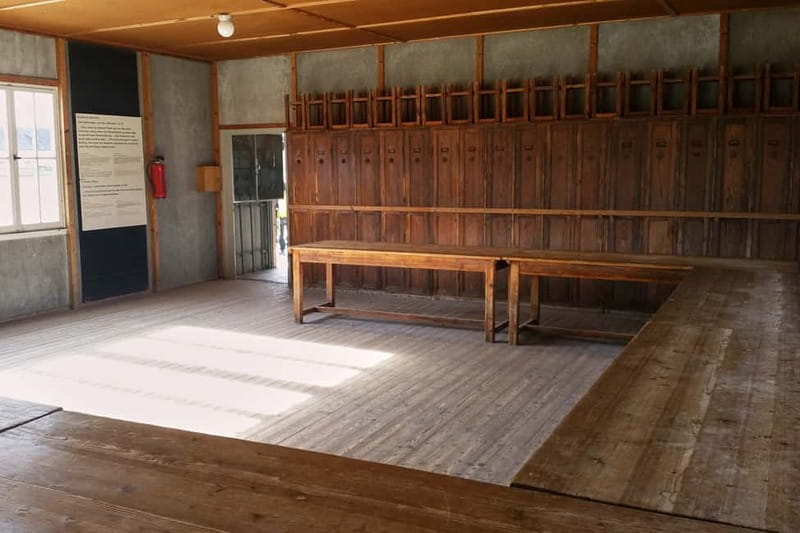
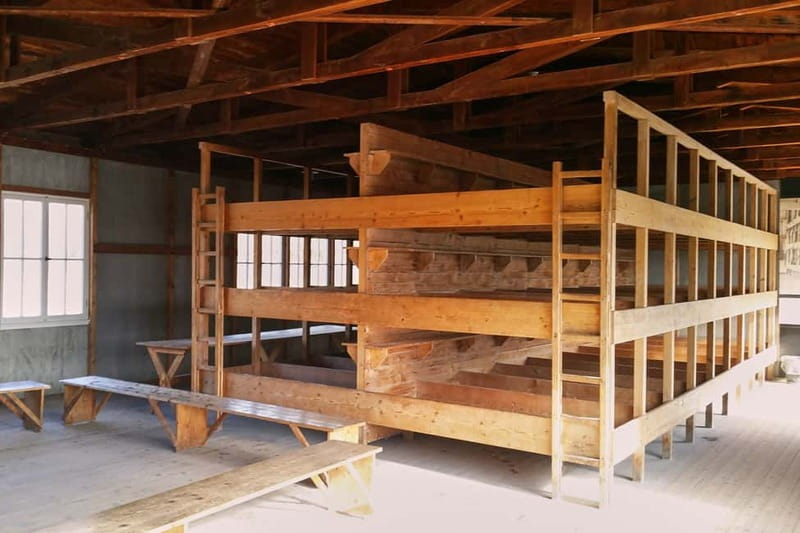
The tour doesn’t treat the museum as a quick add-on. Your guide allocates time for independent exploration of the museum exhibit, so you can slow down and take in what you need at your own pace.
That time is valuable because Dachau is the kind of place where you might miss something if you only get one run-through. The exhibit format supports your own reading and reflection. If you want to focus on a specific theme—dates, individual accounts, or how the system operated—you can do that without having to keep up with a group conversation.
I also like that the tour design includes both guided coverage and museum independence. The guide helps you understand what you’re looking at, and the museum time lets you absorb it without pressure. That’s a good mix if you want to leave with understanding rather than just photos.
Practical note: the day includes moderate walking around the grounds area, and the museum time is where you’ll probably want to sit down for short stretches. Bring the mindset that this is more like a study session with breaks than a normal sightseeing stop.
If site operations change due to COVID regulations, the tour may shift some information off-site and give more independent time at the memorial. So even if the details of how you experience the museum adjust, you should still come away with meaningful time to read and reflect.
Price and value: what $72 buys you in real terms
At $72 per person, this isn’t trying to be the cheapest way to get to Dachau. It’s priced like a serious guided experience, and the value is in what’s included.
You’re paying for:
- a memorial site accredited guide
- return transportation costs from Munich
- comprehensive site coverage with a set schedule that gets you there smoothly and keeps you on track
Here’s the honest way to think about it: you could take trains on your own and see the memorial. But it’s hard to replicate the benefit of a guide who can explain what you’re seeing in an objective, structured way—and then still make time for questions. It’s also hard to replicate the rhythm of arrival, escorted navigation, and planned museum time.
The small group size (limited to 15 participants) adds practical value too. In a large group, the dynamics often push everyone into hurry mode. With a smaller group, the guide can actually manage pacing and help people stay together during transport and on-site movement.
Also, the emotional weight of the day makes “logistics pain” a real issue. This tour removes that stress by having your tickets handled and your transport covered. That’s worth something.


Timing and logistics you can plan around (and a couple gotchas)
The whole experience lasts about 5 hours, and you’re back in Munich around 2:00 PM. That timing is useful because it gives you the afternoon for lighter activities, shopping, a meal, or just time to reset.
There are also some clear rules so you can pack smart:
- Smoking isn’t allowed.
- Luggage or large bags aren’t allowed, so travel light.
- The tour is English-language and led live by your guide.
- Children under 14 aren’t permitted on these tours.
The moderate walking (about 2 to 2.5 km) is manageable for most adults, but it’s not a sit-everywhere format. Wear comfortable shoes and expect a steady day.
One more consideration: the content is somber and disturbing by nature. Even with a respectful guide, you should go in ready for emotions. Don’t schedule something intense right after. Give yourself the option to decompress.
Finally, keep in mind that the memorial can get crowded. One reason the tour is structured is to help you navigate without losing time. When you arrive with a guide, you spend less time guessing and more time learning and reflecting.
Who this tour fits best
This is the kind of tour I recommend if you want:
- a structured, guided introduction that doesn’t leave you guessing
- a balanced approach that includes both victims/survivors and perpetrator complicity (SS)
- small-group pacing so you can ask questions and stay oriented
- planned quiet time in the museum exhibit for your own processing
It may not fit as well if you:
- need very flexible stop times or lots of long pauses beyond what’s scheduled
- can’t handle moderate walking around a memorial site
- are traveling with children under 14 (this tour does not permit them)
If you’re the type who likes to understand context before you look closely, this style works. If you prefer purely independent visits, you might feel the fixed schedule. The tradeoff is that the guide helps you make sense of what you’re seeing, and that can be the difference between a confusing visit and a meaningful one.
Should you book this Dachau small-group tour?
If you care about doing Dachau with care—meaning factual context, respectful pacing, and time to reflect—I’d book this. For $72, you get more than transport and entry. You get a memorial-licensed guide, structured coverage of the site, and museum time built into the day, all wrapped into a schedule that brings you back to Munich by early afternoon.
I would skip it only if you know you can’t handle heavy subject matter, or if walking and rules like no large bags will be a problem for you. Otherwise, this is a strong way to visit: organized, small-group friendly, and designed so you leave with understanding, not just impressions.
FAQ
What time does the tour start?
The meeting time is 9:00 AM at Marienplatz, outside the Tourist Information Center and underneath the Glockenspiel.
How long is the tour?
The tour lasts about 5 hours in total.
Where do I meet the guide?
Meet outside the Tourist Information Center on Marienplatz, under the Glockenspiel in central Munich. Your guide will have a white placard with Dachau Tour.
Is the tour in English?
Yes, it is a live English-language tour.
What’s included in the price?
The price includes a memorial site accredited guide and return transportation costs from Munich, along with comprehensive coverage of the memorial site.
Is food provided?
Food and beverages are not included, so it’s recommended to bring your own.
Are children allowed?
No. Children under 14 are not permitted on the tours.
Are there rules about luggage or smoking?
Yes. Smoking is not allowed, and luggage or large bags are not allowed.