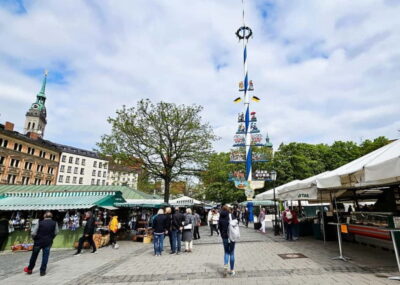
REVIEW · MUNICH
Hop-On Hop-Off Tour CitySightseeing Munich
Book on Viator →Operated by CitySightseeing Munich · Bookable on Viator
Munich moves fast. This bus loop helps you move with it, with 8-language audio and smart stop choices that cover both the Old City and Schwabing.
My two favorite parts are the hop on, hop off freedom and how easy it feels to get an overview quickly—especially if you’re landing, tired, or just trying to plan your next moves. One thing to keep in mind: on some days, routes can shift because of events or construction, so you’ll want to check what’s running before you walk across town.
In This Review
- Key highlights to know before you ride
- Munich in one loop: how the hop-on hop-off rhythm really works
- Price and value: is $28.28 a fair deal?
- Getting on board: where to redeem and where the buses pick up
- The Old City and Odeonsplatz to Marienplatz: the “wow” stretch
- Schwabing stops like Siegestor and Leopoldstraße: where Munich feels more local
- Museum time: Deutsches Museum and Stachus for train-and-walk sightseeing
- English Garden, Olympia Park, and Nymphenburg: the greener side of the plan
- How often the buses run: red, purple, and blue timing in real life
- Audio in English and other languages: clear, but watch for quirks
- When plans change: route modifications, construction, and crowding
- Tickets and phone hassles: QR codes and contacting the organizer
- Who this fits best in Munich
- Should you book the Hop-On Hop-Off CitySightseeing Munich?
- FAQ
- How long is the Hop-On Hop-Off tour?
- How much does the tour cost?
- What language is the audio commentary available in?
- Where do I redeem my ticket?
- Where do the buses start from?
- Are service animals allowed?
- Is free cancellation available?
Key highlights to know before you ride
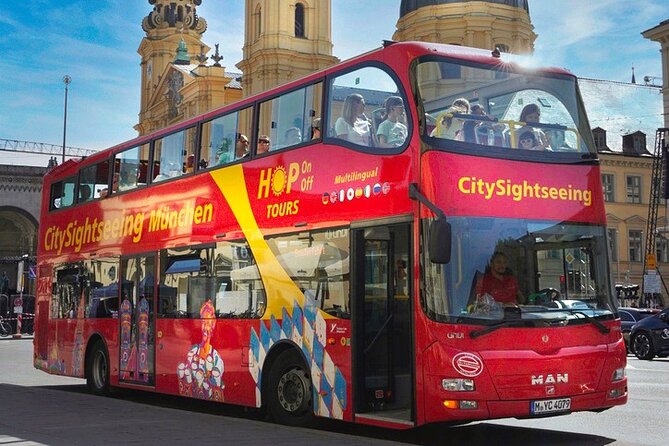
- Quick orientation: you can sample a lot of Munich fast, then go back later on your own terms
- Audio in multiple languages: recorded commentary is available in 8 languages, including English
- Great stop mix: Old City landmarks plus Schwabing-area stops like Siegestor and Leopoldstraße
- Frequent red departures: one route runs about every 20 minutes, with other routes less often
- Worth doing early: it helps you decide what you’ll actually spend time on next
- Some day-of surprises: events and modified routes can affect which streets you see
Munich in one loop: how the hop-on hop-off rhythm really works
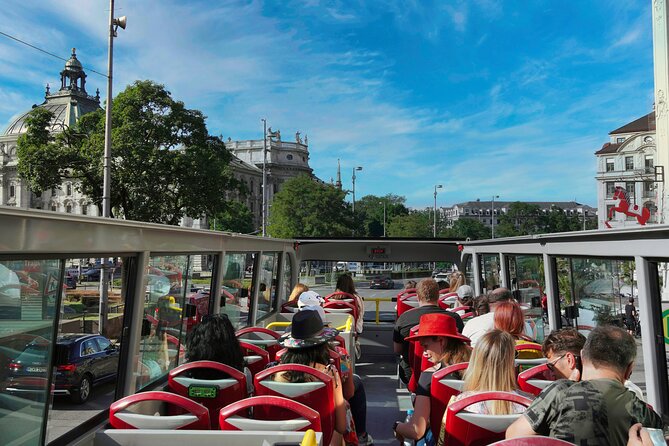
The big idea is simple: you pick the sights that match your mood, then you catch the next bus when you’re ready. The tour runs for about 1 hour per route, so it’s not meant to replace museum time or long walks. Think of it as your moving floor plan.
What I like about this setup is how it prevents the most common sightseeing problem in big cities: you over-commit early, then you feel trapped. Here, you can get your bearings around Hauptbahnhof, then decide if you want more time near Marienplatz, a museum stop, or a greener patch like the English Garden area.
Also, you’re not stuck with a single speaking voice. The audio is recorded and designed for multiple languages, so you can follow along at your own pace while traffic and crowds come and go. On a cloudy day, that matters more than you’d think.
You can also read our reviews of more tours and experiences in Munich.



Price and value: is $28.28 a fair deal?
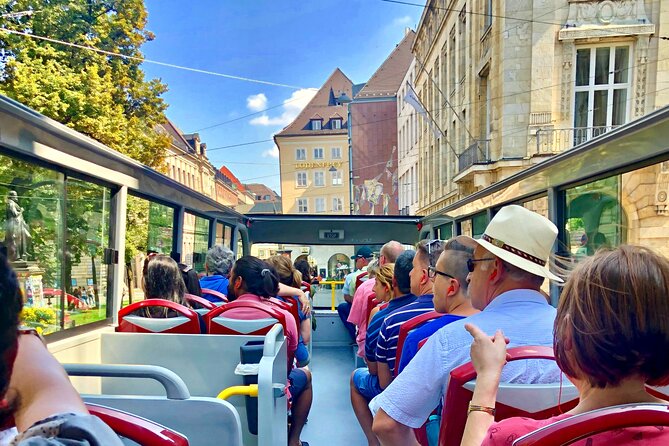
At $28.28 per person, this is priced like a practical “do something useful right now” ticket. You’re paying for three things: transport without the stress, priority access to good viewpoints, and commentary that helps you understand what you’re seeing.
Is it a bargain? It can be—if you use it the way it’s intended. If you treat it like a sightseeing sampler, hop off twice or three times, and then plan the rest of your trip around what you liked, the cost feels reasonable. One common best use case is doing it on your first day to figure out what you want to revisit.
If you hop off a lot and then get stuck waiting for the bus that matches your next stop, you might feel the price more sharply. That’s especially true if you hit a busy period and the bus you want is full. My advice: give yourself padding. Build in a few extra minutes so you’re not watching the street like it owes you money.
Getting on board: where to redeem and where the buses pick up
This tour has a clear ticket redemption point: Luisenstraße 4, 80335 Munich. From there, you connect to the Welcome Center for Red Bus Sightseeing near Hauptbahnhof (the main hub listed as the first stop on the route).
That matters because Munich’s public transit is great—but it can also make you feel like you’re walking in circles if you’re not sure where the bus stop starts. The good news from real-world feedback is that the first boarding area near the main station is usually easy to find.
Practical tip: once you know which color route you want, confirm the stop name you’re aiming for. Several issues in the feedback circle back to people arriving at a pickup spot for the wrong route, or realizing too late that a route had a modified plan.
The Old City and Odeonsplatz to Marienplatz: the “wow” stretch
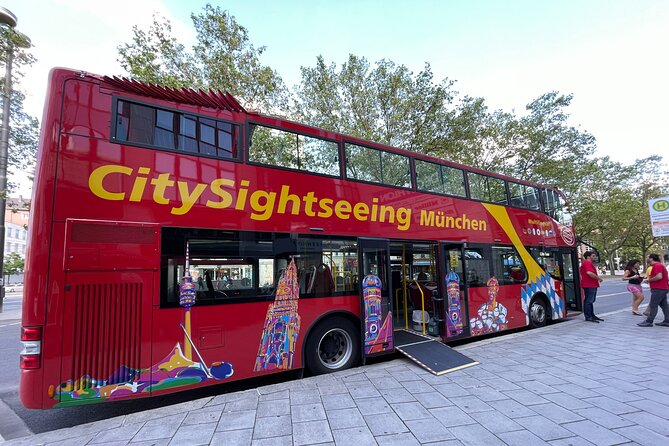
The Old City part of Munich is where this bus helps you most, because walking everywhere can turn into a marathon. You’ve got stops such as Odeonsplatz and Marienplatz, plus a “caught between streets” kind of area near the Oper listing.
If you hop off near Marienplatz, you’re in the heart of the city’s classic photo loop—use it to get orientation. If you only do one “big center” stop, I’d place my bet here.
Near Odeonsplatz, you’re also in a zone where it’s easier to make sense of the city’s layout. The bus gets you close, but it’s on your feet where you really understand the spacing between key buildings and squares. The bus doesn’t replace that, and it doesn’t try to. It just gets you there without map anxiety.
One possible drawback: a few people found the building descriptions not always clear at the moment they were driving by. That’s a normal issue with bus audio—there’s less time than you expect. If you want to read fast, keep your phone handy for a quick look-up after the bus passes.
Schwabing stops like Siegestor and Leopoldstraße: where Munich feels more local
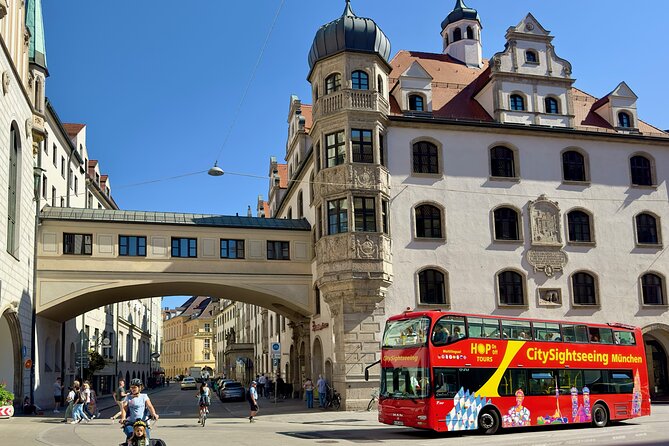
One of the best parts of the route plan is that it doesn’t only stay in the tourist core. You get into the Schwabing orbit through stops including Siegestor and Leopoldstraße.
Why this matters: Schwabing is where Munich feels less like a museum set and more like a daily neighborhood. It’s a good place to hop off if you want a break from constant landmark hunting. You can walk at an easier pace, shop, or just reset with a coffee, then swing back to the bus when you’re ready.
Also, Schwabing-area stops connect nicely with a longer city strategy. If you do Old City first, then go Schwabing, you get contrast: formal squares and major monuments followed by a more everyday feel.



Museum time: Deutsches Museum and Stachus for train-and-walk sightseeing
Two stops stand out for turning sightseeing into an actual plan: Deutsches Museum and Stachus (including the Stachus Passagen area listed).
The Deutsches Museum stop is ideal if you want a guaranteed indoor option, especially if weather turns. Even if you don’t go inside, the museum area is a solid “reset point” where you can regroup and decide what you’ll do next.
Stachus is useful in a different way. It’s a transit-and-shopping knot that makes it easier to shift between routes and walk out for shorter targets. If you’re trying to cover more in fewer hours, Stachus helps keep your legs from getting bored.
One caution from feedback: when you’re hopping on to continue after getting off, sometimes there’s not much room on the bus you need. That’s not unique to Munich, but it’s real. If you arrive to board and it’s crowded, wait for the next bus rather than forcing it and losing time.
English Garden, Olympia Park, and Nymphenburg: the greener side of the plan
This tour also covers Munich’s “outdoors and big space” side. Stops listed across routes include Englischer Garten (English Garden area) and Olympiapark München (Olympia area), plus a Nymphenburg stop.
This is a smart mix because it gives you choices that aren’t all about monuments. If you want a breather after hours of city center walking, English Garden is a natural target. If your trip includes a classic stadium/park stop, Olympia Park is one of the most sensible ways to reach it without coordinating multiple transit legs.
And Nymphenburg offers a different mood—more open, more spread out, more “Munich at a slower speed.”
One practical thing: routes can be affected by events or road closures. If something big is happening, you might find that the bus’s path changes or that streets you expected to ride past aren’t on the day’s plan. Build a little flexibility so you’re not disappointed when the bus takes a detour.
How often the buses run: red, purple, and blue timing in real life
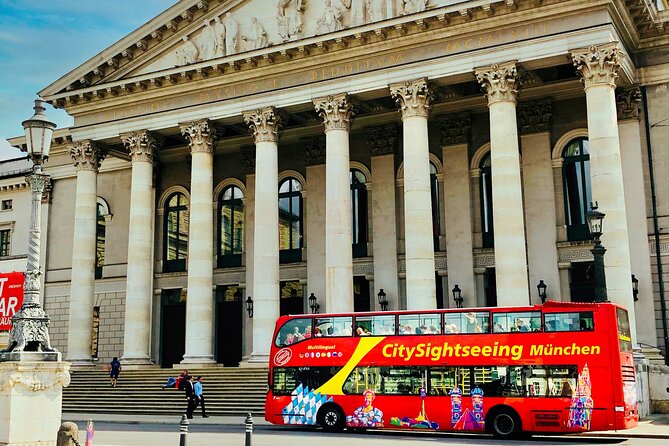
The route frequency can make or break the experience, so it’s worth understanding how the system behaves. One practical breakdown from real usage: the red line comes about every 20 minutes, purple about 30 minutes, and blue about 1 hour.
That means you should plan like this:
- Use red when you want flexibility and quick re-boarding
- Use purple if you’re comfortable with slightly longer gaps
- Use blue if you’ve got time and your schedule is forgiving
Also note that a few people reported minor lateness, usually just a handful of minutes. That’s not a disaster. It’s a reminder to check the next stop timing instead of treating it like a train timetable.
Audio in English and other languages: clear, but watch for quirks
Audio is one of the strongest selling points here: you get recorded commentary in 8 languages, and English is available.
The good side: people described the sound as clear and the overall info as easy to follow. If you listen to just the basics—what you’re looking at and why it’s there—you’ll get value even if you only hop off once.
The friction side: one issue popped up more than once in different ways. A few people said there’s more music than information at times, and another reported that despite Norwegian being marketed, it wasn’t selectable, with Swedish being the closest option. So if language availability matters a lot for you, it’s smart to test it when you board rather than assuming every listing detail will match your device perfectly.
Practical move: keep volume up early. If you wait until you’re disappointed, you’ll miss the first explanations and then spend the rest of the ride distracted.
When plans change: route modifications, construction, and crowding
This is where I get picky—because it affects your day.
Some days bring modified routes because of events. The most painful version is when a route is changed but your expectations come from a standard plan. If you’re counting on the blue route to hit a specific street sequence, confirm the day-of status before you march to a stop.
Construction can also change what you see. One report noted that construction limited access to parts of the city center, which reduced how much central sightseeing felt available. In that scenario, the bus still gets you around, but it may not deliver the exact “greatest hits” you hoped for.
Finally, crowding happens. If buses fill up on re-boarding, you may have to wait for the next one. The fix is simple: when you hop off, don’t leave 20 seconds for the bus to arrive like it’s a video game. Step back to a safe spot at the stop and give it time.
Tickets and phone hassles: QR codes and contacting the organizer
Most parts of the experience are straightforward. But ticket tech can occasionally turn into a time sink.
A few reports mentioned QR code problems, including a situation where a date change didn’t trigger a new QR code and the issue took time to resolve. Others said their online ticket didn’t work at the bus, requiring an additional purchase, and there were also cases involving requests for help or refund that didn’t get immediate responses.
My advice if you’re booking through a third-party channel:
- Screenshot your confirmation details
- Keep an offline copy of your ticket or booking confirmation
- If your date changed, double-check that your QR code is still valid before you head to the stop
If something goes wrong, you’ll move faster if you can provide booking details quickly rather than searching for them while the bus pulls away.
Who this fits best in Munich
This hop-on hop-off works best for people who want structure without commitment. It’s great if:
- You’re doing Munich for the first time and need quick orientation
- You want to reduce walking while still seeing key sights
- You like choosing your own pace—especially for families or people managing limited time
It also suits rainy days. One big theme in feedback was using it to keep sight-seeing going when weather wasn’t cooperating.
If you’re the type who loves to plan route details down to the minute, you might find this less satisfying because routes don’t always match paper expectations. The bus is more flexible than precise. Use it to set direction, then refine on foot.
Should you book the Hop-On Hop-Off CitySightseeing Munich?
I think it’s a good booking if you want a smooth first pass at Munich. The combination of frequent departures on one route, major central stops like Marienplatz, and useful areas for breaks like Schwabing and the English Garden makes it a practical value play.
Skip it or rethink your plan if:
- You only have a very tight schedule and can’t handle waiting if a bus is full
- You need a route that stays absolutely identical day to day (events and construction can change things)
- You’re worried about ticket tech glitches and don’t want a backup plan
If you’re traveling smart, not stressed, this is one of those “pay for convenience” choices that can actually make your Munich day better.
FAQ
How long is the Hop-On Hop-Off tour?
The duration is listed as about 1 hour (approx.) per route.
How much does the tour cost?
The price is $28.28 per person.
What language is the audio commentary available in?
The tour includes audio commentary in 8 languages, and English is offered.
Where do I redeem my ticket?
The ticket redemption point is Luisenstraße 4, 80335 München, Germany.
Where do the buses start from?
One listed starting stop is the Welcome Center for Red Bus Sightseeing at Hauptbahnhof.
Are service animals allowed?
Yes, service animals are allowed.
Is free cancellation available?
Yes. Free cancellation is available up to 24 hours in advance for a full refund.