REVIEW · MUNICH
Munich: Middle Ages Tour with Night Watchman
Book on GetYourGuide →Operated by schwarzgold.info - Wolfgang Brehm · Bookable on GetYourGuide
Medieval Munich can feel like stone and dates, but this walk makes it human and even a little theatrical with night watchman Wolfram at the front. I like how the lantern, halberd, and horn are used to turn landmarks into stories, not just photos. You’ll also get stops around Marienplatz, church interiors/adjacent remains, markets, and old civic buildings—then the tour pushes into darker topics like executions and prison punishments.
The big consideration: the show includes gruesome themes (executions, beheadings, torture methods). If you’re sensitive to that, you’ll want to think twice—especially since it’s not suitable for kids under 12.
In This Review
- Key things to love on this Munich night watchman walk
- Meeting Wolfram at Marienplatz with lantern, halberd, and horn
- St. Peter’s Church area: incense and the smell of old stone
- Viktualienmarkt and Old Town Hall: where daily life met power
- Alter Hof and Marienhof: civic space as a court-like stage
- Frauenkirche stop: a medieval story bridge, not a detour
- Walking the 12th-century city wall: why boundaries mattered
- Talburg Gate: the closing of a gate and a halberd moment
- Metzgerzeile: punishments for bad bakers
- Medieval executions and interrogations: learning the why, not just the gore
- Medieval prisons and torture techniques: the subject is intense
- Castle and Schwabinger Gate: more edges of the medieval city
- Price and value: $21 for 1.5 hours of story-driven walking
- Practical tips before you go (so the experience lands right)
- Who this Munich night watchman tour suits best
- Should you book the Munich Middle Ages night watchman tour?
- FAQ
- How long is the Munich Middle Ages tour with the night watchman?
- Where is the meeting point?
- What is the language of the tour guide?
- Is the tour wheelchair accessible?
- Does the tour include food and drinks?
- Is the tour suitable for children?
- Does the tour run in bad weather?
- Are photos allowed?
- Can I record video?
- Who is the night watchman guide?
Key things to love on this Munich night watchman walk
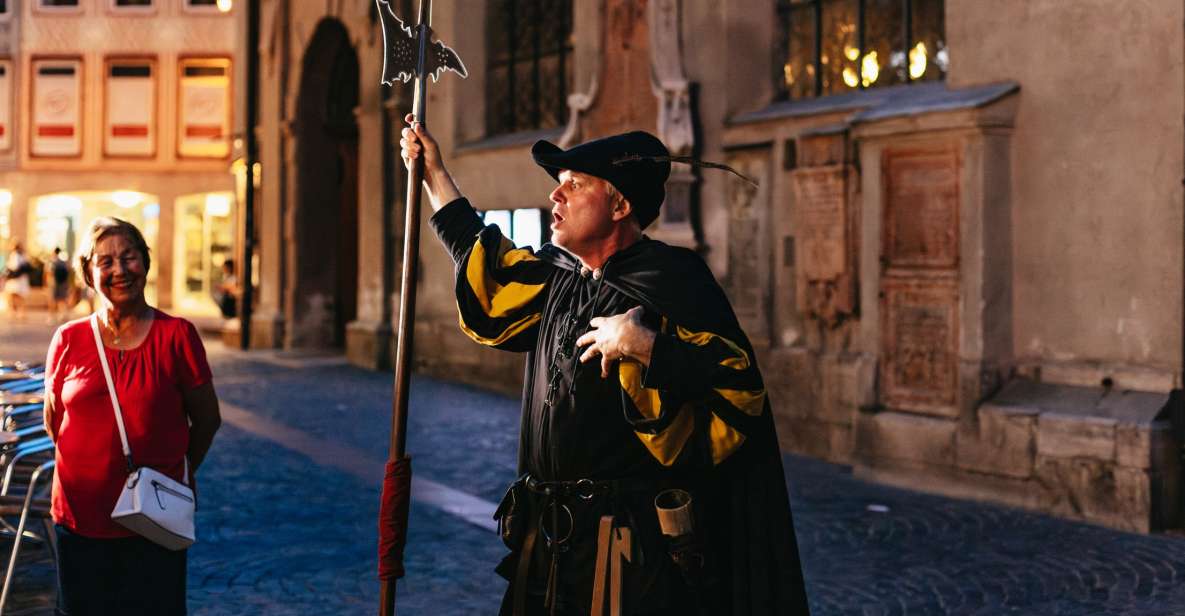
- Wolfram’s role-play style: lantern-and-horn storytelling that stays grounded in real places
- Medieval Munich landmarks in walking order: Marienplatz area, St. Peter’s, Viktualienmarkt, old civic spots, and more
- Gates and defenses as a living timeline: you’ll hear how the city wall and gates worked
- Grisly punishments explained: executions, bad-baker punishments at Metzgerzeile, and prison torture techniques
- Quick, efficient 1.5 hours: enough time to get the vibe without eating your whole evening
- Short stops, not lectures: the 10-minute segments keep things moving
Meeting Wolfram at Marienplatz with lantern, halberd, and horn
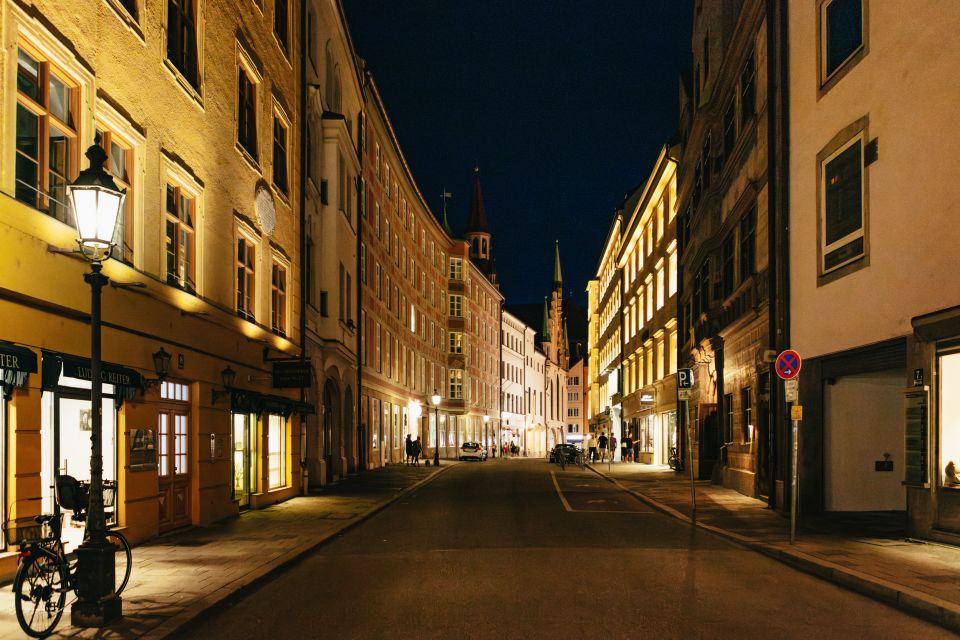
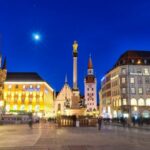
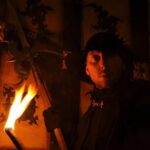
You start in the heart of Munich: in front of Rathaus Apotheke on Marienplatz. Your guide will be wearing typical medieval clothing and arrives with the props that set the tone right away—a lantern, halberd, and horn. That matters more than you might think. These items help you picture what nighttime life and city security felt like when the streets weren’t lit the way they are now.
The meeting directions are straightforward: look for the shop and meet the guide about 25 meters left of number 8. If you’re plugging it into Google Maps, you can use the coordinates 48.13737, 11.57588.
One practical tip: show up a few minutes early and keep your phone away until you’re ready. Not because you’re forced to, but because the tour’s first moments are about getting into the mood and hearing the setup before you walk.
You can also read our reviews of more evening experiences in Munich

St. Peter’s Church area: incense and the smell of old stone
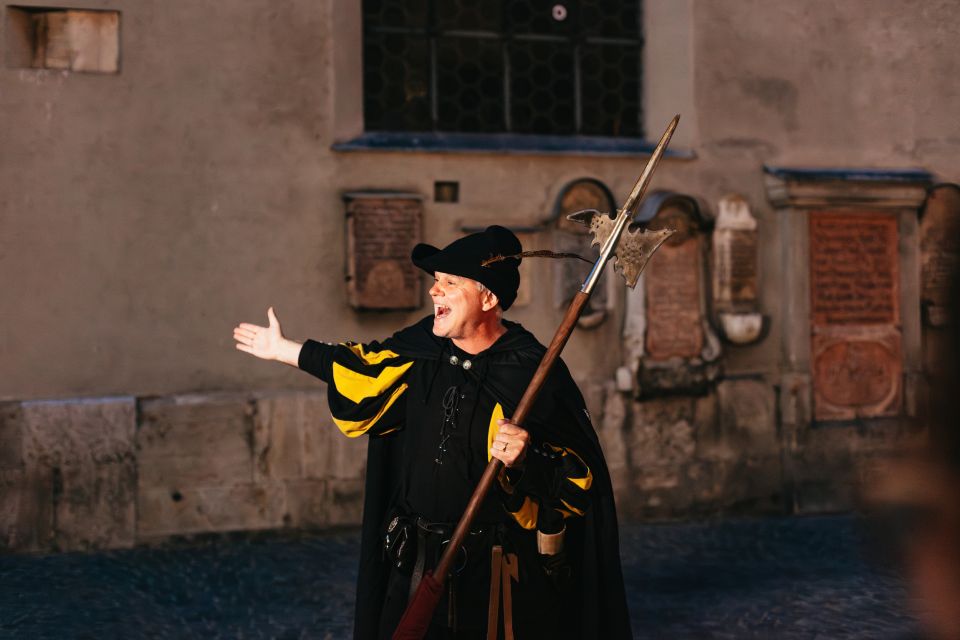
One of the most memorable parts is St. Peter’s Church. The tour gives you a short, guided look with a second church stop as well, and the key sensory detail is that you’ll experience incense in the ancient remains of the church. Even if you don’t care about religious architecture, this is a smart way to get beyond “pretty building” sightseeing.
Here’s why it works: incense and old stone instantly make the Middle Ages less abstract. You’re not just seeing walls—you’re imagining how ceremonies, fear, and everyday life blended together in the same city.
Also, it’s a good “reset” stop after the city-square start. The group moves through a mix of civic and darker themes, and St. Peter’s gives you a moment where the guide can slow down just enough for meaning to land.
Viktualienmarkt and Old Town Hall: where daily life met power
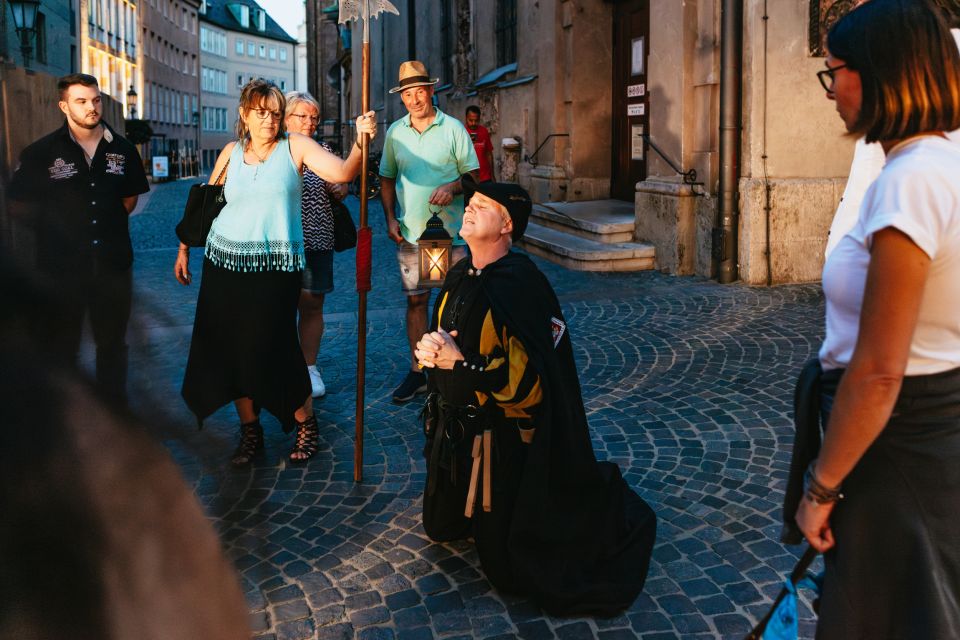
From the church area, the route heads toward the Viktualienmarkt. This is where Munich’s food-market energy meets the weight of old authority. The tour doesn’t ask you to ignore the present; instead, it uses the market as a frame for medieval daily life—people gathering, trade happening, and power keeping an eye on order.
Right after, you’ll get a stop at the Old Town Hall, followed by a sequence of classic old-town areas (including Alter Hof and Marienhof). These locations are important because medieval power wasn’t hiding. It sat in public spaces. When your guide points out the details here, the story connects with everything else you’ll hear later about punishment and city control.
If you like tours that feel like walking through a timeline, you’ll appreciate this portion. The stops are short and focused, so you’re not stuck in one place pretending to read a plaque. You’re moving, listening, and seeing.
Alter Hof and Marienhof: civic space as a court-like stage
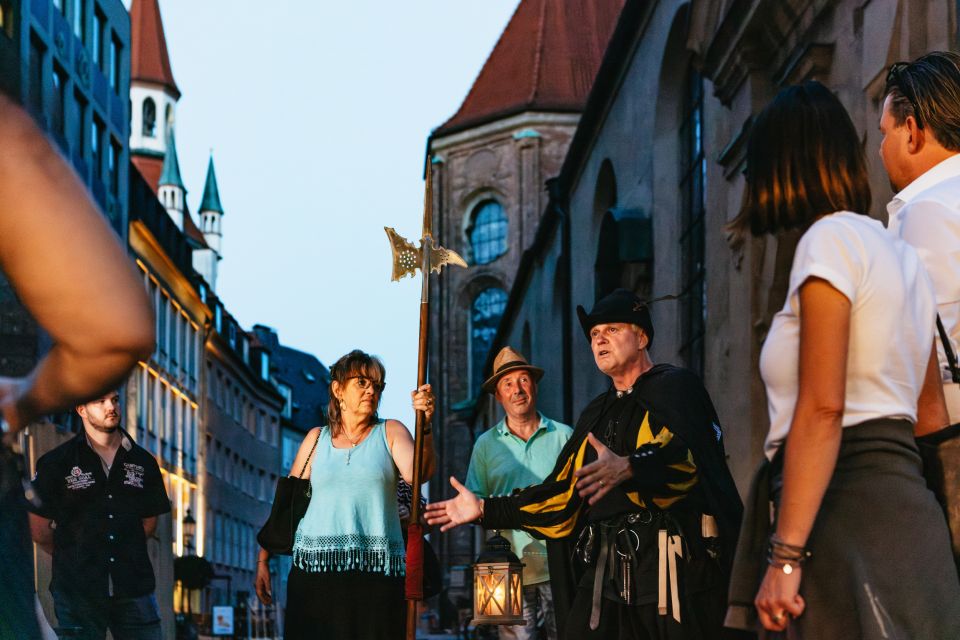
Alter Hof and Marienhof are the kind of Munich spots where the buildings look “official” even today. In this tour, they come across as stage sets for medieval life—where rules mattered, and where the city’s leadership could be seen.
This part of the tour is valuable even if you’re not a medieval-architecture obsessive. It helps you understand that punishment wasn’t random. It was part of governance, part of social signaling. When your guide connects these spaces to what people could face—detentions, trials, and public discipline—you start reading the city differently. You stop seeing only sights and start noticing systems.
Frauenkirche stop: a medieval story bridge, not a detour
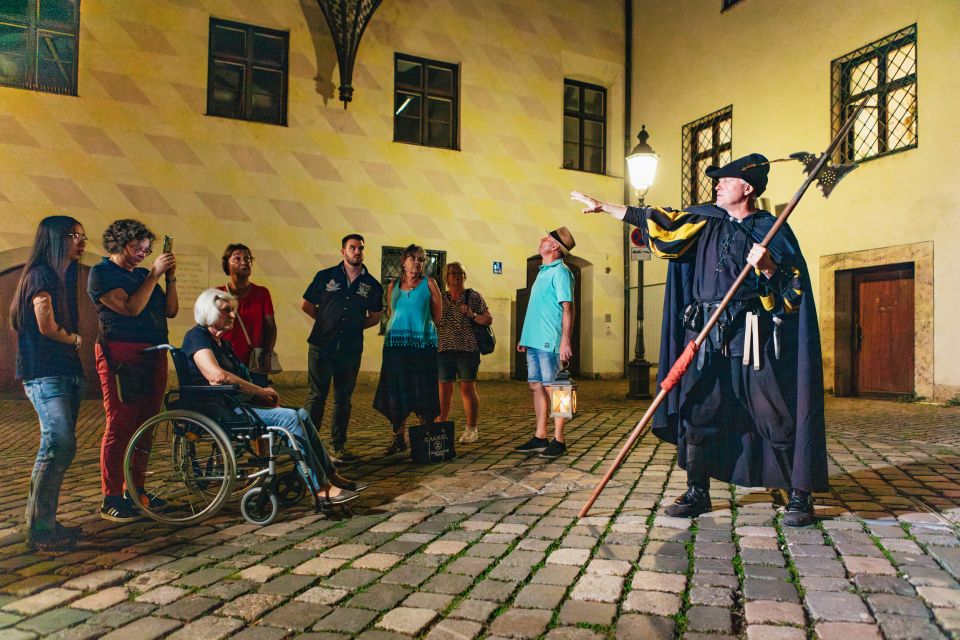
You also get a brief, guided stop at Munich Frauenkirche. The key isn’t that you’re spending a long time inside a landmark. It’s how the guide uses the location to bridge the Middle Ages story to what’s still standing in front of you.
This is where you benefit most if you’re willing to let the tour do what it’s designed to do: link modern Munich to medieval life instead of treating each sight as separate. You’ll come away with a clearer mental map of how the city grew and how old structures still anchor the feel of Munich.




Walking the 12th-century city wall: why boundaries mattered
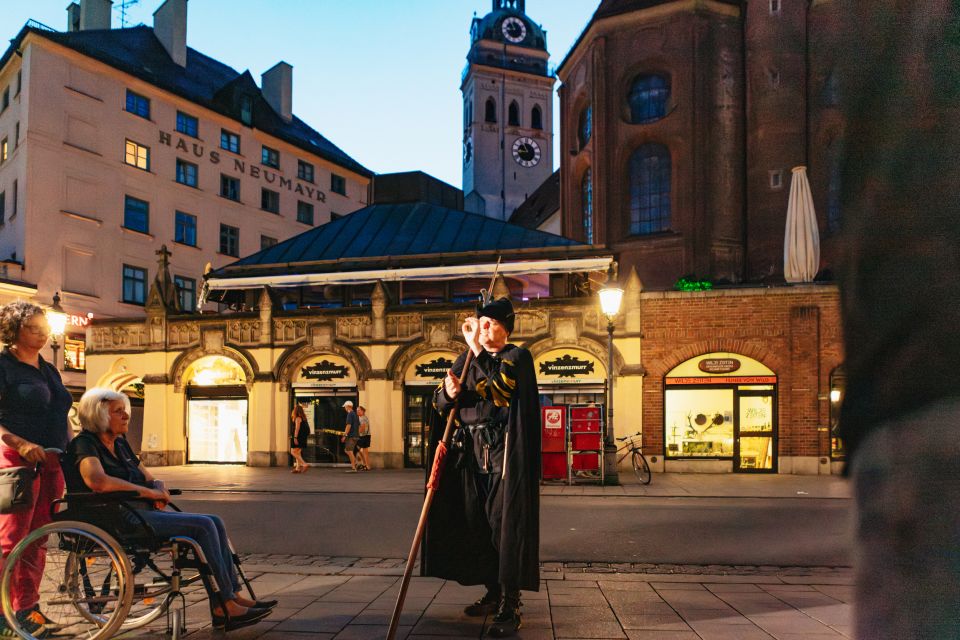
After the central stops, the tour shifts into “defense and limits.” You’ll walk with your group to Munich’s 12th-century city wall, and this is where the story gets more physical. It’s one thing to read about boundaries in a book. It’s another to stand along a wall line and realize how people had to live knowing where the city ended.
The guide uses this walk to set up why punishment and control made sense in that setting. In a city you could defend—and a neighborhood you could close—authority had leverage. This section sets the stage for later scenes like gate closures and the way streets were secured.
If you like visual learning, you’ll enjoy this. Even with a short duration overall, the wall segment makes the medieval concept click.
Talburg Gate: the closing of a gate and a halberd moment
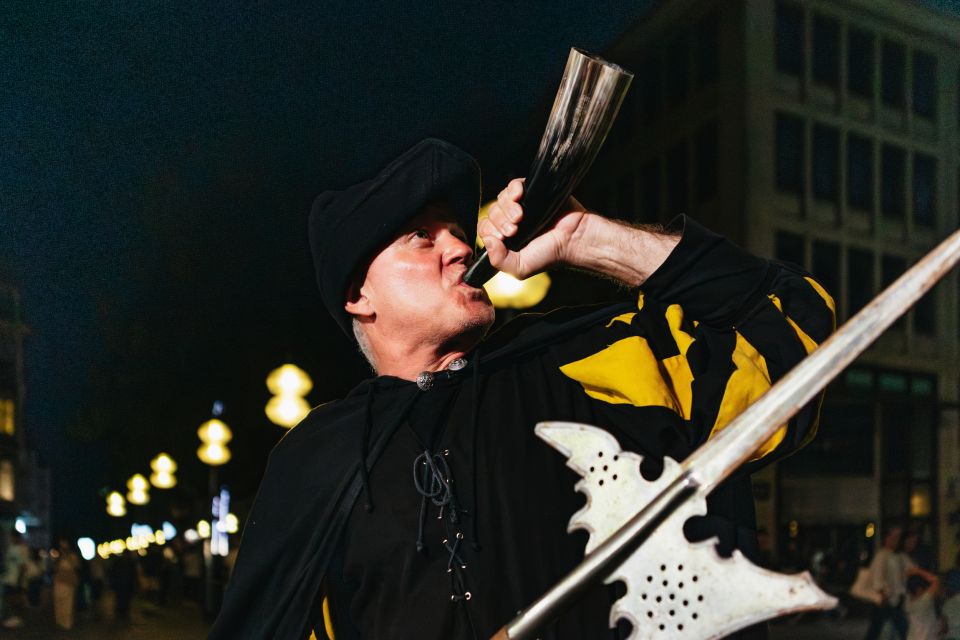
One of the most dramatic highlights is the Talburg Gate scene. You’ll witness the closing of the gate, and you’ll also see a fight with a halberd. This is where the night watchman concept turns from explanation into performance.
Why it’s worth your time: gate closures weren’t just dramatic theater. They were a daily reality tied to safety, entry control, and nighttime order. When the guide reenacts it, you grasp how quickly access could change, and how power worked at street level.
Also, the halberd moment gives you a memorable “anchor” for the rest of the dark material. After you’ve seen the weapon and the role of a watchman, the tour’s stories about punishments feel less like generic horror and more like a system of enforcement.
Metzgerzeile: punishments for bad bakers
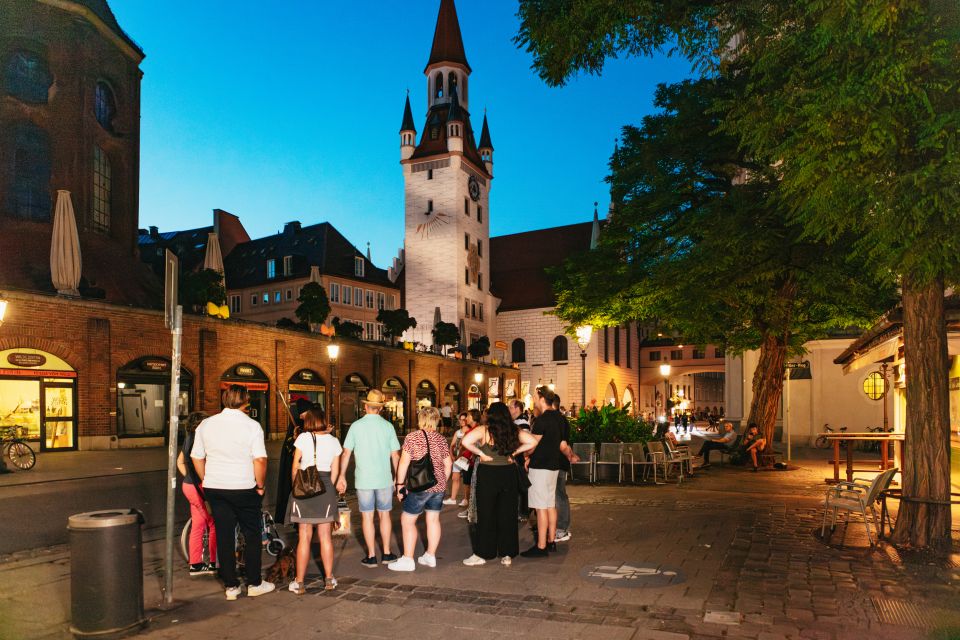
Now we get specific and very medieval. At Metzgerzeile, you’ll learn about punishments for bad bakers. This is the kind of detail that makes history feel real because it’s not about big battles. It’s about daily trust—food safety and the reputation of trades.
What I like here is the balance. The tour isn’t only chasing shock value. It includes the practical reasons a city cared so much about rule-following. If people got cheated or sick, the social impact was immediate. Your guide’s story helps you see the logic behind public discipline.
If you’re the type who enjoys hearing how “small” occupations were regulated, this stop delivers more than you’d expect from a short tour.
Medieval executions and interrogations: learning the why, not just the gore
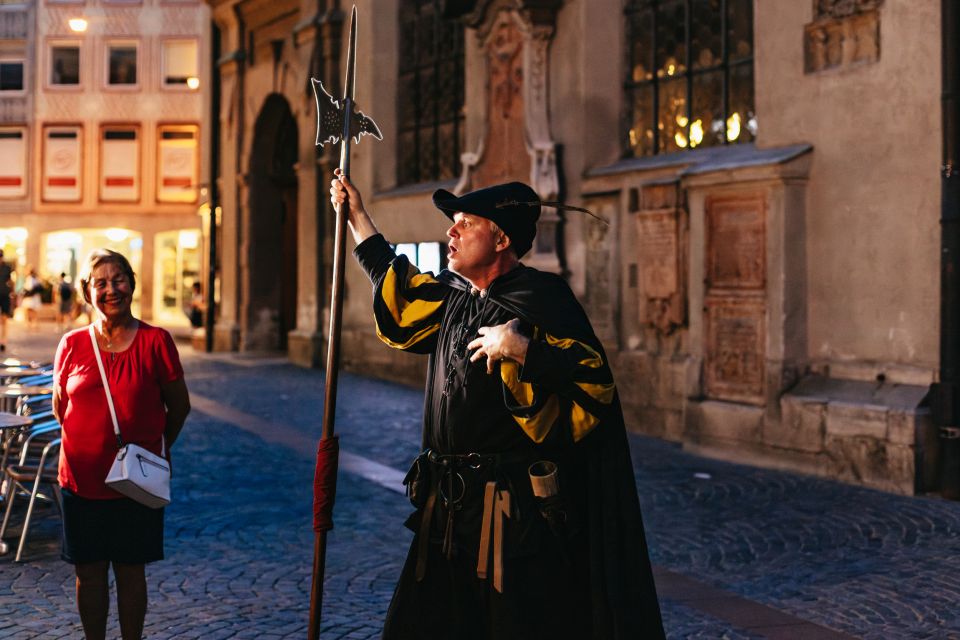
The tour leans into the darker chapters—executions and beheadings, plus stories about interrogations and the justice system. You’ll also encounter references to ancient artifacts, which helps shift things from pure scare-story to a more grounded look at the past.
Here’s the practical mindset I’d suggest: treat the gruesome parts as context for how medieval societies managed fear, order, and behavior. The guide’s job isn’t just to describe what happened. It’s to explain how and why a city used punishment as a tool.
Still, I’ll be direct: if you don’t handle topics like torture methods and prison punishments well, this tour may feel too heavy. It’s not labeled as light entertainment, and the night watchman approach makes the theme land harder.
Medieval prisons and torture techniques: the subject is intense
One of the tour’s major promises is learning about terrifying torture techniques used in medieval prisons. That detail tells you what the emotional tone is. The guide explains what those methods were meant to achieve—information, control, compliance—but it stays firmly in the realm of serious, unpleasant history.
So plan accordingly:
- If you’re going with friends, ask up front if anyone is uncomfortable with this topic.
- Dress warm and wear good shoes anyway. The tour is rain or shine, and you’ll be walking while the story stays intense.
This is exactly the kind of tour that can be educational and unsettling at the same time.
Castle and Schwabinger Gate: more edges of the medieval city
As the tour continues, you’ll also explore the city castle area and the Schwabinger Gate. These places round out the picture of Munich as a fortified medieval city rather than a set of isolated landmarks.
The value here is perspective. After hearing about punishments, interrogations, and prison methods, it’s helpful to see the physical layout—where authority was centered, where people entered, and how gates and fortifications shaped everyday movement.
If you like walking tours that give you both “story” and “map sense,” this portion helps. You leave with more than memories—you leave with orientation.
Price and value: $21 for 1.5 hours of story-driven walking
At $21 per person for about 1.5 hours, this tour is priced for people who want more than a quick photo stop but aren’t trying to spend an entire evening. In Munich, that’s a fair sweet spot: short enough to fit into a busy trip, but long enough for a guide-led narrative that actually connects the dots.
What you’re paying for:
- A costumed guide experience with Wolfram’s night watchman approach
- Guided stops around multiple central sites
- A walk that includes city defenses like the 12th-century wall and city gates
- Thematic content that focuses specifically on medieval justice and punishment
The main “value test” is whether you want this subject matter. If you’re interested in how medieval Munich worked socially—how authorities enforced rules—this is good value. If you want gentle, scenic sightseeing with minimal dark content, you’ll likely find it too intense.
Practical tips before you go (so the experience lands right)
This tour runs rain or shine, and it’s a walking experience. You’ll be doing the story-time walk through older streets and landmark areas, so plan like you’re out for a brisk evening stroll.
Also note:
- Flash photography is not allowed
- Video recording is not allowed
- The guide is German
- It’s not suitable for children under 12
- Wheelchair accessible (so you can consider it if that’s important for you)
- Private group available if you want a quieter or more tailored experience
If you don’t speak German: you might still enjoy the atmosphere and visuals, but the factual storytelling will be limited. If you do speak German (or at least follow along), this tour becomes a lot more rewarding.
Who this Munich night watchman tour suits best
This tour fits you if:
- You enjoy story-driven walking tours more than museum time
- You want the Middle Ages to feel like lived reality, not a lecture
- You’re curious about how cities enforced rules, not just how kings fought
- You don’t mind uncomfortable topics and want the explanations behind them
It’s not a great fit if:
- You want a family-friendly evening out (it’s not for kids under 12)
- You’re easily disturbed by discussions of torture and executions
- You need English-language guiding (the tour is German)
Should you book the Munich Middle Ages night watchman tour?
If you’re looking for a short, high-impact way to understand medieval Munich—especially its justice system, city defenses, and public enforcement—this is an easy yes. The combination of Wolfram’s performance style and the mix of central landmarks with wall and gate moments gives you a strong “one evening, many connected scenes” effect.
But if the idea of interrogations, beheadings, and prison torture techniques makes you uneasy, skip it or choose a lighter theme tour instead. This one aims straight at the darker mechanics of the Middle Ages, and it does it with props and pacing that make the topic land.
If you do book it, go prepared to listen closely, wear comfortable shoes, and treat the gruesome bits as history with context—because that’s how the tour becomes more than just a scare-story.
FAQ
How long is the Munich Middle Ages tour with the night watchman?
It lasts about 1.5 hours.
Where is the meeting point?
Meet your guide in front of Rathaus Apotheke on Marienplatz, about 25 meters left of number 8.
What is the language of the tour guide?
The live tour guide speaks German.
Is the tour wheelchair accessible?
Yes, it is listed as wheelchair accessible.
Does the tour include food and drinks?
No. Food and drinks are not included.
Is the tour suitable for children?
It is not suitable for children under 12.
Does the tour run in bad weather?
Yes, it takes place rain or shine.
Are photos allowed?
Flash photography is not allowed.
Can I record video?
Video recording is not allowed.
Who is the night watchman guide?
The guide is Wolfram the night watchman, and the experience includes the medieval garb.