REVIEW · MUNICH
Munich: Scary Tour with actors in GERMAN
Book on GetYourGuide →Operated by Weis(s)er Stadtvogel GmbH · Bookable on GetYourGuide
Witches, devils, and a city that won’t behave. This Munich scary tour uses actors in historic costumes to turn grim 16th-century stories into scenes you can actually follow. I like that it stays entertaining without losing the historic thread, and I especially enjoy how the walk links each spooky moment to a real place in Munich’s old center.
One thing to consider: it’s German-only, and the themes go straight into witch hunts, torture, and prostitution history, so it’s not “light and fluffy” at night.
Key points at a glance
- Actors in traditional costume bring each episode to life with stage-style scenes on the street
- German-language tour with a live guide and lots of story beats that fit the locations
- Major old-town stops: Neuhauser Tor, St. Michaelis Church, Frauenkirche, town hall area, St. Peter’s Church, Old Town Hall
- Dark history with specific answers like why executions left town and why the city’s red-light district changed
- Short and focused: 90 minutes, so you get a full story arc without spending your whole evening walking
In This Review
- Entering Munich’s Dark Side, One Scene at a Time
- Where You Meet: Karlsplatz/Stachus Under the Karlstor
- Neuhauser Tor and Salzstraße: Executions Left Town for a Reason
- St. Michaelis Church: The Tower Collapse and the Accused Women
- Schöner Turm to Frauenkirche: Wind, Builders, and the Devil’s Size
- Munich Town Hall Area: Alchemy and Marco Bragadino
- St. Peter’s Church: The Hangman’s Work in Plain Terms
- Old Town Hall: Torture Chamber Stories and the Platzl Shift
- Price and Timing: Is $46 Worth 90 Minutes?
- Language Reality: German Tour, German Story Energy
- What You’ll Likely Love Most (and Why)
- Who Should Book This Scary Tour, and Who Should Skip It
- Should You Book the Munich Scary Tour With Actors in German?
- FAQ
- Is the tour in German?
- How long is the Munich scary tour?
- Where do we meet?
- Does the tour run rain or shine?
- Is it wheelchair accessible?
- What locations are included on the walking route?
- What is the price?
- What’s included in the ticket?
- Can I cancel for a refund?
- Is there a reserve and pay later option?
Entering Munich’s Dark Side, One Scene at a Time
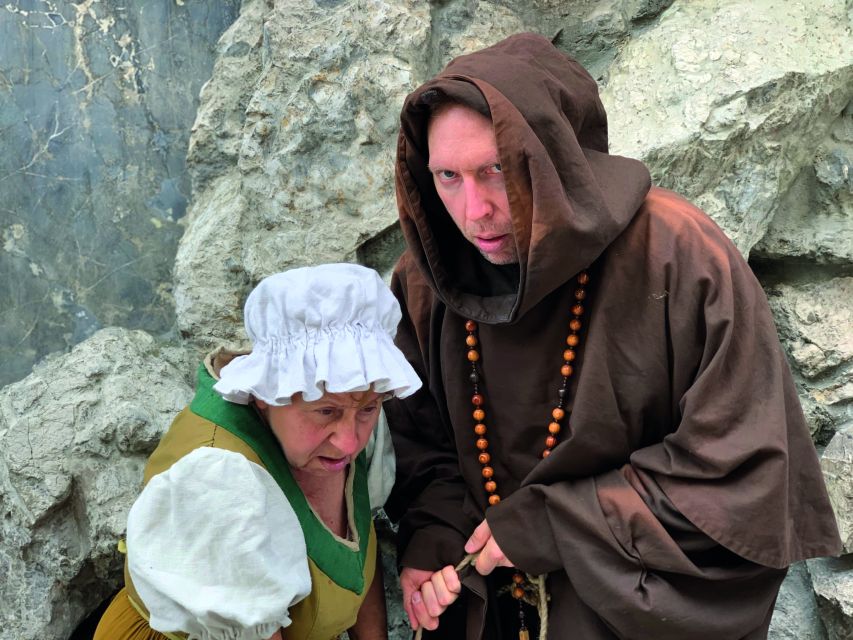
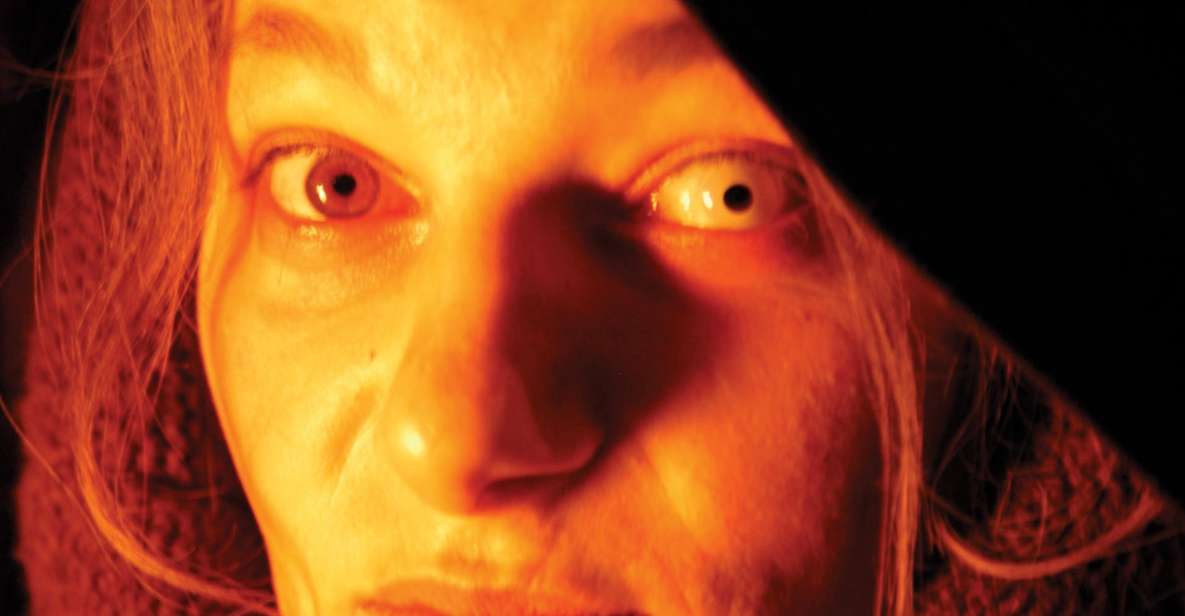
This is not a museum tour where you whisper and shuffle. It’s a story-driven walking show that moves through Munich’s center like a chain of cause-and-effect. You start with the city’s past emerging out of the evening dark, then you get hit with characters, arguments, punishments, and odd details that make the history feel less abstract.
What I like most is the balance. The tour doesn’t just throw out scary images. It explains why certain things happened—then it stages the moment so you can remember it. Expect a steady mix of witch-hunt material, devil-and-legend talk, and street-level glimpses into how punishments and trades worked in earlier Munich.
And yes, it’s theatrical. The actors in historic costumes take over key moments as you pass landmarks, so you’re not just listening—you’re watching the story unfold around you. That matters because Munich can feel “polished” as a travel experience. This tour reminds you that the same streets also held fear, power, and propaganda.
Where You Meet: Karlsplatz/Stachus Under the Karlstor
You’ll meet at Karlsplatz/Stachus, under the archway of the Karlstor. This matters because Munich’s center can be busy, especially in the evening. Give yourself a few extra minutes to arrive early and get oriented before the group forms.
Your guide wears a big blue bag with white text that reads Weis(s)er Stadtvogel. It’s a simple trick, but it works. If you’re ever unsure, look for that bag and you’ll find the tour group.
A practical note: since the tour runs rain or shine, it’s smart to arrive with decent walking shoes and something to handle drizzle. If you’re damp and cold early, the whole hour-and-a-half can feel longer.
You can also read our reviews of more tours and experiences in Munich.
Neuhauser Tor and Salzstraße: Executions Left Town for a Reason
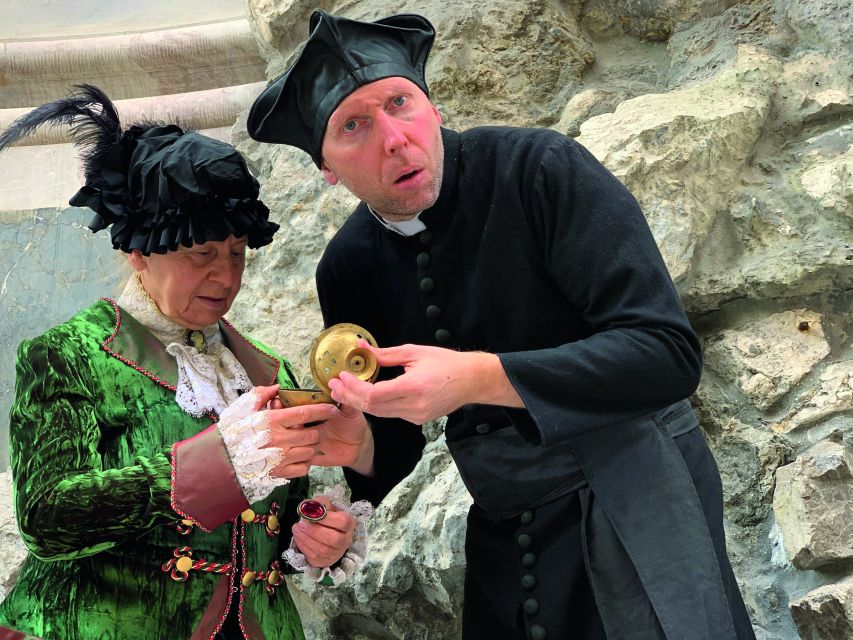
The tour begins at Neuhauser Tor, and it quickly sets the tone with the story of how delinquents were led out of town toward execution. This is one of those points where history stops being “gloomy facts” and becomes understandable. If you’ve ever wondered why punishments often happened outside city walls, this tour gives you the logic in plain language, then pairs it with the route you’re walking.
From there, you move along historic Salzstraße. That street-to-story connection is a big part of the value here: you’re not hearing random trivia. Each stop acts like a chapter marker.
Then you reach the former Jesuit school from the period tied to the witch-hunt era. Expect a staged moment built around conflict between Duchess Renata and Jesuit Father Ignatius. It’s not just name-dropping—this argument is used to re-create the atmosphere of the time, when accusations could become official truth fast.
St. Michaelis Church: The Tower Collapse and the Accused Women
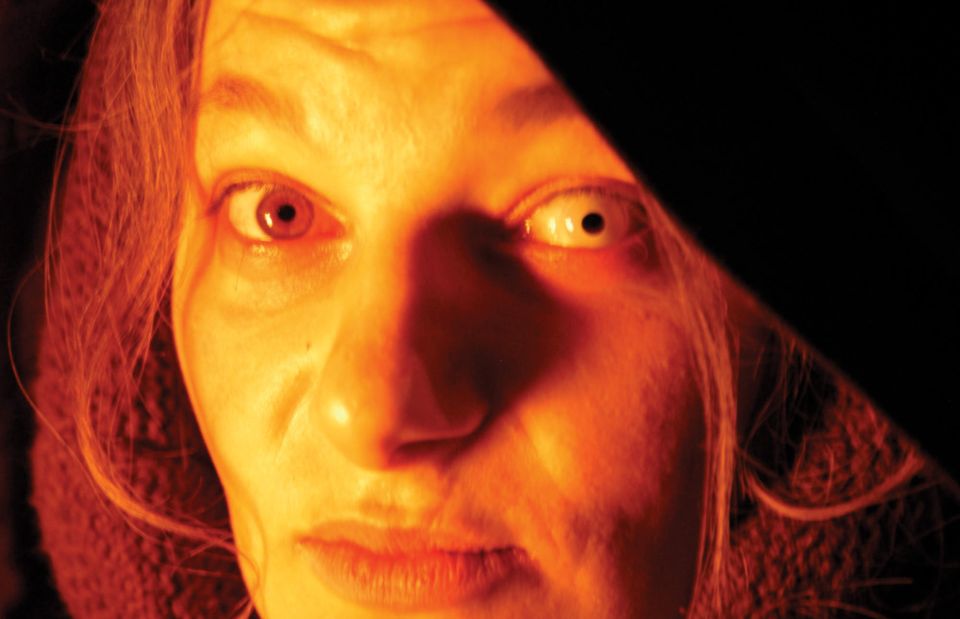
One of the most vivid parts of the route is at St. Michaelis Church. The story goes to a dramatic event during the church’s construction: the tower collapsed, and people pointed to an explanation involving supernatural blame—specifically, that an unusual storm was caused by the accursed bad women.
That’s the heart of the tour’s scary credibility. It doesn’t rely only on monsters-under-the-bed drama. It shows how real-world disasters, power struggles, and religious authority could get welded together into fear. You can see how quickly the narrative becomes “evidence” in people’s minds.
On a practical level, this segment is a good time to slow down, look up when you can, and take in the church setting before the story shifts again. The tour uses the building environment to make the claims feel grounded, even when the claims are wild.
Schöner Turm to Frauenkirche: Wind, Builders, and the Devil’s Size
The walk continues via the Schöner Turm and into the area of Frauenkirche. This is where the tour leans into legend. You’ll hear about the sad story of an unfortunate goldsmith—then the mood turns surreal.
As you approach Frauenkirche, the tour brings in the Prince of Darkness himself. You’ll get an explanation for why it’s so windy around the church and why the devil helped the master builder construct it. And yes, you’ll hear the playful but oddly memorable question about the devil’s shoe size.
This is one of the tour’s strengths: it treats folklore as something that traveled through everyday people’s conversations. You’re not forced to choose between “it happened” and “it’s a myth.” Instead, the guide frames it as a story culture that shaped how people interpreted the world.
Also, weather here matters more than you’d expect. If you’re visiting on a windy day, you’ll feel why the tour’s explanation is so sticky in your mind. If it’s calm, you’ll still understand the role wind and uncertainty played in how these stories spread.
Munich Town Hall Area: Alchemy and Marco Bragadino
Next comes the yard of the Town Hall, where an alchemist character—Marco Bragadino—waits for you. The tour plays with the idea that Bragadino, described as a goldsmith figure, tries to persuade people through his arts.
This segment is valuable even if you’re not into occult stories. It shows how “promises” and “technical talk” can be used to gain influence. In the context of the tour, it’s also a way to connect witch-hunt anxiety and punishment culture to other kinds of fear—fear of deception, fear of hidden knowledge, fear that someone’s “craft” has dangerous consequences.
If you like your history with characters and a little street theater, you’ll enjoy this part. It feels less like a sermon and more like a confrontation—audience, actor, setting, and story all working together.

St. Peter’s Church: The Hangman’s Work in Plain Terms
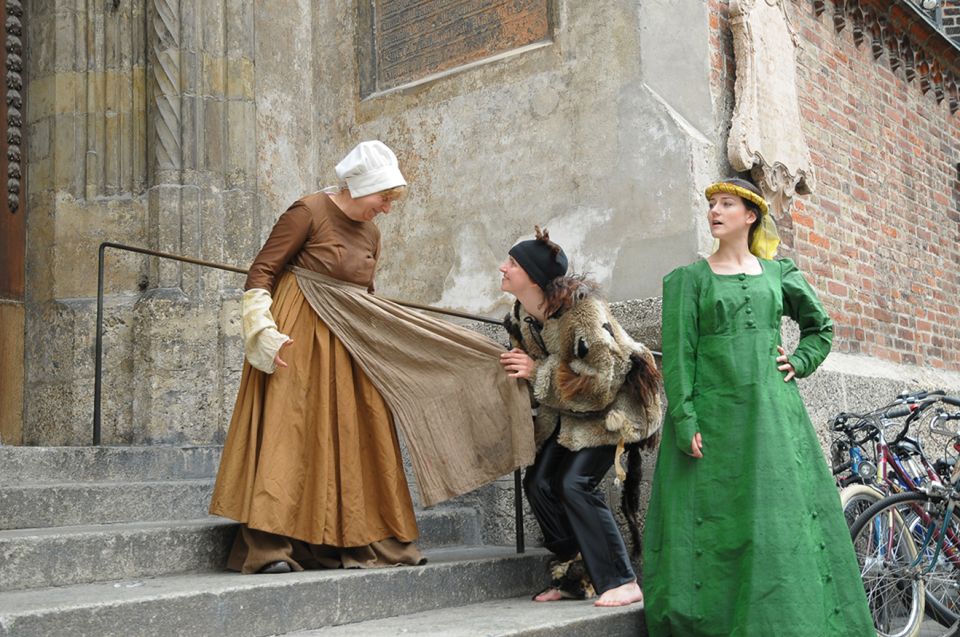
At St. Peter’s Church, the tour shifts from dramatic accusations to the everyday machinery of punishment. You’ll learn about the everyday life of a hangman, how he looked, why he was best avoided, and even how you might obtain a gallows rope.
That “why he was avoided” part is key. It’s not just gore. You start to see social distance as a form of control. People needed the hangman for the system to work, but they didn’t want to be close to the person who carried it out.
And because it’s staged and story-forward, the hangman segment lands with more weight than a standard lecture might. It’s one of those moments where you remember that history is made of people with jobs, routines, and reputations, not just grand events.
Old Town Hall: Torture Chamber Stories and the Platzl Shift
The tour ends with a darker stop: the Old Town Hall, where you cross into the former torture chamber. Expect gruesome stories tied to how interrogation and punishment functioned. The tour doesn’t linger for shock value—it uses these moments to explain the logic and power behind the cruelty.
Then you’ll get to Platzl history. The tour describes how the Platzl area was home to Munich’s red light district until the Olympic Games in 1972. And it connects that to the idea of a “cleaner” city center afterward—so prostitution disappeared from the historic center as a policy change starting in the 1970s.
You’ll also hear music and street culture as part of the retelling, including the Skandal im Sperrbezirk reference to the Spider Murphy Gang. It’s an effective reminder that city history isn’t only built by kings and church towers. It’s also shaped by what societies decide to tolerate—or hide.
Price and Timing: Is $46 Worth 90 Minutes?
The ticket price is $46 per person for a 90-minute walk. For Munich, that’s not a “cheap add-on,” but it also isn’t pricing you out of a core experience. The reason it makes sense is simple: you’re not paying just for a guide. You’re paying for a professional team of actors in historic costumes, with staged scenes that happen as you move between landmarks.
This is the kind of tour where timing matters. Ninety minutes is long enough for a full story arc, but short enough that you’re still fresh by the end. If you’ve got limited evenings (or you want one focused activity instead of a full museum day), this fits.
Starting times vary, so check what’s available and pick one that matches your energy level. Also, because the tour is rain or shine, you’ll want to choose an evening that doesn’t force you into a cold, long transit afterward. Plan something simple afterward, like a nearby meal or a calm drink in the center.
Language Reality: German Tour, German Story Energy
The tour is guided live in German. That’s a big consideration. If you read German reasonably well, you’ll still get the benefit of clear place-based storytelling. If you don’t speak much German, the acting will help, but you’ll miss a lot of the cause-and-effect explanations.
I’ll be blunt: this is one of those tours where language affects how much you actually understand. Even if the costumes and scenes draw you in, the meaning is in the dialogue and the historic explanations tied to each stop.
So if you’re choosing between a German-only scary walking tour and something bilingual, your comfort with German should drive the decision.
What You’ll Likely Love Most (and Why)
A bunch of details make this one work better than a generic “spooky walk”:
The acting actually explains things. The performances aren’t just decoration. They’re used to recreate arguments, accusations, and social roles so the stories click.
The route follows real landmarks. You’re not wandering randomly. The tour takes you through Neuhauser Tor, St. Michaelis Church, Frauenkirche, the Town Hall yard, St Peter’s Church, and the Old Town Hall. That gives the tour structure and keeps it grounded.
It’s entertaining without being weightless. The combination of witch hunts, torture chamber stories, and prostitution history is heavy material. Yet it’s delivered in a way that stays readable and trackable, rather than turning into pure grimness.
You learn the “why,” not just the “what.” Why executions happened outside town. Why brooms became part of witch imagery. Why prostitution was removed from the historic center after 1972. Those are the kinds of answers that make the tour feel like more than theater.
Who Should Book This Scary Tour, and Who Should Skip It
You should strongly consider booking if you want a Munich evening that feels different from the usual beer hall and postcard circuit. This is for you if you enjoy stories with characters and you like your history tied to specific places you can revisit later.
It’s also a good choice for people who want a structured 90-minute activity that doesn’t require transportation planning. Everything happens as you walk through the old center.
You might want to skip—or at least think twice—if:
- German is a barrier for you, since the tour is German-only
- You prefer lighter topics, since the tour includes witch hunts, torture, and prostitution history
- You’re sensitive to dark themes, even though the tour is delivered as a performance and explanation rather than gore
Should You Book the Munich Scary Tour With Actors in German?
If you like history that’s told with energy, and you’re comfortable with German, I think this is a smart booking. For $46 and 90 minutes, you get a guided route through major old-town landmarks plus professional actors making the story scenes tangible. It’s the kind of tour you’ll remember because it connects dialogue, characters, and the actual streets you walked.
If German is your weak spot, or if dark subject matter isn’t your thing, look for a different style of Munich tour. But if those two conditions don’t block you, this one is worth your evening—especially for the mix of witch-hunt explanation, devil legend humor, and the way Munich’s past keeps popping up right where you’re standing.
FAQ
Is the tour in German?
Yes. The live tour guide presents the tour in German.
How long is the Munich scary tour?
The duration is 90 minutes.
Where do we meet?
Meet at Karlsplatz/Stachus, under the archway of the Karlstor. The guide wears a big blue bag with white text reading Weis(s)er Stadtvogel.
Does the tour run rain or shine?
Yes. It takes place rain or shine.
Is it wheelchair accessible?
Yes, the tour is listed as wheelchair accessible.
What locations are included on the walking route?
The tour walks past Neuhauser Tor, St. Michaelis Church, Frauenkirche, the yard of the Town Hall, St Peter’s Church, and the Old Town Hall.
What is the price?
It’s $46 per person.
What’s included in the ticket?
You get a competent and entertaining guide plus a professional team of actors in historic costumes.
Can I cancel for a refund?
You can cancel up to 24 hours in advance for a full refund.
Is there a reserve and pay later option?
Yes. You can reserve now and pay later, keeping travel plans flexible.