REVIEW · MUNICH
Munich Third Reich and WWII Segway Tour
Book on Viator →Operated by FireWheels GmbH · Bookable on Viator
Some streets are too long on foot. This Segway tour makes Munich’s darker WWII story feel easier to follow, and you cover real ground fast. You roll past key sites tied to the rise of Nazi power, with an English-speaking guide who turns street-level sightseeing into a clear narrative.
I like the pace most: about 3 hours and a route built for seeing a lot without feeling rushed. I also love how the tour focuses on context, including the rise of Hitler, why the Beer Hall Putsch didn’t work, and why Munich matters to that story.
One consideration: it can get crowded, and like any Segway activity, a few people may have minor comfort or mechanical issues. If you come on a cold day, plan to dress warmly, because you’ll be moving outdoors the whole time.
In This Review
- Key things to know before you book
- Munich’s Third Reich story, told on wheels
- Price and value: why $82.82 can make sense here
- Timing, meeting point, and how the loop works
- Segway practice: safety, comfort, and that first nervous minute
- The route: from Königsplatz to Odeonsplatz in one WWII storyline
- Alte Synagoge and Königsplatz
- Führerbau and Braunes Haus
- Schelling-Salon
- White Rose section (IWhite Rose)
- Haus der Kunst
- Angel of Peace
- Hitler’s apartment 1933
- Hofbrukeller and Maximilianeum
- Hitler’s apartment 1920–29
- Maximilianeum Strasse, Hofbräuhaus, and Residenz München
- Odeonsplatz (ending back at the start)
- What you’ll learn, not just what you’ll see
- Who this tour suits best (and who should reconsider)
- Real-world guide styles: why it matters on this topic
- Should you book the Munich Third Reich and WWII Segway Tour?
- FAQ
- How long is the Munich Third Reich and WWII Segway Tour?
- Where does the tour start, and where does it end?
- What language is the tour offered in?
- Is there a maximum group size?
- Do I need a printed ticket?
- What’s the cancellation window?
Key things to know before you book
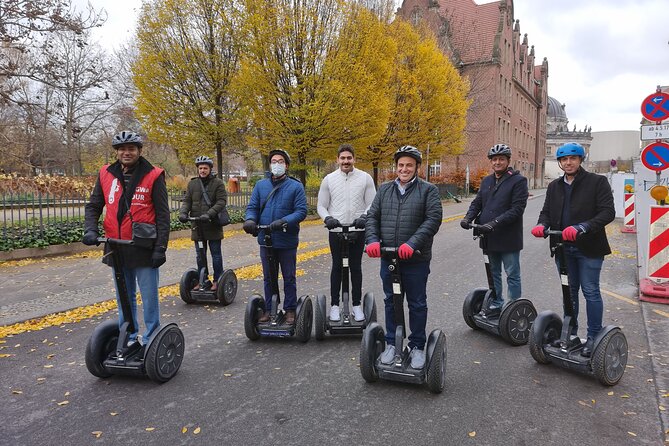
- Go where cars can’t: smoother, more direct routes than typical walking tours.
- A tight 20-person max: small enough for questions and photo stops, if the group is steady.
- English mobile-ticket tour: easy to carry and simple to find at the start.
- WWII story at named landmarks: Führerbau, Braunes Haus, Hitler’s apartments, and more on one loop.
- Guides matter for Segway confidence: past guides like Claudia, Josef, Karl, and Rawen have been patient with first-timers.
Munich’s Third Reich story, told on wheels
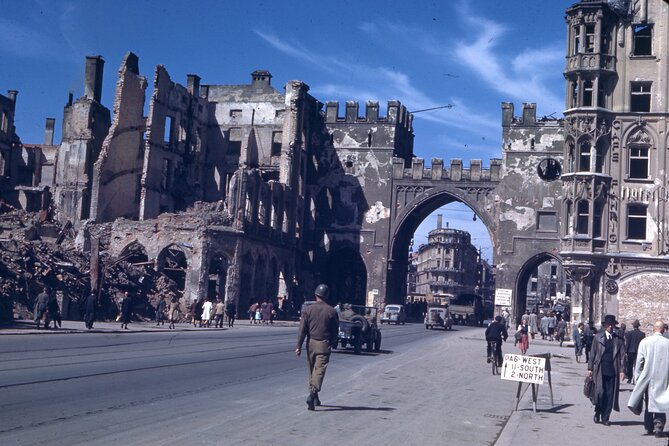
Munich is famous for beer halls, palaces, and big public squares. This tour adds a different lens: the Nazi-era chapters that played out right in the middle of those familiar streets. Instead of just standing in front of plaques, you’re guided through a route that connects people, power, and political turning points across the city center.
The Segway part matters. When you can glide smoothly, you spend more time listening and looking, and less time negotiating slow walking speed in crowds or traffic. That’s a big deal on a tour that aims to cover a lot of named places tied to WWII history.
You’ll also notice the tour’s structure: it’s not just a list of locations. It’s built like a storyline, with your guide explaining how Munich fits into Hitler’s rise and how the movement tried to reshape the city.
You can also read our reviews of more tours and experiences in Munich.

Price and value: why $82.82 can make sense here
At $82.82 per person for about 3 hours, the value depends on one thing: do you want speed plus guided interpretation? If you do, the math can work in your favor.
You’re paying for several bundled advantages:
- Guided context on Nazi-era history at multiple specific stops.
- Segway time during the full loop, so you don’t waste the limited tour window walking.
- An admission-free structure, since the tour lists admission ticket free (so you’re not likely to face extra entrance fees at each stop).
Also, the booking pattern helps you plan. This tour is commonly booked around 36 days in advance, which suggests it’s popular and not something you should leave to the last minute if you have tight travel days.
Is it the cheapest history option in Munich? No. But if you’d normally spend a full day on public transport and multiple walking routes, this can feel more efficient and more fun.
Timing, meeting point, and how the loop works
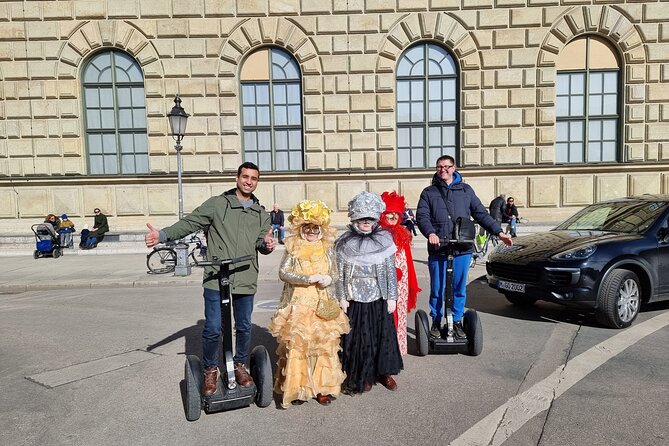
The tour starts at 10:00 am and runs about 3 hours, ending back at the meeting point.
You’ll meet at:
Artur-Kutscher-Platz 2A, 80802 München, Germany
The start location is noted as near public transportation, which is exactly what you want for a downtown tour. You won’t need a car, and you can build your day around a predictable start time.
With a maximum of 20 travelers, the group size is small enough for a guide to keep momentum while still handling questions. That balance is where many city tours either shine or fall flat.
Segway practice: safety, comfort, and that first nervous minute
This is one of those tours where the Segway learning curve can make or break your day. The good news is that the experience is designed so most travelers can participate, and the instruction period helps first-timers get comfortable.
From past trips, the guides have been especially supportive for people who were nervous. Guides including Claudia, Josef, Karl, and Rawen were specifically praised for being patient and helping riders get steady.
Still, here’s the practical takeaway for you:
- If you’ve never ridden before, arrive with comfortable clothes and shoes that grip well.
- Expect it to be easier once you have a few minutes on the board, then you’ll settle into the sightseeing rhythm.
- Dress for motion. On colder days, you’ll feel it. One key tip: rug up, because you’ll be outside the whole time riding.
And one more reality check: if the group is large or the street conditions get busy, you’ll be moving through real city crowds. That’s manageable, but it’s not a quiet museum tour.
The route: from Königsplatz to Odeonsplatz in one WWII storyline
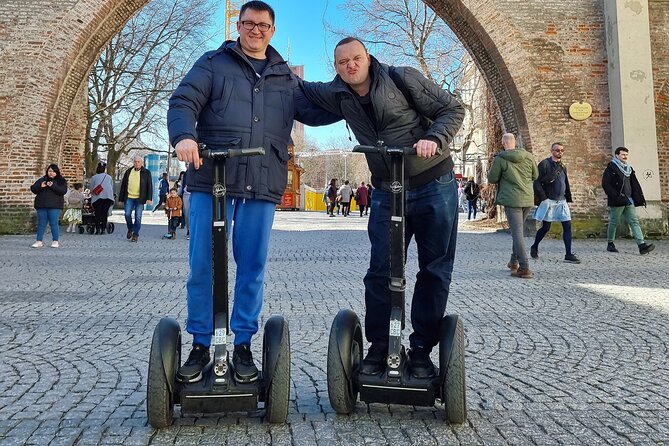
The route is a loop that strings together a sequence of named landmarks. Your guide connects the dots between Nazi power, Munich politics, resistance, and how the city fit into the broader WWII story.
Below is how you can think about each stop and what it likely means in the tour’s narrative.


Alte Synagoge and Königsplatz
You’ll start the historical thread in the Alte Synagoge area and then move toward Königsplatz. This opening phase is important because it sets the tone: you’re not only seeing buildings, you’re seeing the city as a stage where major political and social shifts unfolded.
A drawback to keep in mind: the early part of an outdoor tour is where people are still adjusting to riding. If your legs feel a bit unfamiliar on the Segway, focus on getting steady first. You’ll still catch the guide’s story as you settle in.
Führerbau and Braunes Haus
Next come two locations named directly for Nazi-era leadership and ideology: Führerbau and Braunes Haus. These are the kinds of places that make the history feel close and specific, because the names themselves point to the power structures the guide is describing.
This is usually where the tour’s emotional weight lands hardest. If you want a tour that’s straightforward and interpretive (not vague), you’ll likely appreciate this section.
Schelling-Salon
The tour then moves to Schelling-Salon, a stop that fits the tour’s theme of how political momentum moved through Munich. Even if you don’t know much in advance, the guide’s explanations are meant to turn the stop into a clear “why this matters” moment.
White Rose section (IWhite Rose)
You’ll also encounter IWhite Rose. This stop signals the tour’s inclusion of opposition and resistance to the Nazi regime, not just the official story of power. That balance can make the tour more human and more complete.
Haus der Kunst
From there you go to Haus der Kunst. The point here is context: you’re seeing how major public-facing venues and institutions were part of the era’s public life. This stop tends to be a good chance to ask questions, because the guide can connect place to the larger WWII narrative the whole route is building.
Angel of Peace
Next is Angel of Peace. The name suggests a different emotional register than the earlier Nazi-named buildings. It can act like a pause in the story, reminding you that WWII history didn’t end at the moment of regime power—it moved into aftermath and reflection.
If you’re prone to getting overwhelmed by heavy topics, this section can help you reset.
Hitler’s apartment 1933
Now you’re into the more personal and immediate part of the route: Hitler’s apartment 1933. A named address with a specific year helps you follow time. The guide uses these points to show the changing scale of power over the years.
This is one of those stops where your guide’s pacing matters. If the ride slows here, it’s because the story is aiming for clarity.
Hofbrukeller and Maximilianeum
You’ll pass Hofbraukeller and then Maximilianeum. Since the tour also covers why the Beer Hall Putsch wasn’t successful, beer-hall related locations and civic sites like Maximilianeum fit naturally into that part of the narrative.
Here’s a practical note: these are well-known areas. Expect foot traffic. It’s not a reason to avoid the tour—it just means you should stay flexible and keep your attention on the guide’s safety cues.
Hitler’s apartment 1920–29
Then comes Hitler’s apartment 1920-29. If the earlier Hitler apartment stop made history feel like a single moment, this one supports the bigger arc: rise over time. A time-range address helps your brain organize the story chronologically.
Maximilianeum Strasse, Hofbräuhaus, and Residenz München
The loop continues along Maximilianeum Strasse, then to Hofbräuhaus, and onward to Residenz München. This part of the route blends the political narrative with Munich’s larger identity as a city of historic buildings and public gatherings.
Because Hofbräuhaus is widely known, this stop can make the story feel extra real. The guide’s job here is to connect the famous Munich setting to the darker chapters you’re learning about.
Odeonsplatz (ending back at the start)
Finally, you reach Odeonsplatz and the tour ends back at the meeting point. This closing stop helps you look at the same city you’ve been moving through all morning, but with the WWII context turned on in your head.
By the end, the value isn’t just that you saw many addresses. It’s that you can mentally link the route into a timeline and understand what the guide wanted you to notice.
What you’ll learn, not just what you’ll see
The tour description signals three big learning goals:
- How Hitler gained power and how Munich fits into that rise
- Why the Beer Hall Putsch wasn’t successful
- The role of those who tried to fight the Nazi regime, plus how the city was targeted for political influence
That matters because WWII history can feel like a pile of facts if you only read. A guided route does something better: it gives you a mental map. When you see Führerbau or Braunes Haus, you don’t just see architecture. You see a timeline of what political power was doing in the city.
It’s also why the Segway format works. When your body is doing something easy and predictable, your mind has room to follow explanations. You’re not constantly stopping, starting, and searching for direction like you might on a standard walking loop.
Who this tour suits best (and who should reconsider)
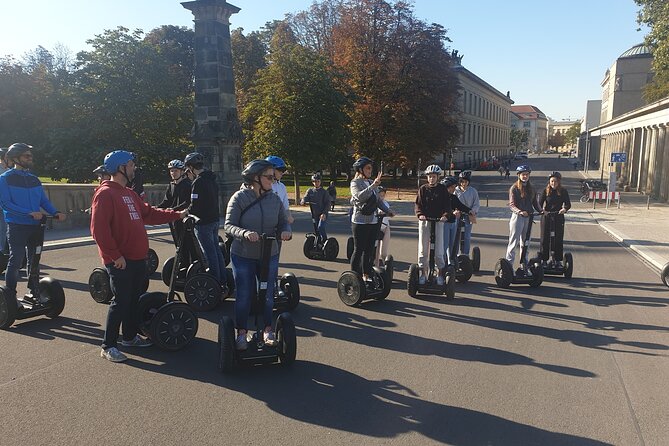
This is a strong pick for:
- Couples who want a shared sightseeing experience with meaning, not just photos
- Families looking for something more active than a museum day (it’s explicitly described as great for families)
- First-time Munich visitors who want a fast overview while still getting serious historical context
It may be less ideal if:
- You want a quiet, low-stimulation setting. Streets can be busy in central Munich.
- You’re traveling on a day when you’re feeling tired or unsteady. Segways are fun, but you need comfort staying upright.
- You’re expecting only WWII sites with no urban “downtown” feel. This loop runs through classic city areas, so you’ll experience the mix of historic and everyday Munich street life.
The key is setting your expectations: this tour uses Segway mobility to get you to a concentrated set of named places, but it isn’t an isolated, closed-route reenactment.
Real-world guide styles: why it matters on this topic
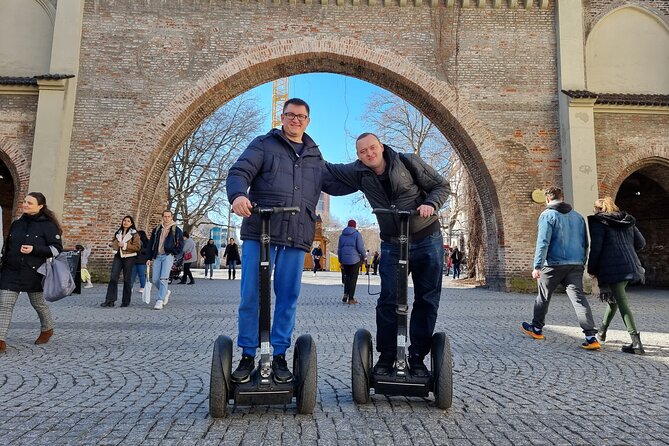
The biggest compliments in the experience revolve around the guide’s ability to combine history with easy movement around the city.
If you get a guide who:
- takes time to answer questions,
- helps nervous riders feel safe,
- and keeps photo stops reasonable,
…you end up with a tour that feels both educational and genuinely fun.
Past guides have included Claudia, Josef, Karl, and Rawen, and the consistent theme is patience and friendliness. That’s especially important on a Segway tour, because if the group struggles early, it eats into time for the story.
One practical caution from real experience: occasionally, scheduling can get messy if a guide is missing or there’s a coverage gap. That doesn’t mean you should skip the tour—it just means you should build a bit of buffer into your day.
Should you book the Munich Third Reich and WWII Segway Tour?
I’d book it if you want:
- a 3-hour overview that covers multiple named WWII-era locations,
- an English-speaking guide who turns the stops into a storyline,
- and a Segway format that lets you see more than a walking route in the same time.
I’d think twice if you’re sensitive to crowds, or if you’re the type who prefers reading at your own pace without group movement. Also, if you’re visiting in cold weather, plan to dress for wind and motion, not just for standing still.
For most visitors who balance fun and education, this is a strong, efficient way to understand Munich through the lens of Nazi Germany and WWII—while still getting the joy of gliding through the city center.
FAQ
How long is the Munich Third Reich and WWII Segway Tour?
It’s about 3 hours.
Where does the tour start, and where does it end?
You meet at Artur-Kutscher-Platz 2A, 80802 München, Germany, and the tour ends back at the same meeting point.
What language is the tour offered in?
The tour is offered in English.
Is there a maximum group size?
Yes, the tour has a maximum of 20 travelers.
Do I need a printed ticket?
You get a mobile ticket.
What’s the cancellation window?
You can cancel for a full refund up to 24 hours before the experience starts.