REVIEW · MUNICH
Munich: 3-Hour Culinary Nightwatch Tour
Book on GetYourGuide →Operated by Weis(s)er Stadtvogel GmbH · Bookable on GetYourGuide
A night watchman guide in Munich sounds like theatre. But the real win here is how the costume and stories turn familiar landmarks into something you remember. You start with a hearty meal and drink, then the evening becomes a walk through medieval streets where the city’s “what happened here” moments stay with you.
I also like the historical-costume night watchman format because it keeps the pace moving and the storytelling focused, not lecture-y. One drawback to plan for: in larger groups you can feel a little squeezed at the tavern meal stop and around some narrow street corners.
This tour works best if you like your Munich a bit darker and funnier, with grisly details that are told like campfire stories. You’ll cover the old town on foot, hit major churches, and learn how everyday life, crime, punishment, and even food and drink shaped the streets you see today.
In This Review
- Key moments you’ll care about
- Meeting at Marienplatz: spotting the night watchman with the BIG BLUE BAG
- The first stop: a hearty nightwatch meal and drink in a Munich tavern
- Following the stories through old town: St. Peter’s Church and its cemetery tales
- Salzstraße and the Old Town Hall: gate lore and the spire rebuilt in the 1970s
- Torture chamber, prison, and the Old Court: the darker “how the city worked” stops
- Gruftgasse and Schäfflergasse: the wine detail that flips the beer assumption
- Frauenkirche towers and noble stops: Promenadeplatz, Palais Portia, and Palais Holnstein
- Salvatorkirche host desecration and the Theatine Church: Henriette Adelaide’s family story
- Women of walls, men of tales: what the best guides do with the format
- The return to the tavern: dessert and a nightcap to close the loop
- Cost and value: is $88 for 3 hours worth it?
- Who should book this Munich culinary nightwatch tour?
- Should you book it or not?
- FAQ
- Where is the meeting point for the tour?
- How long is the Munich 3-Hour Culinary Nightwatch Tour?
- How much does the tour cost?
- What language is the live guide?
- What is included in the tour meal stops?
- Is the tour guide dressed in costume?
- Which major sights are included on the route?
- Is the tour wheelchair accessible?
- How can I pay if I want flexible planning?
- Is there free cancellation?
Key moments you’ll care about
- Start at Marienplatz (Mariensäule): meet right by the action, then follow the guide with the BIG BLUE BAG marked Weis(s)er Stadtvogel
- Tavern meal sets the mood: meat and bread with a hearty drink before you go walking
- Cemetery + church stop with real culture details: St. Peter’s Church stories include funerary customs and missing pews
- Medieval street “food facts”: learn why wine mattered on streets like Schäfflergasse
- Finish with dessert and a nightcap: your final stop is another full stop, not just a photo moment
Meeting at Marienplatz: spotting the night watchman with the BIG BLUE BAG
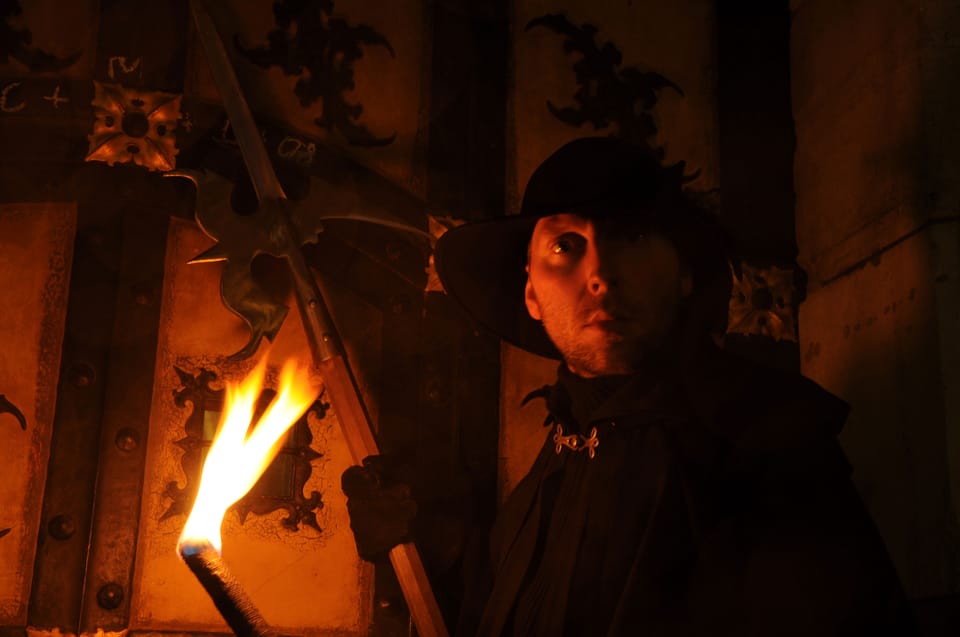
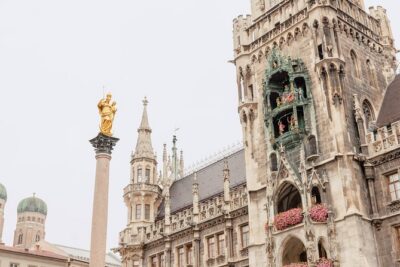
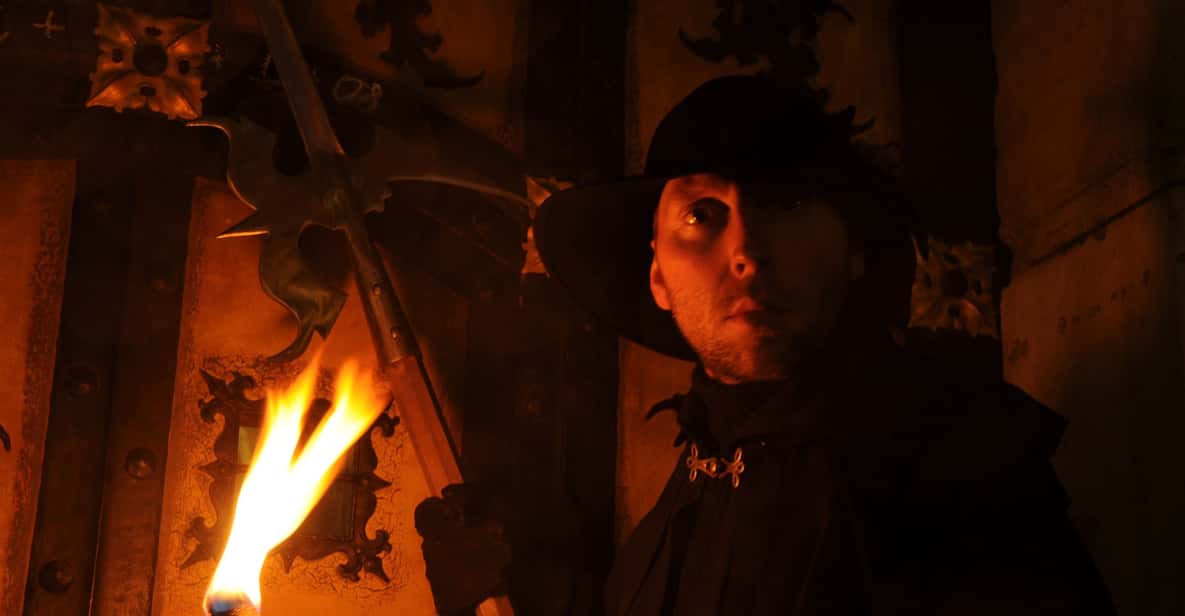
You’ll meet at Mariensäule at Marienplatz in Munich, one of the easiest places to find because it’s central and instantly recognizable. Your guide should be easy to identify: they wear a historical night watchman outfit and carry a BIG BLUE BAG with the white words Weis(s)er Stadtvogel on it. That detail matters because you’re starting before the walk really gets moving, and you don’t want to spend ten minutes hunting.
This is also a smart meeting choice for timing. Marienplatz is where you can quickly orient yourself, then your walk pulls you into the Old Town streets. You’ll be moving through compact areas, so being punctual helps your guide keep the flow of the stories rather than rushing late arrivals.
You can also read our reviews of more tours and experiences in Munich


The first stop: a hearty nightwatch meal and drink in a Munich tavern
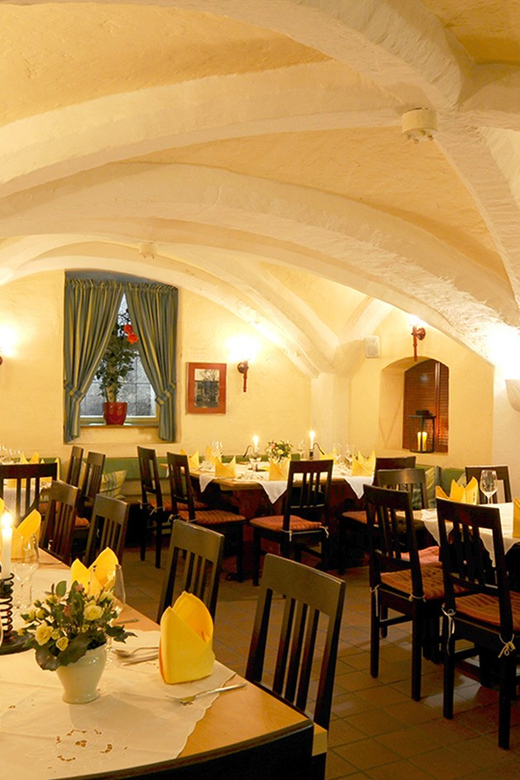
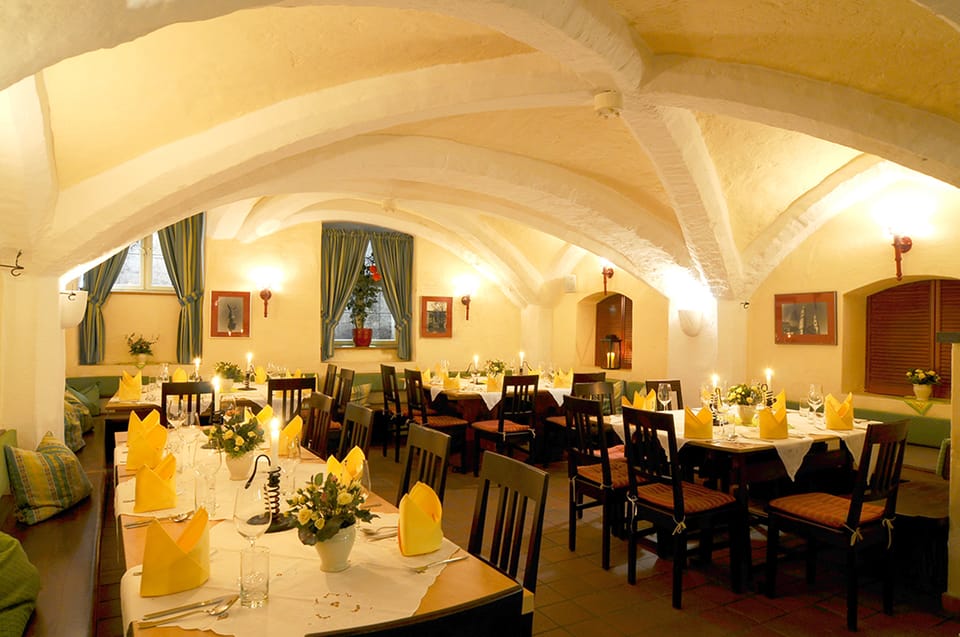
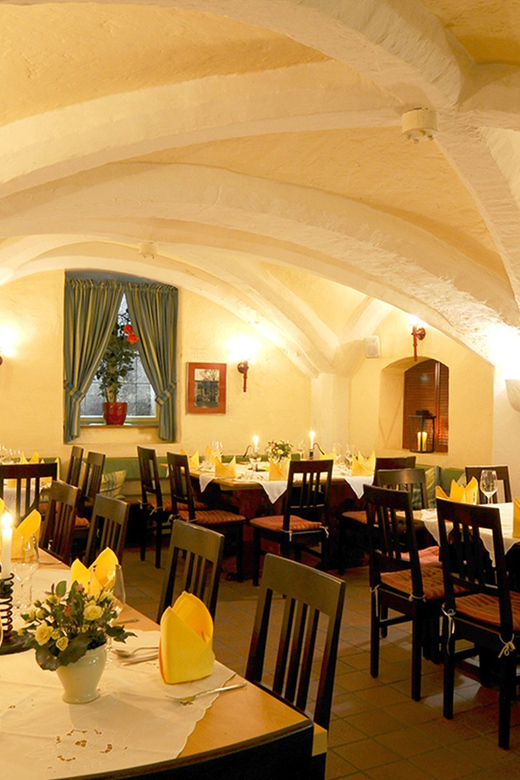
Before you go sightseeing, you’ll start with a hearty nightwatch meal and a drink at a quaint Munich tavern. The menu focus is simple: meat and bread, plus something to drink to “gather strength” for the tour. I like this kind of start because it solves two problems at once: you avoid trying to figure out food mid-walk, and you’re fueled before the darker, more narrative-heavy part of the evening.
If you’re the type who gets hangry, this stop is doing real work. The tour lasts about 3 hours, and you’re not just passing buildings from the sidewalk. You’ll be stopping, listening, and walking between old-city landmarks. Food early means you can stay present without checking the clock every few minutes.
One practical consideration: taverns can get crowded, and if your group is on the larger side you may sit closer than you’d like. Nothing ruins the experience, but it’s worth knowing so you can show up expecting comfort over spacious.
Following the stories through old town: St. Peter’s Church and its cemetery tales
Once you’re fed, you’ll head into Munich’s old town with a night watchman guide leading the way. The vibe stays theatrical, but the stops are anchored to real places—starting with St. Peter’s Church.
At this church stop, you’ll hear cemetery stories, including funerary customs, epitaphs, and the kind of unsettling details that medieval life didn’t sugarcoat. You’ll also hear about things like foul-smelling corpses and missing church pews. Whether the details sound shocking or just grimly practical, the point is that you start seeing churches as part of the everyday system of life and death, not just postcard architecture.
Why this stop is valuable: most sightseeing treats cemeteries as quiet background. Here, the guide connects the cemetery to beliefs, memorial habits, and the social rules that shaped where people stood, prayed, and were remembered. It’s a different way to read the churchyard spaces you might otherwise rush past.
Salzstraße and the Old Town Hall: gate lore and the spire rebuilt in the 1970s
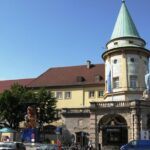
Next up is the Old Town Hall on Salzstraße, along a historic street that pulls you deeper into Munich’s core. Here you’ll learn about an old city gate and also about the reconstruction of the spire in the 1970s.
That spire detail is one of those facts that makes the whole walk feel more grounded. Instead of treating medieval Munich as a sealed time capsule, you see how later centuries repaired and reshaped what survived. It reminds you that old cities are living cities, not museum sets.
From here the route keeps stacking moments. You’re not just ticking off landmarks; you’re connecting them to how movement through the city worked—where gates stood, how authority and public space overlapped, and how the old town was organized.
Torture chamber, prison, and the Old Court: the darker “how the city worked” stops
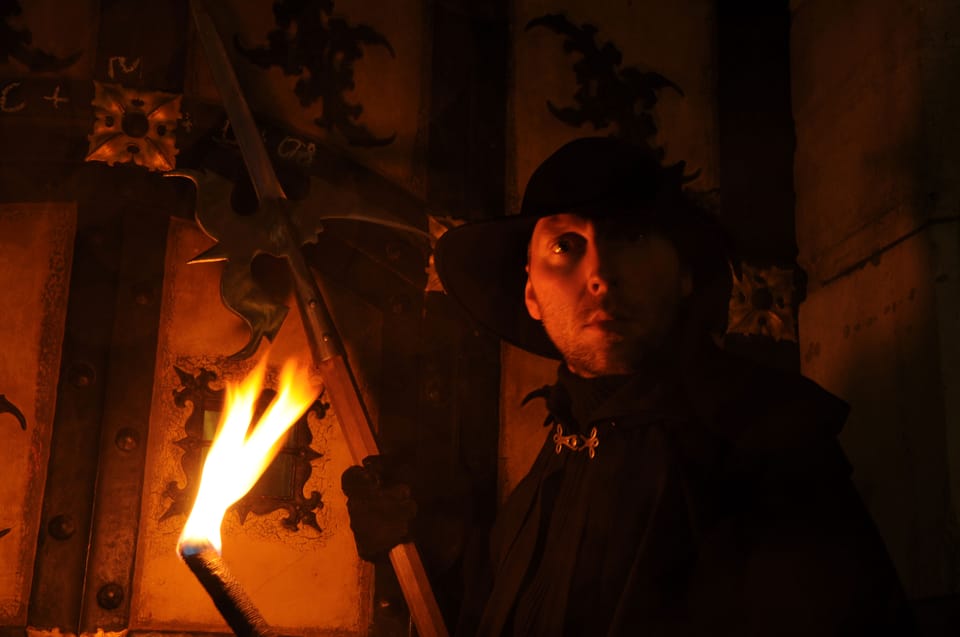
As the evening tour continues, you’ll pass by a torture chamber and prison, then reach the Old Court. This is where the night watchman costume stops being just a fun visual and becomes a storytelling tool. The guide’s job is to make you understand what these places were for—how law enforcement, punishment, and public fear were part of the city’s daily rhythm.
You’ll also follow along where the original city wall from the 12th century once stood. Later you’ll leave a moated castle behind and head west. That street-wall connection is useful for your brain. It gives you a mental map for the “shape” of medieval Munich—where boundaries were, what counted as inside and outside, and why that mattered to trade, safety, and control.
If you’re uncomfortable with heavy topics, keep one thing in mind: the tour is framed as tales from centuries ago. You’re not going to a horror attraction. You’re hearing historical narrative with a costumed guide, and the tone is designed to keep you engaged rather than overwhelmed.


Gruftgasse and Schäfflergasse: the wine detail that flips the beer assumption
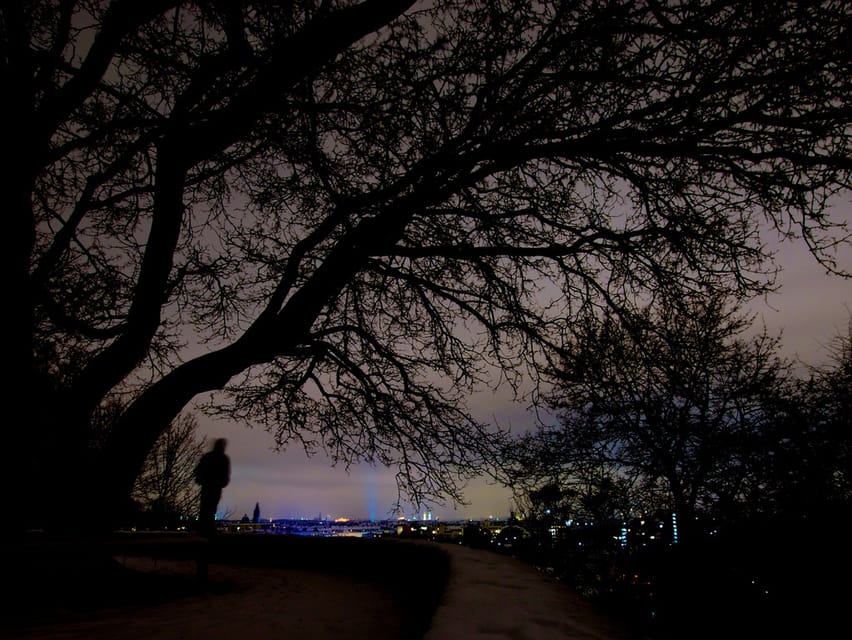
Then comes Gruftgasse with gruesome tales, and after that you’ll explore Schäfflergasse, where you’ll learn something you might not expect: in medieval Munich, wine was the drink of choice, not beer.
That’s a great example of why this tour feels like more than a standard “night walk.” It gives you a fresh lens for the city. You look at a street and suddenly you’re asking different questions—who drank what, why, and how local life connected to trade and availability.
Gruftgasse and the surrounding stops lean into the darker side of the city, but you’re still getting useful “context facts” along the way. Even if you don’t remember every spooky detail, you’ll walk away understanding the city’s social logic more clearly.
Frauenkirche towers and noble stops: Promenadeplatz, Palais Portia, and Palais Holnstein
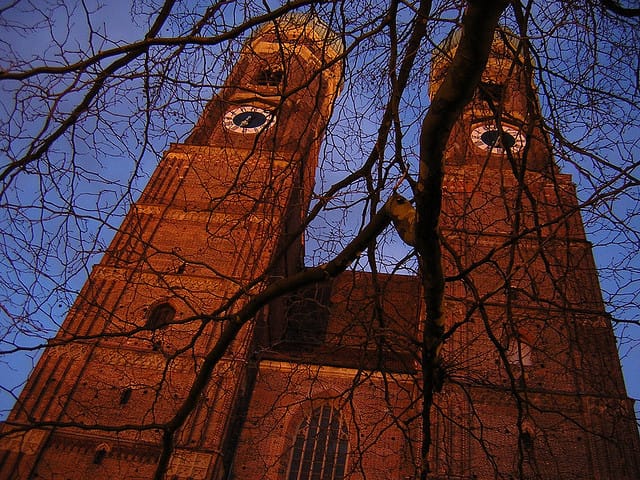
The route then brings you past major landmarks like the Frauenkirche. You’ll admire its two towers, one of the city’s go-to visual markers.
But you’ll also pass Promenadeplatz, Palais Portia, and Palais Holnstein. These stops add contrast. After the grittier tales and punishment-related sites, the tour shifts back to how power, wealth, and religious identity shaped the look and layout of the old town.
This mix is part of the value. A purely medieval route can feel one-note. Here you get the contrast between institutions that controlled people and buildings that projected influence. You end up seeing Munich as a system, not just a collection of pretty facades.
Salvatorkirche host desecration and the Theatine Church: Henriette Adelaide’s family story
One of the more startling story beats comes at Salvatorkirche, where you’ll hear about host desecration. The guide uses the moment to explain how shocking events became part of the city’s collective memory—and how churches were tied to belief in a way that affected social life.
After that, you’ll reach the Theatine Church for a story about Henriette Adelaide. You’ll hear how her son made sure the Theatine cloister was built. This stop matters because it shifts from a shock event to a long-term legacy story. You leave with a better sense of how religious spaces were shaped by people with names, family ties, and influence—not just anonymous “history.”
If you’re trying to understand Munich beyond beer halls, this is a strong segment. You’ll connect faith, governance, and architecture, and you’ll also see how personal stories helped shape what stands today.
Women of walls, men of tales: what the best guides do with the format
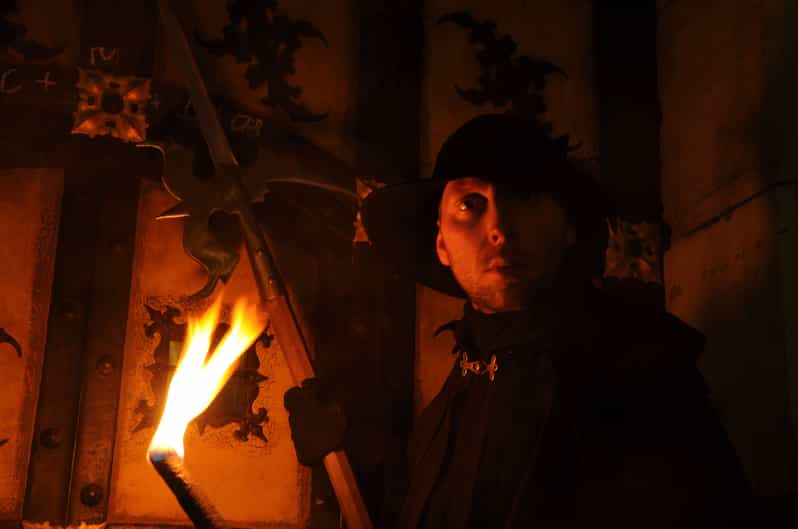
The big reason this kind of tour works is the guide. In one run, the night watchman Matthias delivered humor and a lot of knowledge, keeping the group laughing and engaged. There’s also a fun energy that can include singing by the end of the evening, which turns the walk from a one-way talk into something more like a shared night out.
Not every guide will be exactly the same, but the role is consistent: a costumed night watchman who guides you through streets and makes you picture earlier centuries. If you like interactive storytelling, this format suits you.
Also, the tour is in German. That’s important for your expectations. If you speak a bit of German or you’re comfortable listening closely, you’ll get more out of every stop. If you don’t, you can still enjoy the atmosphere and the physical route, but some story detail may pass you by.
The return to the tavern: dessert and a nightcap to close the loop
After the sightseeing and church stops, you’ll return to the tavern for dessert and a nightcap. This ending matters more than it sounds. It gives you a chance to decompress after walking and listening, and it keeps the food thread consistent: meal first, dessert finish.
One dessert that has shown up in the experience is Kaiserschmarren, and it fits the Munich comfort-food style that makes the night feel complete rather than abrupt. Even if the exact dessert varies, the pattern is steady: you end with something sweet and a drink, not just a farewell at the curb.
Cost and value: is $88 for 3 hours worth it?
At $88 per person for a 3-hour tour, you’re paying for three things at once: a costumed guide, multiple historic stops, and actual meal service (not just a snack). That combination is usually what separates this from a standard walking tour.
Here’s how I’d judge the value for you:
- If you like storytelling plus food, the tavern stops do the heavy lifting. You’re not spending the whole evening “just looking.”
- If you’re primarily a photo-first sightseer, you might feel the price is high for a walking route. The experience is built around narrative, not architecture lectures.
- If you get motion sickness or dislike tight seating, consider that the tavern and alley-like streets can feel crowded at times.
Overall, I think the price makes sense when you want a guided evening with character. The best versions of this tour run smooth and funny, and the night watchman costume makes the city feel like it has a voice.
Who should book this Munich culinary nightwatch tour?
Book it if you want:
- A fun, spooky-leaning walk through Munich’s old core
- Real food stops, not just meeting up and wandering
- Stories connected to specific places like St. Peter’s Church, Frauenkirche, Salzstraße, and the Theatine Church
Skip or rethink if:
- You dislike dark historical topics in general
- You need a fully multilingual guide setup (the tour is German)
- You prefer very quiet, spacious sightseeing where group closeness won’t bother you
Also, if your group values a lively guide, keep this in mind: some formats run a touch over the planned time. It’s usually part of the storytelling energy, not a runaway schedule, but it helps to be flexible.
Should you book it or not?
I’d book this when you’re in Munich for a few days and you want one evening that feels different from the usual museum-and-marienplatz routine. The night watchman costume plus tavern meal is a good mix, and the stop list is specific enough to make the walk feel intentional.
If you’re a strong listener with even basic German, you’ll likely get the most from the stories. If you don’t, you can still enjoy the route and atmosphere, but you should expect less of the plot detail.
FAQ
Where is the meeting point for the tour?
You meet at Mariensäule at Marienplatz in Munich.
How long is the Munich 3-Hour Culinary Nightwatch Tour?
The tour lasts about 3 hours.
How much does the tour cost?
It costs $88 per person.
What language is the live guide?
The tour guide speaks German.
What is included in the tour meal stops?
You get a first stop with a nightwatch meal and a drink, plus an ending dessert and a nightcap.
Is the tour guide dressed in costume?
Yes. You’ll have a night watchman in a historical costume as your guide.
Which major sights are included on the route?
You’ll see and hear stories connected to St. Peter’s Church, Old Town Hall on Salzstraße, Frauenkirche, Salvatorkirche, and the Theatine Church, plus other notable stops along the way.
Is the tour wheelchair accessible?
Yes, it’s listed as wheelchair accessible.
How can I pay if I want flexible planning?
You can reserve now and pay later.
Is there free cancellation?
Yes. Free cancellation is available up to 24 hours in advance for a full refund.