REVIEW · MUNICH
Munich Segway Tour
Book on Viator →Operated by Fat Tire Tours - Berlin · Bookable on Viator
A Segway glides you through Munich fast. This is a small-group tour that pairs 30-minute training with a smooth route past gardens, museums, markets, and old-city sights, all with an English-speaking guide. I love that it keeps the group tight (max 8), so you’re not stuck waiting around, and I also like how guides like Karl, Susanna, and Rob are praised for teaching you confidently before you roll out.
One thing to consider: it’s not a gentle flat cruise. The route includes uphill and downhill, so if you’re worried about slopes or your balance, you may want to skip this.
In This Review
- Key Things I’d Book For
- Segway Time on Munich’s Streets, Parks, and Old-City Highlights
- Meeting at Karlsplatz and Getting Your Segway Under Control
- Hofgarten Royals, University Pass-By Photos, and the Rhythm of Garden Munich
- Deutsches Museum Area and the Art of Seeing Big Landmarks Without Detours
- Gartnerplatz, Viktualienmarkt, and the Residenz: Where Munich Feels Most Real
- Jewish Museum Area and a History-Storyline That Mixes Light and Heavy
- Price of $90.05: How to Judge Value for a 3–4 Hour Segway Tour
- Weather, Uphill/Downhill Reality, and Who This Tour Fits Best
- Should You Book This Munich Segway Tour?
- FAQ
- How long is the Munich Segway tour?
- Where do I meet for the tour?
- Does the tour include Segway training?
- Is the tour only for people who already know how to ride a Segway?
- What are the age and weight requirements?
- What happens if the weather is poor?
Key Things I’d Book For

- 30-minute Segway orientation first, so beginners have time to learn the basics
- Max group size of 8, which makes the pace feel personal instead of rushed
- Stops that mix Munich’s big icons with everyday scenes, like Viktualienmarkt
- Guides with strong storytelling, including both lighter local culture and heavier WWII-era context
- Ponchos provided if rain pops up, since the tour runs on good weather
Segway Time on Munich’s Streets, Parks, and Old-City Highlights

This is one of those Munich tours that helps you cover real ground without turning the day into a leg workout. You start near the central hub area (meeting point at Karlsplatz 4) and head into the old-city zone, then you move quickly between neighborhoods, gardens, and major landmarks. The Segway matters here: you get that “hands-free sightseeing” feeling while still seeing places you’d normally reach only by hopping on buses or trains.
The route also makes sense for first-time visitors. You’re not only checking off monuments—you’re also seeing how Munich lives. The tour works in a “gallery + stroll” rhythm: glide along the Isar waterfront, pause for photos, and then hop to a market or historic site before moving on again. If you like your sightseeing with a bit of context, you’ll likely enjoy how guides build connections between old roots and modern culture, including the city’s beer tradition.
Because it’s a half-day format (about 3 to 4 hours), it’s a smart use of time. I’d especially consider it early in your trip. You’ll come away with a mental map of Munich that makes the rest of your days easier, whether you want to re-visit a garden, linger longer at a market, or explore a museum area on your own.
You can also read our reviews of more tours and experiences in Munich.



Meeting at Karlsplatz and Getting Your Segway Under Control
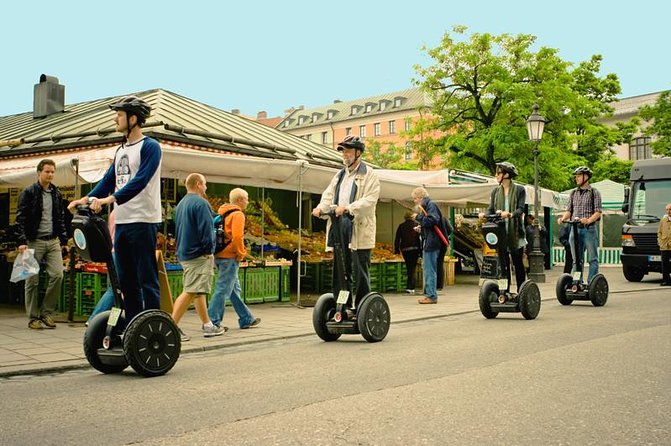
You meet at Karlsplatz 4, 80335 München. The tour begins at the Segway office there, and the day starts with an orientation session—about 30 minutes focused on the basics.
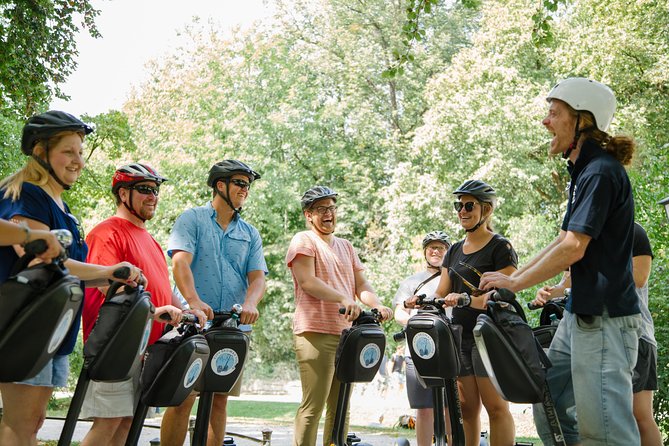
That training isn’t just a formality. It’s the difference between feeling like you’re riding a toy and feeling like you can steer, balance, and stop smoothly when traffic, pedestrians, or a slope shows up. In the reviews, guides such as Karl, Susanna, Rob, Mark, and Mike are repeatedly praised for being patient with newcomers and for explaining how the Segway works in clear, practical terms. One detail I found helpful: a few guides use visual aids, like pictures, to help you understand the sites you’ll be seeing.
Here’s how to set yourself up for an easier ride:
- Wear closed-toe shoes with good grip (you’ll appreciate it during starts and stops).
- Come on time. If you’re late, you’ll lose part of the practice window.
- Listen carefully during the training. Small technique changes can make uphill and downhill feel much less stressful.
Also note the limits: you need to be able to move safely, including climbing and descending stairs without assistance. The tour is not recommended for knee or balance problems, and you’ll need to meet the weight range (about 45kg to 110kg / 100 to 250 lbs). Minimum age is 14.
Hofgarten Royals, University Pass-By Photos, and the Rhythm of Garden Munich
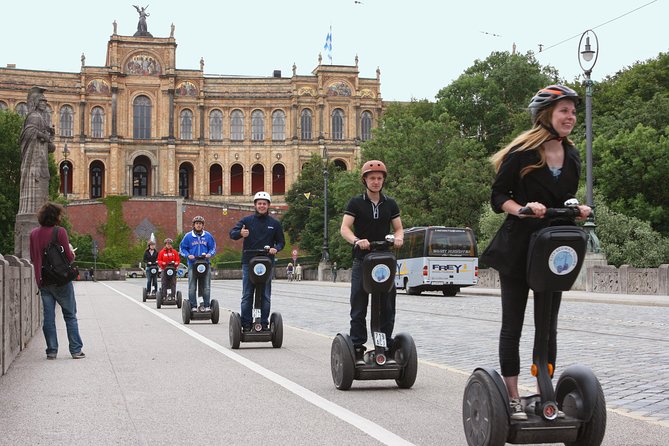
After training, the tour turns into what I’d call a “Munich sampler.” Early on, you glide through standout green space—especially Hofgarten (Royal Gardens). This is a good first real taste of the city’s style: manicured pathways, elegant landscaping, and that classic royal-imprint vibe. It’s also a comfortable zone to get your confidence up on the Segway before the route mixes in more urban crossings and busier streets.
From there, you move through a mix of places you might not see as easily on foot in one half-day. You’ll pass by Ludwig-Maximilians-Universität (LMU), which is one of those photo-stop landmarks even if you’re not touring inside. Then you head toward a major outdoor area: the English Garden.
The English Garden is where the tour can feel extra “Munich.” One review specifically called out surfers in the Englischer Garten area, which is a great reminder that this isn’t just pretty landscaping—it’s an active public space with real life happening.
If you’re the type who likes to understand how Munich thinks, this stretch is also a good moment for the guide’s stories. You can expect facts that connect Munich’s origins to its modern identity, with emphasis on both daily culture (like beer traditions) and bigger historical moments. More than one guide is noted for sharing WWII-era context alongside the cheerful city scenes, so you’ll likely get a balanced, not-only-postcard narrative.
Deutsches Museum Area and the Art of Seeing Big Landmarks Without Detours
At some point, you’ll pass by the Deutsches Museum. Even if you don’t go inside, it’s worth noting that this museum is one of the world’s best-known science-and-technology institutions. Being able to roll past it as part of a bigger loop is efficient. You get the landmark in your “first impressions” memory without burning extra time hunting for parking or planning another transit hop.
The practical benefit of doing this on a Segway is simple: you keep momentum. You’re not bouncing between long stretches of walking and short bursts of riding. The guide’s job is to keep the route flowing while you stay oriented and comfortable.
One small snag that can affect your expectations: there’s at least one report of an in-app map not matching the exact route taken. That doesn’t mean the tour changes drastically—it’s more like the route guidance you see on a phone may not perfectly mirror the physical path of the day. My advice: don’t rely on the app as your main navigation tool. Use it if it helps, but follow the guide’s lead.
Gartnerplatz, Viktualienmarkt, and the Residenz: Where Munich Feels Most Real
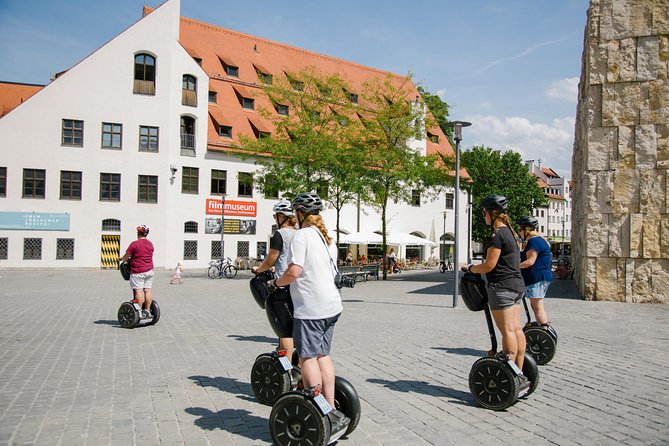
This tour gets especially fun when it switches from major landmarks to places that feel more local. One highlight is the Gartnerplatz neighborhood. It’s a different slice of city life—less “official monument” and more “neighborhood texture.”
Then you reach Viktualienmarkt, Munich’s famous market area. This is one of the spots where you can slow your brain down and take in details: food stalls, the vibe of people browsing, and the sense that Munich’s culture is partly built around everyday rituals. Even if you don’t plan to buy much, this kind of market stop is great for understanding local patterns: what’s common, what’s seasonal, and how the city shows up in public.
After that, you’ll visit the former Royal Residence at Residenz. This is a major historic site, and it shifts the mood from market energy to palace-era scale. A Segway visit can be a little different from a classic walking tour because the device gets you close to the context quickly. You’ll still have time to absorb the setting and take photos, but you’re not stuck covering every inch on foot.
One tip: if you’re hoping for the full palace experience, be realistic. A half-day tour doesn’t equal an all-day museum visit. Treat Residenz here as a meaningful taste—enough to understand why it matters, not necessarily enough to master every room.



Jewish Museum Area and a History-Storyline That Mixes Light and Heavy
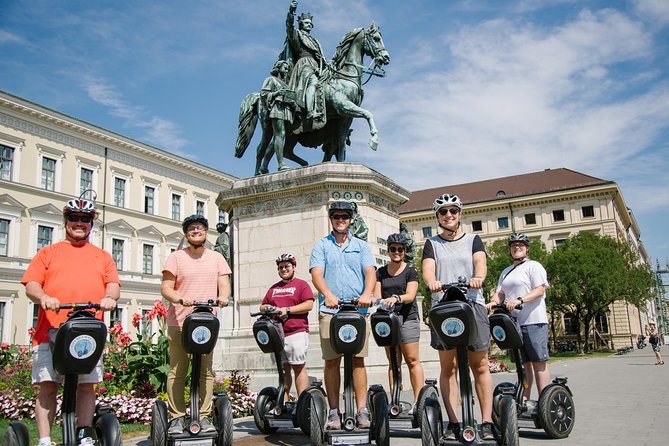
The route includes a pass by the Jewish Museum. That stop matters because it adds another layer to Munich’s story. You’re not only learning about kings, gardens, and everyday culture—you’re also seeing how Munich carries complex history in modern streetscapes.
Guides in the reviews are praised for doing more than reciting facts. One guide (Rob) is specifically noted for sharing in-depth stories about the Nazi regime and WWII. That kind of context can be intense, so it helps that the tour moves in segments—garden scene, market scene, palace scene—so the day doesn’t feel like one long lecture. You get emotional variety, even when the subject matter turns heavy.
Also, remember this is a ride. Even on a topic-rich tour, the flow is part of the value. Gliding between stops makes it easier to absorb information because you aren’t losing time to constant walking transitions.
Price of $90.05: How to Judge Value for a 3–4 Hour Segway Tour
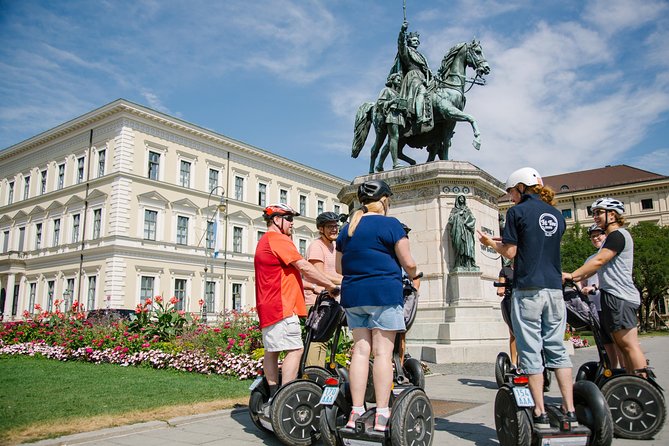
At $90.05 per person, this isn’t a budget activity, but it also isn’t priced like a private limousine-style tour. It lands in the middle. The value comes from what you get bundled into the price:
- A professional English-speaking guide
- Segway orientation (30 minutes)
- Helmet
- Wet weather ponchos if rain happens
- A route that covers multiple big areas in about 3 to 4 hours
- Small group format (max 8)
What’s not included is also clear: food and drink. If you plan to snack, budget for it during breaks or afterward. That’s the tradeoff with any guided experience that focuses on movement and pacing—time goes to the route and the guide, not to meals.
If you’re deciding whether it’s “worth it,” I’d think about your alternative. If you tried to do this same mix of gardens, market area, and palace zone by hopping between transit and walking, you’d spend real energy and time. Here, the Segway turns that movement into the experience. For many people, that’s the whole point.
Weather, Uphill/Downhill Reality, and Who This Tour Fits Best
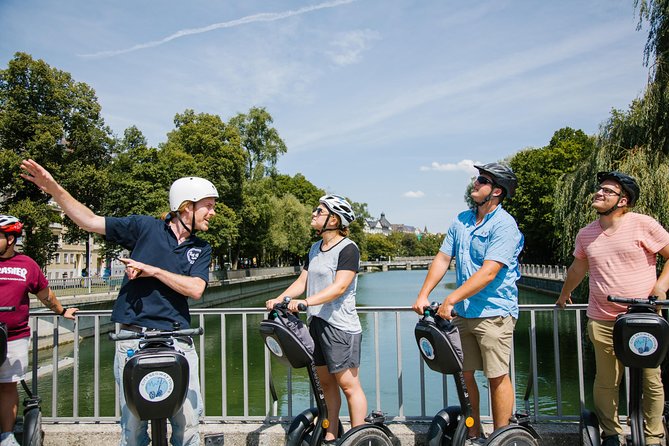
This tour requires good weather. If it’s canceled due to poor weather, you’ll be offered a different date or a full refund. Ponchos are included, which is great for light rain, but think of this as a tour that depends on rideable conditions.
Next: slopes. One review describes a rider ending up in an ambulance after falling going downhill, and it notes that the course includes uphill and downhill. That’s not something I’d ignore. My practical advice is simple:
- If you’ve never used a Segway, take the training seriously and practice the controls before you feel confident.
- If you’re uneasy on slopes, say so early and ask the guide what to expect.
- Move calmly. Rushing is when balance breaks down.
Also pay attention to the physical requirements:
- Minimum age: 14
- Weight range: about 100 to 250 lbs (45kg to 110kg)
- You must be able to climb/descend stairs without assistance
- Not recommended for knee or balance problems
If you’re traveling solo, this can still work well because the group is small and the guide keeps the pace controlled. If you’re traveling with family or a mixed-experience group, the training helps level the playing field—multiple reviews mention beginners adjusting fast.
One more small consideration: the tour is English-speaking, and the company confirms an English guide as part of the experience. Still, if you’re sensitive to language support, double-check your booking details before the day starts.
Should You Book This Munich Segway Tour?
Book it if you want a high-coverage, story-led half-day that shows Munich beyond just one landmark. The small group size (max 8), the 30-minute Segway orientation, and the mix of Hofgarten, the English Garden area, Viktualienmarkt, and the Residenz makes it a strong fit for first-timers and for anyone short on time.
Skip it or choose a different activity if any of these apply: you have knee or balance issues, you don’t feel comfortable with uphill/downhill riding, or you’re looking for a slow, in-depth museum-style day. Also, if your trip happens during uncertain weather, be ready for potential rescheduling.
If you do book, go in with the right mindset: this is sightseeing with motion. You’ll get more out of it when you treat the training like part of the fun, not like a hurdle.
FAQ
How long is the Munich Segway tour?
It runs about 3 to 4 hours.
Where do I meet for the tour?
The meeting point is Karlsplatz 4, 80335 München, Germany. The tour ends back at the meeting point.
Does the tour include Segway training?
Yes. You get a Segway orientation session for about 30 minutes, plus helmet and (if needed) wet weather ponchos.
Is the tour only for people who already know how to ride a Segway?
No. There is a 30-minute orientation session to cover the basics, and you’ll practice before heading out on the route.
What are the age and weight requirements?
Minimum age is 14. Riders must weigh between about 100 lbs and 250 lbs (roughly 45kg to 110kg).
What happens if the weather is poor?
The experience requires good weather. If it’s canceled due to poor weather, you’ll be offered a different date or a full refund.