REVIEW · MUNICH
Ten Munich Old town Sights in a Private Express Walking Tour
Book on Viator →Operated by Victoria – Key to Munich · Bookable on Viator
Munich old town, fast and fun. In a private 90-minute loop, you get the big-name sights plus the oddball details that explain how the city got its name, its beer legends, and its medieval muscle. I like that Victoria brings the story to life with an iPad and clear pacing, even if you’re traveling with kids. I also like the payoff: St. Peter’s, Marienplatz, Frauenkirche, and Hofbräuhaus in one efficient walk. The only real catch is that it’s an express format, so you’ll see a lot in quick looks, not long stays.
This is offered in English as a private tour, so it’s just your group, no mixing with strangers. You’ll start at the Toy Museum area on Marienplatz and finish right at Hofbräuhaus—close enough that you can keep wandering after the tour ends. It’s also built to be easy to manage: a mobile ticket, a comfortable pace, and your guide sharing insider restaurant and sightseeing ideas along the way.
At $84.29 per person, it’s not a budget “wander and guess” deal. But you do get a guided history-and-symbols tour with multiple major landmarks marked as free-entry stops, plus practical recommendations. If you want deep museum time or long church visits with lots of sitting, you might prefer a slower day plan and pair this with time on your own.
In This Review
- Key Things I’d Fix in Your Day Plan Before You Go
- Why This 90-Minute Private Route Works in Munich
- Old Town Hall Tower: Fortifications, Salt, and the Monk
- St. Peter’s Church: Eight Clocks, the Tiara Moment, and a Cannonball
- Marienplatz at Walking Speed: Mary Column and the White Sausage Origin
- Fischbrunnen Traditions: Wallet Washing and the Butchers’ Jump
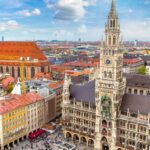
- New Town Hall (Neues Rathaus): Neo-Gothic Detail and the Glockenspiel’s Daily Show
- Frauenkirche: Devil’s Footprint and Why the Wind Feels Personal
- New Town Hall Courtyard: The Staircase of Ages and Statue Meaning
- Alter Hof and the Monkey Tower: Wittelsbach Power and Louis IV
- Pfistermühle and the Pretzel Legend You’ll Carry Home
- Hofbräuhaus München: Beer-Hall Lore, Lockers, and No Tasting
- What You Get for $84.29 (and Why It Can Still Be Good Value)
- Who Should Book This Express Old Town Walk
- Should You Book This Munich Old Town Express Walk?
- FAQ
- How long is the private express walking tour?
- Is this tour private?
- What language is the tour offered in?
- Where do we meet and where does it end?
- Are there admission tickets required for the stops?
- Is food, drinks, or beer tasting included?
Key Things I’d Fix in Your Day Plan Before You Go
- 90 minutes, 10 stops: You get a fast hit of the old town without committing to a full day.
- Victoria’s iPad storytelling: Visuals help you understand how parts of the city changed over time.
- Marienplatz + Glockenspiel timing: You’ll see why this square is still Munich’s meeting point.
- Church details that actually matter: Clocks, bells, altars, and legends tied to real events.
- A real ending at Hofbräuhaus: You finish at the beer hall, with its stories ready to match what you see inside.
- No food included: You’ll need to plan your meals separately, but the guide’s suggestions help.
Why This 90-Minute Private Route Works in Munich
Munich old town can be deceptively big. This tour keeps you moving through the core highlights without turning it into an all-day grind. The schedule is built around short, focused stops—often 5 to 15 minutes—so you learn what to notice before you’re swept along by your own sightseeing momentum.
Because it’s private, you also get a little more flexibility in real life. In real-world terms, that matters if you’re traveling with children or you need a quick bathroom break; a good guide can slow down without breaking the whole timetable. Expect a comfortable pace, and expect you’ll leave with a map in your head, not just photos on your phone.
You can also read our reviews of more walking tours in Munich
Old Town Hall Tower: Fortifications, Salt, and the Monk
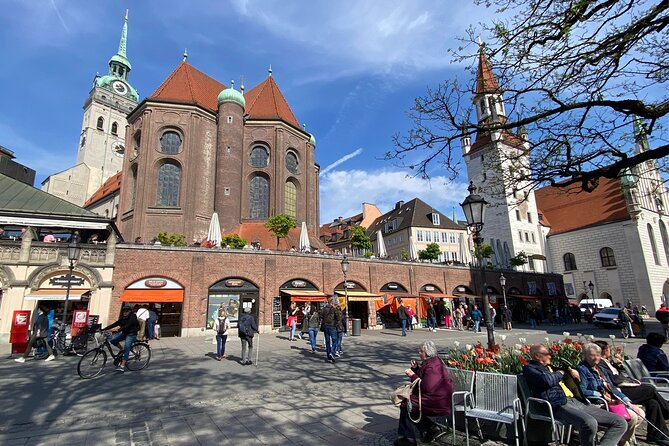
Your tour starts by the tower at the Old Town Hall, and the point here is orientation: you learn how medieval Munich was defended and how the city’s foundation story connects to power and trade. You’ll hear how salt helped the rise of Munich—one of those practical “economy made the city” facts that makes history click.
Then the tour shifts into symbolism. You’ll connect how a monk became Munich’s symbol and what that has to do with the city’s name. This is a great opening stop because it teaches you the city’s logic. After this, the rest of Munich’s landmarks feel less random and more like chapters in the same story.
Tip: stand where your guide indicates on the square side, because the tower-and-fortification context is easier to follow when you’re positioned for the overview.
St. Peter’s Church: Eight Clocks, the Tiara Moment, and a Cannonball
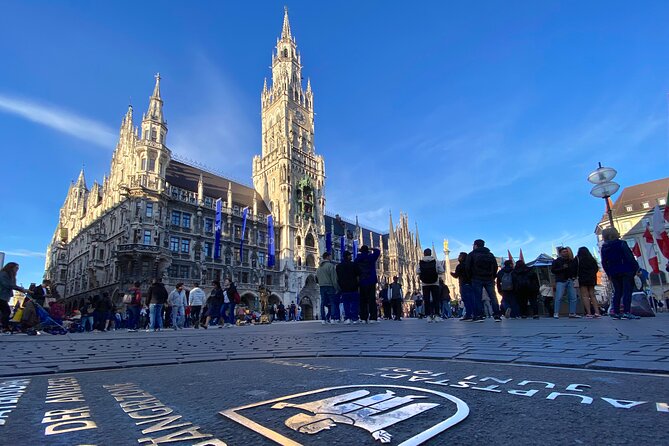
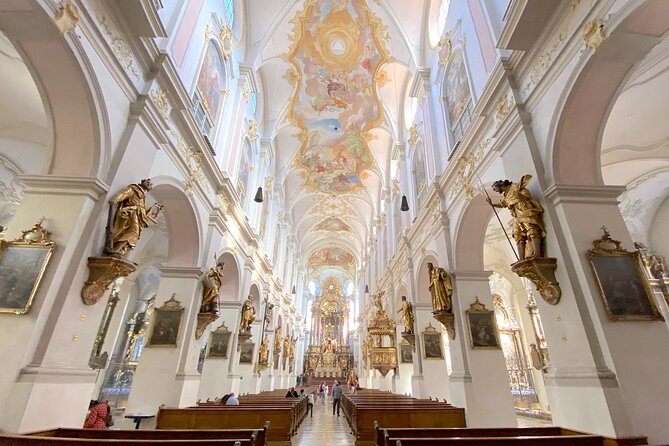
St. Peter’s is Munich’s oldest church, and the tour turns it into a story of odd details with meaning. You’ll learn about the tower’s eight clocks, why they matter, and what you can look for on the exterior. That tower is a visual landmark, but the real value is understanding the “why” behind the design.
Inside, you’ll admire the high altar with St. Peter and hear about the moment when his tiara is removed—plus how that symbolism connects to the election of the pope in Rome. The guide also points out a cannonball embedded in a window sill. You don’t need to be a history buff to find that chilling and memorable.
Finally, you’ll spot the Poor Sinners’ bell—right in the story of executions held on Marienplatz. It’s not a cheerful topic, but it explains why this square and church are linked in Munich’s past.
Marienplatz at Walking Speed: Mary Column and the White Sausage Origin
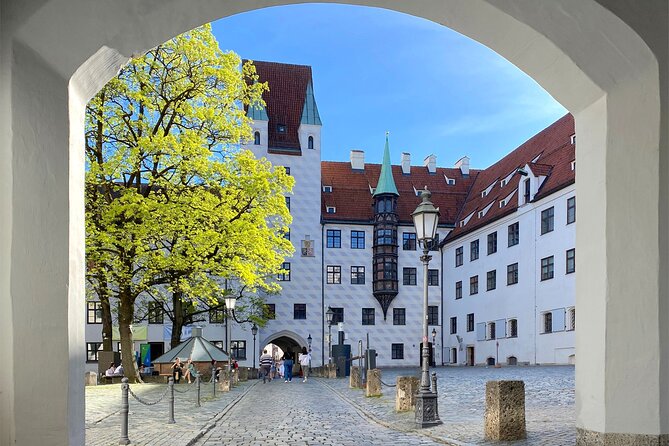
Marienplatz is the center of Munich’s street life, and the tour uses it like a classroom. You’ll learn its centuries-old role as the medieval marketplace and then see why it still feels like the city’s living room.
You’ll look at St. Mary’s column, including the angels fighting four evils at the base. The tour also includes some practical “how Munich measures things” context—like learning about counting driving distances in Munich—so you can make sense of what you’ll see on signs later.
And yes, you’ll get a foodie legend too: the place where Munich white sausage was invented. Even if you’ve had white sausage before, connecting it to the actual spot makes it feel real instead of like trivia.
Fischbrunnen Traditions: Wallet Washing and the Butchers’ Jump
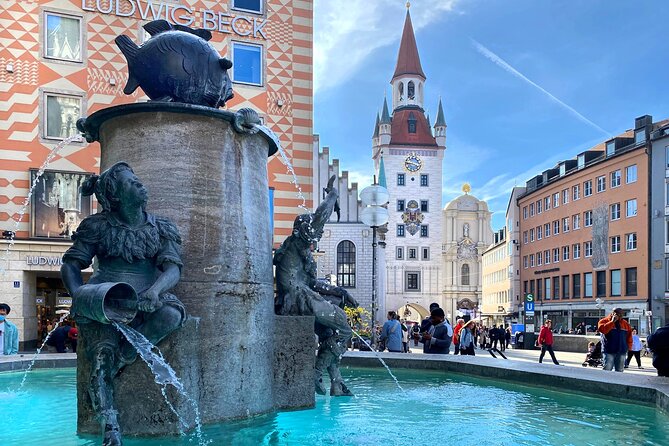
Fischbrunnen is the fountain that gives Munich its “locals have rituals” side. The tour explains the two traditions tied to it: Wallet Washing and the Butchers’ Jump.
What I like about this stop is that it’s not just legend for legend’s sake. It’s the kind of tradition that helps you understand how a city builds identity around small, repeatable moments—things people do year after year, even when the world changes.
Because this is short (around 5 minutes), don’t expect a long pause for photos from every angle. Treat it as a quick taste. Then keep walking, and notice how the fountain becomes a reference point for the rest of your stroll through old Munich.
You can also read our reviews of more private tours in Munich



New Town Hall (Neues Rathaus): Neo-Gothic Detail and the Glockenspiel’s Daily Show
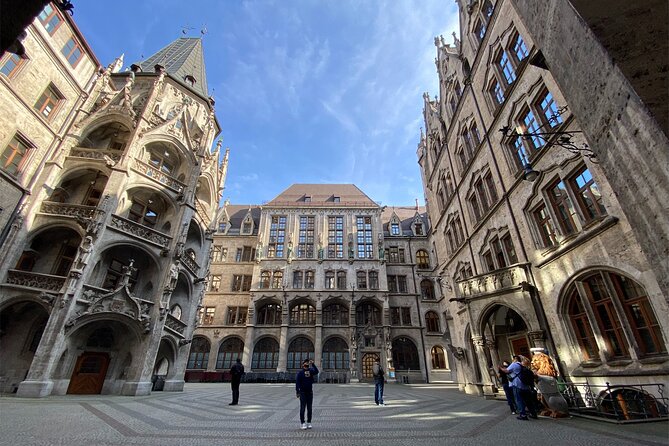
At the Neues Rathaus, you’ll learn to “read” the building. The guide breaks down the Neo-Gothic structure, but you’re really there for the stories tied to what happens above and around it.
You’ll also hear how two significant historical moments are daily reenacted by the Glockenspiel, Munich’s famous mechanical clock. The exact scenes aren’t spelled out here, but the key is this: the clock isn’t decorative. It’s public storytelling, performed on schedule for the city.
This stop is longer than the fountain (about 10 minutes), but it still won’t feel slow. You’ll get enough architectural guidance to avoid staring at random stone. Then you’ll move on with a better eye.
Frauenkirche: Devil’s Footprint and Why the Wind Feels Personal
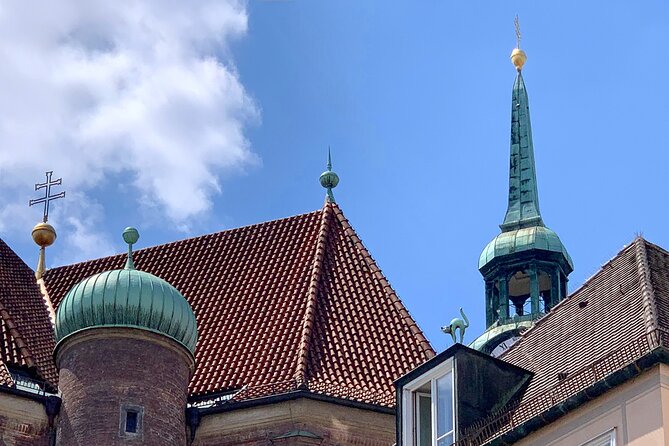
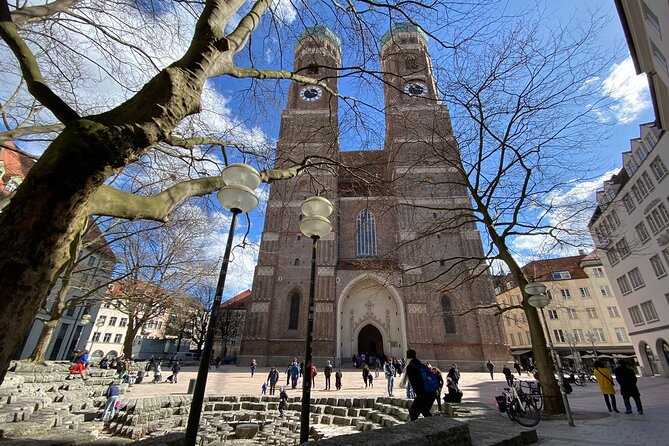
Frauenkirche is one of those landmarks that looks simple until you learn the legends attached to it. The tour covers the spine-chilling story of the cathedral’s construction, and you’ll also see the Devil’s footprint at the entrance.
Then the guide tackles the legend of wind. You’ll learn about how wind seems to blow around the cathedral regardless of season or weather in the city. Whether you treat that as legend or observation, it’s a neat way to turn a walk-by building into something you remember.
This stop is about 15 minutes, which is a good length for this kind of place. Expect it to be part story, part orientation: where to stand, what to look for, and how to connect the exterior symbolism to what you notice inside.
New Town Hall Courtyard: The Staircase of Ages and Statue Meaning
You’ll return to the New Town Hall for a peek at the grand courtyard. This part feels different from the main exterior stop because the focus shifts to symbolism—sculptures on the portico of the old city treasury and the story behind what you’re seeing.
One of the highlights is the Staircase of Ages. The guide helps you read the implied significance of the statues along the walls, which turns a “pretty courtyard” into a guided lesson about time, power, and how cities explain themselves with art.
This is a short stop (about 5 minutes). That’s just enough to get oriented without eating your whole schedule. If you want to linger, you’ll have to do it after the tour, but you’ll know what to look for when you do.
Alter Hof and the Monkey Tower: Wittelsbach Power and Louis IV
At Alter Hof, you’ll visit the inner courtyard connected to the first residence of the Wittelsbach royal family in Munich. The standout here is the Monkey Tower, and the tour covers its legend along with its surprising role in the life of Holy Roman Emperor Louis IV.
This is a great stop for readers who like “how power worked.” It’s not just royalty names—it’s how a specific place fed into an emperor’s life. The courtyard setting also helps you feel the scale of what used to be a residence center instead of just a photo backdrop.
This portion runs about 10 minutes, which is ideal: enough time to understand the story and still keep the pace brisk for an express tour.
Pfistermühle and the Pretzel Legend You’ll Carry Home
Pfistermühle is a stop that takes you from royal courts back to everyday life. You’ll walk by a building that once hosted a royal mill and bakery, and the guide shares the legend of the pretzel—plus the pretzel’s symbolic connection to Munich.
What works here is the way food becomes an anchor. After this, you’ll likely start spotting Munich’s symbols and thinking, “Oh, that connects to a place and a story.” Food lore can get silly fast, but with a specific location behind it, it becomes memorable.
The time here is short (about 5 minutes), so don’t expect a food tour. Think of it as a quick cultural download that makes the city’s flavors feel tied to history rather than just marketing.
Hofbräuhaus München: Beer-Hall Lore, Lockers, and No Tasting
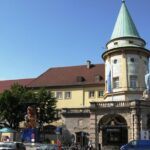
The tour ends at Hofbräuhaus München, the former royal brewery that’s now one of the world’s best-known beer halls. You’ll go inside the main hall, where you can meet the beer angel and observe regulars at their tables.
One of the most practical details: you’ll see the lockers where people keep their personal beer mugs. It’s a small element, but it tells you something about how the place works day to day—people aren’t just passing through; they have routines.
You’ll also learn the story behind the beer purity law, which breweries are allowed to sell beer at Oktoberfest, and an unexpected connection between Oktoberfest and a royal wedding. The tour does not include a beer tasting, so come ready to enjoy the history and ambiance without assuming you’ll sample anything.
This stop is about 15 minutes, long enough to feel like you arrived for a reason, not just walked past a famous address.
What You Get for $84.29 (and Why It Can Still Be Good Value)
At $84.29 per person, you’re paying for a private guide, not just walking from sign to sign. The tour is 90 minutes (approx.), and it strings together major sites plus the symbolic meanings that are hard to piece together on your own.
Several stops are marked as free-entry on the itinerary, and you won’t be locked into extra ticket costs while you’re learning. What’s also valuable: you’ll get insider recommendations for local restaurants, shopping, and sights to explore afterward.
The trade-off is what you already picked up: this is an express format. There’s no included food or drinks, so you’ll need to budget for a meal on your own. If you’re counting on beer, remember there’s no tasting—though the ending at Hofbräuhaus sets you up perfectly to plan your next step independently.
Who Should Book This Express Old Town Walk
This works especially well for:
- First-time Munich visitors who want a fast grasp of what matters
- People who enjoy story and symbolism, not just dates and names
- Families who need a guide who can keep things friendly and manageable for kids
- Anyone who likes history explained with practical, visual support (Victoria uses an iPad with photos of how war affected buildings)
If you’re the type who wants to sit inside churches for a long time, explore museums, or read every panel at length, this might feel a bit too quick. Pair it with extra time after you finish at Hofbräuhaus, and you’ll cover both bases.
Should You Book This Munich Old Town Express Walk?
I’d book it if you want to get your bearings fast and learn how Munich connects fortifications, churches, traditions, and beer culture into one story. The private setup is a real advantage, and the guide-led pace helps you hit 10 meaningful stops without feeling rushed in the wrong way.
Skip it (or add more free time) if you’re expecting a slow, deep, sit-down tour where you can linger in every room. This one is about efficient understanding—so use it as your launchpad for the rest of your Munich day.
FAQ
How long is the private express walking tour?
It’s listed as about 1 hour 30 minutes.
Is this tour private?
Yes. It’s a private tour/activity, so only your group participates.
What language is the tour offered in?
The tour is offered in English.
Where do we meet and where does it end?
The tour starts at Toy Museum Munich, Marienplatz 15, 80331 München, and ends at Hofbräuhaus München, Platzl 9, 80331 München.
Are there admission tickets required for the stops?
The itinerary notes the stops with admission ticket free.
Is food, drinks, or beer tasting included?
No. Food and drinks are not included, and no beer tasting is included.