REVIEW · MUNICH
Private Dachau Concentration Camp Memorial Site Tour from Munich
Book on Viator →Operated by InMunich Tours · Bookable on Viator
Dachau is heavy, even on a good day. This private tour from Munich pairs easy pickup with a guide who keeps the day moving at a human pace, with choose-your-start-time flexibility. It is built for English speakers and runs about 5 to 6 hours.
I especially like the survivor-centered stories and the structured way the visit follows the prisoners’ experience, often described as the Path of the Prisoners. You’ll hear careful context while you walk through key areas, including the camp’s day-to-day reality and later developments. Guides mentioned by name in past bookings include Adam and Markus, among others.
One consideration: this is emotionally intense and involves a long, mostly on-foot visit, so plan for moderate physical fitness. Also, there’s no food or drinks included, so you’ll want to plan a meal before or after.
In This Review
- Key things you’ll notice on this private Dachau tour
- Why this private Dachau tour from Munich feels more personal
- Getting to Dachau: the Munich transit day plan that saves you brainpower
- The heart of the tour: following the Path of the Prisoners
- What you actually see at Dachau: buildings, administration, and the darkest rooms
- What makes this tour’s pacing work (and where it can drag)
- Munich Central Station return: how you end the day without stress
- Price and value: what you’re paying for beyond the guide
- Who this tour is best for (and who might want a different plan)
- The guide quality: what to look for in a good Dachau explanation
- Should you book this Dachau private tour from Munich?
- FAQ
- How long is the private Dachau tour from Munich?
- Do I get hotel pickup in Munich?
- Is the tour in English?
- Is the admission ticket included?
- Is it really private?
- Are there age restrictions for children?
Key things you’ll notice on this private Dachau tour
- Private group only: You get a guide’s attention without juggling strangers’ questions.
- Pickup and public transit included: Less stress than figuring out trains and timing on your own.
- A clear route called the Path of the Prisoners: You follow a logical storyline from arrival onward.
- Big-picture camp history, not just one site: You’ll hear how the camp system evolved and why Dachau became a model.
- Survivor stories and survivor-era memory: The tour focuses on individual human experiences, not just dates.
- Weather-proof planning: The tour runs in all weather, so wear layers and shoes you trust.
Why this private Dachau tour from Munich feels more personal
Dachau does not need hype. What you need is the right guide and the right pace, because the site is both physical and psychological. A private format matters here. Instead of trying to listen over a crowd, you can ask your questions in the moment, pause when something lands, and keep your footing—literally and emotionally.
I also like the way this tour is designed around your day. Hotel pickup from selected stays helps you start without a scramble, and you get to choose your departure time when booking. That combination is a quiet win. It means you arrive ready to focus, not still figuring out Munich transit at the worst possible moment.
Finally, the tone matters. The tour is designed to follow the prisoners’ journey, and that shows up in how the day is explained—arrival, administration, daily life, and at times death. The storytelling is tied to the site layout, so you leave with a clearer understanding of what happened and how the system worked.
You can also read our reviews of more private tours in Munich

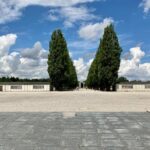
Getting to Dachau: the Munich transit day plan that saves you brainpower
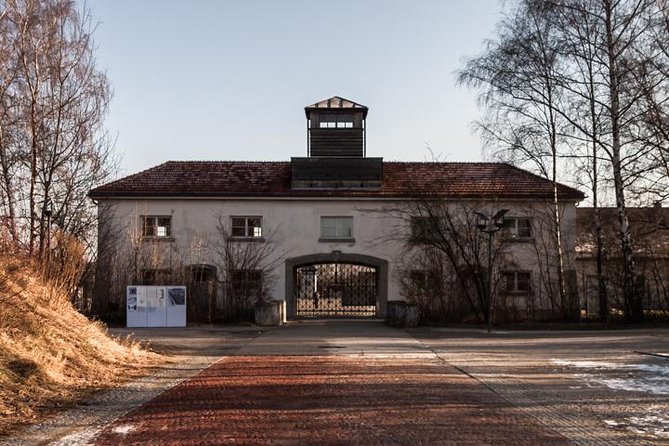
The day starts at your accommodation or at Munich Central Station. From there, you take public transit to the Dachau Bahnhof area. The tour’s schedule sets aside about an hour for this first movement, and the admission ticket connected to the first stop is included.
This is one of the smartest parts of the experience. You don’t have to plan the route, worry about train changes, or time the return. Munich’s transit is efficient, and using it with a guide keeps the day calm. You’ll also get a clearer sense of where you are in relation to the memorial site before the emotional heavy lifting begins.
If you are the type who likes to arrive with a plan, you’ll appreciate the structure. If you are already tired from travel, you’ll appreciate that the first logistics are handled.
Practical note: you’ll want shoes that work well on uneven ground. Even when the route is organized, Dachau is still a walking visit.
The heart of the tour: following the Path of the Prisoners
Once you’re at the memorial site, the tour shifts fully into interpretation. The guide follows recommendations linked to the Comite International de Dachau (CID), a group of survivors involved in creating the Memorial Museum. That matters because the tour’s aim is not only historical explanation. It is guided remembrance, with a storyline.
You’ll spend about 4 hours inside the museum complex area as the tour tracks the prisoners from arrival through administration, then through daily life, and at times their death. This is not a quick highlight reel. It is paced like a walk through a system, with stops that connect the buildings and spaces to what people endured there.
Two things make this approach powerful for you:
- It helps you understand cause and sequence. You are not just seeing buildings; you’re following how the camp functioned.
- It reduces confusion. The camp layout can feel overwhelming if you try to read it alone.
Also, the guide doesn’t stick to one theme. Expect discussion of different types of camps that existed and how the concentration camp system evolved over time. You’ll also hear how Dachau became a model camp for the entire system, which is one of those facts that changes how you read the rest of the era.
What you actually see at Dachau: buildings, administration, and the darkest rooms
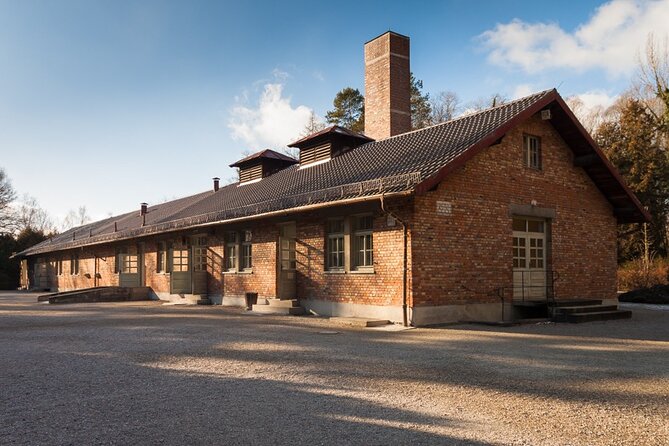
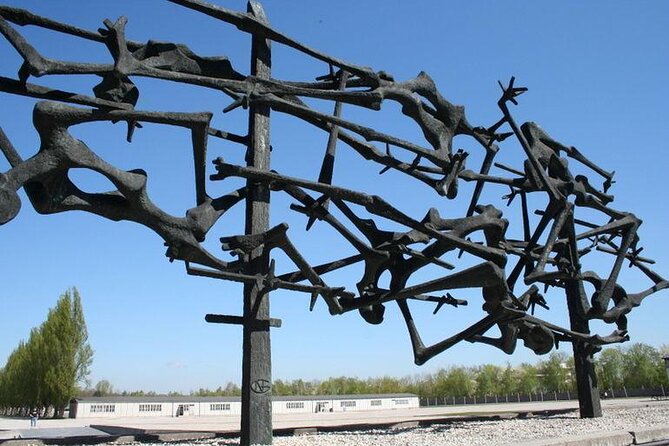
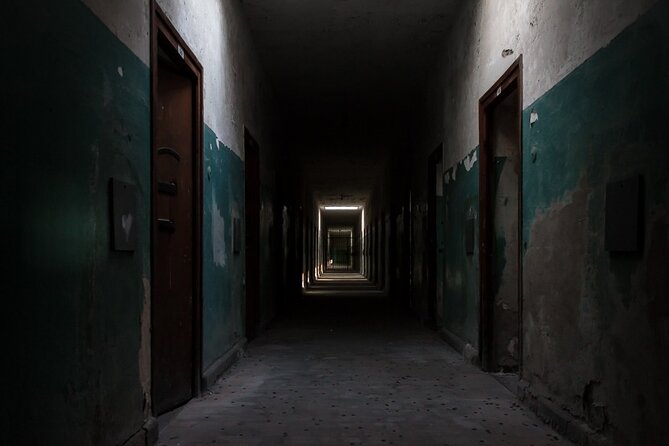
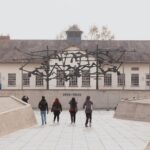
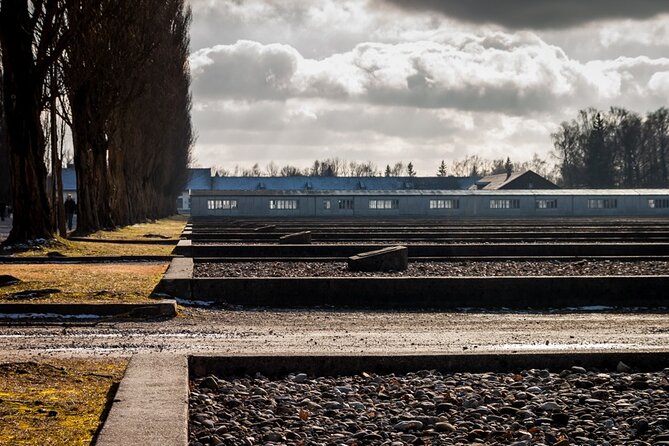
The museum complex includes original camp buildings and key structures. The tour specifically mentions viewing original areas including the original gas chamber and crematoria. Seeing these parts of Dachau is hard, and the guide’s job here is to keep you oriented and grounded in context.
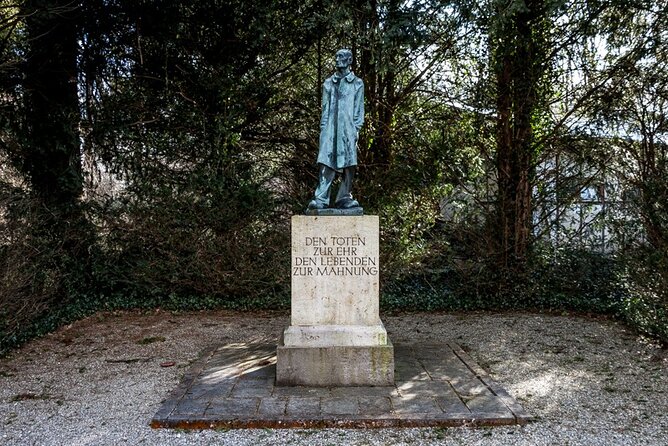
The tour also includes time for reflection around how German society deals with this history, and how the memorial site became integral to learning. That piece is important. You are not only learning what was done to prisoners. You’re also learning how memory is carried in the public space today.
During the visit, you can expect emphasis on individual survivor stories. That approach is a counterweight to the scale of the crime. Numbers are necessary for context, but they can blur people. Survivor narratives pull the story back into human terms.
You should mentally prepare for a day where questions are welcome but answers can be difficult. A good guide will handle your curiosity with care and keep you respectful of the site and its meaning.
What makes this tour’s pacing work (and where it can drag)
This experience is designed as a 5 to 6 hour day, with time allocated for transit and the long core visit. The first transit block is about an hour. The memorial visit is about 4 hours. Then there’s another hour for the return, ending back at your original start location.
That timing tends to work well because it prevents the classic problem: spending too little time inside and leaving with only impressions. Four hours inside is enough to make the information stick.
Still, it can feel long if you are emotionally sensitive. Dachau isn’t the kind of place where you want to sprint through and then recover later. You may also notice that your brain gets tired from absorbing structure: camp systems, evolving policies, and how the site is interpreted. If you start too late in the day, it can be harder to process.
My advice: schedule the tour earlier if you can, and plan a calm evening afterward. You will want space to think, not rush into dinner plans that require nonstop smiling.



Munich Central Station return: how you end the day without stress
After visiting the museum complex and original buildings, the tour returns you to Munich. The route described goes back to Munich Central Station or your accommodation, with about an hour for the return.
The included admission ticket at the first segment is noted, and the tour time is built around a full circuit rather than a one-way drop. That matters for you because it prevents the common headache: you arrive, you tour, then you scramble to find a train while still processing what you’ve just seen.
Instead, you finish the day knowing where you’re going next. It’s a small detail, but on a day like this it can feel like a big deal.
Price and value: what you’re paying for beyond the guide
The price is $260.72 per person. For a Dachau tour from Munich, that is not a bargain, and it’s not meant to be. The value is in what’s bundled and how the experience is delivered.
Here’s what you’re getting as part of the cost:
- A professional and qualified guide
- Hotel pickup and drop-off (selected hotels only)
- Transport using Munich’s public transit system
- Local taxes included
- Admission ticket inclusion connected to the transit segments (listed at the first and final segments)
- The core memorial visit admission is described as free for the tour portion
Food and drinks are not included, so you’ll need to handle meals separately. Since you’re going to be focused for hours, it’s smart to eat before you go or plan a solid meal after. Even if you don’t feel hungry, your energy will matter.
Where this feels like good value is the private format. When you’re the only group, the guide can match pacing to your needs. That tends to make a difference in a site where questions and pauses are normal.
If you’re traveling with another adult and want your own pace, the private structure can feel especially worth it. If you’re traveling solo, it can still be a worthwhile splurge because you’re buying clarity, not just transportation.
Who this tour is best for (and who might want a different plan)
This private tour fits well if you want a guided, structured visit and you care about understanding how Dachau fits into the broader concentration camp system. It’s also a strong choice if you’d rather ask questions directly than rely on signage.
It can work for families with older teens, since children must be 13 or older. Proof of age may be requested, so if you’re bringing teens, have the right ID ready.
It may be a tougher fit if you expect a fully relaxed day. The tour is moderate fitness level, and the content is emotionally intense by nature. If mobility is limited, you should contact the provider ahead of time. One guide has previously helped arrange a mobile scooter for a visitor who couldn’t walk the full distance, which suggests the team can be flexible when needs are clear.
The guide quality: what to look for in a good Dachau explanation
The guides tied to this tour style are repeatedly praised for being careful with the subject and for answering questions. Names that have shown up include Adam, Markus, Marcin, Marsin, Nik, Sam, Scott, Keith, Tom, and Mat. You should not treat name-dropping as a guarantee, but it does signal that English-speaking, thoughtful guides are a real part of the product.
When you’re evaluating whether a tour will work for you, here’s what matters most at Dachau:
- Can the guide connect the buildings to a storyline, not just facts?
- Can they handle survivor stories without turning them into a checklist?
- Can they explain how the camp system evolved, and why Dachau’s role mattered?
- Can they give you space to ask questions?
This tour is built around those points: prisoner path storytelling, discussion of camp types, evolution, and how memory works in Germany.
Should you book this Dachau private tour from Munich?
Book it if you want a guided, prisoner-path experience with pickup convenience and a private pace. It is the kind of tour where structure helps you understand what you’re seeing, and the emotional intensity is easier to hold when someone keeps you oriented.
Skip it or consider another option if you need a light, casual outing. Dachau is not that. Also, if you know you struggle with long on-foot visits, plan ahead and talk to the provider before you lock in your time.
If your goal is to learn with care, ask questions, and not waste time figuring out transit, this private format is a strong choice.
FAQ
How long is the private Dachau tour from Munich?
The tour runs about 5 to 6 hours.
Do I get hotel pickup in Munich?
Pickup is offered from selected hotels. You can also request pickup from other accommodations by providing the name and address so the company can advise if pickup is possible.
Is the tour in English?
Yes, the tour is offered in English.
Is the admission ticket included?
Admission is included for the first stop and again for the return segment. The memorial site admission portion is described as free for this tour.
Is it really private?
Yes. This is a private tour/activity, and only your group participates.
Are there age restrictions for children?
Yes. Children must be 13 or older, and children 12 and under are not permitted. Proof of age is recommended and may be requested.