REVIEW · MUNICH
Dachau Concentration Camp Private Tour by Train from Munich
Book on Viator →Operated by Nuremberg City of Empires Tours · Bookable on Viator
A sobering day trip by train. This private Dachau visit is built for easy transport and a one-on-one style tour with an officially accredited guide. You’ll see the memorial and museum in a clear, guided order, then head back to Munich by train.
I especially like that the day is paced for real understanding, not just a fast walk-through. You also get a customizable experience where you can ask questions along the way. One drawback to consider: this visit is emotionally intense, and kids under 13 aren’t allowed—so it’s not a casual outing, even if the logistics are smooth.
In This Review
- Dachau by train from Munich: simple logistics, real context
- Your guide’s role at Dachau: the difference-maker
- Entering the memorial: what you’ll see and why it matters
- Camp gate to crematorium: a guided walk with room to process
- Museum time and an English documentary option
- Price and value: when private makes sense at this distance
- Who this Dachau private tour is best for
- Guide names and what to expect from delivery
- Practical timing: how to plan your day around 4–5 hours
- A few respectful tips that make the visit better
- Should you book this Dachau private tour from Munich?
- FAQ
- What’s the duration of the Dachau private tour from Munich?
- Where do we meet the guide in Munich?
- How do you get from Munich to Dachau?
- Is the tour offered in English?
- Is this a private tour?
- Are tickets and transport included in the price?
- Is food included?
- Can children attend?
- What’s included at the memorial site?
- Is the museum visit ticket included?
- What’s the cancellation rule?
Dachau by train from Munich: simple logistics, real context
Munich to Dachau is close enough for a day trip, but far enough that DIY can feel annoying. This tour solves the main headache: getting you from Munich to the memorial site with train tickets included, plus the onward bus ride to the camp area.
You meet your guide either at Munich Central Station (Hauptbahnhof) or at your Munich hotel. Then you board a train north—roughly a half-hour ride—before switching to a bus to reach the memorial site. The whole structure is designed so you’re not spending the day figuring out schedules and platforms.
That matters at Dachau. When you arrive stressed, you don’t absorb as much. When you arrive in sync—guided, timed, and settled—you can focus on what you’re actually seeing and learning.
Your guide’s role at Dachau: the difference-maker
This is a private tour, meaning only your group participates. In practice, that gives you something you won’t get on big buses: time. Time for questions. Time for clarification. Time to pause when a moment hits harder than expected.
The guide is officially accredited/certified for this subject matter, and the tour is set up to be guided throughout the memorial site. You can ask questions any time, and the itinerary is flexible enough to steer deeper into what you care about most.
Some guides in this program have been praised for strong historical sequencing and respectful tone, including guiding you with a linear timeline so the details connect. Others have been noted for sensitivity—helpful when the topic is heavy and personal. Bottom line: at Dachau, the guide’s delivery is not a side detail. It’s the whole experience.
You can also read our reviews of more private tours in Munich

Entering the memorial: what you’ll see and why it matters
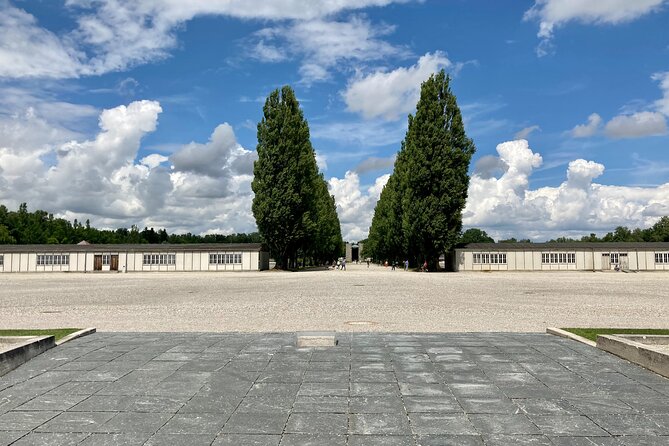
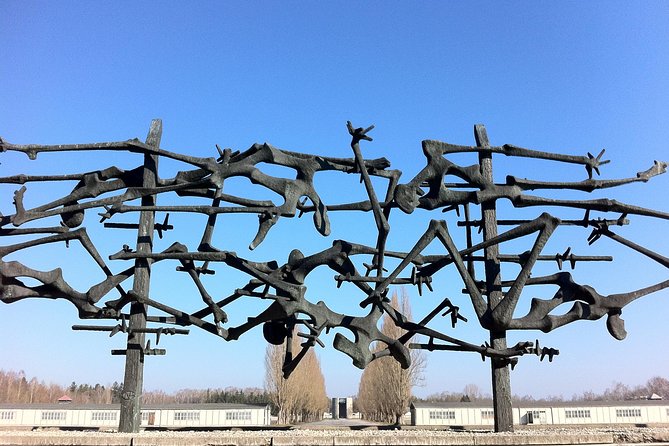
The Dachau Concentration Camp Memorial Site is often described as a starting point—Dachau was the first permanent concentration camp in Nazi Germany and a model for later camps. Your guide’s job is to connect the place to the bigger story: how the system worked, how it expanded, and how the Nazis turned persecution into policy.
You’ll walk through major areas tied to daily camp reality and the machinery of repression. The goal isn’t shock for shock’s sake. It’s understanding—grounded in the physical reminders still present on-site.
Key landmarks on the site visit include:
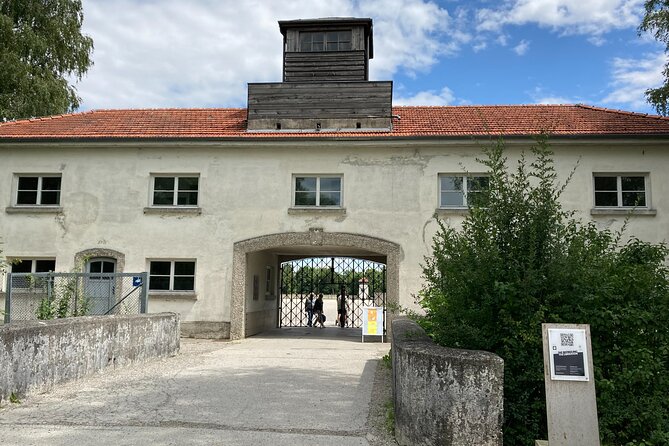
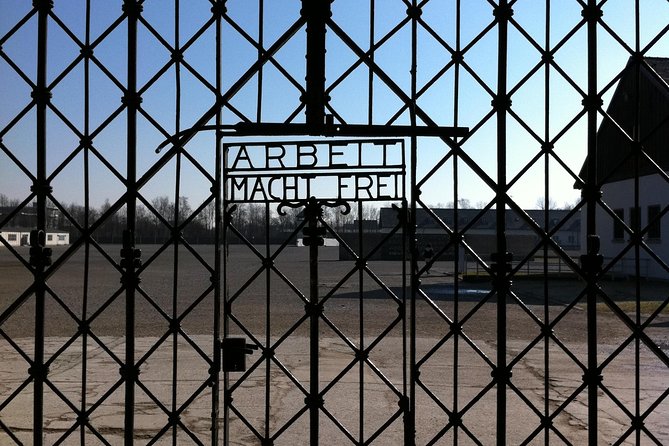
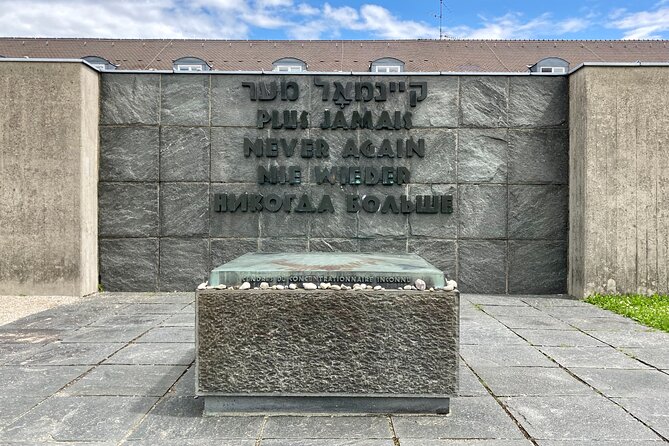
- The gatehouse and the famous entrance message Arbeit macht frei (Work makes you free)
- The bunker
- The crematorium
- The administration headquarters
- The rail platform where prisoners arrived
Each stop functions like a chapter. The entrance and its message set a bitter tone. The prisoner transport details show how quickly the system processed people. Then the buildings and spaces help you grasp how confinement, surveillance, and death were integrated into camp operations.
Camp gate to crematorium: a guided walk with room to process
Walking Dachau isn’t like visiting a typical museum. You’ll move through reconstructed cell blocks and preserved reminders, with a guide helping you interpret what you’re looking at.
One thing I like about this tour’s structure is that it doesn’t just point out buildings. It connects them to what happened there—describing the Nazis linked to the site and giving stories of prisoners held at Dachau. The tour format also helps you understand that Dachau wasn’t used only for one group. You’ll learn about prisoners such as communists, German dissidents, gay men, Jehovah’s Witnesses, and Jewish and Polish men and women.
That variety matters because it shows the camp as part of a broader, ruthless targeting system—not a single isolated event. It also helps you understand why people’s experiences differed, even under the same brutal framework.
You’ll also get context for the camp’s purpose and evolution. Dachau didn’t stay static. Your guide will explain how the system changed as the regime tightened control and expanded persecution.
Museum time and an English documentary option
After the memorial site portion, you’ll have time to explore the museum on your own. This is a big deal, because the museum is where many visitors slow down and process details at their own pace.
If you want an additional layer of context, there’s also the option to watch an English-language documentary while in the museum area. It’s a helpful way to connect what you just saw in the camp spaces to broader historical explanation.
Even if you don’t watch the documentary, this open museum time gives you control. You can linger over photographs, documents, or specific themes that your guide highlighted during the camp walk.
Price and value: when private makes sense at this distance
At $266.16 per person for a private tour, you’re paying for more than a guide. You’re paying for a tight bundle: hotel or central meeting, guided time at the memorial, and train tickets between Munich and Dachau.
Is it expensive? It can be, yes—especially if you compare it to cheaper group coach tours. But private value shows up in three practical ways:
- You can ask follow-up questions when something doesn’t click.
- You avoid the scramble of large groups trying to hear over noise.
- Your route and timing are handled, so you’re not managing public transport while the day is emotionally demanding.
Also, the tour duration is clearly structured at about 4 to 5 hours total. That’s a reasonable window for a day trip that includes a guided memorial visit (around three hours), museum time, and the return journey.
If you’re visiting Munich and want Dachau to feel like a guided learning experience rather than a rushed checklist, this is the kind of price that can make sense.


Who this Dachau private tour is best for
This tour fits best if you want structure and context. It’s ideal for people interested in World War II and European history, and it’s especially well-suited to travelers who prefer a quieter, question-friendly format.
It also works well for families with teens—since the minimum age is 13. For younger children, this isn’t just about policy. It’s about the emotional reality of the content and the length of the visit.
Moderate physical fitness is recommended. You’re not doing an extreme hike, but you should expect walking through a memorial site and museum spaces, likely with some uneven surfaces and time on your feet.
If you’re short on time in Munich and want this covered in one smooth day, the private train approach is a strong match.
Guide names and what to expect from delivery
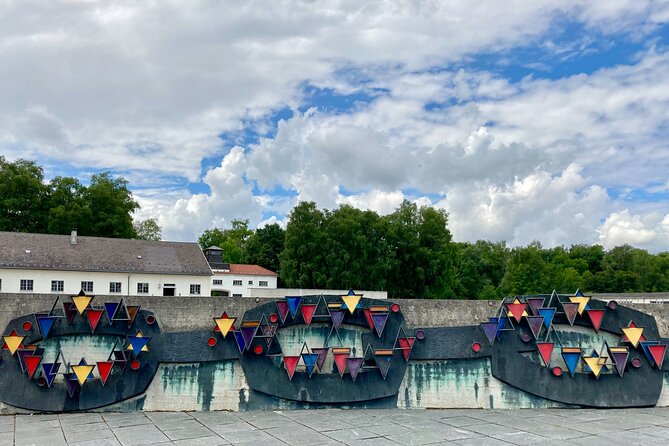
Different guides bring different energy. Within this tour style, guides such as Lucia, Nick, Jason, Richard, Achim, Keith, and Nic have been described as patient, historically grounded, and respectful of the moment.
For example, Lucia has been praised for patiently giving WWII context and helping connect the camp story to what led to it. Nick has been noted for balancing competence with sensitivity, which matters when emotions rise. Jason and others have been credited with clear timelines and strong responsiveness to questions.
On the other hand, there has been at least one unhappy experience tied to guide tone and how much camp-specific information was delivered. That doesn’t mean the tour is automatically like that. It does mean you should care about guide fit.
If you prefer a strictly formal approach, consider asking—before departure—how the guide tends to structure explanations. A quick message can help you align expectations for the emotional tone.
Practical timing: how to plan your day around 4–5 hours
This is a half-day commitment that still feels full. Plan for a total time window of about 4 to 5 hours, including meeting your guide in Munich, the train ride to Dachau, the guided memorial portion (about three hours), and the return trip.
Because pickup can be at your hotel or at Hauptbahnhof, I recommend you keep your morning fairly open. You don’t want to schedule a tight lunch reservation right after the tour unless you’re okay with a little uncertainty from train and museum pacing.
Also note that food and drinks aren’t included. If you’re staying in central Munich, you can make this work by having a plan for a simple meal afterward—something quick and nearby.
Dachau is a place where you’ll likely want water and a break when you can. Bring a small bottle, wear comfortable shoes, and dress for cool or rainy weather since Germany can switch moods fast.
A few respectful tips that make the visit better
You don’t need to turn this into a performance. You do need to be ready to slow down.
Here are the practical moves I’d make:
- Keep your questions ready. If you have one big theme—how the system evolved or how different groups were targeted—write it down.
- Let the guide set a timeline. It helps you avoid getting lost in details.
- Treat the museum time as optional processing, not a race. The best part is lingering where you feel you need it.
And yes, humor has a place in travel. But at Dachau, it can feel out of place. If you’re sensitive to that, you’ll appreciate a guide who stays grounded and respectful.
Should you book this Dachau private tour from Munich?
If your priority is understanding—not just seeing—then I think you’ll like this format. The included train travel from Munich, the private setup, and the guided memorial visit with time at the museum are a strong mix. The age limit and the emotional weight mean it’s best for older teens and adults.
Book it if:
- You want a certified guided experience rather than DIY.
- You prefer asking questions and getting straight answers.
- You want the whole day handled: pickup, train, memorial tour, return.
Skip it (or consider another option) if:
- You’re expecting a more casual, lighthearted outing.
- Your group is sensitive to emotional content and needs a gentler pace.
- You want a cheaper group bus option and don’t care as much about personalized guidance.
Overall, if you’re going to Dachau from Munich, this private train approach is one of the more practical ways to do it with structure and respect—without spending your day hunting down transit.
FAQ
What’s the duration of the Dachau private tour from Munich?
It runs about 4 to 5 hours total, including meeting your group in Munich, the train ride to Dachau, the guided memorial visit (around 3 hours), time at the museum, and the return trip to Munich.
Where do we meet the guide in Munich?
You can meet your guide at Munich Central Station (Hauptbahnhof) or at your centrally located Munich hotel. You choose your preferred pickup point when booking.
How do you get from Munich to Dachau?
You take a train from Munich (about a 30-minute ride) to Dachau, then a bus transports you to the memorial site.
Is the tour offered in English?
Yes, the tour is offered in English.
Is this a private tour?
Yes. It’s private, and only your group participates.
Are tickets and transport included in the price?
Train tickets from Munich to Dachau are included, and transport costs are included in the tour price.
Is food included?
No. Food and drinks aren’t included.
Can children attend?
Children under age 13 aren’t allowed on this Dachau tour.
What’s included at the memorial site?
You’ll tour the Dachau memorial site with a guided visit that includes areas such as the gatehouse, bunker, crematorium, administration headquarters, and the rail platform. There’s also time to visit the museum afterward.
Is the museum visit ticket included?
The details provided indicate the admission ticket is free for the activity.
What’s the cancellation rule?
You can cancel for a full refund up to 24 hours before the experience starts, based on local time.