REVIEW · MUNICH
Private Munich Tour with hotel pickup
Book on Viator →Operated by InMunich Tours · Bookable on Viator
Marienplatz feels like Munich’s heartbeat. This private, 2 to 3 hour old-town walk makes it easy to connect the dots between Bavaria, the city’s big landmarks, and the stories people come back for. I like that you get real guiding at a human pace, not a rushed checklist.
I also like the hotel pickup option (city center) plus the focus on major sights you can’t really miss once you know where to look. One good watch-out: some stops are short, and a few interiors cost extra, so this is best if you’re happy to see sights from the right angles rather than doing a deep inside-the-building day.
In This Review
- Key things I’d highlight before you go
- A private Munich intro walk that actually helps you plan
- Marienplatz and the Glockenspiel: the showtimes to build your day around
- Frauenkirche: Munich’s big church, quick and meaningful
- The Rathaus-Glockenspiel: another clock show, another layer of Munich
- One more old church stop: what you’ll gain from a short pause
- Hofbräuhaus: Munich beer hall energy with Oktoberfest stories
- Odeonsplatz: a beautiful square with heavy history
- Residenz München: Wittelsbach palace power, with optional ticketing
- Viktualienmarkt: the market stroll that works best on the right day
- How the guide shapes the whole experience
- Price and value: what $258.82 buys for up to 15 people
- Who should book this Munich private tour
- Should you book? My take
- FAQ
- Is pickup included, and where do they pick me up?
- Where does the tour start?
- How long is the private tour?
- What languages is the tour offered in?
- Is this tour private?
- Are entrance tickets included for the churches and palace?
- When can I see the Glockenspiel shows?
- Does the tour run in bad weather?
- Does the tour include food or drinks?
- What is the cancellation policy for a full refund?
Key things I’d highlight before you go
- Private guide + hotel pickup: easiest on day one, especially if you’re tired from travel.
- Glockenspiel at Marienplatz: timed showings at 11:00, 12:00, and 17:00 from March to October.
- Two clockwork moments: Rathaus-Glockenspiel is also on the schedule in the same months.
- Church stops with extra admission: Frauenkirche is a quick look, but the ticket isn’t included.
- Beer hall context: quick stop at Hofbräuhaus with Oktoberfest-style storytelling.
- History in the open: Odeonsplatz gets real context about the 1930s–1940s era.
A private Munich intro walk that actually helps you plan
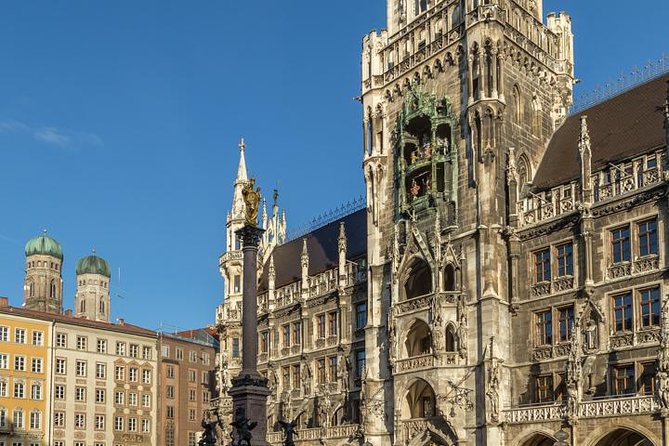
Munich can feel a bit like a tidy puzzle at first: beautiful squares, grand buildings, and a lot of layers stacked on top of each other. This tour is built for your first day (or your first half-day) because it gives you a clear route through the old center, then explains what you’re seeing while you’re still there—so later, when you return on your own, you know what matters.
Because it’s private, your guide can steer the walk toward what you care about most: history, beer culture, photo stops, or just the most scenic viewpoints. You’re also not stuck with a big group tempo. The most common praise I see tied to this kind of private walk is simple: the guide explains, you ask, and you don’t feel like you’re in the way.
The route is compact and meant to be walked. That’s good for value and energy—just don’t plan a heavy lunch right after if you’re sensitive to cold or long pavement. The tour runs in all weather, so bring proper walking shoes and dress for conditions.
You can also read our reviews of more private tours in Munich

Marienplatz and the Glockenspiel: the showtimes to build your day around
Marienplatz is where Munich announces itself. You start at the New Town Hall area (Marienplatz 8), and you’ll pause for the Glockenspiel performances at 11:00am, 12:00pm, and 5:00pm from March through October. The ticket for this segment is free, which is a nice bonus: you’re paying for the guide and orientation, not an extra entry fee.
What I like about this stop is the timing logic. Those shows are so specific that seeing them with a guide reduces your stress. You don’t have to research the hours, map your approach, or wonder where to stand for a decent view.
Practical tip: arrive a bit early to get your bearings at street level. Even if the show itself is quick, the square is part of the experience—lots of faces, lots of photos, and a very Munich sense of occasion.
If you’re visiting outside March to October, you won’t get these Glockenspiel showtimes as listed. You’ll still get the square and history context, but plan your expectations for the clockwork moment.
Frauenkirche: Munich’s big church, quick and meaningful
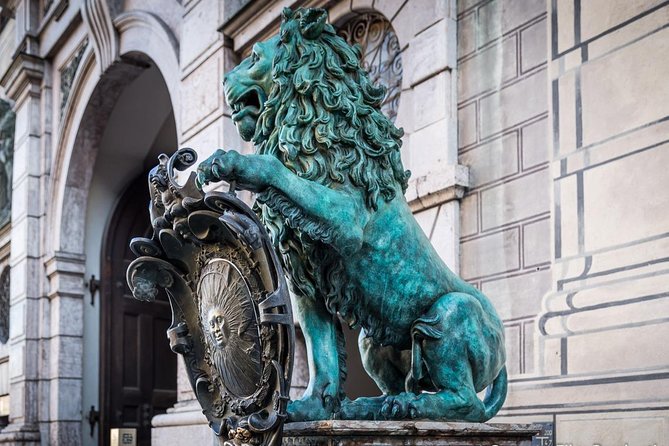
Next is a short visit to Frauenkirche, Munich’s largest church and the Cathedral of Munich and Freising. You’ll spend about 10 minutes here. The big headline: this stop does not include admission tickets.
That matters for two reasons. First, you’ll likely keep it to the exterior and the most immediate viewpoints unless you choose to add the ticket yourself. Second, it keeps the overall walk smooth—so you don’t lose your afternoon to long entry logistics.
What makes this stop worth it anyway is the scale and role. This is one of those places where knowing what you’re looking at changes how you see it. You’ll get a guide’s explanation for why this church shows up in so many Munich stories, not just as architecture, but as identity.
The Rathaus-Glockenspiel: another clock show, another layer of Munich
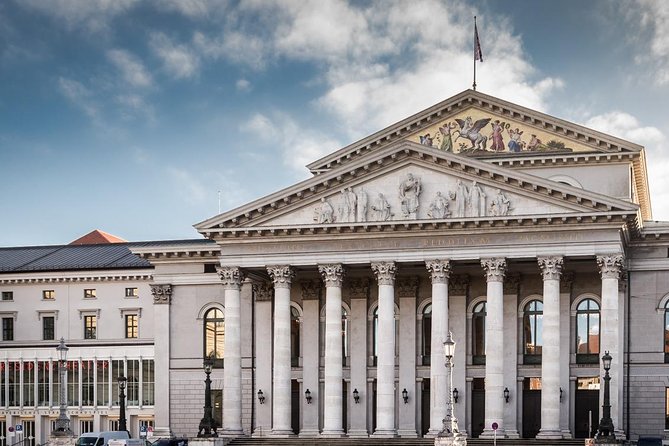
After Marienplatz, you’ll hit the Rathaus-Glockenspiel area. It’s the other clock moment in the itinerary, with the same seasonal schedule: 11:00am, 12:00pm, and 5:00pm from March until October. The time here is about 15 minutes, and it’s free.
Why a second Glockenspiel stop is smart: it shows you how much of Munich’s public life revolves around these symbolic events. Also, once you’ve seen one clockwork show, the second one lands better. You spot details faster. You also understand how guides connect the city’s civic buildings to its cultural traditions.
This is a good place to ask questions. A private guide is at its best when you can say something like, I noticed that detail—what does it mean? You’ll get a direct answer, not a generic sign explanation.
One more old church stop: what you’ll gain from a short pause
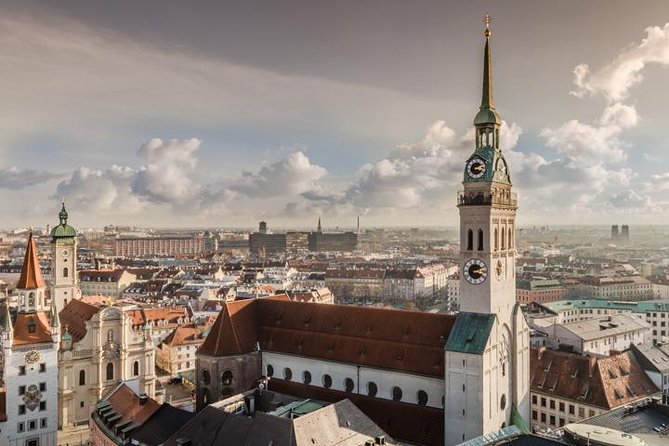
There’s also an additional historic church stop described as one of the most beautiful and oldest churches in Munich. The exact name isn’t spelled out in the information I have, but the intent is clear: a small detour for older-city atmosphere before you move into squares and civic landmarks.
These short church stops are useful even if you don’t go inside. They break up the walk with something human-scale: stone textures, towers, and streets that feel different from the main squares.
If churches are your thing, keep an eye out for viewpoints you can photograph quickly. If you want photos, this is one of the times to slow down briefly, since later stops focus more on civic spaces and quick context.

Hofbräuhaus: Munich beer hall energy with Oktoberfest stories
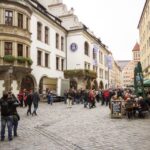
Then you’ll step into Staatliches Hofbräuhaus, one of the world’s most famous beer halls. You’ll spend about 10 minutes, and admission is listed as free.
Even with a short stop, this is a useful piece of orientation. Hofbräuhaus sits at the intersection of tradition and performance. The guide also brings in the broader context of Oktoberfest beer festival stories, so the beer culture isn’t treated like a random fun fact. It becomes part of Munich’s social calendar and why certain places matter.
What to expect practically: this stop can be a great photo moment from the outside or at the entrance area, but if you want a full beer hall experience with a long sit-down, this tour likely won’t replace that. Food and drinks are not included, so you’ll need to plan any orders separately.
If beer culture is one of your travel priorities, I recommend using this stop as your cue for what style of place you want for your evening.
Odeonsplatz: a beautiful square with heavy history
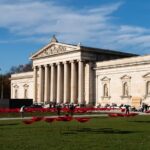
Next is Odeonsplatz, about 20 minutes. Admission is free. This square is described as one of Munich’s most beautiful, but also infamous for Nazi rallies in the 1930s and 1940s.
That combination is why this stop sticks with you. It’s easy to admire architecture without learning the cost of certain eras. A good guide helps you see the present without erasing the past. You’ll get the history turned into something you can connect to what you stand in front of today.
This is also a stop where your questions can matter. If you care about context, ask how the city changed or how these spaces were used. A private guide can tailor tone—direct, respectful, and clear.
Residenz München: Wittelsbach palace power, with optional ticketing
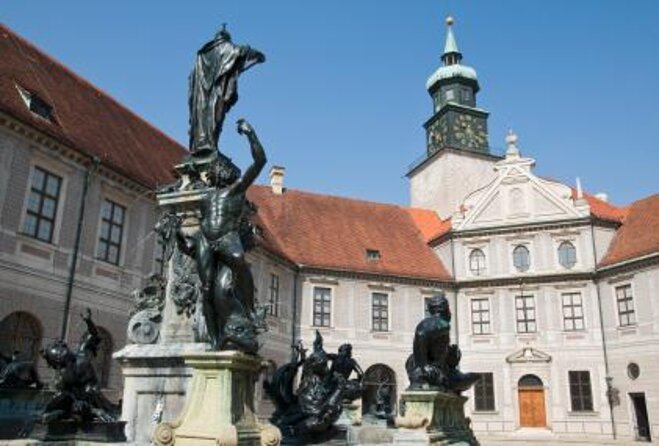
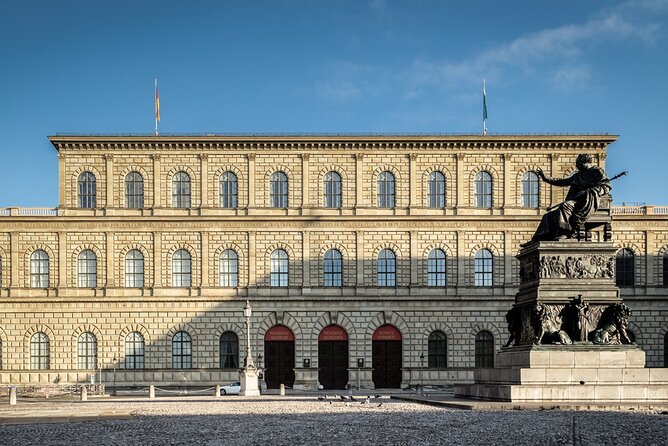
The route continues to Residenz München, described as the largest inner-city palace in Germany and the ancestral home of the Wittelsbach Royal family of Bavaria. You’ll spend about 10 minutes. Admission is not included.
So here’s the practical reality: within a short time window, you’re mostly getting the big-picture view and guide-led orientation. If you want the full interior palace experience, you’d likely need separate ticket planning (since it’s explicitly not included).
Even so, this kind of quick palace stop can be a win. When you later visit the palace on your own, you’ll recognize what the guide pointed out first. You’ll also feel less lost when you walk into spaces that are designed to overwhelm you a little.
Viktualienmarkt: the market stroll that works best on the right day
Another highlight in the information you have is a visit to the largest inner city fresh food market in Germany, identified as Viktualienmarkt. It notes: open Monday to Saturday, closed on Sundays.
That schedule matters. If you’re visiting on a Sunday, you’ll miss the market atmosphere described here, even if the rest of the walk still runs. If you’re flexible, put this tour on a weekday or Saturday so your market time is alive.
Also, Viktualienmarkt is a great place to learn by looking. Even without a long food stop, you’ll see how locals browse—produce, specialties, and the everyday rhythm that makes Munich more than just monuments.
Food and drinks are not included on this tour, so think of Viktualienmarkt as inspiration. Use what you learn here to choose your own bite afterward.
How the guide shapes the whole experience
Because this is a private tour, the guide matters almost more than the route. The best guides keep the story moving, but they still give you room to react. You may also get helpful shortcuts—like where to head next, how to time things, and small practical advice around food and beer.
Names show up across the strongest feedback for this experience—people mention guides such as Dani, Verena, Joanne, Keith, Hein, Jax, and Patricia for being engaging and making the walk feel tailored. Another common praise theme is that guides don’t just recite facts; they also add humor and city-use tips, including food and beer suggestions.
Still, there’s one possible downside to keep in mind: this walk is structured with defined stops. In at least one instance tied to the overall experience, a guide reportedly focused heavily on delivering the history script and allowed less time for exploring buildings or lingering for photos. That doesn’t mean your tour will feel that way—but it’s worth planning your expectations. If photography and inside access are top priorities for you, you might want to steer your guide early: ask for extra time where you care most.
Price and value: what $258.82 buys for up to 15 people
The price is $258.82 per group, up to 15 people, for a tour that runs 2 to 3 hours. Pickup and drop-off are included, as are local taxes, with a private guide.
That pricing structure changes how you should think about value:
- If you’re traveling as a small group, you’ll likely feel this as a premium per person.
- If you’re traveling with family or friends, your cost per person can drop quickly because the price is per group, not per ticketed passenger.
- You’re also buying something practical: hotel pickup in the city center and a guided route that hits the major landmarks without you spending your first hours figuring out logistics.
A quick way to judge it: this tour is strongest when you use it for day-one orientation and prioritized sights—especially Marienplatz and the Glockenspiel showtimes. If you’re already confident navigating on your own and you don’t care about the timed moments, a self-guided walk could be cheaper. If you want time-saving structure plus a guide who can explain why the sights matter, the price starts to make sense.
Who should book this Munich private tour
This is a great fit if:
- You’re in Munich for a short time and want an efficient old-town route.
- You like history and stories tied to real places, not just dates on signs.
- You want hotel pickup so day one feels easier.
- You want Glockenspiel showtimes aligned to the season (March to October).
It may not be your best match if:
- You want long stays inside major buildings. Some big stops here list admission as not included (like Frauenkirche and Residenz München), and several segments are intentionally short.
- You’re traveling specifically for deep museum-style exploring rather than walking, listening, and seeing.
Should you book? My take
If your goal is to get your bearings fast and understand what you’re looking at while you’re standing in front of it, this private Munich tour is a solid choice. With a 4.9 rating from 37 reviews and 97% recommending it, the demand for exactly this kind of guided orientation seems to be real.
I’d book it especially early in your trip. The route hits Marienplatz, Glockenspiel moments, churches, beer hall atmosphere, and key squares like Odeonsplatz—with just enough time at each stop to spark ideas for what to do next.
If you’re picky about inside access, build a plan for separate tickets where noted (Frauenkirche and Residenz). Do that, and you’ll get the best of both worlds: guided context first, then your own deeper visits later.
FAQ
Is pickup included, and where do they pick me up?
Yes. Pickup is offered from a variety of hotels, Airbnb rentals, and private apartments in Munich City Center. If you share your accommodation name or address, they’ll advise if pickup is available or if you’ll meet at a central location instead.
Where does the tour start?
The tour starts at New Town Hall, Marienplatz 8, 80331 München, Germany.
How long is the private tour?
It runs about 2 to 3 hours (approx.).
What languages is the tour offered in?
The tour is offered in English.
Is this tour private?
Yes. It’s a private tour/activity, and only your group participates.
Are entrance tickets included for the churches and palace?
Some are not included. Frauenkirche and Residenz München list admission as not included. Other stops like the Glockenspiel viewing areas and several squares/beer hall entry are listed as free for this experience.
When can I see the Glockenspiel shows?
From March until October, you can watch the Glockenspiel at 11:00am, 12:00pm, and 5:00pm.
Does the tour run in bad weather?
Yes, it operates in all weather conditions. Wear comfortable walking shoes and dress appropriately.
Does the tour include food or drinks?
No. Food and drinks are not included.
What is the cancellation policy for a full refund?
You can cancel for a full refund up to 24 hours in advance of the experience start time. If you cancel less than 24 hours before, the amount paid is not refunded.