REVIEW · MUNICH
Dachau Memorial Public Tour
Book on Viator →Operated by Global Guide Services · Bookable on Viator
Dachau hits harder than you expect. This 5-hour guided visit walks you through how the Nazi camp system worked, from its early political-prisoner purpose to forced labor and mass death, with a guide helping you make sense of what you’re looking at. The stop-by-stop route matters here because the layout of gates, barracks, and memorials tells the story faster than a brochure ever will.
I love the focus on key places like the Roll Call Area and the International Monument, where the meaning shifts from facts to remembrance. I also like the way the guides keep the tone clear and human; Charlotte, for example, is known for connecting Dachau to the wider WWII story in Europe without turning it into a textbook. One real drawback: it’s heavy and long, and no food or beverage is included, so plan a snack or lunch before or after.
In This Review
- Key highlights you’ll feel on this tour
- Dachau in plain terms: what you’ll be seeing in 5 hours
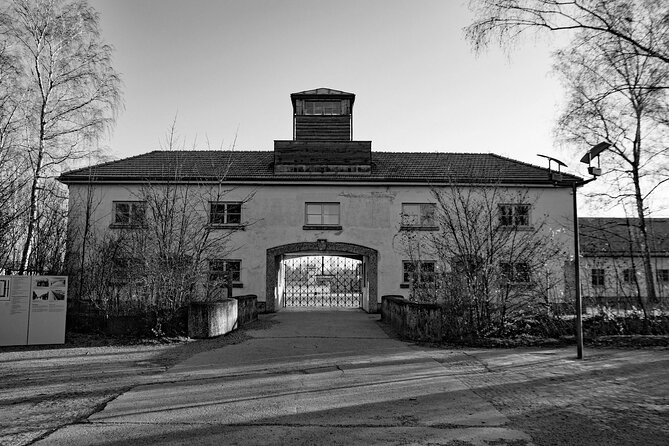
- Passing the Main Gate and Jourhaus: the camp’s control starts immediately
- Roll Call Area and the International Monument: why this space stops people in their tracks
- Former Maintenance Building museum: where exhibits and documentaries add structure
- The Bunker and reconstructed barracks: confinement you can map in your head
- Religious memorials and the camp’s security design
- Guides set the tone: Charlotte and Michael bring clarity and respect
- Price and value: what $118.74 buys you in Munich
- Timing, meeting point, and what to plan around in the real world
- Who this tour is best for
- Should you book this Dachau Memorial Public Tour?
- FAQ
- Where does the tour start and end?
- How long is the Dachau Memorial Public Tour?
- Is admission to the memorial site included?
- How big is the group?
- Do I get a mobile ticket and a booking confirmation?
- Can I get a full refund if my plans change?
Key highlights you’ll feel on this tour
- Max 15 people keeps the pacing thoughtful and questions possible
- Memorial site admission is free, so your money goes to interpretation and guidance
- Route includes major camp areas like the Jourhaus, museum, bunker, and reconstructed barracks
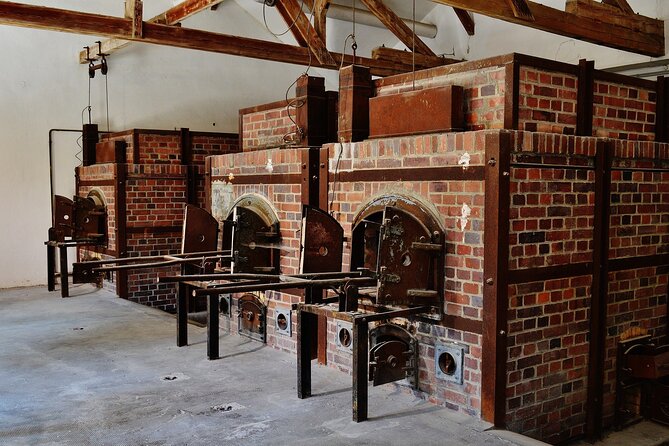
- Respectful group moment: a minute of silence can be observed outside the crematorium
- Multiple memorial types (including religious memorials) show how memory is handled here
- Mobile ticket and local guide make it easier to start on time from Munich
Dachau in plain terms: what you’ll be seeing in 5 hours
Dachau Concentration Camp was the first camp the Nazis opened in 1933 in Germany. It began as a place for political prisoners only, then shifted into a forced-labor camp. Over its 12 years of operation, more than 200,000 people were held there.
The numbers you’ll hear on this tour are staggering: about 40,000 people killed from 34 nations, before the camp was liberated in 1945 by the American army. You’ll also hear a phrase used to describe the camp’s role: an academy of terror, a training ground for brutal methods.
The good part is that the tour doesn’t just throw dates at you. It uses the physical site—gate, administration buildings, detention areas, barracks, and memorials—to explain how the system functioned. That’s why a guided format is so helpful. You’re not just looking at ruins; you’re learning how control was built into the camp’s design.
You can also read our reviews of more tours and experiences in Munich.
Passing the Main Gate and Jourhaus: the camp’s control starts immediately
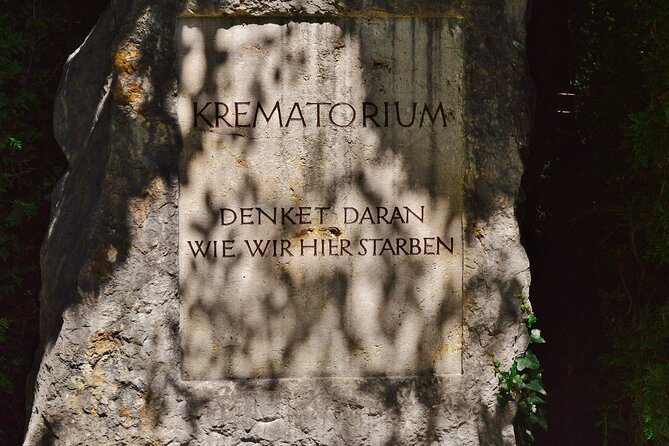
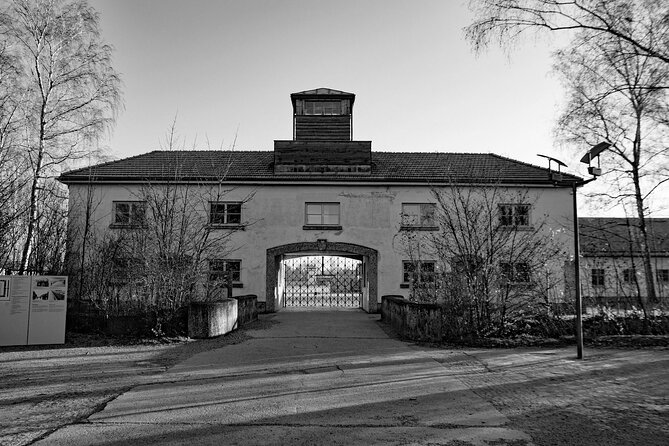
The visit begins at the memorial site and you step through the solemn Main Gate. Even if you’ve seen photos before, being there changes the feeling. The scale is real, the stone details are real, and you understand quickly this place was designed to manage people, not just to confine them.
Then you move to the Jourhaus, which once served as an administration hub. This is one of those stops that can feel less dramatic than the barracks or the bunker—but that’s exactly why it’s important. When you see the administration space in context, the camp reads like a system: paperwork, orders, supervision, and discipline running alongside the violence.
A point I appreciate: the guide isn’t rushing. You get enough time to locate what you’re standing in front of, so the rest of the tour stays coherent. If you usually like to read at your own speed, you’ll still benefit, because the guide’s job is to connect each building to the larger story.
Roll Call Area and the International Monument: why this space stops people in their tracks
The Roll Call Area is usually the first place where the camp stops feeling like history and starts feeling like a living memory space. This is where you learn how daily routine and forced order worked. The guide points out how the roll call process was part of control—who was present, who was punished, and how the camp maintained dominance.
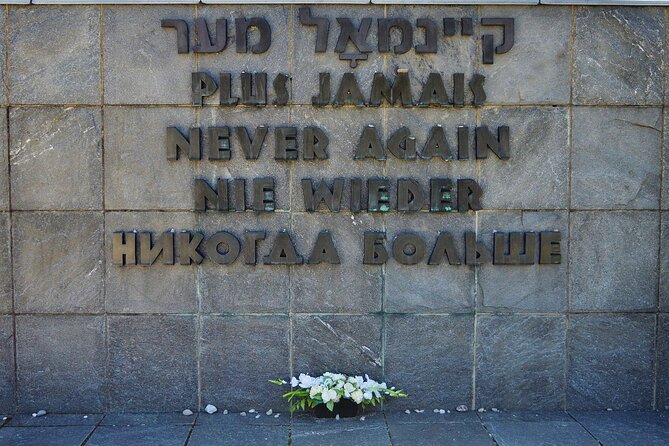
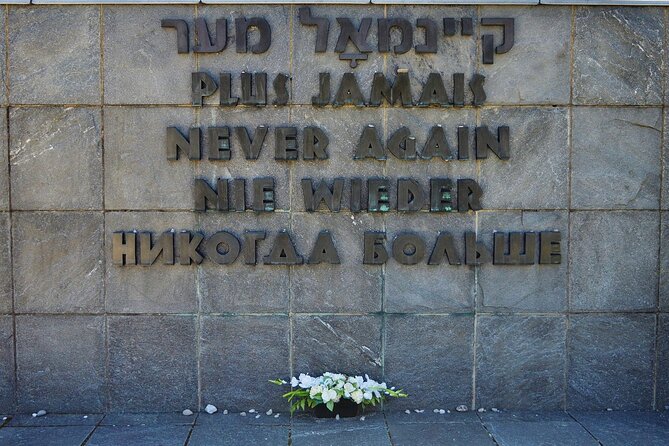
At this area, the International Monument adds another layer. This isn’t just about structures anymore. It becomes about people—those who were held, those who suffered, and the idea that memory belongs to more than one country or community.
If you’re sensitive to heavy topics (and you should be), treat this part as a moment to slow down. You’ll likely feel your own thoughts going quiet, and that’s okay. This is one of the reasons I think the tour is worth doing with a guide instead of on your own: you get context right where your emotions can otherwise carry you away.
Former Maintenance Building museum: where exhibits and documentaries add structure
Next comes the museum housed in the Former Maintenance Building. This stop is practical and, honestly, calming in a strange way—because it gives your brain something to organize. You’re learning about the camp’s history with exhibits and documentaries, which helps fill gaps you might miss if you’re only following landmarks.
I like museum stops on tours when they don’t feel like a detour. Here, it functions like a story backbone. After the roll call and gate areas, the museum helps you connect what you saw to what happened, and it prepares you for the more intense spaces like the bunker and detention rooms.
Also, museums at memorial sites tend to be careful with what they show. The goal isn’t shock for shock’s sake. The goal is understanding—how oppression operated and what survived in records and testimony.
The Bunker and reconstructed barracks: confinement you can map in your head
One of the toughest parts of the Dachau visit is the Bunker, a former prison space. This is where you understand the camp’s idea of punishment. Even if you’ve read about concentration camps, seeing the bunker in place can make the concept of detention feel immediate and concrete.
Then you move to two Reconstructed Barracks. Reconstruction can be tricky in some places, because it can tempt visitors into assuming too much. But here, it’s guided and connected to documented realities. The value is that you get a clear sense of what prisoners’ day-to-day life looked like, from how spaces were arranged to how living conditions were shaped by confinement.
I like how this part of the route helps you build a mental map:
- administration/control near the front,
- living/work areas in the barracks,
- detention/punishment in the bunker.
When you can see that layout pattern, the whole camp reads more clearly, and you spend less time guessing.


Religious memorials and the camp’s security design
Dachau also includes diverse religious memorials. This detail matters because it reminds you that the victims were not a single category. Memorials like these communicate that people carried different faiths, traditions, and identities with them into a system designed to crush those differences.
From there, you shift to the camp’s security installations—guard towers and partially reconstructed outer walls. This isn’t just set dressing. You learn how the camp’s design supported monitoring and restriction. You can literally see how the perimeter shaped movement and control.
If you’re the type of traveler who likes architecture and layout (even on serious trips), this is the part where you’ll feel most satisfied. The guide helps you connect sightlines, barriers, and the practical mechanics of confinement.
Guides set the tone: Charlotte and Michael bring clarity and respect
The strongest praise from this tour experience is usually about the guides, and it makes sense. The content is heavy; the difference between a good and a great guide is how they pace, explain, and keep the focus on understanding rather than distraction.
Charlotte is noted for having command of Dachau and WWII context in Germany and Europe in general. That’s a key skill. Dachau didn’t happen in a vacuum, and a guide who can connect the camp’s story to the broader war helps you avoid isolated, confusing facts.
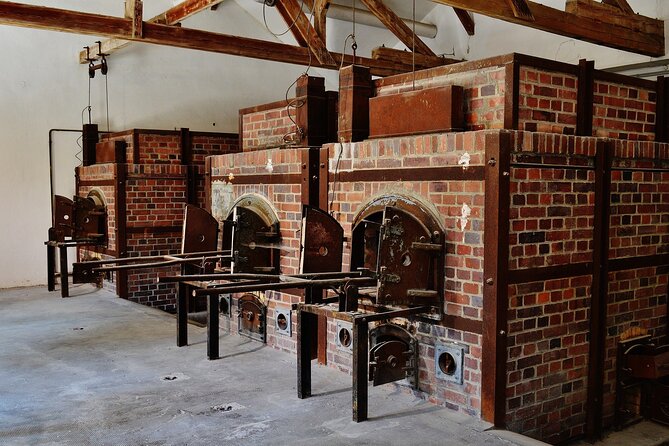
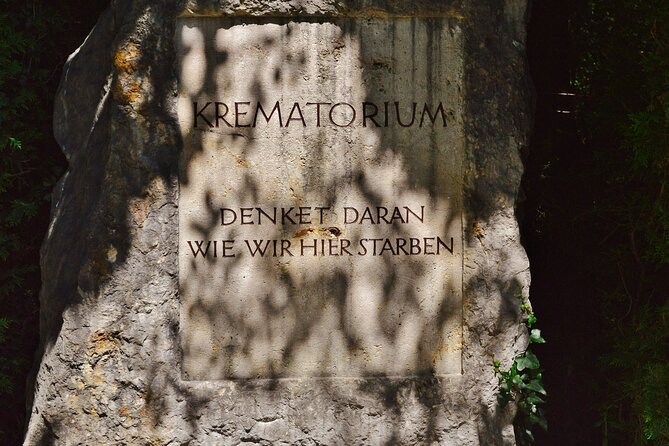
Michael is praised for being both informative and passionate, and for leading a minute of silence outside the crematorium. That moment of group respect is not just symbolism. It slows everything down and brings the visit back to remembrance. If your guide does something similar, follow the lead. It’s one of those small actions that carries a lot of weight.
Group size helps here too. With a maximum of 15 travelers, the guide isn’t stuck sprinting through a script. You can usually get answers without the whole group losing time.
Price and value: what $118.74 buys you in Munich
The tour price is $118.74 per person, and it runs about 5 hours. At this length, you’re paying for a local professional guide and the time it takes to explain what you’re seeing in the right order.
Admission can be confusing to travelers. The tour info indicates admission ticket is free for the memorial site. So you’re not paying an entrance fee on top of the price; you’re primarily paying for the guide and the organized experience.
Is it good value? For most people, yes—because Dachau is not the kind of place where “I’ll figure it out later” works well. Without context, you can walk past major points and miss what they mean. With a guide, you spend the time learning, not struggling to piece together the story from signs.
You’ll also like the small touches: mobile ticket convenience, group discounts, and a group cap of 15 that helps the experience stay human.
Timing, meeting point, and what to plan around in the real world
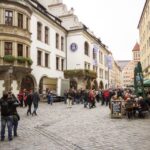
The tour starts at 10:00 am in Munich and meets at Fischbrunnen, Marienplatz 8, 80331 München, Germany. It ends back at the meeting point, so you’re not trying to figure out a new pickup location when you’re mentally drained.
It’s also described as near public transportation, which matters because Munich transit can make or break your schedule. Aim to arrive a little early so you’re not rushing when the day already feels heavy.
What about food? This is a practical point: food and beverage are not included. In a 5-hour visit, that can catch up to you. I suggest you eat something before you go or plan a proper stop right after, especially if you tend to get worn out when you’re walking and standing for long stretches.
Since you’re moving through multiple parts of the site, comfortable shoes are a smart call. You’ll be outside for parts of the experience, and you’ll likely spend time standing to take in each area.
If you want to secure your preferred dates, booking ahead helps—this experience is often booked around a month in advance on average.
Who this tour is best for
This is best for you if:
- you want a guided, structured visit rather than a self-paced wander,
- you prefer small groups and a chance to ask questions,
- you’re ready for a serious, respectful experience that takes time to understand.
It’s also a good fit if you’ve got limited time in Munich. In one morning, you get a coherent picture of the camp’s administration, detention, living conditions, and memorialization.
You might reconsider if you’re looking for something lighthearted, short, or purely informational. Dachau is emotionally intense, and the tour format keeps the focus on meaning.
Should you book this Dachau Memorial Public Tour?
I’d book it if you value clarity and respect, and especially if you like small-group attention. The combination of a guided route through major camp areas, museum time for context, and a guide who can explain Dachau within the larger WWII picture makes it easier to understand what you’re seeing without turning it into a rushed checklist.
Skip it (or think twice) only if you know the topic will be too much for your current emotional bandwidth—or if you strongly need food included, since you’ll be on your own for meals.
If you do book, go in with one mindset: you’re there to understand and remember. Pick the date that lets you rest afterward, and plan food so you’re not spending the last hour thinking about hunger instead of history.
FAQ
Where does the tour start and end?
The tour starts at Fischbrunnen, Marienplatz 8, 80331 München, Germany, and it ends back at the same meeting point.
How long is the Dachau Memorial Public Tour?
It runs for about 5 hours.
Is admission to the memorial site included?
The experience information indicates admission ticket is free.
How big is the group?
The tour has a maximum of 15 travelers.
Do I get a mobile ticket and a booking confirmation?
Yes. You’ll receive a mobile ticket, and confirmation is received at the time of booking.
Can I get a full refund if my plans change?
Yes. You can cancel for a full refund up to 24 hours before the experience starts. If you cancel less than 24 hours before, the amount paid is not refunded.