REVIEW · MUNICH
Inside the Third Reich (Private Tour)
Book on Viator →Operated by Big Hat Tours · Bookable on Viator
Munich has a Nazi past you can walk. This private 2–3 hour tour, led by Curt Milburn, strings together Third Reich sites from around Marienplatz onward, with an iPad packed with images and film so you can match the street you’re standing on to what happened there. I also like that it’s truly private—just your group—so you’re not stuck watching from the back or guessing what something means.
The second thing I love is the way the tour points you toward details that can vanish in plain sight, like war damage on beautiful Munich buildings and memorial spaces that force you to slow down. The only possible drawback: it’s a walking tour with short stops, so if you want a museum-length, slow-breathing pace, you may feel the timeline is tight.
In This Review
- Key highlights to know before you go
- Why this Munich Third Reich tour feels different than a history lecture
- Curt Milburn’s iPad story method (and why it works on tired feet)
- Route and timing: a 10:30 am walk that ends back where it starts
- Isartor to Platzl: beer halls, early speeches, and the path to power
- Old Town Hall to Odeonsplatz: Kristallnacht beginnings, assassination attempts, and SA purges
- Memorial stop at Platz der Opfer des Nationalsozialismus: remembrance built into the route
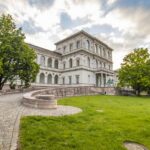
- War-burnt memory: Glyptothek and Alter Botanischer Garten in plain view
- Residenz München: the failed putsch, resistance, and why it matters
- Price and value: $180.72 per group for up to 15
- Who should book this private tour
- Should you book Inside the Third Reich (Private Tour)?
- FAQ
- FAQ
- Where does the Inside the Third Reich private tour start?
- What time does the tour begin?
- How long is the tour?
- How much does the tour cost?
- Is this a private tour?
- Do I need to buy tickets for the stops?
- What kind of ticket do I get?
- Is free cancellation available?
- Is the tour near public transportation?
- Is the tour suitable for service animals and most travelers?
- Where does the tour end?
Key highlights to know before you go
- Private group access so you can ask questions as you go
- Curt Milburn’s iPad visuals linking modern streets to past events
- A stop-by-stop route that focuses on speeches, rallies, attacks, and aftermath
- War-damage observation on everyday facades you’d likely miss
- Memorial and remembrance stops built into the walk, not bolted on at the end
Why this Munich Third Reich tour feels different than a history lecture
Most Munich walks are about churches, beer halls, and the view from Marienplatz. This one uses those same streets to talk about how power got built, how it spread, and how it was fought—and, crucially, how it left scars behind. You’re not reading a timeline. You’re standing where decisions happened.
The private format matters more than you’d think. In a group tour, you often get a few facts and move on. Here, the structure is set up so you can ask questions in the moment. That helps when you hit uncomfortable topics like political violence, purges, and persecution. You don’t have to wait until the end to ask what a place means.
You’ll also notice the tour isn’t only about big names. It connects events to the physical city: facades, squares, and the kind of architecture that helped Nazis sell an idea of strength and destiny. That is the real value in seeing it in Munich rather than as abstract “German history.”
You can also read our reviews of more private tours in Munich

Curt Milburn’s iPad story method (and why it works on tired feet)
Curt Milburn’s approach is practical and visual. He uses an iPad loaded with hundreds of films and images from over 1000 years of European history. That means you’re not just hearing a speech description—you’re seeing how Munich looked when the context was unfolding.
It also means you can calibrate the depth. If you want the straight story, you can follow the arc. If you want more detail on specific people or specific moments, Curt can adjust. From what I’m looking at in the tour’s format, the goal is not to cram everything into two hours—it’s to give you enough to understand the places, then keep your questions alive.
A small but useful benefit: short stop times don’t have to equal shallow learning. The iPad visuals help you make quick connections—where a political gathering happened, what building features were used for impact, and where war damage shows up later. It’s like getting a focused “street map” for the Third Reich.
Route and timing: a 10:30 am walk that ends back where it starts
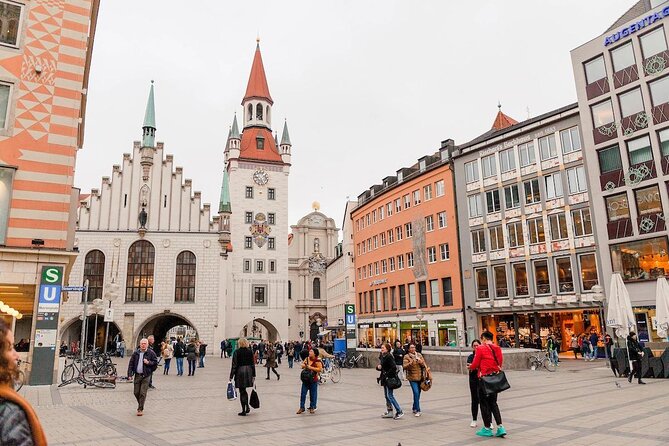
You meet at Marienplatz 18 at 10:30 am. The tour lasts about 2 to 3 hours, and it returns to the meeting point at the end. That loop matters because it keeps the experience efficient: you’re not crossing town for one distant site, then coming back exhausted.
Also pay attention to the stop rhythm. Many locations are planned for roughly 10 to 20 minutes. That’s perfect for a city walk where you want to cover key anchor points. It does mean you should mentally prepare for a fairly concentrated sequence—this isn’t a slow “linger and browse” style tour.
Since the route is built around squares and central streets, you can also expect it to mesh well with your day in Munich. You’ll still have plenty of time afterward to do your usual sightseeing—if you’re emotionally steady after the history part.
Isartor to Platzl: beer halls, early speeches, and the path to power
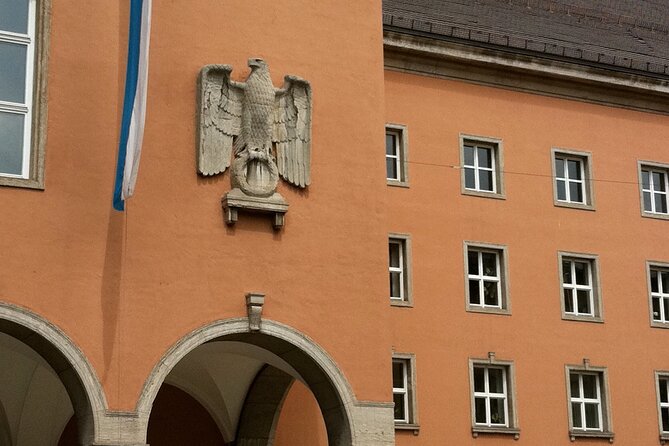
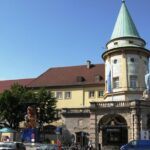
The walk starts at Isartor, where you’ll visit the site tied to the original beer hall where Hitler met the Nazis. This is a good opener because it frames the movement in a very Munich way: politics growing out of social spaces, not only out of parliament rooms. It helps you understand how recruitment and influence can start in ordinary public life.
Next is Platzl for Hitler’s first speech and his rise to success. Even if you’ve heard this era before, the point here is to connect the narrative to place. Instead of treating Hitler’s ascent like a distant headline, you’re watching it unfold on streets and in squares.
Then you hit Platzl again, but for a different reason: evidence of war damage on Munich buildings. This is one of the tour’s most sobering shifts. You go from ideology and speeches to consequences. The point isn’t to shock you with “look how ruined it is.” It’s to show you how modern facades hold history in their scars—often quietly.
If you’re sensitive to heavy themes, pace yourself here. This is where your brain starts doing the real math: what did people build, what did they lose, and what did it cost civilians who never asked to be part of it?
Old Town Hall to Odeonsplatz: Kristallnacht beginnings, assassination attempts, and SA purges
The tour then goes to Old Town Hall, where you’ll hear about the beginning of Kristallnacht and also the site of an assassination attempt on Hitler’s life. That pairing can feel intense, because it forces a double perspective: escalating violence against civilians and high-level political instability all at once. It’s also a reminder that the Third Reich wasn’t only a clean march forward—there were confrontations, plots, and violent turning points.
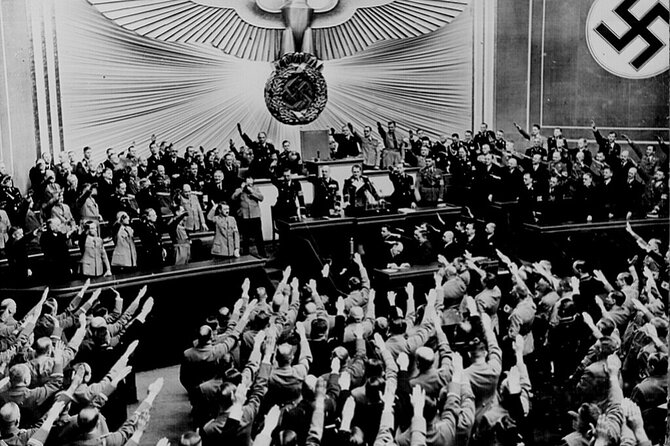
From there, you move to Odeonsplatz, linked to Hitler’s purge of the SA and also to places of his speeches. Purges are easy to describe in a textbook. They’re harder to accept when you’re standing where public messaging and political intimidation would have played out. This stop helps you see how propaganda and fear worked together.
What I like about placing these topics into Munich’s real geometry is that it makes the history feel less like a remote chapter. You start to notice how authority is staged—how people gather, how leaders address crowds, and how public space becomes a tool.

Memorial stop at Platz der Opfer des Nationalsozialismus: remembrance built into the route
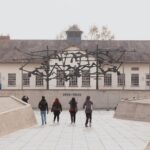
Between political sites and architectural sites, you’ll spend time at Platz der Opfer des Nationalsozialismus, Munich’s memorial to those who died at the hands of the Third Reich. This is a key moment because it shifts the focus from leaders to victims.
Don’t treat it as a quick photo op. Even with short stop timing, the memorial context is the point: it sets a moral anchor for the rest of the tour. Without it, it would be too easy for the walk to feel like a sightseeing circuit of “interesting remnants.” With it, you’re reminded what those buildings and events meant for people who didn’t have a choice.
If you’ve ever felt uneasy visiting Nazi-era sites, this stop can help you steady your footing. It doesn’t erase the difficult context. It gives you a place to stand before you continue.
War-burnt memory: Glyptothek and Alter Botanischer Garten in plain view
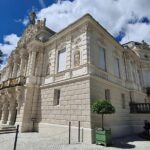
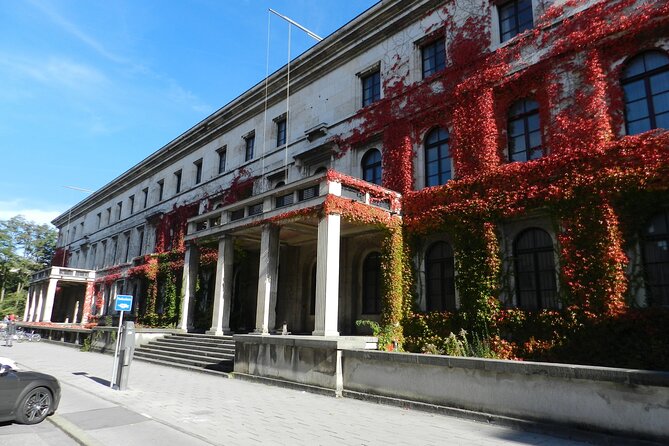
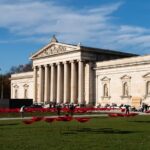
Next comes Glyptothek, presented in the route as Munich rally grounds and the still-standing fascist buildings tied to Hitler’s era. This is where the tour’s “see what you might miss” philosophy really clicks. When you encounter Nazi-era architecture in daily city life, you can walk past it without realizing the intent behind it.
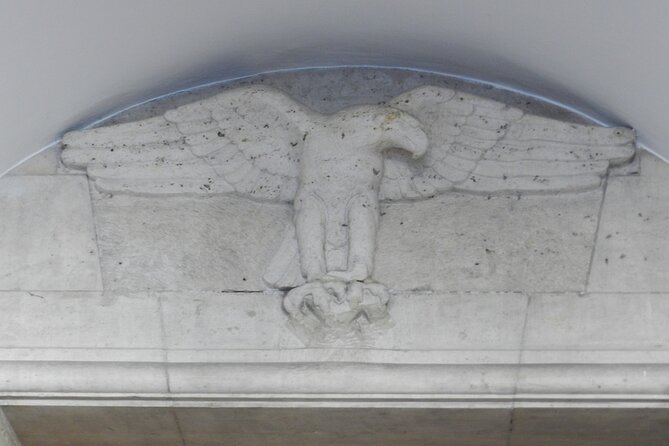
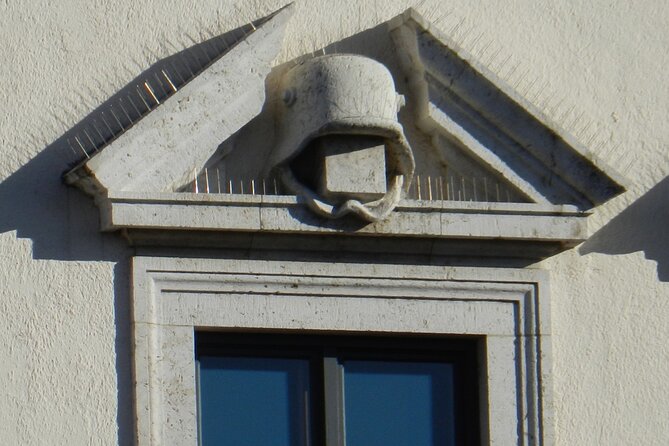
Then you go to Alter Botanischer Garten, where the tour focuses on the largest Nazi eagle still on public display in Germany, plus evidence of Nazi architecture and art. This is the kind of detail that changes the whole experience. You stop thinking only about events. You start seeing how art and symbols were used as persuasion—how a regime tried to make itself look inevitable.
My practical advice here: give yourself permission to look twice. These sites can be visually “just buildings” at first glance. Then Curt’s framing helps you notice what makes them propaganda tools rather than neutral monuments.
Also, watch how your emotions change through these stops. Early stops often feel like politics and speeches. Later stops shift toward visual messaging—how regimes put ideology into material form. That emotional shift is normal, and it’s part of why this walk is worth doing with a guide rather than solo.
Residenz München: the failed putsch, resistance, and why it matters
The tour finishes at Residenz München, focusing on Hitler’s failed putsch and the story of resistance to the Nazis during the Third Reich. Ending on resistance is a smart choice. It keeps the story from ending where propaganda wants it to end: with the winners controlling the narrative.
This part matters because it gives you a fuller picture of the era. When you only focus on the rise, the history can feel like fate. When you include resistance, it reminds you that alternatives existed—and people paid for them.
The final result is that you don’t just leave with a list of places. You leave with a sense of how power is contested and how cities remember conflict—sometimes in obvious scars, sometimes in architectural decisions that outlast the people who made them.
Price and value: $180.72 per group for up to 15
Let’s talk value in a way that helps you decide. The price is $180.72 per group (up to 15 people). That means the per-person cost depends entirely on how many of you show up.
- If you fill the full group size, the cost can be surprisingly low per person.
- If it’s just a small group of 2 to 4, the price per person is higher, but you still gain the real benefit: privacy and live Q&A.
The best value here is not “cheaper than a museum.” It’s the guided link between locations and meaning. You’re paying for someone to help you read the city: where to look, what a building detail might signify, and how to connect events like speeches, purges, Kristallnacht, and memorialization to actual Munich spots.
Also, because the tour uses an iPad with films and images, you’re getting a visual learning layer that would be hard to replicate on your own while also trying to find exact historical angles for each site.
Who should book this private tour
This one fits best if you want history you can see—not just read. It’s a good match if you like asking questions and you appreciate a guide who can adjust detail based on your interests.
It’s also a strong choice if you’re already planning a Munich day around central locations (Marienplatz and nearby squares). Since the tour ends back at the start, it’s easier to fold into your schedule without a ton of transit juggling.
One more honest note: because the subject is the Third Reich and topics include Kristallnacht and persecution, this is emotionally heavy history. If you’re visiting for a quick, light day, you might not love the tone. If you’re ready to understand how these places connect to real harm, this tour is built for that goal.
Should you book Inside the Third Reich (Private Tour)?
I’d book it if you want a Munich walk that does more than point. This tour is designed to help you see the city as evidence: how speeches and rallies connected to architecture, how war damage remains visible, and how memorials keep victims in the foreground.
I would think twice only if you strongly prefer long, slow museum time over short street stops. This route is time-efficient. That’s good for most people. If you need extra hours at each site to fully process, plan to add independent time afterward.
FAQ
FAQ
Where does the Inside the Third Reich private tour start?
It starts at Marienplatz 18, 80331 München, Germany.
What time does the tour begin?
The start time is 10:30 am.
How long is the tour?
It runs for 2 to 3 hours (approx.).
How much does the tour cost?
The price is $180.72 per group, up to 15 people.
Is this a private tour?
Yes. It’s private, and only your group participates.
Do I need to buy tickets for the stops?
The itinerary lists the stops as Admission Ticket Free.
What kind of ticket do I get?
You receive a mobile ticket.
Is free cancellation available?
Yes. You can cancel for a full refund up to 24 hours before the experience start time.
Is the tour near public transportation?
Yes. It’s near public transportation.
Is the tour suitable for service animals and most travelers?
Service animals are allowed, and most travelers can participate.
Where does the tour end?
It ends back at the meeting point.