REVIEW · MUNICH
Marienplatz and Viktualienmarkt Private Tour and Tasting
Book on GetYourGuide →Operated by Rosotravel Germany · Bookable on GetYourGuide
Munich’s center hits fast. This private Old Town walking tour stitches together Marienplatz’s big landmarks with the food-market buzz of Viktualienmarkt, plus a real taste of Bavaria. I love how the route links classic sights like St. Peter’s Church and Frauenkirche with a practical food stop where you can actually slow down, sit, and eat. The tasting is small but focused, so you get flavor without turning the afternoon into a long meal. One caution: if your guide is delayed, the 3.5 hours can shrink and you may lose part of the pacing.
You also get the best kind of private-tour tradeoff: you’re not packed with strangers, and you can ask questions in your chosen language. On at least one run, the guide’s style was friendly and hands-on, with questions like what you want to know about the city, which makes the history feel less like a lecture. The possible drawback is that you might find the information less structured than you’d like, so it helps to nudge your guide toward a clearer timeline as you go.
In This Review
- Key moments to look for on this Marienplatz to Viktualienmarkt tour
- Finding your bearings at Marienplatz (and why this start matters)
- New Town Hall, Mariensäule, and Altes Rathaus: the quickest way to read Munich
- St. Peter’s Church: what you get when entry is included
- Frauenkirche, St. Michael’s, and Asamkirche: noticing what’s different
- Viktualienmarkt: the oldest food market, and how to use it well
- The tasting: beer garden calm plus Bavarian snack basics
- Price and value: what $326 per person really buys you
- Logistics that can affect your afternoon (timing and meeting point)
- Guide style: friendly Q&A works best with a clear question
- Who this tour is perfect for (and who may want a different fit)
- Should you book: my practical recommendation
- FAQ
- Where does the tour start?
- Is there pickup from my accommodation?
- What’s included in the tasting at Viktualienmarkt?
- Is St. Peter’s Church admission included?
- How long is the tour?
- What languages are available?
- Is the tour private and accessible?
Key moments to look for on this Marienplatz to Viktualienmarkt tour

- Marienplatz landmarks up close, including New Town Hall views and the Mariensäule statue area
- St. Peter’s Church entry included, letting you go beyond the street-level facade
- Frauenkirche and other sacred stops, where you’ll see Munich’s church architecture in a short stretch
- A 200-year-old food market finish at Viktualienmarkt, Munich’s oldest food market
- Beer garden seating with a set tasting, built around one beer and two traditional snacks
- Private-group pacing, ideal for families and small friend groups
Finding your bearings at Marienplatz (and why this start matters)

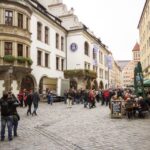
The tour starts at the beating heart of Munich’s Old Town: Marienplatz. This is where you get the city’s “orientation moment,” the place you’ll hear name after name once you start exploring. Even if you’ve only got a few hours, Marienplatz helps you understand how everything else in the center connects.
Your meeting point is in front of hotel BEYOND by Geisel, Marienplatz 22, right opposite St Peter. One practical note: you’re told not to enter the hotel—treat it as a signpost for where your guide will meet you, not a place you check in. That small bit prevents you from wasting time with front-desk confusion.
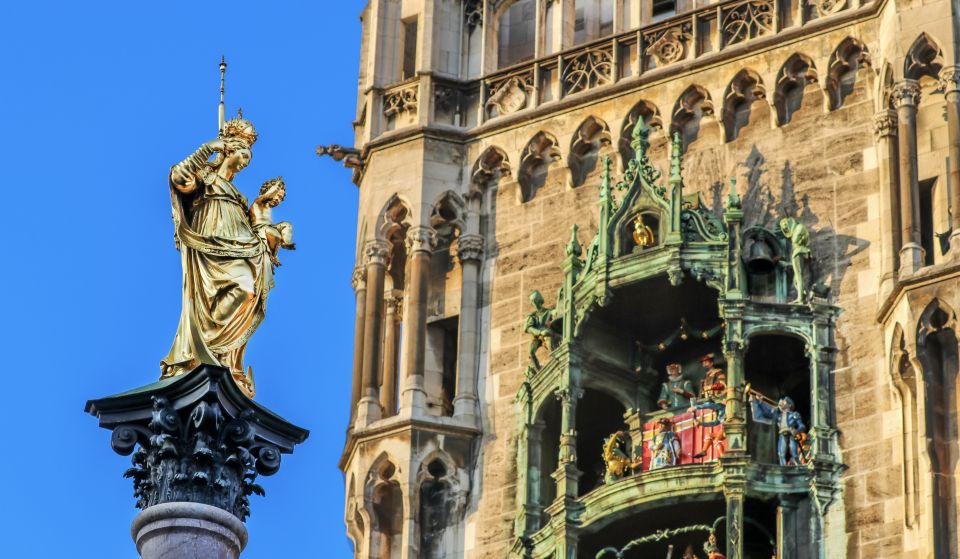
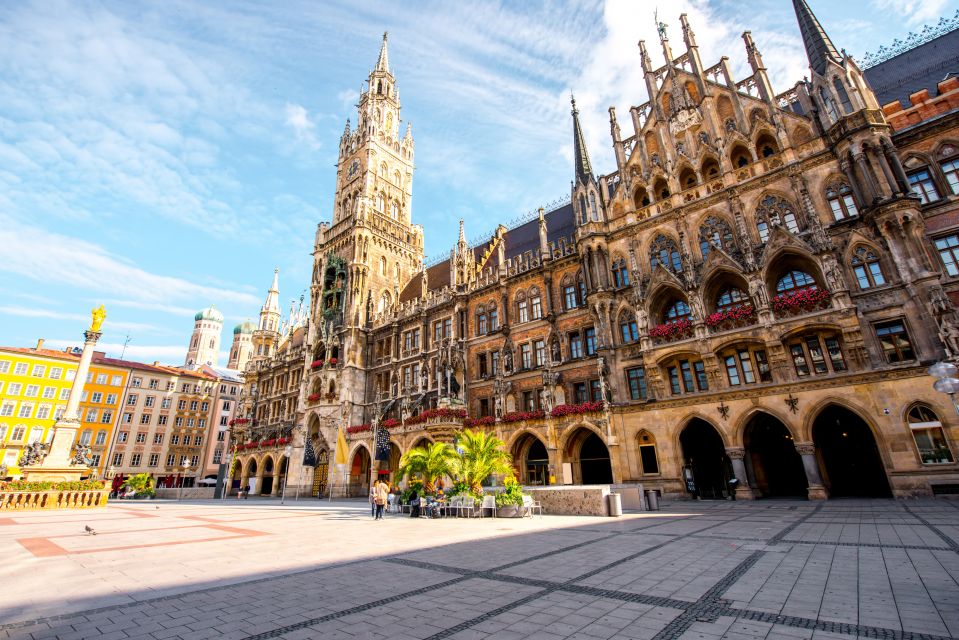
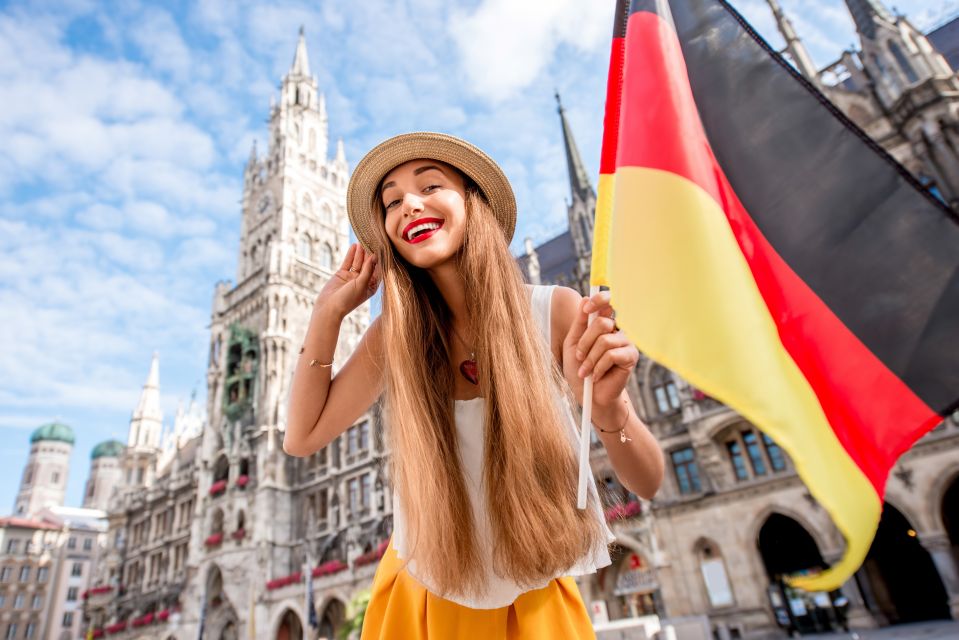
From here, you’ll walk through the “big picture” landmarks that define Old Town Munich. You’ll admire the architecture around New Town Hall and see the golden Mariensäule, plus the area near Altes Rathaus (Old Town Hall). I like this approach because these are not random photo stops—they’re the visual anchors that make later churches and streets feel connected, not scattered.
You can also read our reviews of more food & drink experiences in Munich

New Town Hall, Mariensäule, and Altes Rathaus: the quickest way to read Munich
The stretch around New Town Hall is where Munich shows off its official face. You’ll get the chance to admire the grand building features from outside, then connect what you see to how the square functioned in the city’s life. It’s the kind of context that makes a landmark more than a postcard.
Nearby, the Mariensäule and the old civic buildings help you understand why Marienplatz has always been a meeting place—politically, socially, and visually. If you like “spotting the story” while you walk, this is a good moment to slow down and let the guide point out details you might otherwise miss: how the buildings frame the square, and how the area feels designed for crowds.
This part also sets expectations for the rest of the tour. Once you’ve seen the civic grandeur, the shift to churches later in the walk hits harder. You get contrast: city power in one direction, sacred architecture in the other.
St. Peter’s Church: what you get when entry is included
One major value point is that St. Peter’s Church entry is free on this tour. That matters because it changes the experience from outside-looking-in to actually stepping into a historic interior. In a short walk like this, I’d rather have one meaningful indoor stop than several rushed viewpoints.
St. Peter’s is described as the oldest church in the city. Even without over-selling it, that label gives you a reason to pay attention once you step inside. You’re not just touring a pretty room—you’re entering a place that has had a long role in Munich’s story.
Practical tip: the included access covers the church itself, but the tower entrance is optional and listed at 3 EUR. If you care about views and you’re comfortable paying a small extra fee, the tower can be worth it. If you’re more focused on architecture at ground level, you can skip it and keep the pace.
Frauenkirche, St. Michael’s, and Asamkirche: noticing what’s different
After St. Peter’s, the walk shifts toward Frauenkirche (Munich Cathedral), plus St. Michael’s Church and Asamkirche. This is one of the best ways to see Munich’s “church face” without turning the day into a multi-stop cathedral marathon.
Frauenkirche is the kind of landmark that draws your eye from across parts of the center, but the tour context helps you understand why it’s so central to the city’s identity. Instead of just admiring the exterior, you’ll connect it to the broader religious architecture you’re seeing along the route.
St. Michael’s and Asamkirche add contrast. I like having several sacred stops close together because it makes comparisons easier. You’ll start noticing how design choices communicate different vibes—scale, ornament, and layout—without needing to keep mentally switching cities. If you’re the type who likes to “read” buildings, these stops give you enough variety in a short time to keep interest high.
A small pacing caution: if your guide’s narration jumps around, you can miss the connective thread between churches. A simple fix is to ask a direct question early on, like asking for the order of what you’re seeing and what time period it relates to. You’ll get more out of the walk if the story has a clear spine.
Viktualienmarkt: the oldest food market, and how to use it well
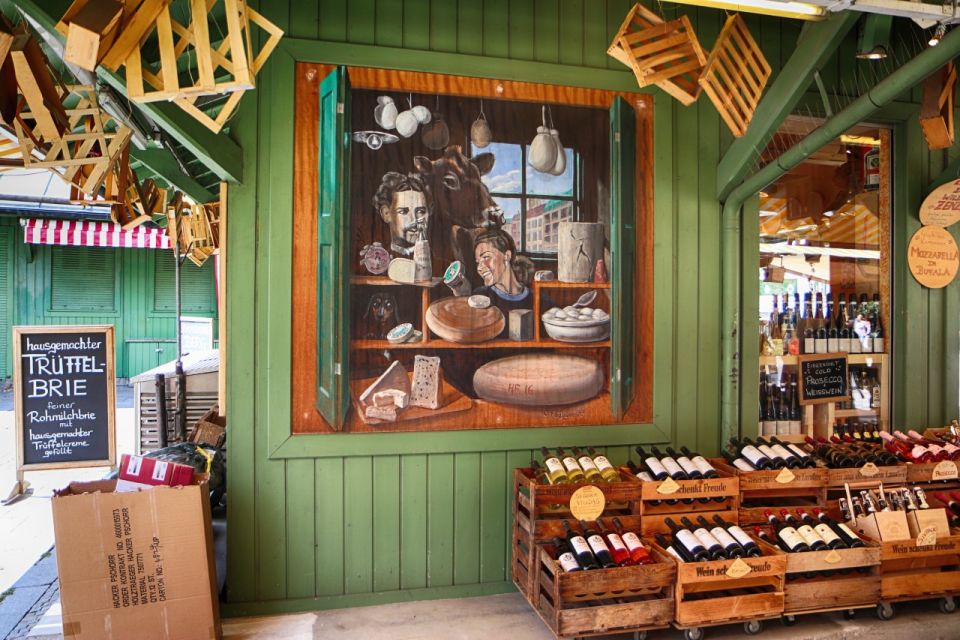
The final stop is Viktualienmarkt, Munich’s oldest food market, with about 200 years of history. This is not a “drive-by” stop. The tour is designed to end with food and beer, so you can switch from sightseeing mode to local-life mode.
When you arrive, you’ll follow your guide through what makes the market special—then you’ll head to a beer garden seating area to relax. That transition is smart. After a few churches and big-city architecture, sitting down lets your brain reset and makes the food feel earned.
The key is that this isn’t an endless tasting platter. You’re given 1 original Bavarian beer and 2 traditional snacks. That structure keeps things simple, and it also helps you decide what you want to explore later on your own. If you love the beer style or one snack in particular, you’ll know exactly what to come back for.
You can also read our reviews of more private tours in Munich


The tasting: beer garden calm plus Bavarian snack basics
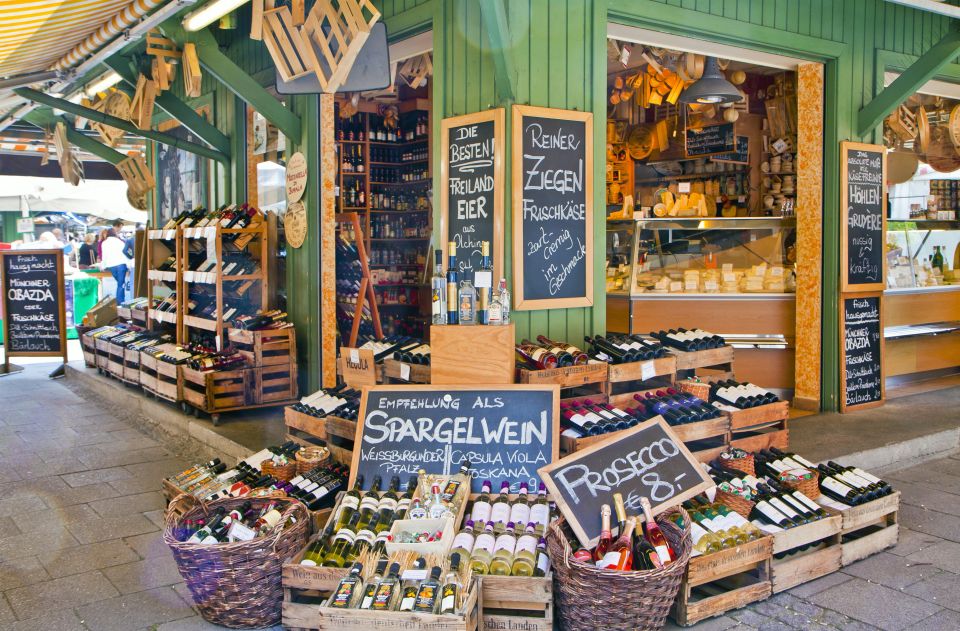
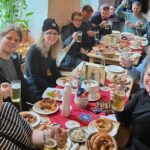
The tour tasting includes one beer and two snacks, with an example like Bratwurst semmel with sauerkraut. The point isn’t to overwhelm you—it’s to give you a couple of bites that taste like Munich, then let you explore independently afterward if you want.
I especially like the “set tasting” approach for first-timers. It removes the guessing game of what to order when you’re tired and hungry and the menu is in German. You get a reliable sample, and you don’t have to stress over choosing.
Also, the beer garden vibe matters. Even if you’re not a long-stay beer drinker, the market’s atmosphere is part of why this stop works. It’s a place where everyday people eat and linger, and that’s where a private tour can feel more authentic than a strict checklist.
One last tip: if you’re picky about beer styles, check in with your guide during the tasting. The tour data says you’ll receive one beer, but it doesn’t specify options. A quick question can help you avoid surprises.
Price and value: what $326 per person really buys you

This tour lists at $326 per person for a 3.5-hour private walking experience. Private tours in Munich can get expensive fast, so the real question is what you’re paying for besides the sightseeing.
Here’s what the value includes:
- A licensed 5-star guide fluent in your selected language
- Private group time (family and friends, not a crowd)
- Free entry to St. Peter’s Church
- Pickup from your accommodation if it’s within ZIP 80331
- A tasting: 1 beer + 2 Bavarian snacks
- A focused route through Marienplatz, multiple major churches, and Viktualienmarkt
Whether it feels like a deal depends on your group size and priorities. If you’re traveling as a couple or small group that wants a more personalized pace, private can make sense even at a premium. If you’re solo and just want a couple highlights, you might find the price steep for a walking-only format—though the included entry and tasting do help offset some of the cost.
Think of it like this: you’re not just buying “places.” You’re buying time with a guide, plus a structured local food finish. That structure is what most people pay for in Munich—having someone point out what matters and keeping the route sensible.
Logistics that can affect your afternoon (timing and meeting point)
The tour runs about 3.5 hours, and you’ll see starting times based on availability. The biggest logistics piece is the meeting point and pickup rules.
Pickup is only available if your accommodation is in the 80331 ZIP code zone (Munich Old Town). If your stay is outside that ZIP area, you meet at BEYOND by Geisel, Marienplatz 22, opposite St Peter. When pickup is available, you’ll need to provide your accommodation address at booking time to indicate you want to meet at your place.
A thoughtful detail: you’re told to check your email the day before the tour for important information. I’d treat that as mandatory. Private experiences often depend on last-minute confirmations, and missing the email can turn a simple start into a scramble.
Also, build in a small buffer in your schedule for the start time. One drawback that can hit the enjoyment is timing problems. If your guide arrives late, the walking plan can shrink because the tour still ends on schedule. If you’re working with strict dinner reservations, consider booking an evening slot that can flex.
Guide style: friendly Q&A works best with a clear question
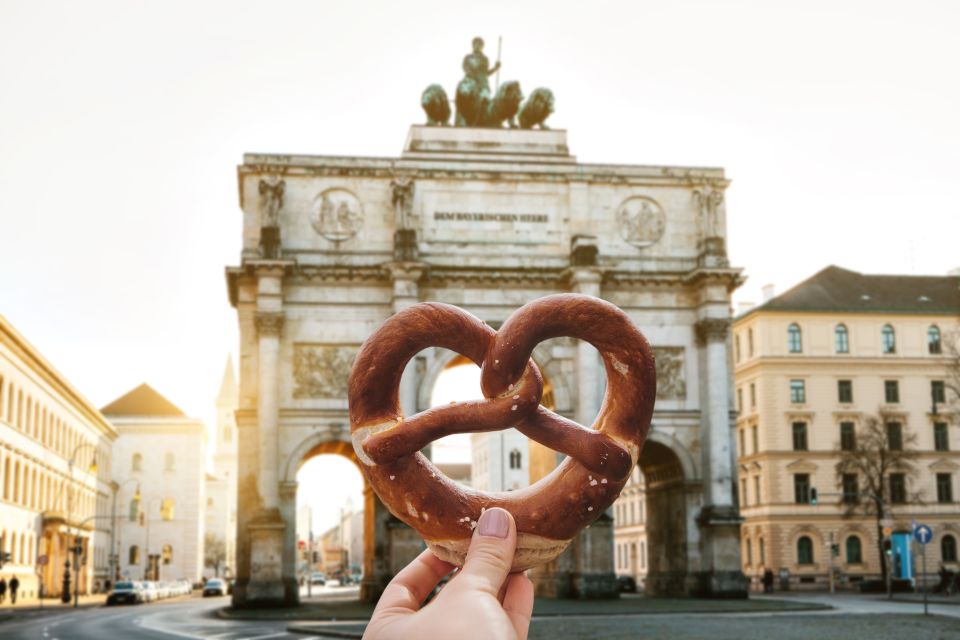
One of the most praised qualities is guide engagement—being friendly, asking what you want to know, and tailoring the explanations to your interests. If your goal is history with personality, this can be a great fit.
That said, there’s also a common pitfall in narration: information that feels like it jumps around without a clear timeline. For you, that means the tour can still be enjoyable, but you might lose some of the “cause and effect” connections that make history click.
A simple strategy helps a lot. If you want a clearer structure, ask early for the order you’ll cover and a rough timeline focus, such as medieval to modern, or architecture first then history. You’ll guide the guide toward the format that works for your brain. It’s a small request, and on tours like this it can change everything.
Who this tour is perfect for (and who may want a different fit)
This tour is strongest for:
- First-timers who want a high-quality Old Town loop without planning each stop
- Families and small groups who prefer private pacing
- People who like pairing landmarks with food-and-drink sampling
- Visitors who want church architecture explained without spending all day in museums
It may be less ideal if:
- You’re highly sensitive to schedule changes and tight reservations
- You only want to scratch the surface and dislike guided explanations
- You want a deep dive into one single church or one single historical era
Should you book: my practical recommendation
If you want a simple, structured way to see Munich’s center plus an easy local food ending, I’d say yes—especially if you value a private guide and you’ll actually use the included tasting. The combination of Marienplatz + church stops + Viktualienmarkt is efficient, and the included St. Peter’s Church entry and beer-and-snacks tasting help justify the premium.
Book it if you’re going with someone and you can share the experience, ask questions, and stay flexible on timing. Skip it if you’re on a very tight schedule or you only care about one or two landmarks. In that case, a lighter option might fit better.
FAQ
Where does the tour start?
You meet your guide in front of hotel BEYOND by Geisel at Marienplatz 22, 80331 Munich, opposite St Peter.
Is there pickup from my accommodation?
Pickup is available only if your accommodation is within the 80331 ZIP-code zone (Munich Old Town). If not, you still meet at BEYOND by Geisel, Marienplatz 22.
What’s included in the tasting at Viktualienmarkt?
You’ll taste 1 original Bavarian beer and 2 Bavarian snacks, with examples like Bratwurst semmel with sauerkraut.
Is St. Peter’s Church admission included?
Yes. Entry to St. Peter’s Church is free on this tour. Access to the tower is optional and listed at 3 EUR.
How long is the tour?
The walking tour is 3.5 hours.
What languages are available?
The live guide is available in English, German, Spanish, Italian, French, and Polish.
Is the tour private and accessible?
It’s a private group tour, and it is wheelchair accessible.