REVIEW · MUNICH
Walking Tour on Resistance to Nazism in Munich
Book on Viator →Operated by Explora Múnich · Bookable on Viator
Munich hides stories of resistance in plain sight. This guided walk connects key locations to the people who pushed back against the Nazi regime, even when it was dangerous. I love the stop-by-stop storytelling tied to actual addresses, and I love how the guides keep heavy topics clear and human.
One thing to plan for: eight locations means about twenty minutes per stop, so the pace can feel a bit quick if you like to linger. Still, most people can participate, and the admission is free at each stop, which makes the value feel straightforward.
In This Review
- Key things you’ll like about this Resistance-to-Nazism walk
- Why this walk hits harder than a textbook
- 2.5 hours, 8 stops: how the pacing works (and how to be ready)
- Hofgarten: where royal life met a changed political climate
- Bayerische Staatskanzlei: parties, Sopade, and resistance in politics
- Prinzregentenstraße and the former Luftwaffe command center: resistance inside the militia
- Bavarian National Museum: the Valkyrie Operation explained through place
- Haus der Kunst: Degenerate Art, propaganda, and the press
- Ludwigskirche: Church, Nazism, and Law T4 resistance
- DenkStatte Weisse Rose: one of Munich’s most famous resistance groups
- Türkenstraße and the Georg Elser Memorial: resistance aimed at the Führer
- Guide quality makes a real difference here
- Value and logistics: what you’re actually paying for
- Who should book this tour (and who might not love it)
- Should you book this tour?
- FAQ
- How much does the Walking Tour on Resistance to Nazism in Munich cost?
- How long is the tour?
- What time does the tour start?
- Where does the tour start and end?
- Do I need to buy admission tickets for the stops?
- Will I receive a ticket on my phone?
- What is the maximum group size?
- Is free cancellation available?
- Are service animals allowed?
- When will I get confirmation of my booking?
Key things you’ll like about this Resistance-to-Nazism walk
- 8 major Munich sites, each focused on a different form of resistance
- Small group size (maximum 25 people) that keeps the discussion lively
- Mobile ticket, easy to use without extra paper
- Free entry at every stop, so you pay for the guide, not museum fees
- Route from Odeonsplatz to Georg-Elser-Platz, so you finish in a different part of the center
- Guides known for clarity and warmth (Laura, Maca, Javier, Jaime, and Julieta are standout guide names you may be paired with)
Why this walk hits harder than a textbook
This isn’t a generic “Nazi history” tour. The whole point is to show you how resistance worked in real life across Munich—through politics, institutions, art, faith, and individual courage. You’re not just hearing about the regime. You’re also meeting the people who tried to stop it or limit its harm, even while the system tightened around everyone.
I also like the structure. Each stop zeroes in on a specific angle, so your brain can actually hold onto the story. You leave with a clearer sense of how oppression spreads, but also how opposition can show up in surprising places—like church spaces, cultural institutions, or even inside groups you might assume were fully aligned.
And yes, it’s serious. But the guides keep it understandable, with room for questions and plain explanations that make the details stick.
You can also read our reviews of more walking tours in Munich
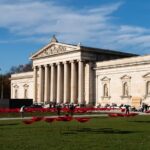
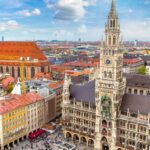

2.5 hours, 8 stops: how the pacing works (and how to be ready)
The tour runs about 2 hours 30 minutes and starts at 3:00 pm. It’s a walking tour, with each main location designed for roughly 20 minutes of guided time. The route starts at Odeonsplatz (Odeonspl., 80333 München) and ends at Georg-Elser-Platz in Munich-Maxvorstadt.
That timing matters because Munich can be a “stop-and-start” city. Here, you get an organized flow: you’ll move, listen, and then move again. If you’re the type who takes photos every ten steps, you’ll still be fine—just don’t plan on reading every plaque afterward. If you’re the type who wants to talk to the guide, the format gives you chances to ask questions without the tour dissolving into chaos.
A few practical tips that make this easier:
- Wear comfortable shoes. It’s not an all-day hike, but it is continuous walking.
- Dress for the weather. Even in a city like Munich, your best sightseeing depends on what it’s doing outside.
- Bring your phone and keep it charged enough for the mobile ticket.
Group size is capped at 25 travelers, which is great for questions. You’re not just getting a lecture from the front of the group.
Hofgarten: where royal life met a changed political climate
The walk begins at Hofgarten, and you’ll hear about how the royal family lived during the Nazi period—plus what the political situation looked like at the time. Even without going into a ton of complex jargon, this stop gives you a key foundation: power didn’t only show up on posters and loudspeakers. It showed up in rooms, rituals, and public respect.
What I like about starting here is that it sets up a useful mental contrast. You can look at the surroundings and think, What does “normal life” mean when the state has rewritten the rules? Then the tour keeps returning to that question, stop after stop.
Possible drawback: if you prefer tours that start with the most dramatic events first, this first segment may feel more background-heavy. But that background helps you understand what came next.
Bayerische Staatskanzlei: parties, Sopade, and resistance in politics
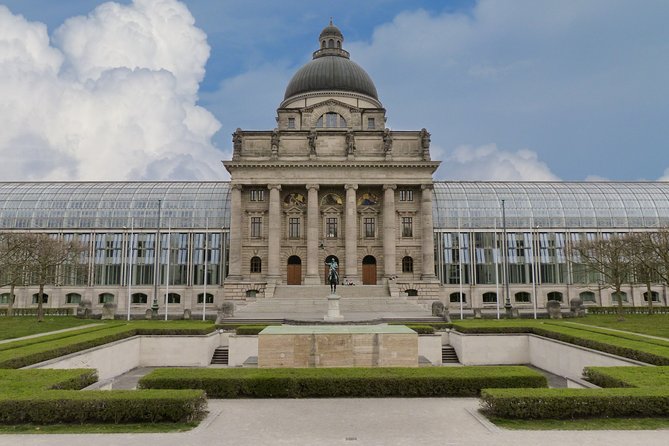
Next you’ll head to the Bayerische Staatskanzlei. Here the focus shifts to how political parties resisted the Nazi regime, including discussion of the Sopade.
This is where the tour stops feeling like a series of isolated “cool sites” and starts feeling like a map of opposition. When the Nazis took power, public life didn’t just shut down overnight. People fought back in political spaces too—sometimes loudly, sometimes through channels that weren’t obvious to outsiders.
I also like that the guide brings this into street-level reality. You’re not stuck with abstract ideas. You’re standing in a place tied to governance and decision-making, and the story lands with more weight.
Prinzregentenstraße and the former Luftwaffe command center: resistance inside the militia
At Prinzregentenstraße, you’ll learn about the building connected to the former Luftwaffe Command Center and hear discussion about resistance within the militia itself.
This stop is important because it challenges an easy assumption. Resistance doesn’t only come from outside the system. Sometimes it comes from people who were already “in”—or close to power. You’ll get that angle here without making it feel like a movie plot. It’s framed as human choices and pressure-packed environments.
You may walk away thinking: if resistance could appear inside such a tightly controlled structure, then the regime’s grip wasn’t total. That doesn’t make it less horrifying—just more honest.


Bavarian National Museum: the Valkyrie Operation explained through place
The tour then goes to the Bavarian National Museum for what happened in the well-known Valkyrie Operation.
This is a turning-point stop for many people, because it’s linked to a plot style of resistance—action with planning and consequences. Hearing it while standing in a museum-adjacent setting also makes sense. Museums are where we process history afterward, but here you’re getting a guided, on-the-ground interpretation so it doesn’t feel like distant trivia.
If you’re the type who likes to understand cause-and-effect, this stop is a good one. It gives you a clearer sense of how resistance could take organized forms.
Haus der Kunst: Degenerate Art, propaganda, and the press
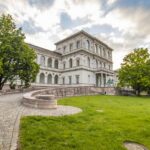
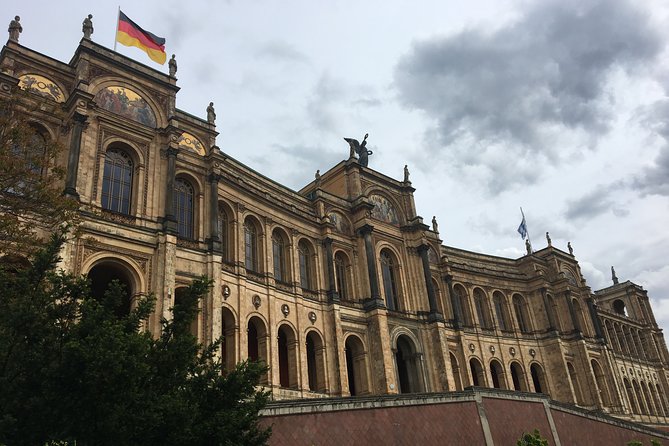
At Haus der Kunst, the theme becomes cultural control. You’ll discover how Nazism tried to censor art, you’ll hear about the exhibition of Degenerate Art, and you’ll discuss how the regime managed the press through its propaganda apparatus.
This is a stop that you’ll probably remember long after the tour ends, because it hits a modern nerve. Art and media aren’t separate from politics. When a government controls what people see, it controls what people think is normal.
What I like here is the balance. The tour doesn’t just say censorship happened. It connects censorship to the wider strategy—what the regime wanted people to believe and repeat.
Time note: since each stop is roughly twenty minutes, you won’t be handed an encyclopedia. But you’ll get enough clarity to understand what you’re looking at and why it matters.
Ludwigskirche: Church, Nazism, and Law T4 resistance
Next is Ludwigskirche, and the tour explains the relationship between Church and Nazism, including Law T4, and how religious resistance to the regime took shape.
This stop can land emotionally, because it deals with harm on a serious scale, and it also deals with moral resistance. The way the topic is framed tends to keep it grounded: who had power, who was pressured, and how people answered back in religious spaces.
If you want to keep your mind open here, it helps to listen for the human choices—what people could do, what they risked, and how that risk shaped their actions. That’s where this segment becomes more than a date-and-policy lesson.
DenkStatte Weisse Rose: one of Munich’s most famous resistance groups
You’ll then reach DenkStatte Weisse Rose to meet the best-known resistance group in the city of Munich: the White Rose.
This stop is often what people come for, because it ties Munich to a name that feels both personal and brave. You’re not just hearing that resistance existed. You’re hearing about a group that became a symbol of refusal.
I like that the tour treats this as more than a famous label. The guide’s job here is to make the story feel real—people making choices under terrifying conditions. Even in a short time window, it can give you a sense of why the White Rose became remembered.
Tip: if you’re taking photos, do a few quick ones, then put the phone away for the explanation. This is the kind of stop where your attention matters.
Türkenstraße and the Georg Elser Memorial: resistance aimed at the Führer
The final thematic stop is at Türkenstraße, where you’ll visit the Georg Elser Memorial. The guide will talk about how attentive resistance was against the life of the Führer himself.
This is a different kind of courage from group movements and institutional opposition. It’s closer to individual action—planning and timing aimed at changing the course of events.
You’ll also likely feel a shift in mood as the tour closes. Earlier stops explored broader systems: art, politics, faith. Here, the story tightens toward a single goal with enormous stakes.
The tour ends at Georg-Elser-Platz, so you’ll have an easy finish point to head elsewhere afterward—food, coffee, or connecting to public transport.
Guide quality makes a real difference here
This is one of those tours where the guide can make or break the experience. The standout thing you’re likely to notice is how friendly and attentive the guides are, plus how well they explain without talking down.
Names you may see include Laura, Maca, Javier, Jaime, and Julieta. Common themes across those guides: they tend to keep the material interesting, explain in ways that are easy to follow, and answer questions instead of rushing past them. That matters on a topic like this. If you don’t fully understand a reference—like Sopade, Law T4, or the Valkyrie Operation context—the guide being able to clarify helps you connect the dots.
If you care about getting questions answered, this tour format is built for you because the group size stays small.
Value and logistics: what you’re actually paying for
At $19.49 per person, you’re paying for guided interpretation across a dense route of major Munich sites. What makes this feel like good value is that admission is free at each stop. So the price isn’t inflated by museum entry fees—you’re mostly buying the guide’s expertise and the story structure.
One more value point: the tour uses a mobile ticket. That reduces friction. No scrambling for printed tickets. No extra steps.
Also, this one is typically booked in advance (on average, people book about 141 days ahead). If you want a specific day and you’re traveling in a busy season, you’ll save yourself stress by booking early.
Who should book this tour (and who might not love it)
You should book this walk if:
- You want a guided route that connects resistance stories to real places in Munich.
- You prefer a clear structure over a freeform museum-hopping day.
- You care about more than one type of resistance: political, cultural, religious, group-based, and individual.
You might reconsider if:
- You dislike walking tours that are paced and scheduled, because this one runs on a tight timeline.
- You want long, slow reading time at each location. Twenty minutes can feel short for deep solo study.
Should you book this tour?
My take: yes, if you’re in Munich and you want resistance to Nazism presented in an organized, place-based way. The route is efficient, the sites connect to different forms of pushback, and the guides tend to be a big strength.
Just go in with the right expectations: this is not a passive “see buildings” loop. It’s a story walk. Wear good shoes, listen actively, and treat each stop like a chapter—not a postcard.
If you want Munich history that’s more honest than safe, this is a strong choice.
FAQ
How much does the Walking Tour on Resistance to Nazism in Munich cost?
It costs $19.49 per person.
How long is the tour?
The tour lasts about 2 hours 30 minutes.
What time does the tour start?
The start time is 3:00 pm.
Where does the tour start and end?
It starts at Odeonsplatz, Odeonspl., 80333 München, Germany, and ends at Georg-Elser-Platz, 80799 München-Maxvorstadt, Germany.
Do I need to buy admission tickets for the stops?
No. Admission tickets are listed as free for the stops on this tour.
Will I receive a ticket on my phone?
Yes. It uses a mobile ticket.
What is the maximum group size?
The tour has a maximum of 25 travelers.
Is free cancellation available?
Yes. You can cancel for a full refund up to 24 hours in advance.
Are service animals allowed?
Yes, service animals are allowed.
When will I get confirmation of my booking?
You’ll receive confirmation at the time of booking, unless you book within 16 hours of travel, in which case confirmation is received as soon as possible subject to availability.