REVIEW · MUNICH
Munich and Nazi History Combination Day Tour Small Group
Book on GetYourGuide →Operated by Alun Evans Personal Tour Guiding Munich · Bookable on GetYourGuide
Munich can look friendly and pretty. Then you turn a corner and the city’s Nazi past becomes painfully specific. This small-group tour links Dachau Concentration Camp Memorial Site with the places in Munich tied to Adolf Hitler and the Nazi party, so the story doesn’t stay abstract.
I really like the structure: you get a full morning at Dachau with a memorial guide, including time for the museum, plus a later walking tour through central Munich anchored to exact events in the 1930s. The other big win is the group size—15 participants max—which makes it easier to ask questions and actually hear the guide instead of shouting over everyone else.
One consideration: it’s a heavy, emotionally demanding day. Come with comfortable walking shoes, plan for a lot of time outdoors, and note that children under 14 aren’t permitted, and luggage or large bags aren’t allowed.
In This Review
- Key takeaways before you go
- From Marienplatz to Dachau: the morning plan that keeps things simple
- Dachau Concentration Camp Memorial Site: time with a memorial-licensed guide
- Marienplatz lunch break: where you catch your breath and plan your next steps
- 3 PM Munich walking tour: connecting Nazi-era decisions to real streets
- Hofbräuhaus and the Führerbau: when familiar Munich turns unsettling
- Königsplatz rally ground and the documentation center area
- Transportation, timing, and group size: why the day feels manageable
- Price and value: is $109 worth it?
- Who should book this tour—and who should skip it
- Should you book the Munich Nazi History + Dachau small-group tour?
- FAQ
- How long is the tour?
- Where do I meet the guide?
- What happens first on the day?
- How much time is spent at Dachau?
- Is lunch included?
- What sites in Munich are covered after lunch?
- What is the group size?
- Is the tour suitable for children?
- Are luggage or large bags allowed?
Key takeaways before you go
- Dachau first, Munich second: a long, respectful morning at the memorial, then a focused walking tour back in the city.
- Memorial-licensed guide at Dachau: you’ll get factual, thought-provoking guidance and time at the museum exhibit.
- Small group logistics: max 15 people, with a guide managing trains so the day stays on track.
- Hitler and Nazi turning points in Munich: the walk connects real locations to events like the 1938 pogrom decision and the Munich Agreement.
- Built-in breaks: a lunch window back at Marienplatz with guidance on where to eat.
- Ends at Königsplatz: you finish near the spaces used for Nazi rallies and the documentation center area.
From Marienplatz to Dachau: the morning plan that keeps things simple
The tour starts in central Munich at Marienplatz, right in front of the Tourist information center. Look for your guide holding a placard that says Dachau Memorial Tour. The morning kickoff is at 09:00 AM, and the schedule is designed so you’re not wasting time figuring out trains or meeting points.
Once you’re moving, expect a 45-minute train ride toward Dachau. This part matters more than it sounds. Munich’s rail system is good, but it can still be confusing when you’re trying to follow a strict day plan. The whole point here is that you’re traveling with an experienced escort who knows how to keep the group together and on time.
At the very start, do yourself a favor: dress for the weather and wear shoes you can stand and walk in for hours. The tour is not a sit-down museum day only—it includes walking in Munich later, and it includes time at the memorial that tends to involve uneven paths and outdoor sections.
Also note the practical rule: no large bags or luggage. If you’re carrying more than a small daypack, you’ll want to rethink what you bring so you aren’t worrying about storage all morning.
You can also read our reviews of more historical tours in Munich
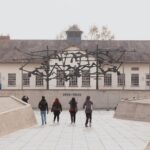
Dachau Concentration Camp Memorial Site: time with a memorial-licensed guide
The Dachau block is the heart of the day. You’ll spend about 3 hours at the memorial with a Dachau memorial guide who’s described as licensed and focused on making the experience factually rich and thought-provoking. That combination is important. Dachau isn’t a place you should try to “figure out later.” A good guide helps you connect what you’re seeing with what it meant, without turning it into a history lecture you can’t emotionally hold.
The pacing is balanced. There’s a thorough guided portion, and you also get time to explore the museum exhibit on your own. The schedule calls out time for questions and interaction, so if something doesn’t make sense, you’re not left to guess.
You should expect a serious environment. The guide’s job isn’t to soften details—it’s to provide context and help you make sense of what you’re looking at. Reviews for this tour consistently highlight that the guide’s communication is careful, clear, and direct, including the ability to answer tough questions without making the conversation feel rushed.
One more real-world note: if regulations or access conditions change (for example, site requirements at the memorial), the itinerary may shift. In that case, some historical information could be provided offsite, along with extra independent time on the grounds. You still get structure; it just adapts on the day.
Marienplatz lunch break: where you catch your breath and plan your next steps
After Dachau, you head back toward Marienplatz. The plan includes another 45-minute train ride, followed by a break for about 1 hour. This is not just a transit pause—it’s time to reset.
The tour description notes that your guide will suggest eateries during the break. Meals and drinks aren’t included, so you’re choosing what fits your budget and hunger level. Use the hour to do the small things that make a long day work:
- grab something quick to eat so you don’t run on empty
- step away for a bit of quiet time
- get your bearings for the afternoon walk
Marienplatz is a convenient base because it keeps you centered in Munich. You’re not trekking across town to find lunch, and you’re not losing your place in the day schedule.
3 PM Munich walking tour: connecting Nazi-era decisions to real streets
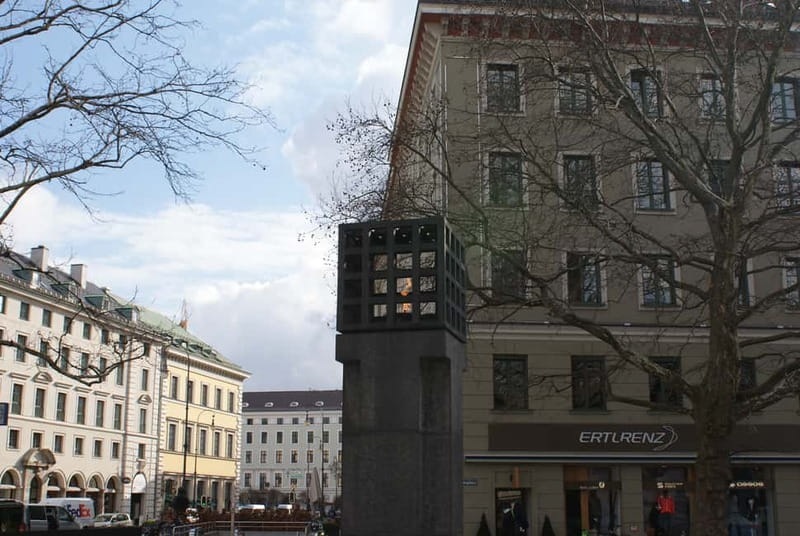
The second half starts at 03:00 PM from Marienplatz. This is a guided walking tour through central Munich focused on Nazi relevance and Adolf Hitler’s rise, with stops tied to specific 1930s moments.
The tour description calls out some of the turning points you’ll hear about, including:
- the location where Hitler joined the German Workers Party
- the location where it was decided to carry out a pogrom against German Jews in November 1938
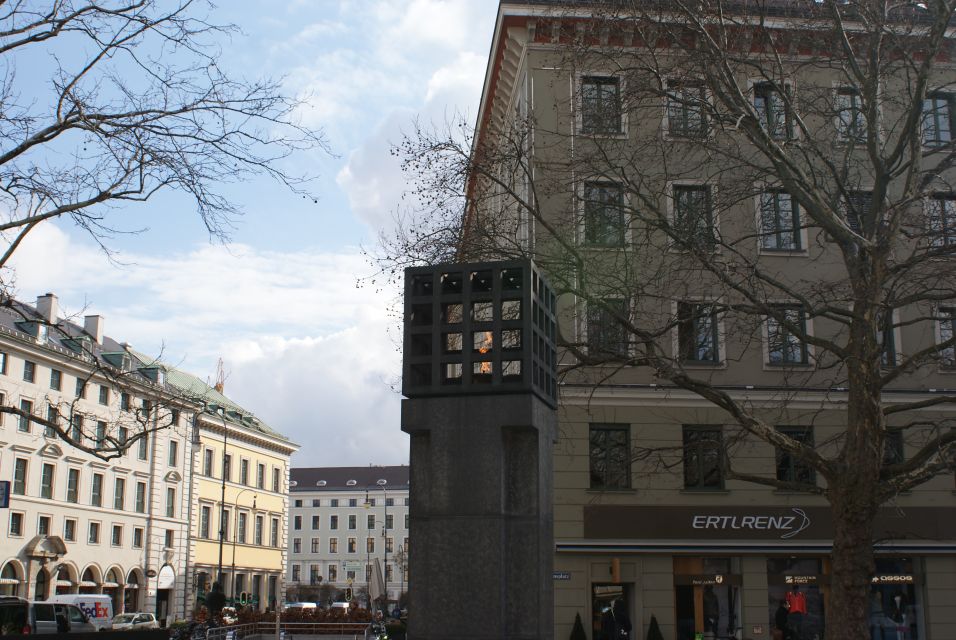
- the place where the Munich Agreement was signed in 1938
Those aren’t generic history bullet points. They’re the kinds of events that can sound distant until you stand in a place that helped shape them. The value of the walk is that you see how ideology turned into actions, using Munich locations that still sit in the city today.
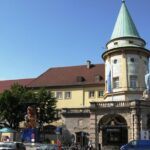
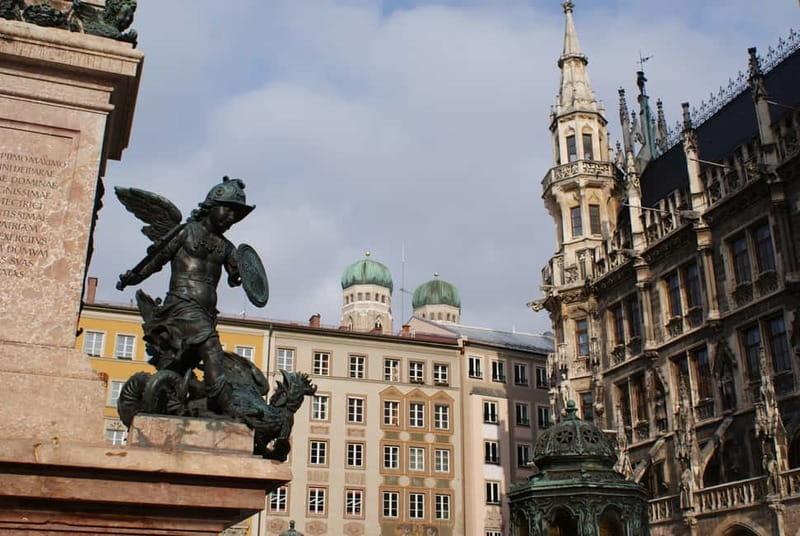
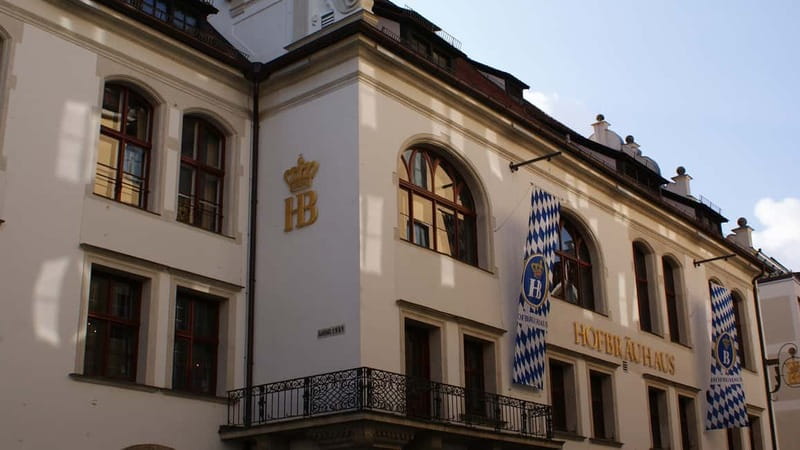
Along the way, you’ll also see other sights not directly tied to one Nazi event, including the oldest parish church in Munich, one of the quaint beer gardens in the city, and the famous Hofbräuhaus München. That mix helps keep the day from becoming only grim and monotone. You’re seeing real Munich too—just with the context switched on.
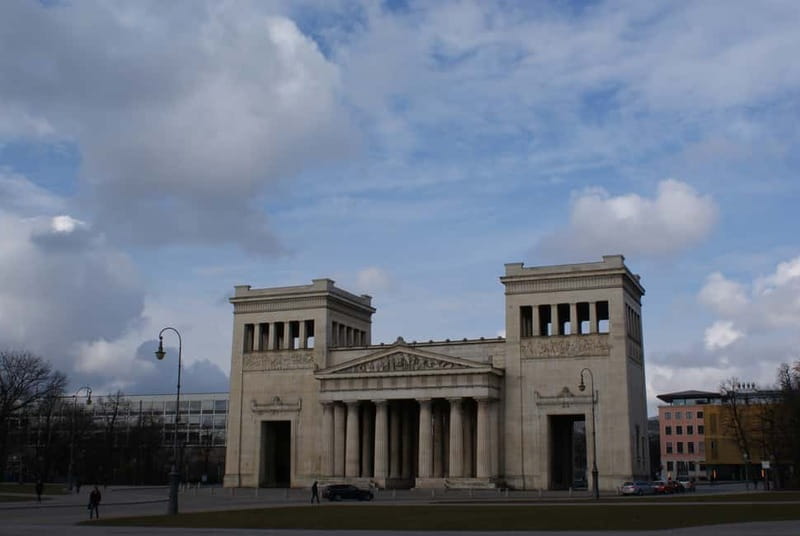
This portion ends around Königsplatz, where the Nazis held rallies. That matters because it shows how public spaces were used for propaganda and control, not just private meetings behind closed doors.
Hofbräuhaus and the Führerbau: when familiar Munich turns unsettling
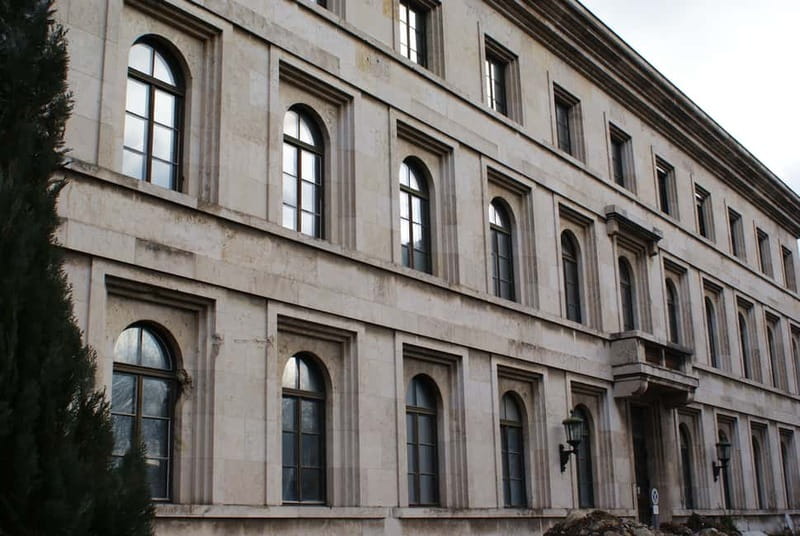
A quick note on the emotional rhythm: the afternoon includes well-known Munich landmarks like Hofbräuhaus München and the Führerbau area. Seeing these names in a Nazi-history itinerary can feel strange at first. That’s normal. The real learning moment is when your guide connects what you see to what happened there—especially around the 1938 period.
The tour includes short guided time at both:
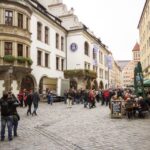
- Hofbräuhaus München (guided for about 10 minutes)
- Führerbau (guided for about 10 minutes)
Then you move on toward Königsplatz and the surrounding historical spaces. The pacing here stays short-stop and focused rather than turning into one long march. For many people, that’s the sweet spot: enough time to learn and absorb, without dragging the same intensity for the entire afternoon.
Königsplatz rally ground and the documentation center area
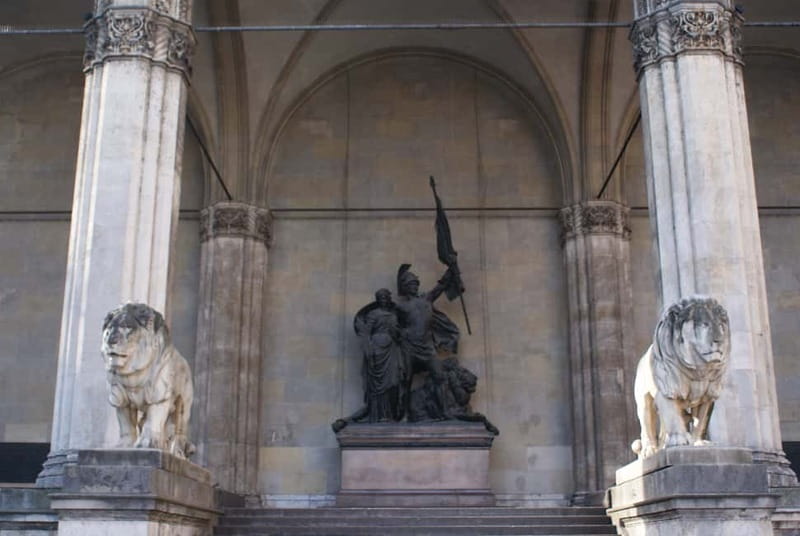
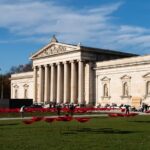
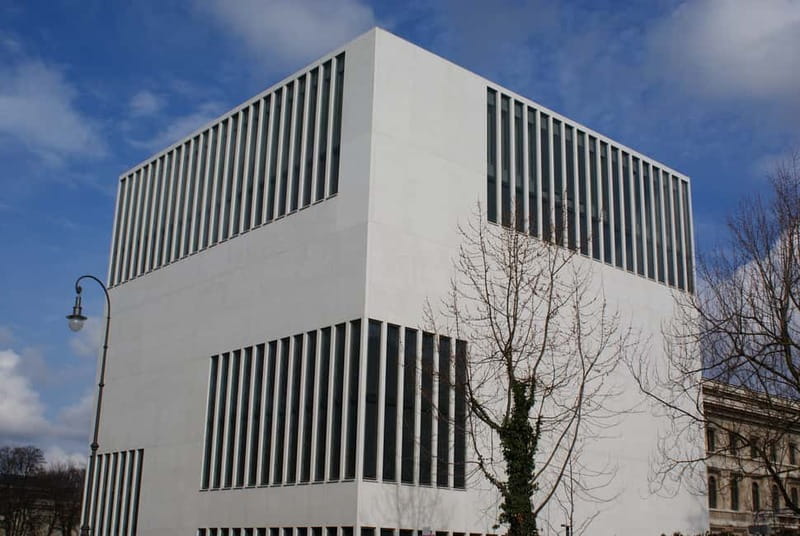
Your final stop is Königsplatz, with guided time of about 15 minutes. This is the part of the day where the Nazi presence in Munich stops being a story about meetings and decisions and becomes a story about public performance—large rallies, mass attention, and space designed to amplify messages.
The itinerary also points to the Führerbau and a new documentation center of National socialism at/near this area. Even without wandering for hours, you’ll leave with a clear sense of what you were looking at and why it mattered.
From a visitor perspective, this ending location is also practical. It’s central enough that you can keep exploring afterward, but structured enough that the tour doesn’t dump you at a random corner. At the end of the day, you have a choice: you can be escorted back to Marienplatz by train with your guide, or you can pick your own route and continue independently. Either option keeps you in control.
Transportation, timing, and group size: why the day feels manageable
The tour duration is about 8 hours, starting at 09:00 AM and running until you’re back at Marienplatz by the end. You’ll have train time in between guided segments, and the schedule includes multiple short guided stops in Munich.
That matters because it’s not just about history—it’s about flow. Reviews consistently mention that the guide, Alun Evans, manages public transport efficiently and keeps everything running smoothly, even in crowded transit situations. One reviewer even mentioned that the guide waited as long as possible when they arrived late, which is a nice sign of how seriously the day is handled.
Group size is another practical win. Maximum 15 participants means you’re more likely to hear the guide and get your questions answered. Reviews also mention small groups like 11–13 people, which gives you a more personal feel than big-bus history tours.
Also keep in mind: you’re walking at least part of the afternoon. Even if you’re not a long-distance walker, plan for steady walking on uneven city surfaces.
Price and value: is $109 worth it?
At $109 per person for an 8-hour day, the value comes from three places that are hard to replicate on your own.
First, you’re buying a memorial-licensed guide for Dachau. That’s not just “a guide who knows facts.” It’s guidance designed for a site of remembrance and education, with time for questions and museum exploration. Second, you’re getting transportation costs included for the tour duration, which removes a chunk of logistics and stress. Third, your group size is capped at 15, which makes the experience feel more like a tight guided day than a cattle-call.
Could you do Dachau and Munich sites independently? Sure. But you’d be spending time working out transit, timing, and what to prioritize. Paying for a structured plan is often worth it when the topic is heavy and you don’t want to miss key context.
If you’re the kind of traveler who likes to understand what you’re seeing instead of just checking boxes, this price starts to look fair fast.
Who should book this tour—and who should skip it
This experience is a strong fit if you want Nazi-era Munich history taught in context, not in isolated plaques. The Dachau portion plus the Munich walking tour gives you a full arc: from the machinery of persecution to the local spaces tied to key moments in Hitler’s rise.
It’s also a good match for people who appreciate careful explanations and Q&A. The guide’s approach is described as engaging and sensitive, and the small group format makes discussion easier.
You may want to skip (or at least think hard first) if:
- you’re traveling with kids under 14 (not permitted)
- you don’t handle heavy, emotional subject matter well
- you can’t do a walking day and long memorial time
- you’re planning to carry bulky luggage (not allowed)
Should you book the Munich Nazi History + Dachau small-group tour?
If you want one day in Munich that actually explains how the Nazi story connects to real places, this is a smart choice. The combo of a Dachau memorial guide with a focused Munich walk makes it hard for the day to feel like disconnected sightseeing. With Alun Evans leading and the group capped at 15, the format stays human-sized and question-friendly.
Book it if your priority is understanding and context over casual photos. Consider another option if you’re looking for a light, relaxed city stroll or if the subject matter would be too much for your comfort level.
FAQ
How long is the tour?
The tour lasts about 8 hours.
Where do I meet the guide?
Meet at Marienplatz in central Munich, in front of the Tourist information center. The guide will have a placard that says Dachau Memorial Tour.
What happens first on the day?
You start at Marienplatz at 09:00 AM and travel by train to Dachau for a guided visit.
How much time is spent at Dachau?
You spend about 3 hours at the Dachau Concentration Camp Memorial Site with a memorial-licensed guide, including time to explore the museum exhibit.
Is lunch included?
No. Meals and drinks are not included, but there is a break of about 1 hour at Marienplatz during which the guide can suggest places to eat.
What sites in Munich are covered after lunch?
The afternoon walking tour covers locations relevant to Hitler and the Nazi party, including sites tied to Hitler joining the German Workers Party, the 1938 pogrom decision, and the Munich Agreement, plus the oldest parish church in Munich, a beer garden, Hofbräuhaus München, the Führerbau, and the Königsplatz area.
What is the group size?
It’s a small group with a maximum of 15 participants.
Is the tour suitable for children?
No. Children under 14 are not permitted.
Are luggage or large bags allowed?
No. Luggage or large bags are not allowed.