REVIEW · MUNICH
Munich: National Socialism Historical Tour in GERMAN
Book on GetYourGuide →Operated by Weis(s)er Stadtvogel GmbH · Bookable on GetYourGuide
Munich’s Nazi story starts on the street.
This 2-hour walking tour with Weis(s)er Stadtvogel follows the key places tied to how National Socialism took hold in Bavaria, starting at Königsplatz and moving toward major sites around Odeonsplatz. You’ll hear about the rise of the NSDAP, the meaning of November 9 in 1923 and 1933, and you’ll see black-and-white photos that help you picture Munich in the 1920s and 1930s.
What I like most is the way the guide ties events to location instead of listing facts in the abstract. I also appreciate the historic photo element, because it makes the story feel anchored in real street-level scenes from the period.
One consideration: this is a walking tour focused on difficult history, and you’ll be moving outside rain or shine, so plan on comfortable shoes and staying mentally ready for tough subject matter.
In This Review
- Key Points Worth Noting
- Why Munich’s Nazi Sites Hit Differently at Street Level
- The 2-Hour Route: Königsplatz, Briennerstrasse, Odeonsplatz
- Königsplatz: Where Symbolism Gets Its Stage
- Führerbau and the Munich Documentation Centre Connection
- Along Briennerstrasse: Following the City’s Political Gravity
- Passing the Former Gestapo Headquarters
- Feldherrnhalle at Odeonsplatz: November 9 and the Power of Public Space
- The Photo Element: Black-and-White Context You Can’t Fake
- German-Language Guide: Clear, Direct, and Not Overly Complicated
- Price and Value: Why $34 Can Be Fair Here
- Who This Tour Fits Best
- Practical Setup: Meeting Point and What to Wear
- Should You Book This Munich National Socialism Historical Tour?
- FAQ
- What’s the duration of the Munich National Socialism historical tour?
- How much does the tour cost?
- Is the tour offered in German?
- Where do I meet the guide?
- How can I recognize the guide?
- Is the tour private or in a group?
- Is the tour indoors?
- Are entrance fees included?
Key Points Worth Noting
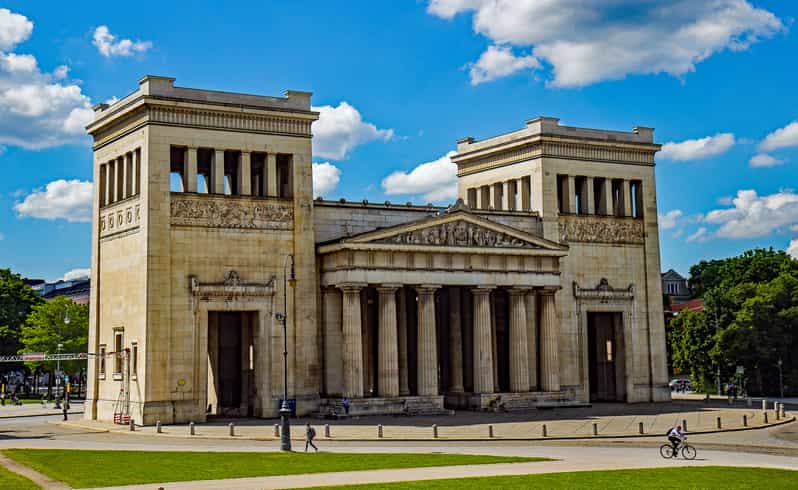
- Königsplatz to Führerbau: a route through sites tied to early Nazi power-building
- Munich Agreement context: you’ll connect 1938 decisions to the buildings around you
- Gestapo headquarters passed en route: the tour doesn’t shy away from the machinery of repression
- Feldherrnhalle and Odeonsplatz: you learn how public space was used in power plays
- Black-and-white photos: visual context for Munich in the 1920s and 30s
- Private or group option: choose the group format that fits your style
Why Munich’s Nazi Sites Hit Differently at Street Level
Munich is often called the City of the Movement, and this tour focuses on why that label matters. National Socialism didn’t just happen in remote archives. It formed in cities, rallies, speeches, and buildings where people walked past ordinary life while politics hardened around them.
I like that the tour keeps returning to cause-and-effect: where the movement gained visibility, how it turned momentum into power, and what daily geography looked like during the 1920s and 1930s. That makes the story easier to follow, because you’re not memorizing dates in a vacuum. You’re walking them into place.
Also, the guide is professional and German-language, so you’re getting a guided interpretation of the sites rather than a self-paced checklist. If you’re comfortable with German (or willing to listen closely), it’s a straightforward way to learn without distractions.
You can also read our reviews of more historical tours in Munich
The 2-Hour Route: Königsplatz, Briennerstrasse, Odeonsplatz
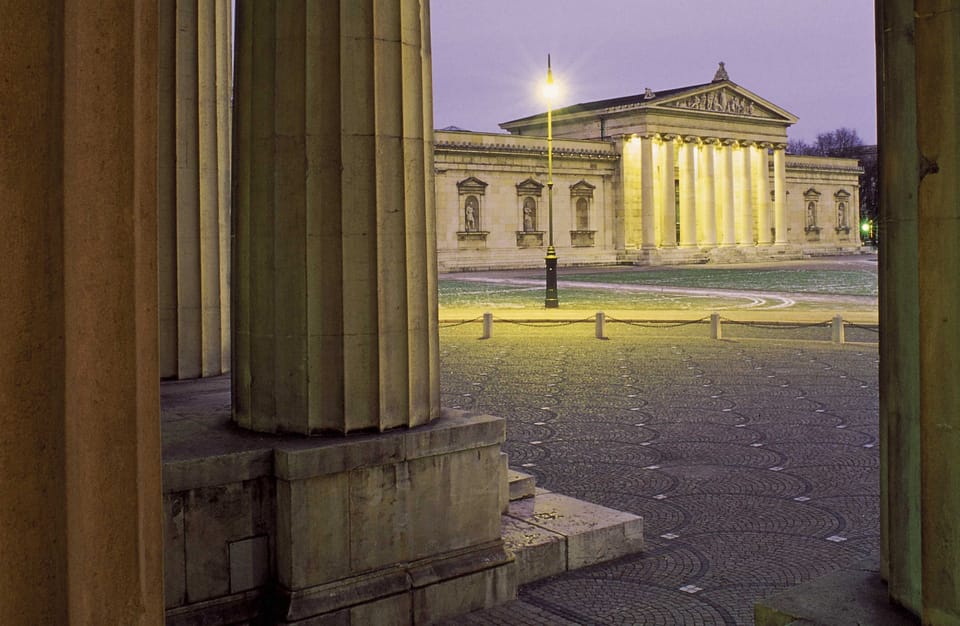
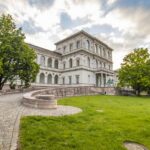
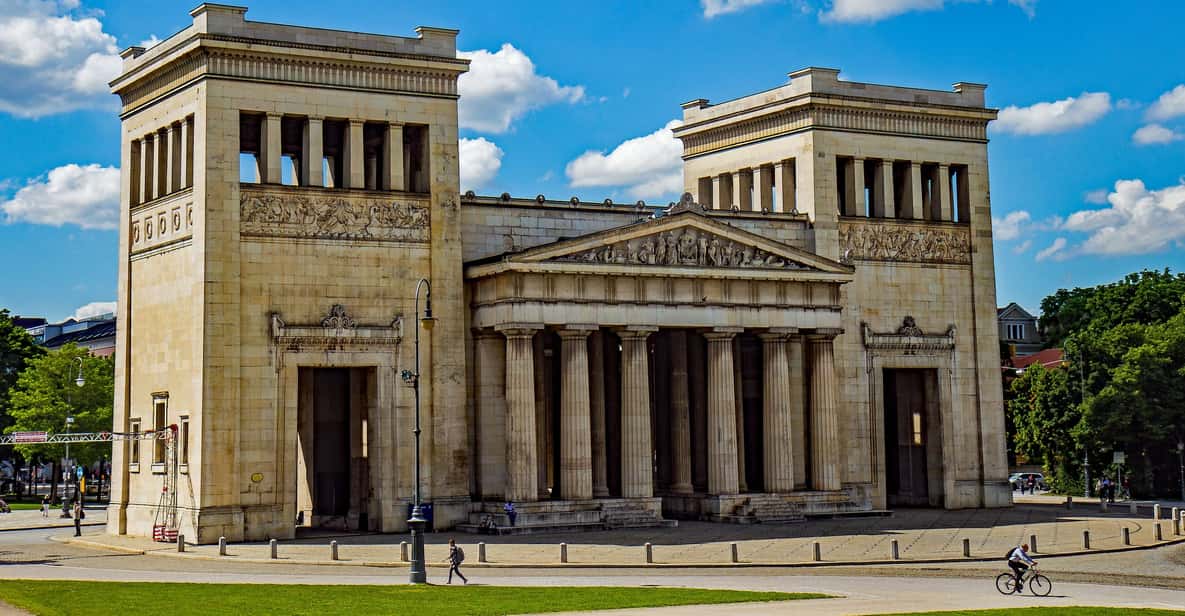
This is built as a focused walk, not a half-day marathon. You start at the main entrance of the Staatliche Antikensammlungen, then follow the story through central landmarks tied to National Socialist history. The walking route is clearly meant to guide you from symbolism to enforcement and from propaganda moments to the consequences that followed.
The flow matters. You begin with Königsplatz, then head to the former Führerbau—today connected with the Munich Documentation Centre for the History of National Socialism—then continue along Briennerstrasse. After that, you pass the former Gestapo headquarters and finish at Feldherrnhalle at Odeonsplatz. Each stop acts like a checkpoint in the broader narrative: movement, agreement, intimidation, and public confrontation.
The tour is scheduled as rain or shine, so you’re not protected from weather. If it’s wet or windy, your best friend is traction and a steady pace—because this kind of walking tour works only if you can keep up.
Königsplatz: Where Symbolism Gets Its Stage
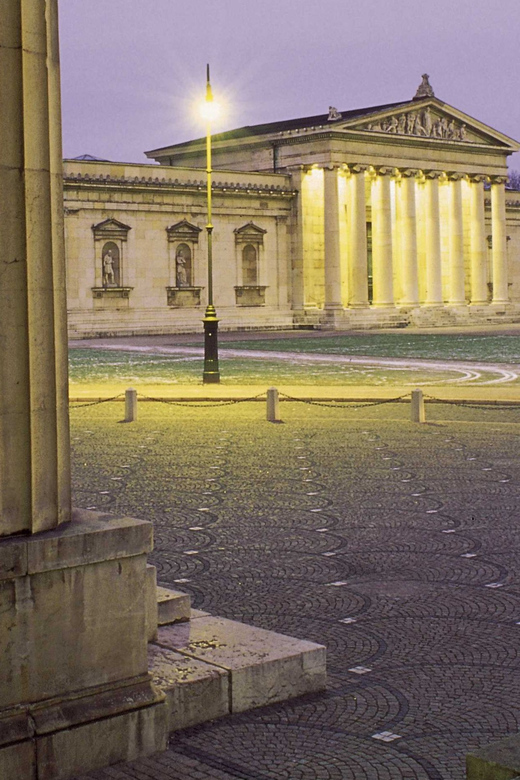
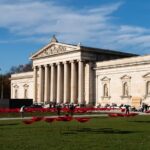
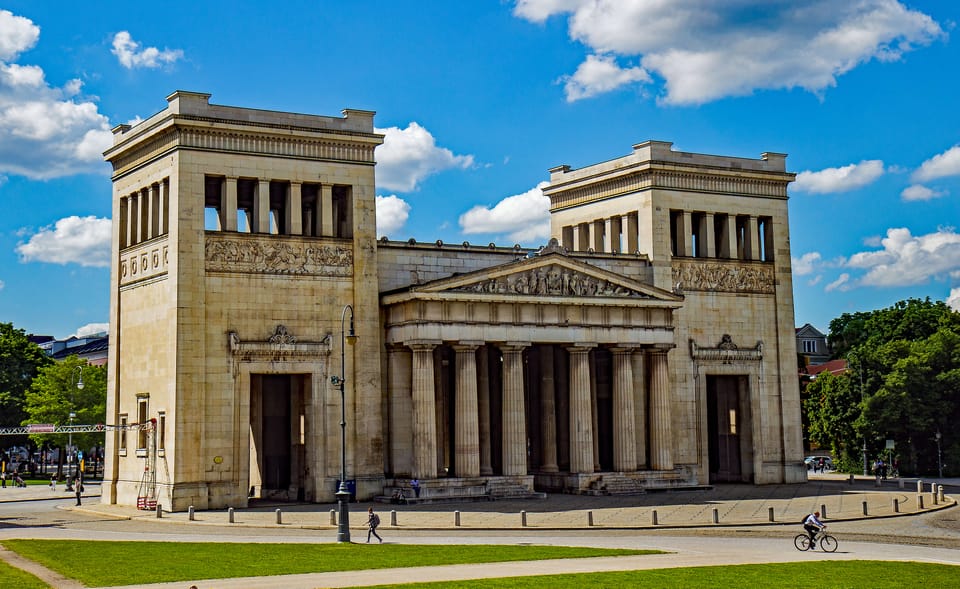
Königsplatz is where the tour begins, and it’s an important choice. This is the kind of setting where mass politics makes visual sense. The space helps explain why movements obsess over architecture and public layouts: people need places that look official, permanent, and hard to ignore.
From here, the guide sets up the bigger story: how Munich became a launchpad in the 1920s and 1930s, and how National Socialism’s rise was tied to what happened in that city. You’ll also hear about the events connected to November 9, with attention to what those dates meant for the movement’s trajectory.
The practical takeaway for you is simple: arriving a little early helps. Use a minute to get your bearings at the start point before the guide pulls you into the narrative.
Führerbau and the Munich Documentation Centre Connection
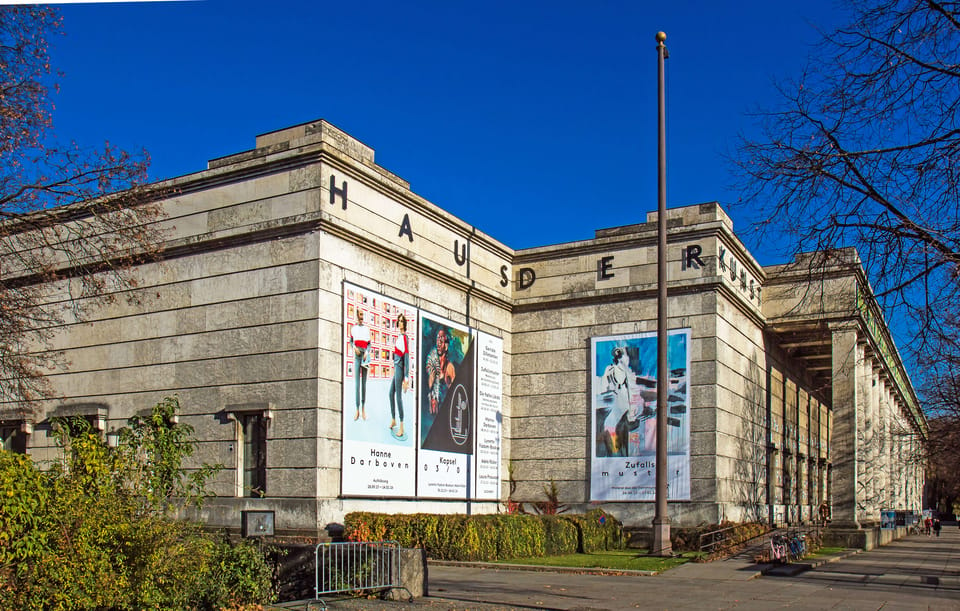
Next comes the former Führerbau, described as the place where the Munich Agreement was signed in 1938, and where today the Munich Documentation Centre for the History of National Socialism is located. Even if you know the name Munich Agreement, hearing it tied directly to the building helps you understand why this area mattered.
This stop is valuable because it connects a political decision to physical place. Agreements aren’t just headlines; they’re made in rooms, within power networks, and they reflect the state of Europe at that moment. Standing in the context of where such events unfolded gives you a clearer sense of how fast diplomacy and ideology could shift the fate of ordinary people.
The tour also uses black-and-white photos here and elsewhere to show what Munich looked like in the 1920s and 1930s. That’s not decoration. It helps you “see” the era, especially when you’re standing in a city that has changed since then.
Along Briennerstrasse: Following the City’s Political Gravity
Briennerstrasse is the in-between section that keeps the tour from feeling like disconnected stops. Walking this stretch matters because it shows how the movement’s story is not confined to one dramatic square. Instead, it flows through the city’s arteries.
This segment helps you understand the pace of history. You’re not only learning what happened; you’re learning how power moved through Munich’s everyday geography. For many people, that’s where the tour feels most real: the distances are short, and the story stays close.
If you want to absorb the most, keep your phone put away. Use that attention on the guide’s explanations and on the photos being referenced as you move.
Passing the Former Gestapo Headquarters
Then you reach a heavier moment: you pass the former Gestapo headquarters on the way to Feldherrnhalle. Even without entering a building, the tour uses this stop to anchor the story in repression and control.
This is one of those moments where a walking route does more than show landmarks. It gives you a sense of how nearby these institutions were—how public life and state violence sat in the same urban fabric. It’s also where the tour’s tone becomes especially serious, so if you’re sensitive to the topic, you’ll want to brace yourself mentally.
I appreciate that the tour doesn’t try to soften the subject. It treats the city’s role during National Socialism as something you can’t fully separate from the streets you’re standing on.
Feldherrnhalle at Odeonsplatz: November 9 and the Power of Public Space
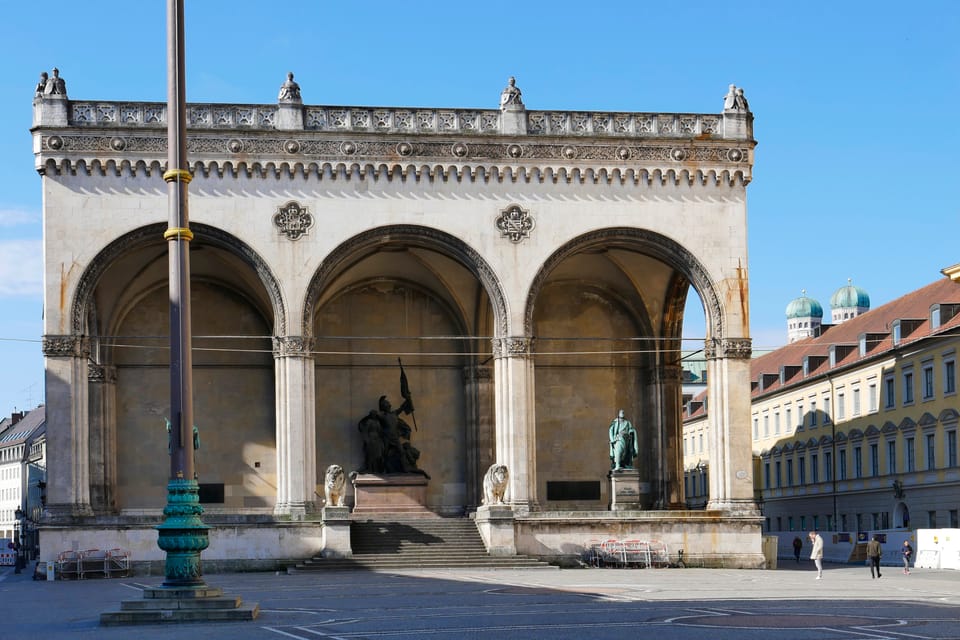
The route ends at Feldherrnhalle at Odeonsplatz. According to the tour description, this is tied to Hitler’s Beer Hall Putsch, with November 9 referenced as a key date. That’s the kind of detail you remember because it connects ideology to a very specific kind of moment: a public confrontation in a visible place.
What makes this stop meaningful is the link between propaganda and space. Public venues become stages where movements try to convert attention into legitimacy. Standing at Feldherrnhalle helps you understand why the movement needed crowds and why the built environment mattered.
The tour also keeps the story organized around the November 9 events—both 1923 and 1933 are mentioned as part of what you’ll learn. That lets you see how the movement’s early claims and later power consolidation connect to the same “public theatre” idea, just with different outcomes and consequences.
The Photo Element: Black-and-White Context You Can’t Fake
One of the strongest features here is that the guide brings black-and-white photographs of Munich in the 1920s and 30s. Photos do two useful things on a walking tour like this.
First, they add visual proof to the timeline. Second, they reduce guesswork. When you’re standing in a modern street, you naturally wonder what everything looked like back then. The photos help you stop guessing and start understanding.
If you’re the type who learns best by seeing, you’ll probably feel like the photo moments are the tour’s secret weapon. Just don’t expect the pictures to be generic; you’ll use them to follow the guide’s specific points about events and locations.
German-Language Guide: Clear, Direct, and Not Overly Complicated
The tour runs with a live guide in German. That’s great if you can handle German conversation, because you’ll hear explanations tied closely to what you’re seeing.
If your German is rusty, don’t panic. You might still pick up the major points from careful listening, especially since the tour is built around recognizable landmarks and clearly stated historical themes: the rise of the NSDAP, Munich’s role during National Socialism, and the events linked to November 9.
In other words, the route gives you scaffolding. The guide supplies the words.
Price and Value: Why $34 Can Be Fair Here
At $34 per person for a 2-hour guided walk, the pricing makes sense for what’s included: a city guide, a structured route through multiple historic sites, and the use of historic black-and-white photographs.
This isn’t a museum ticket situation. The tour is essentially paying for interpretation: the guide’s ability to connect buildings and street-level geography to what happened in Munich and Germany during National Socialism. Those explanations are the value you’re buying.
You should know what’s not included. Food and drinks aren’t part of it, and entrance fees aren’t included either. If any stops require entry on your own time, you’d cover those separately.
Who This Tour Fits Best
This tour is a good match if you want a guided walking format and you’re specifically interested in how National Socialism developed in Munich. It also suits you if you like tours that stay close to a narrative and use photos to build context.
It may not be the best fit if you want a light, casual sightseeing stroll. This is intentionally focused on National Socialism’s rise and the associated sites, including the former Gestapo headquarters. Come prepared for serious material.
On mobility: the activity is described as wheelchair accessible, yet it’s also marked as not suitable for people with mobility impairments. That mismatch likely means the route is possible for some wheelchairs in some cases, but not for every situation. If you have mobility concerns, I’d treat that as a sign to check details with the provider before booking and be honest about what you can manage.
Practical Setup: Meeting Point and What to Wear
Plan to meet at the main entrance of the Staatliche Antikensammlungen. The guide will be wearing a BIG BLUE BAG with the white words Weis(s)er Stadtvogel, which makes them easier to spot from across the plaza area.
Bring comfortable shoes. You’ll be on your feet for the full 2 hours, and the tour runs rain or shine. If you’re prone to slipping or getting cold, dress for weather and keep your pace steady.
The rest is simple: show up, follow the guide, and let the story unfold stop by stop.
Should You Book This Munich National Socialism Historical Tour?
Yes, if you want a structured, guided walk through Munich’s most relevant Nazi-era landmarks, with a professional German-language explanation and the added help of black-and-white photos. The route is tight, the focus is clear, and you’ll connect the historical events to the actual buildings and squares that shaped the narrative.
I’d think twice if you’re seeking a casual tour or if you’re uncomfortable with intense historical topics, including the machinery of repression. And if mobility is an issue, take the wheelchair-accessible claim and the not suitable for mobility impairments note seriously—clarify what the route requires before you commit.
If you’re ready to understand how ideology took root in Munich’s streets, this is the kind of tour that gives you context you can carry with you long after the walk ends.
FAQ
What’s the duration of the Munich National Socialism historical tour?
It lasts 2 hours.
How much does the tour cost?
The price is $34 per person.
Is the tour offered in German?
Yes, the live tour guide speaks German.
Where do I meet the guide?
Meet in front of the main entrance of the Staatliche Antikensammlungen.
How can I recognize the guide?
The guide will be wearing a BIG BLUE BAG with the white words Weis(s)er Stadtvogel.
Is the tour private or in a group?
You can choose between a private or group tour.
Is the tour indoors?
No. It’s a walking tour and takes place rain or shine.
Are entrance fees included?
No. Entrance fees are not included, and the tour also doesn’t include food and drinks.