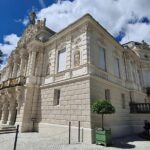
Eat Bavarian classics while the old town wakes up. This 3.5-hour Munich Old Town Food Tour strings together 10+ bites and drinks with landmark stops like St Peters Church and Marienplatz. I like that it’s designed as a small-group experience, not a cattle-car ride.
I also love the sheer variety of Bavarian flavors, from freshly fried snacks to Weisswurst and Leberkäse, plus honey wine, beer, and dessert. I like that the tour brings the sights into the food story, and guides such as Tatiana, Amanda, Yasmina, or Kyrylo often steer the walk with clear, practical context. The main drawback to plan for is pace: it’s a fair amount of walking, and colder days can mean more time eating outside.
In This Review
- Key takeaways before you go
- Munich Old Town food: why this works better than random tastings
- From Sebastianplatz to St Peters Church: your first local hits
- Marienplatz Glockenspiel time, plus a classic pre-noon Weisswurst moment
- Viktualienmarkt: where cheese, meats, honey wine, and people collide
- Ledererstraße and an “oldest” restaurant stop: beer culture and dessert
- Hoffbräuhaus peek near Platzl 9, then the medieval-to-WW2 corridor feel
- Finishing at Marienplatz 8: the oldest deli or patisserie surprise
- What you really get for about $118.56 per person
- Group size, walking pace, and the comfort checklist
- Should you book this Munich Old Town Food Tour?
- FAQ
- How long is the Munich Old Town Food Tour?
- Where does the tour start and end?
- What kinds of Bavarian food and drinks are included?
- Is the tour offered in English?
- How many people are in a group?
- Is weather important for this experience?
Key takeaways before you go
- 10+ Bavarian specialties in one walk: you’re not sampling just one style of food
- Small group cap (normally 12): easier to hear the guide and stay together
- Beer and honey wine are part of the program: not random extras, but planned tastings
- Landmark stops make the eating make sense: St Peters Church and Marienplatz are built into the route
- A secret sweet finish: the end is designed to feel like a reward, not a stop-and-go snack
Munich Old Town food: why this works better than random tastings
Munich has a way of turning meals into a kind of everyday theater. You’ll see it in the bread-and-sausage rhythm of Bavarian breakfast culture, and you’ll feel it in the way beer halls, markets, and old bakeries live right alongside big city sights.
What I like about this tour format is that you’re eating while your eyes are moving. The route is built around the old center: you start near Sebastianplatz, then you walk past St Peters Church and through Marienplatz. As you go, the tastings aren’t tacked on at the last second. They’re used like clues—so the food connects to the streets you’re actually standing on.
It’s also a good way to avoid two common Munich mistakes: overeating too early at a random restaurant (then forgetting the rest of the day), or under-eating because you’re waiting for the one perfect place. This tour is designed to get you fed in the right order, with enough stops that you keep discovering—not just consuming.
You can also read our reviews of more food & drink experiences in Munich
From Sebastianplatz to St Peters Church: your first local hits
You start at Sebastianplatz (Sebastianspl. 11), an historic square that’s a natural “reset point” for your walk. The guide kicks things off by framing what you’re about to taste and what you’ll notice as you move through Old Town.
The first food moment is quick and easy: a stop just a few streets away for a freshly fried treat at a local café. This is a smart early step. It puts something in your hands right away, so you’re not hunting for snacks while everyone else is already tasting.
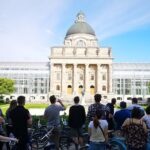
Then you shift gears toward St Peters Church (Peterspl. 1). The tour includes a postcard-perfect pass by the church with commentary on Munich’s food past—how the city’s culture shows up in what gets eaten and where people gather. The practical value here is simple: you’ll start recognizing why Old Town food is so tied to markets, bakeries, and community spots rather than just tourist streets.
A small caution: the first half can move briskly. If you’re the type who needs time to read signs or take photos, wear comfortable shoes and keep your camera ready. You’ll want to stop and still keep up.
Marienplatz Glockenspiel time, plus a classic pre-noon Weisswurst moment
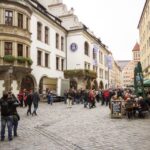
Marienplatz is the visual center of Munich, and this tour uses it well. You get time to catch the iconic Glockenspiel moment and hear the story behind what you’re seeing—down to the hidden details that most people miss while they’re just looking at their screen.
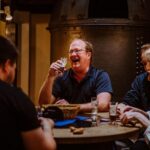
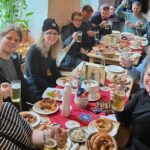
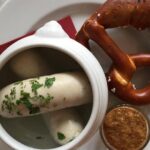
Right after that, the route takes a very Bavarian turn toward a 13th-century inn for a pre-noon breakfast-style stop. You’ll have a mix that’s unmistakably Bavarian: Weißwurst (white sausages), plus a pretzel and a beer element (listed as pretzel beer). It’s the kind of meal that feels odd on paper if you’re used to late breakfasts, but it lands because you’re learning the local rhythm as you go.
This is also where you get a sense of why German food tours work best in the morning window. Weisswurst culture makes most sense before the day drifts too far ahead. Even if you don’t care about tradition, the tasting still gives you a proper baseline: you’ll understand what “breakfast Bavarian” tastes like before you move into cheese-and-beer territory.
Keep in mind: this stop is built for a walk-and-sip pace. If you hate being rushed, slow yourself by taking smaller bites and letting the beer moment be the one slower thing.
Viktualienmarkt: where cheese, meats, honey wine, and people collide
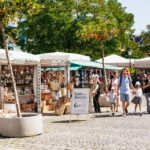
Next comes Viktualienmarkt, often described as Munich’s food core—and here it functions like the tour’s “big tasting playground.” You’ll visit the market area and work your way across different stalls.
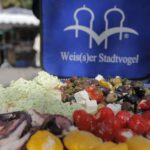
The focus is on variety you can’t easily fake on your own: local cheeses, charcuterie-style meats, honey wine (honigwein), and more. The market stops are also where the tour starts feeling less like a checklist and more like a live food scene. You’ll meet vendors and get a sense of how locals shop and snack.
The practical payoff: after this market portion, you’ll have an internal map for what to look for when you’re on your own. You’ll know the kind of flavors Munich does well—salty, creamy, cured, sweet-but-not-soda-sweet—so you can order with confidence.
One thing to note: markets can be crowded. The route is designed to keep you moving through the right areas, but if you’re tall, carry a small daypack, or have mobility limitations, do your best to keep your space tight and your group contact easy.
Ledererstraße and an “oldest” restaurant stop: beer culture and dessert
The walk then heads into the lanes around Ledererstraße, where you’ll find a hidden restaurant stop tied to Munich’s brewing culture. The tour notes it as Munich’s oldest restaurant for this particular experience, and that detail matters because it frames the tastings as part of a long-running beer-and-food relationship—not just a trendy craft-beer moment.
Here, you’ll learn about brewing culture and enjoy a local beer paired with dessert. Even though dessert can feel like a late-tour gimmick on some food tours, this one uses it as a counterpoint. You’re shifting from salty and malty flavors toward something sweet to reset your palate.
What I like about this pairing is how it helps you taste beer without turning the walk into a beer drinking contest. You get a local lager-style beer element here (the included list also points to local brewery lager), and the dessert gives you a breather so you don’t hit the last stops with your stomach in revolt.
If you’re sensitive to alcohol, pace yourself at each beer moment. You’re not just tasting; you’re walking 3.5 hours, so take sips, not gulps.
You can also read our reviews of more tours and experiences in Munich
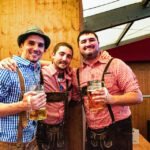
Hoffbräuhaus peek near Platzl 9, then the medieval-to-WW2 corridor feel
At Platzl (Platzl 9), the tour includes a brief pop inside Hoffbräuhaus—Germany’s famous beerhall—so you can learn the brewing history tied to the room itself. This is a good approach for first-timers. You get the big-name landmark without losing half your day waiting in line or wandering.
After that, you head to Alter Hof (Alter Hof 2), where the tour points you toward hidden passages and a courtyard connected to what was once Munich’s castle. The commentary spans about 800 years, from medieval times to World War II. Even if you’re not a history fanatic, this kind of stop changes how you interpret the old-town streets. You start seeing why beer, markets, and inns keep returning in the same places over time.
A practical note: this part of Munich can involve tighter areas. If you’re traveling with a group of friends, make sure everyone knows the guide’s meeting points and look for the guide’s distinctive presence so you don’t drift off in the crowd.
Finishing at Marienplatz 8: the oldest deli or patisserie surprise
The tour ends back at Marienplatz 8 with a surprise sweet treat from Munich’s oldest and fanciest delicatessen and patisserie (as described). This is a strong finish for two reasons.
First, Marienplatz is a friendly landing spot. Once the tour ends, you’re in the center of everything. You can walk to more sights without needing transit immediately.
Second, the surprise sweet is the right emotional end. All the savory bites and beer moments build up your appetite and curiosity, and then the dessert stop seals the deal. It’s the kind of finish that makes the whole walk feel complete instead of like a series of disconnected snacks.
If you want a smooth final hour, keep room for the dessert even if you’re tempted to “wrap up” your eating early. The tour is built to keep you satisfied—not shocked by empty calories or a sudden stop.
What you really get for about $118.56 per person
$118.56 sounds steep until you break down what’s included. This isn’t just a tasting of a few bites. It’s a structured walk with multiple Bavarian specialties and a planned drinks mix that includes Munich brewed wheatbeer, local brewery lager, and honey wine, plus food like pretzels, cheese and charcuterie, Weißwurst, Leberkäse with local baked bread, traditional Bavarian dessert, and a secret dish plus other Bavarian items (like Schmaltznudel).
That matters for value because you’re paying for:
- time savings (stops are chosen so you don’t waste effort figuring out what to eat)
- guided pacing (you get fed at the right rhythm for a 3.5-hour walk)
- access to places you might not notice on your own (like the hidden restaurant concept and the inside pop at the beer hall)
- context (food paired with why it belongs in these streets)
Is it cheaper to buy snacks on your own? Sure, in theory. But if you want a day that feels like Munich rather than a random snack hunt, the price becomes more reasonable. You’re effectively buying a guided evening rehearsal for how Munich food culture works.
My practical advice: go hungry, but don’t show up starving in the dangerous sense. Light breakfast is fine. Just don’t load up so you can actually enjoy the middle stops.
Group size, walking pace, and the comfort checklist
This tour is designed for a maximum of 12 travelers, which keeps the group easy to manage and helps you stay with the guide. I’d still treat that cap as a goal and expect it to feel most comfortable when the group is small.
You’ll walk a fair amount through Old Town, and the tour is subject to change based on weather and availability. That weather note isn’t scary—it’s just realistic. If the day is cold, expect more outdoor eating time, because some stops are at cafés and market areas rather than fully inside.
Comfort checklist:
- wear comfortable shoes (you’re on foot for about 3 hours 30 minutes)
- dress in layers if the weather turns
- bring your phone for the mobile ticket, and keep it charged if you’re also using maps
- use your normal Munich common sense: stay together in crowds around Marienplatz and market streets
Language is English, and the tour uses a mobile ticket. Good weather is required, so if the sky turns ugly, the tour may be moved or refunded based on the operator’s policy.
Should you book this Munich Old Town Food Tour?
Book it if you want a Munich day that’s practical and tasty, without spending your time researching what to eat and where to start. This tour is especially good for first-timers who want both classic Bavarian flavors (pretzels, Weißwurst, Leberkäse, beer, honey wine, dessert) and real old-town context (St Peters Church, Marienplatz, Hofbräuhaus, and the Alter Hof area).
Skip it if you hate walking, you’re sensitive to alcohol tastings, or you prefer long sit-down meals instead of multiple quick food moments.
Also, if your trip is built around a tight schedule, choose your timing wisely. The tour is about 3.5 hours, and you’ll likely finish with enough food that a big dinner right after may be unnecessary.
FAQ
How long is the Munich Old Town Food Tour?
It runs for about 3 hours 30 minutes.
Where does the tour start and end?
The tour starts at Sebastianspl. 11, 80331 München and ends in Marienplatz (MarienPlatz right in the city centre).
What kinds of Bavarian food and drinks are included?
You’ll be served several Bavarian items, including Weißwurst, pretzels, Leberkäse with local baked bread, Schmaltznudel, cheeses and charcuterie, Munich brewed wheatbeer, local brewery lager, honey wine, traditional Bavarian dessert, and a delicious secret dish.
Is the tour offered in English?
Yes, it is offered in English.
How many people are in a group?
The tour has a maximum of 12 travelers.
Is weather important for this experience?
Yes. The tour requires good weather, and if it’s canceled due to poor weather, you’ll be offered a different date or a full refund.