REVIEW · MUNICH
Munich Old Town Walking Tour
Book on Viator →Operated by munich walk tours Ralph Luenstroth · Bookable on Viator
Munich’s center is best learned one street at a time. This 2-hour old town walking tour lines up big-photo stops like Marienplatz and the Frauenkirche, then turns south for local life at Viktualienmarkt and a proper spin through the English Garden with the Eisbach surfers. It is an efficient way to get your bearings fast without feeling like you’re rushing alone.
Two things I’d prioritize: you get a guided story layer over major landmarks (including Glockenspiel sights), and you finish with market energy so you’re not stuck in only monuments and photos. One thing to consider: Munich streets can be loud and crowded, so plan to stand where you can hear your guide, especially on busy days or event weekends.
In This Review
- Key things to know before you lace up
- Marienplatz to Frauenkirche: the quick-hit Munich starter map
- Nationaltheater and Royal Gardens: learning the city’s brain, not just its face
- English Garden: where the city shifts gears (and the Eisbach pulls you in)
- Hofbräuhaus moment: beer-hall history without the long detour
- Viktualienmarkt: where Munich feels like Munich
- Pace and group size: how to get the most from the 2 hours
- Who should book this Munich Old Town walking tour?
- Price and value: $26.62 for a guided route that saves you time
- Should you book it?
- FAQ
- How long is the Munich Old Town Walking Tour?
- What does the tour cost?
- Where does the tour start, and where does it end?
- Is the tour offered in English?
- What is included in the price?
- Is lunch included?
- What is the maximum group size?
- Do children need to be with an adult?
- Are service animals allowed?
- Is there any ticket you need before you go?
Key things to know before you lace up
- Marienplatz launch point keeps the walk logical: you start in the heart of old Munich and end back where you began.
- English Garden + Eisbach surfers are the signature nature break, with photo-friendly stops along the way.
- Viktualienmarkt time gives you a taste of everyday Munich, not just sightseeing.
- Hofbräuhaus included as a major beer-hall moment (mostly for views and context, not a long sit-down).
- A small-group feel can happen since the tour caps at 30 people, and some departures run very tight.
Marienplatz to Frauenkirche: the quick-hit Munich starter map
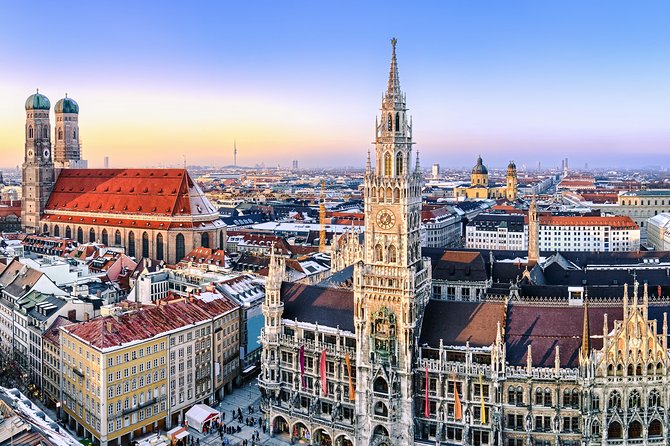
Your walk begins at Marienplatz, Munich’s central square. This matters because it is the cleanest starting point for first-time orientation. From here, you can later branch out on your own with less guesswork about directions, distances, and what’s where.
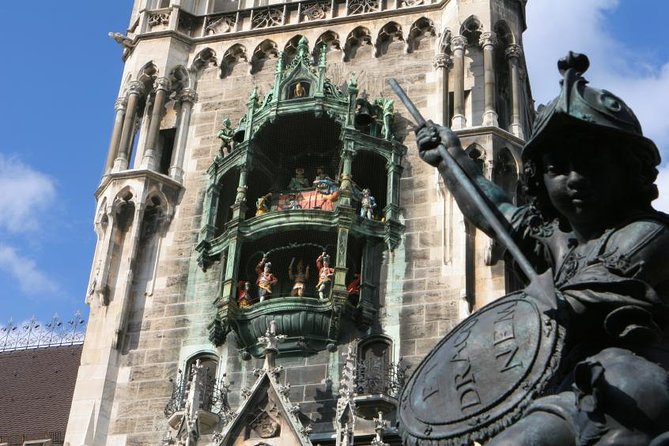
The first stretch is built around getting you oriented and emotionally plugged in to the city. You’ll take in the kind of landmark “anchors” that make Munich feel like Munich. The big-name sights in this part include the Glockenspiel area and the cathedral zone around Frauenkirche. Even if you’re not there for every bell-and-clock detail, you’ll learn how the square and surrounding buildings shaped the city’s identity over time.
What I like about this phase is that it keeps moving. You’re not stuck waiting for long entry times or sitting through lectures. The downside is simple: you’ll see more from the sidewalk than you would on a full-day architecture deep dive. If you want to go inside cathedrals or linger for long photo setups, treat this tour as your “get the lay of the land” day, then plan your slow returns later.
One practical tip: since you’ll be outdoors and walking, wear shoes you’d happily walk 7 kilometers in if you get a faster-paced guide. Some groups do move briskly through the route, and your best comfort hack is choosing footwear that forgives cobbles and quick turns.
You can also read our reviews of more walking tours in Munich



Nationaltheater and Royal Gardens: learning the city’s brain, not just its face
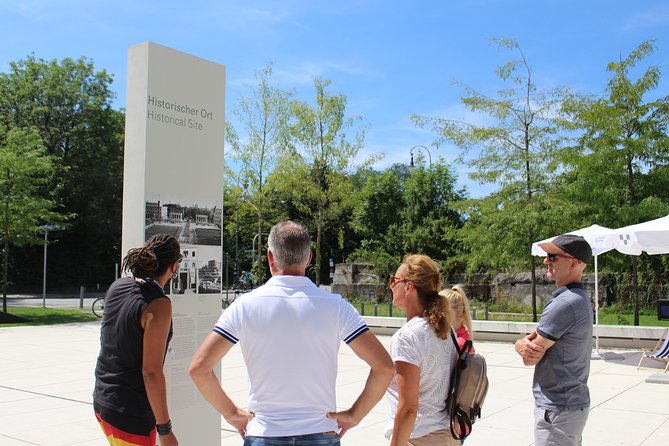
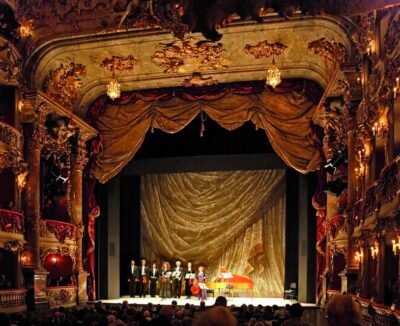
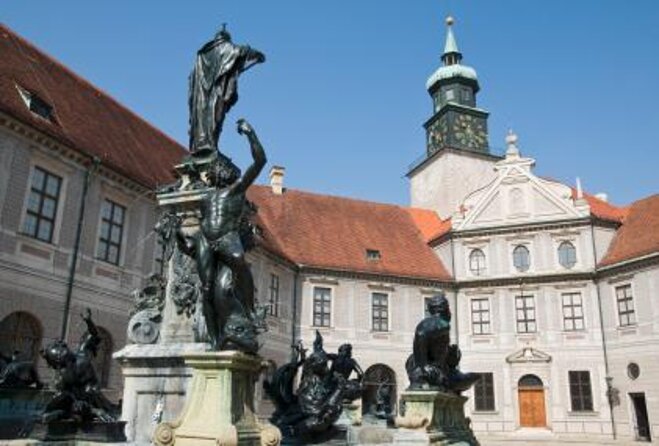
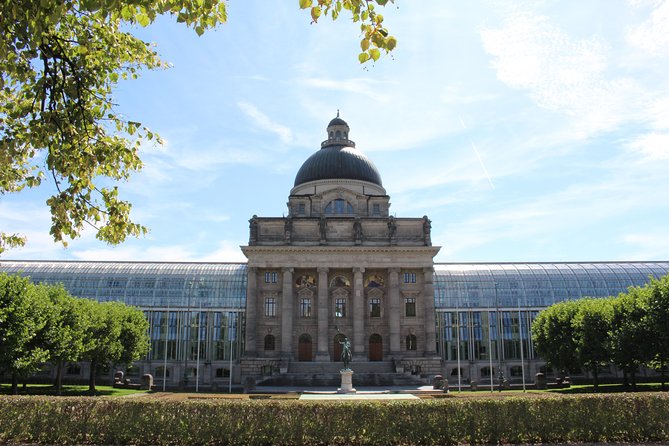
After the central square, the route typically threads you toward the Nationaltheater area and then into the mood-shift zone of the Royal Gardens. This is a smart pairing. Old Munich can feel like one big museum block, but these stops help explain how the city balanced ceremony, culture, and everyday life.
In this segment, you’ll usually get stories that connect buildings to power, politics, and the way Munich organized itself. That is valuable because it changes how you look at what’s in front of you. Instead of seeing only pretty facades, you start noticing patterns—what got built for public life, what served courtly functions, and what became civic symbols.
There’s also a pacing payoff here. If the morning starts with stone-and-statues energy, the garden portion gives your brain a break. Even on cold or rainy days, you can still appreciate the change in atmosphere, as you’re mostly moving between spaces rather than waiting around.
Drawback to keep in mind: gardens and park paths can be affected by weather and crowding. If you’re traveling during a festival or a heavy event week, expect denser pedestrian traffic. When that happens, your guide’s ability to keep everyone together becomes part of the experience—stand where you can clearly hear, and you’ll get more out of every stop.
English Garden: where the city shifts gears (and the Eisbach pulls you in)
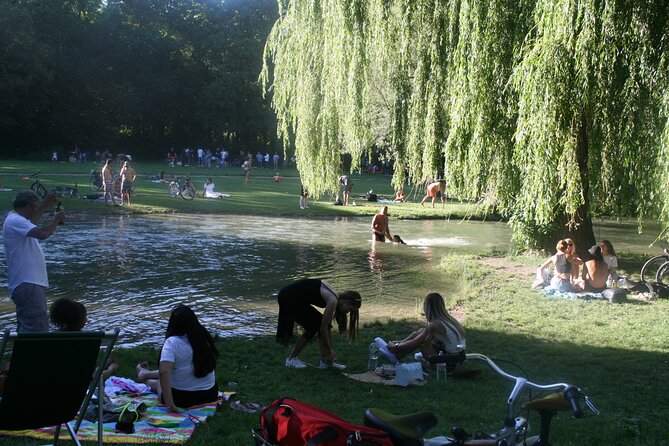
The English Garden is one of the most recognizable parts of Munich for a reason. On this tour, it’s not a quick drive-by. You get guided walking time through the garden space, plus the signature viewing of the Eisbach river surfers.
The Eisbach section is the “wow” contrast: Munich can be formality and beer halls for hours, and then suddenly you’re watching surfers tackle a lively city river. It is also photo-friendly, which is why it often becomes the moment people remember after the rest of the route fades into a blur of streets.
That said, there’s one detail you should know. Some tours manage to get you closer to the action points, while other days (depending on where people are standing and how crowded it is) you might not feel as near to the surfers as you expected. The fix is simple: keep your eyes on where your guide stops for the best angle, and ask right away if you want the closest viewing option. Your guide can usually steer you based on what’s happening at that moment.
If you’re visiting when the garden is crowded, bring patience. The garden is popular, and the best viewing can mean stepping around other people for better sight lines. If your group is flexible, you’ll still come away with a strong sense of why this place is part of Munich’s lifestyle, not just its postcard collection.
Hofbräuhaus moment: beer-hall history without the long detour
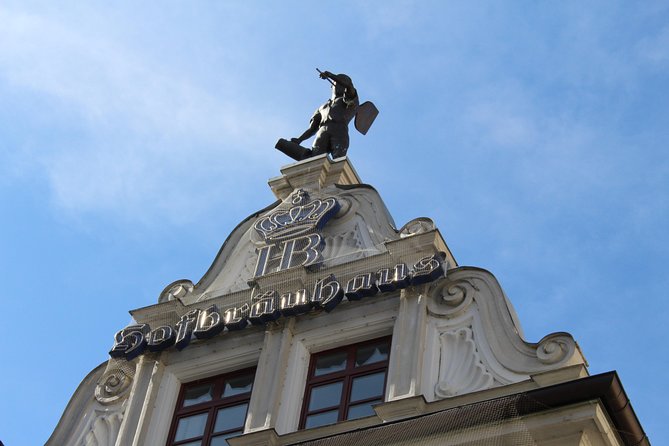
You’ll also see Hofbräuhaus, Munich’s famous beer hall. On this kind of walking tour, you usually don’t spend a full meal-time session there. Instead, you get the context: why the beer hall became such a magnet, how it sits in Munich’s public culture, and what you’re looking at when you stand outside the building.
I like this approach because it keeps the day moving. It gives you a clear landmark reference for later. After the tour, you can decide if you want to return for a table and the full Hofbräuhaus experience. Doing it later is often better anyway—you can choose the day and time based on your energy level and whether you want a lively atmosphere.
The potential drawback is obvious: if your dream day is beer-hall immersion, this tour will feel like a highlight moment, not the full event. Think of it as your introduction. Use it to learn how important the place is, then follow your nose from there.
Viktualienmarkt: where Munich feels like Munich
A big reason this tour works for short stays is what happens near the end: you get time at Viktualienmarkt, the city’s big food market. This is where the visit turns from monument mode into everyday life.
This stop is especially valuable for first-timers because markets teach you more than a landmark ever will. You see what locals buy, how the stalls are arranged, what seasonal items look like, and the rhythm of shopping. Even if you do not plan to buy much, the market is a crash course in what Munich’s food culture looks like on the ground.
What to expect: it is a place to browse, sample if you want, and mentally map what you might want to eat later. Some guides are also good at giving practical recommendations for what to try and where to go next, which is the kind of insider usefulness that turns a walking tour into a planning tool.
One thing to watch: market areas can get crowded fast, especially if you’re there during events or peak hours. If you’re traveling with kids or anyone who needs slower pacing, tell your guide early. Guides often adjust—your goal is to keep everyone comfortable and still get the full route.




Pace and group size: how to get the most from the 2 hours
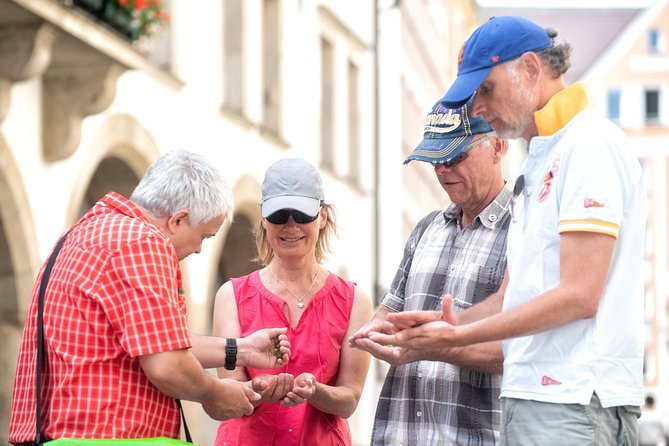
This tour runs about 2 hours and is easy-paced in its planning. Still, real life happens. Reviews show that some departures feel more brisk, and the group mix can change the feel of the walk. The tour caps at 30 travelers, and on some days you might get something close to a small-group experience.
Here’s how to make it work for you:
- Pick your shoes like this is a city hike. Even at easy pace, you’re walking throughout old Munich.
- Stand where you can hear. Loud streets are real, and you’ll lose stories if you’re stuck at the back.
- If you have mobility needs, communicate at the start so your guide can keep you on schedule without sacrificing too much context.
Crowds matter. Munich can get extremely noisy during busy periods. Some guides handle the sound level well, others can struggle when the street is packed. If you’re sensitive to noise, consider simple ear protection. It can make the difference between catching the details and missing them.
Weather is also part of the plan. Rain does not automatically cancel everything on a walking tour. The best approach is to wear layers you can move in. A light rain layer and quick-dry clothing are worth it because you’ll still be outdoors for most of the experience.
Who should book this Munich Old Town walking tour?
This one fits best when you want a guided overview with real Munich flavor. It is ideal if:
- You’re in town briefly and want orientation plus landmark photos in a short window
- You want a mix of old town icons and green-space contrast
- You prefer learning from a live guide rather than reading plaques on your own
It also works well if you’re a family, as long as you’re prepared for a walk that moves through multiple districts. Guides have shown they can handle slower group pacing when needed, but you should still expect to cover ground.
If you want a deep dive into one neighborhood, this may feel too short. Treat it as your setup day. After you finish, you’ll know where to go next and what to prioritize for return visits.
On the guide side, this tour has been led by different personalities, and names you might hear in prior groups include Christopher, Ralph, Emmanuella, Noel, Dianna, Florian, and Sophie. The shared theme across those accounts is that the best guides make the walk feel like stories from the street, not a checklist.
Price and value: $26.62 for a guided route that saves you time
At $26.62 per person for about 2 hours, the value comes from what you’re buying: a guided route that connects multiple zones you’d otherwise piece together yourself. You’re also getting a professional guide included, and the listed price includes the activities on the route (with any major admissions noted as free for the tour stops).
You are not paying for a long sit-down meal or a full-day museum ticket. Instead, you pay for:
- Someone who can point out what matters at each landmark
- A sequence that makes sense for first-time navigation
- Time in the market and garden areas that you might skip if you only chase big monuments
That is smart value when your schedule is tight. If you have more time and you enjoy free-form exploring, you might compare this to a self-guided walk. But the moment you want context and a plan that avoids random wandering, a guided format like this earns its keep.
If you drive, keep one small thing in mind: the parking fee is payable at tour check-in. If you’re using public transport, this is simpler, since the start point is near public transportation.
Should you book it?
I’d book this tour if you want a high-efficiency Munich intro: central landmarks, a real green-space stop, and local market energy—all in a tight 2-hour window. It’s also a good choice for rainy days and cold snaps because you’ll still keep moving and still hit the key zones.
I would hesitate if you need quiet, slow pacing, or you’re the type who requires very close viewing for specific moments like the Eisbach surfers. Crowds and sound can make it harder to hear details on busy days. If you do book, plan to stand near the front and be ready for a brisk walking style.
FAQ
How long is the Munich Old Town Walking Tour?
It runs for about 2 hours.
What does the tour cost?
The price is $26.62 per person.
Where does the tour start, and where does it end?
It starts at Marienplatz, 80331 München, Germany, and ends back at the meeting point.
Is the tour offered in English?
Yes, it is offered in English.
What is included in the price?
The tour includes all activities and a professional guide.
Is lunch included?
No, lunch is not included.
What is the maximum group size?
The tour has a maximum of 30 travelers.
Do children need to be with an adult?
Yes, children must be accompanied by an adult.
Are service animals allowed?
Yes, service animals are allowed.
Is there any ticket you need before you go?
You get a mobile ticket, and you receive confirmation at the time of booking.