REVIEW · MUNICH
Munich: Old Town & Viktualienmarkt City Walk in German
Book on GetYourGuide →Operated by Munich Walk Tours · Bookable on GetYourGuide
Munich’s center tells stories at street level. This 1.5-hour Old Town walk ties together famous landmarks and everyday city life, with anecdotes that make Bavarian capital history feel practical, not textbook.
I love the way the route gives you quick orientation in the core of Munich, and I love the Viktualienmarkt finale, where you can linger in a classic beer-garden vibe or browse stalls at your own pace.
The big consideration: the tour is offered only in German, so you’ll want at least comfortable listening. Also, food and drinks aren’t included, so plan on buying your own if you want to snack in the market or sip in the beer garden.
In This Review
- Key things that make this walk worth your time
- Meeting at Marienplatz: where your Munich walk actually begins
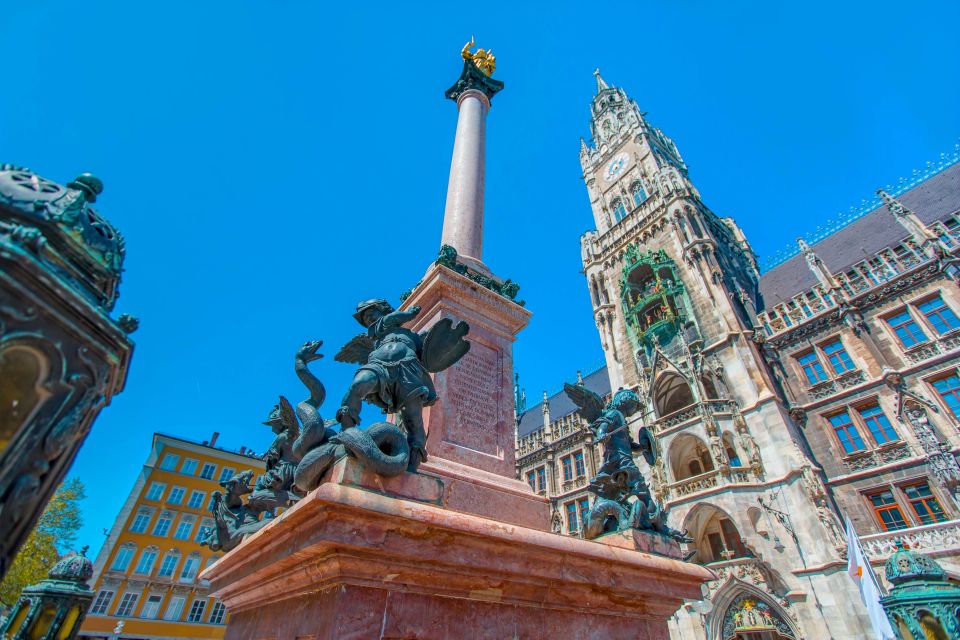
- Marienplatz, the Frauenkirche, and the stories behind the skyline
- Staatliches Hofbräuhaus: why Munich uses beer as a history shortcut
- Odeonsplatz and the high-street contrast of Munich
- Theatine Church and the route pacing that keeps it fun
- Viktualienmarkt: the relaxed ending where you can choose your own pace
- Price and value: what $23 buys you in real terms
- Who this tour fits best (and when you might want another option)
- Should you book this Old Town & Viktualienmarkt city walk?
- FAQ
- Is this tour available in English?
- How long is the Munich Old Town and Viktualienmarkt walk?
- What does the tour cost?
- Where does the tour start?
- What is included in the price?
- Are food and drinks included?
- Can I record video during the tour?
- Is the tour wheelchair accessible?
- Can I cancel for a full refund?
Key things that make this walk worth your time
- Marienplatz start point right by Munich’s Gothic Town Hall, easy to find and great for orientation
- Frauenkirche and Theatine Church give you a fast architectural snapshot of the city
- Staatliches Hofbräuhaus adds a real-world Bavarian angle beyond monuments
- Odeonsplatz and shopping stops (Fünf Höfe, Dallmayr, Schuhbeck’s area) show the city’s modern rhythm
- Viktualienmarkt ending lets you transition from “seeing” to “hanging out” in a market square
- Guide style matters, and names like Emanuela and Alexandra come up for lively, funny storytelling that keeps groups moving even when the weather turns
Meeting at Marienplatz: where your Munich walk actually begins
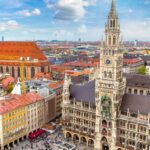
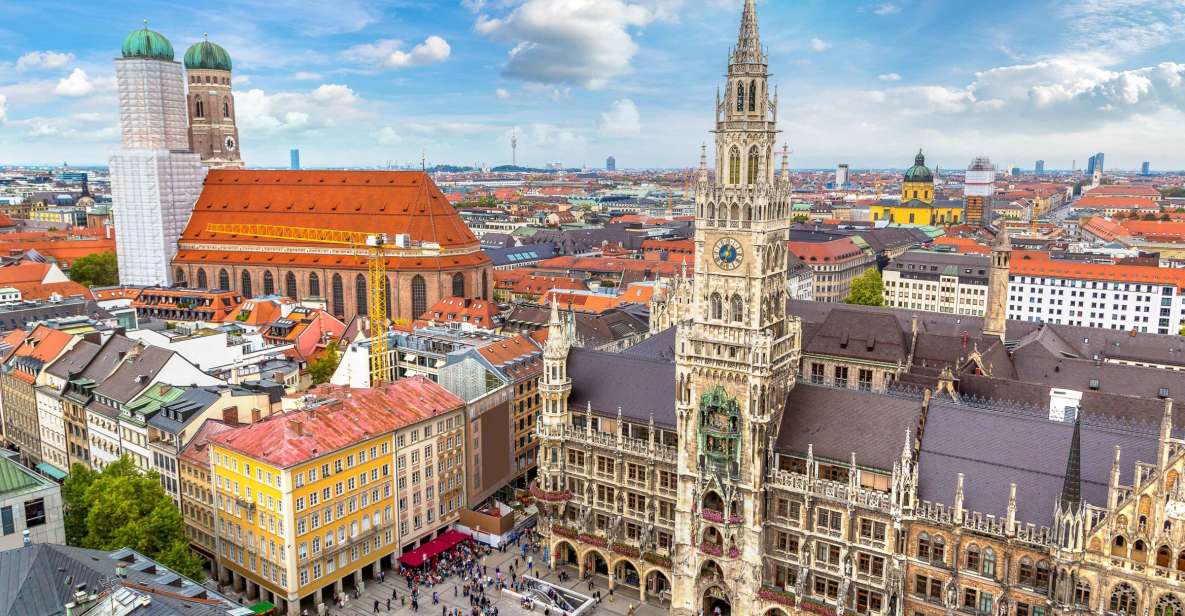
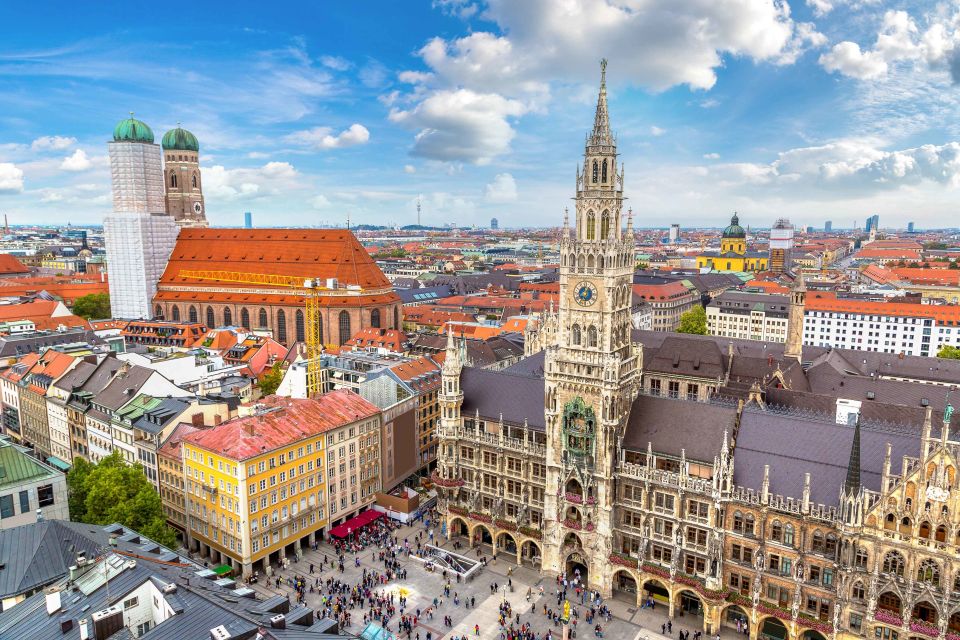
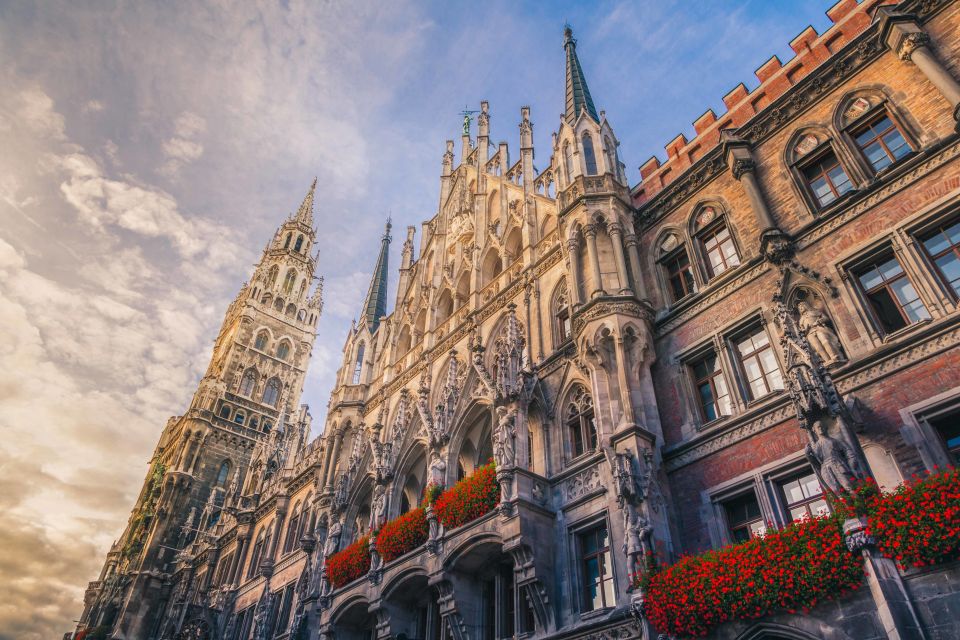
You start at Marienplatz, right in front of the tourist information point in the Gothic Town Hall. That’s a smart choice, because you’re not walking in circles. Within minutes you’re in the thick of central Munich, with landmark views and quick wayfinding options.
Marienplatz is also where locals and visitors naturally mingle. That matters on a guided walk, because your guide can point out what you’re seeing in real time: the way the square functions, how nearby buildings shape the streets, and why this spot matters historically in Bavaria’s capital.
Practical tip: wear shoes you can walk in for the full 1.5 hours. Even if you think the route looks short, central Munich streets add up fast.
You can also read our reviews of more walking tours in Munich
Marienplatz, the Frauenkirche, and the stories behind the skyline
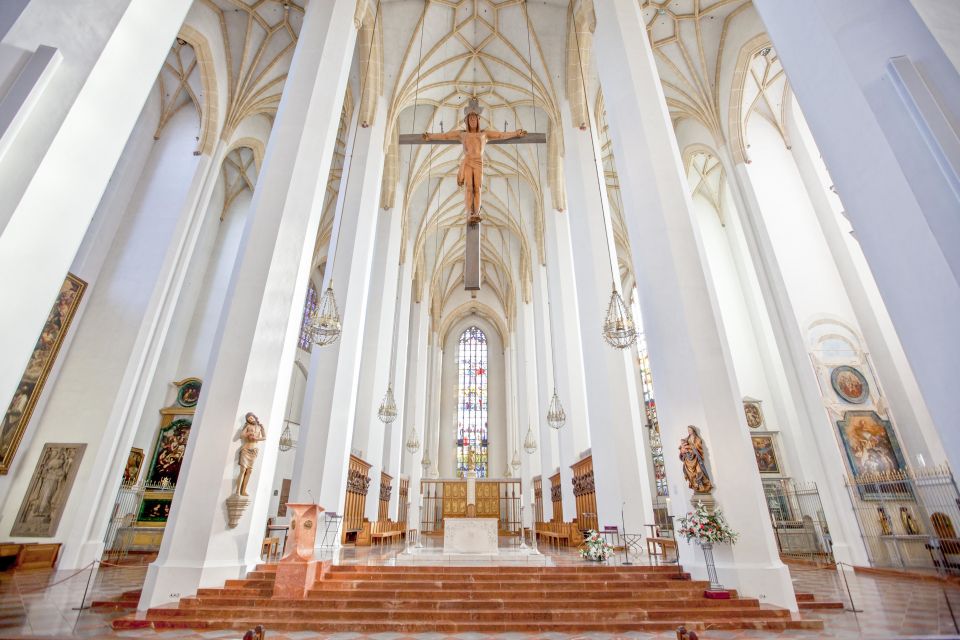
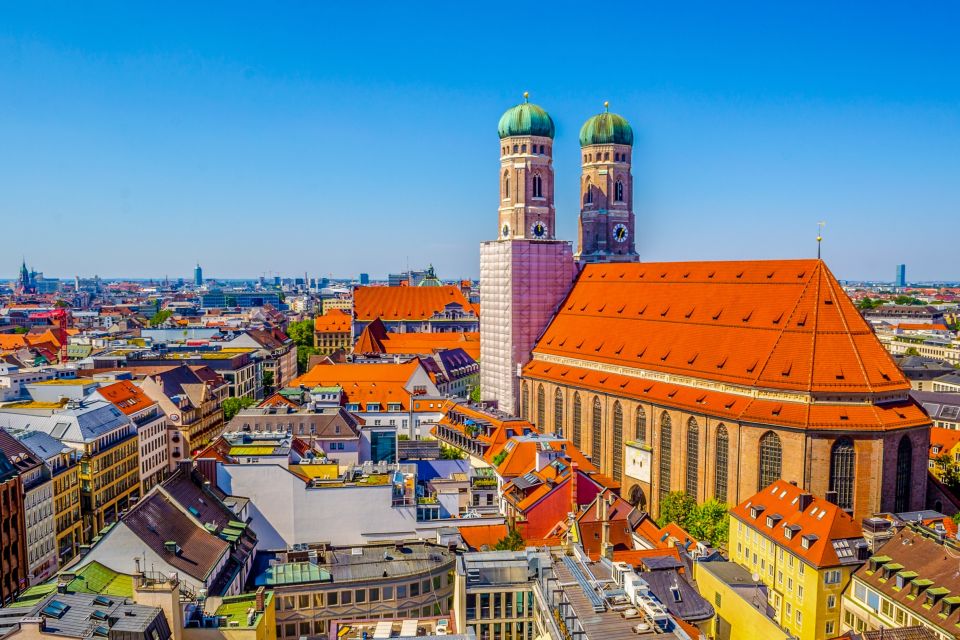
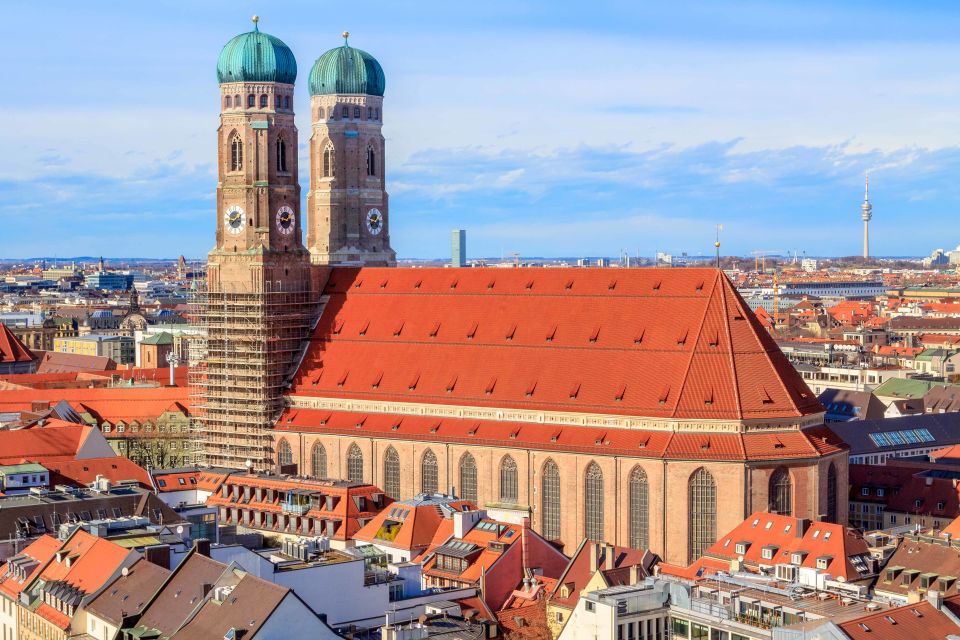
This is where you’ll recognize Munich fast. Your route brings you through Marienplatz and to the Frauenkirche, the city’s best-known cathedral presence. A good walking guide doesn’t just name buildings; it explains what you’re looking at and why people care.
With the Frauenkirche stop, you can expect a shift from “photo moment” to “context moment.” Your guide fills in the why—how the cathedral fits into Munich’s identity as a power center in Bavaria, and how it shaped the city’s visual map over time.
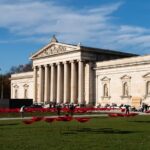
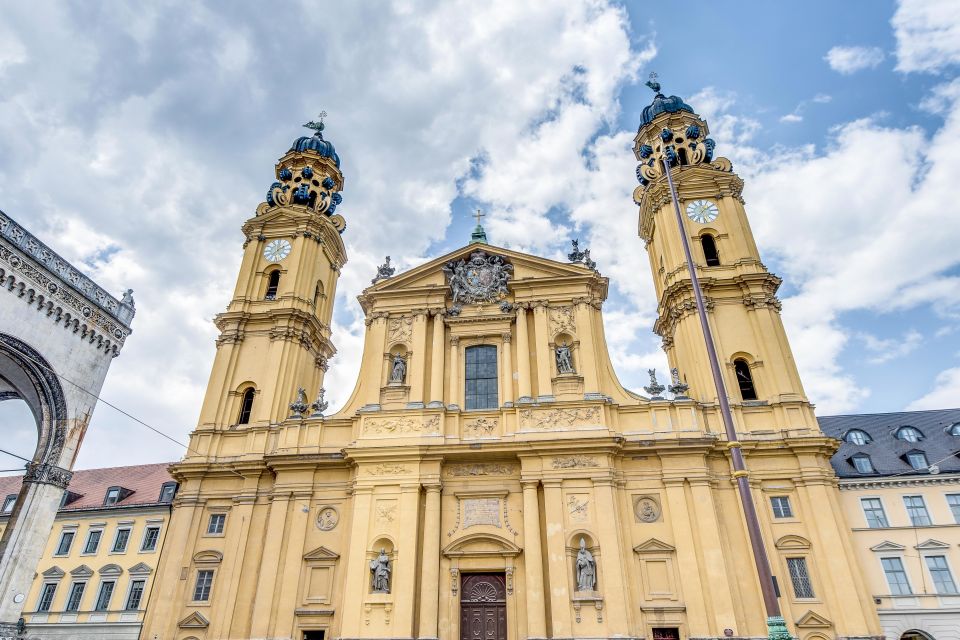
Then you’ll keep moving toward other major religious sites, including the Theatine Church. That’s a nice balance: you get both the big, iconic landmark (Frauenkirche) and a more specific, less tourist-only contrast (Theatine Church). Together they help you see Munich’s old-town character as more than just one famous building.
If you’re trying to understand Munich’s look in one sitting, this pairing is efficient. You won’t leave with 20 random facts—you’ll leave with a sense of how the city’s center is composed.
Staatliches Hofbräuhaus: why Munich uses beer as a history shortcut
Next up is Staatliches Hofbräuhaus, the brewery stop that turns this walk into something more than sightseeing. Here’s the value: beer halls in Munich aren’t a side quest. They’re a social institution, and your guide uses that idea to connect architecture and public life.
Even if you don’t plan to drink (and remember, food and drinks aren’t included), you’ll still get something useful: an understanding of why these places became meeting grounds and how that shaped local culture. It’s a different angle than churches and squares, but it fits the same goal—how Bavarians gather, celebrate, and organize community life.
This is also a great break from pure walking because you get a reason to slow down, look around, and absorb the atmosphere.
Odeonsplatz and the high-street contrast of Munich
After the cathedral-and-brewery core, the walk shifts into a more city-life rhythm. You’ll pass through Odeonsplatz and into areas where modern Munich overlaps with the old center.
This is where you start seeing how the Bavarian capital balances tradition with everyday commerce and style. Your guide points out major names along the way, including the Fünf Höfe shopping mall and the iconic Dallmayr store. You’ll also pass Schuhbeck’s restaurant.
These stops can feel optional if you just want monuments. But that’s exactly why they work on a walking tour. They show you how Munich actually functions today. You get a practical sense of where people go, what the streets are like during the day, and how the city’s wealth and taste express themselves right alongside historic buildings.
I like this part because it helps you avoid the common trap of leaving a city tour thinking you only saw the stage sets. You also learn where the city lives.
Theatine Church and the route pacing that keeps it fun
One of the strengths of this walk is pacing. You’re not asked to sprint between highlights. The stops are spaced in a way that keeps the group engaged without turning the whole thing into museum-mode.
You’ll visit the Theatine Church, and it’s the kind of stop that benefits from a guide’s storytelling. Even when you’re not a religious-history expert, you can still pick up what makes this style and presence distinctive in the city’s overall architectural mix.
Guides like Emanuela and Alexandra are repeatedly praised for making the tour enjoyable, not dry. In practical terms, that means you’re more likely to remember what you learn because you’re smiling while you hear it. In rain, that humor-and-energy approach is especially valuable, since the best guides help you stay focused on what matters rather than the weather.
You can also read our reviews of more city tours in Munich


Viktualienmarkt: the relaxed ending where you can choose your own pace
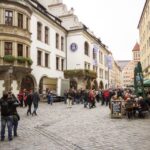
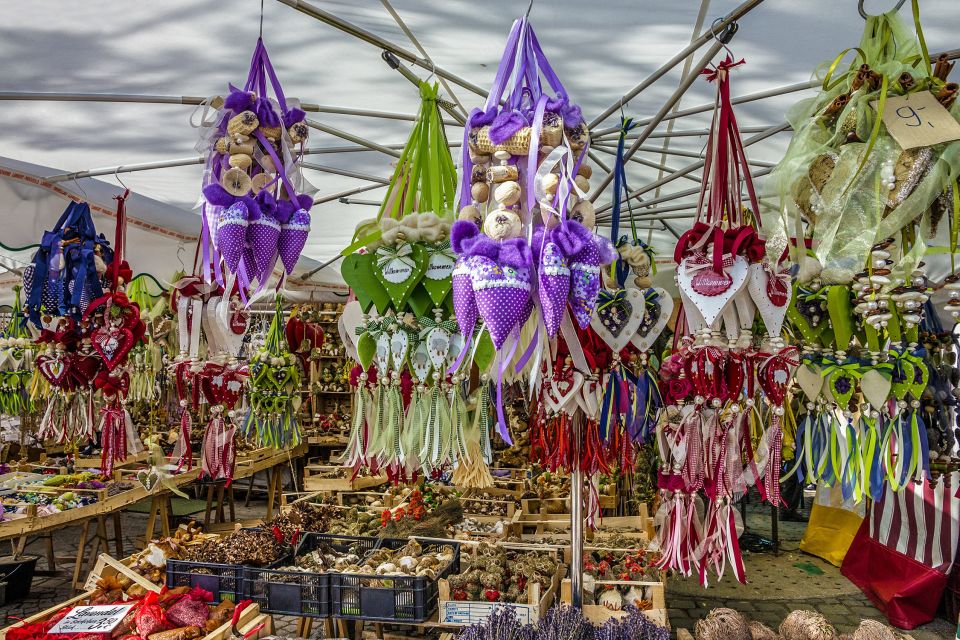
The final destination is Viktualienmarkt, and this is the part you’ll feel in your body more than in your notes. It’s a market square with that classic mix of color, food smells, and people watching.
Expect stalls and products that feel unmistakably Bavarian—think flowers, cheese, spices, and other everyday market goods. Then you can choose what to do with that atmosphere.
Want to slow down? You can sit in a typical beer garden setting and unwind. Want to keep moving? Stroll past shops and stalls and let the place do the entertaining.
I like that the ending gives you control. Many walking tours end with a hard stop. Here you end in a place where it makes sense to keep going on your own—whether you’re hunting for snacks, buying a small souvenir, or just soaking in the crowd energy.
Price and value: what $23 buys you in real terms
At about $23 per person for a 1.5-hour walk, the question isn’t only cost. It’s value.
You’re paying for three things that are hard to replicate alone:
- A guided route that strings together the big hitters—Marienplatz, Frauenkirche, Hofbräuhaus, Theatine Church, and the Viktualienmarkt ending—without wasting time backtracking.
- Explanations that turn landmarks into meaning, including the cultural role of beer halls and the way Munich’s center evolved into a place for both locals and visitors.
- A guide who handles the group energy. The guide humor and enthusiasm mentioned by people who booked it is a real value add, because a walking tour lives or dies on momentum.
Because food and drinks aren’t included, you should budget for optional buys. But you’re not being forced into a paid add-on to enjoy the experience.
If you’re the kind of traveler who likes short, high-yield “see-and-understand” tours before going deeper on your own, this price point is easy to justify.
Who this tour fits best (and when you might want another option)
This walk is a strong match if you want:
- A fast intro to central Munich with multiple anchor stops
- A mix of historic sites and Bavarian social culture (that brewery angle matters)
- A guided experience in a compact time window
It’s less ideal if:
- You don’t feel comfortable with German. The tour is offered only in German, and the value is in the stories and anecdotes.
- You’re hoping for an all-in-one package with meals. Drinks and food are not included, so plan your own timing.
It also works for wheelchair accessibility, which is great for a city center route where stone, crowds, and tight sidewalks can be a problem on other tours.
Should you book this Old Town & Viktualienmarkt city walk?
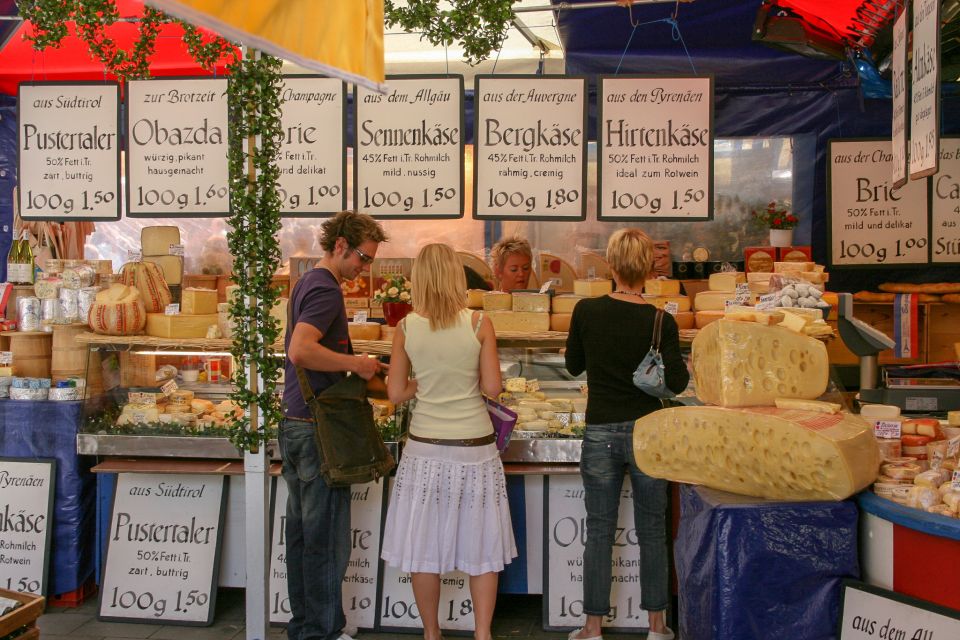
Yes, if you want a smart, efficient way to understand Munich’s heart and end in a place where you can actually relax. Start at Marienplatz, learn why Frauenkirche and Theatine Church matter, get the cultural angle at Staatliches Hofbräuhaus, and then finish in Viktualienmarkt where you can linger among flowers, cheese, and all the market energy.
Skip it (or consider alternatives) if German is a struggle for you. This tour leans on the guide’s storytelling, and if you can’t follow the language, the experience will feel more like a list of buildings than a guided narrative.
If you’re comfortable in German or can at least follow fast-paced conversation, this one is easy to recommend. With a strong overall rating of 4.7 from thousands of bookings, it’s the kind of tour that tends to work in real-world conditions, including less-than-perfect weather, because the guide’s energy keeps the group moving.
FAQ
Is this tour available in English?
No. This tour is only available in German.
How long is the Munich Old Town and Viktualienmarkt walk?
It lasts about 1.5 hours.
What does the tour cost?
The price is listed as $23 per person.
Where does the tour start?
You meet at Marienplatz, right in front of the tourist information point in the Gothic Town Hall.
What is included in the price?
You get a guided walking tour with a German-speaking guide.
Are food and drinks included?
No. Food and drinks are not included.
Can I record video during the tour?
No. Video recording is not allowed.
Is the tour wheelchair accessible?
Yes, the tour is marked as wheelchair accessible.
Can I cancel for a full refund?
Yes. You can cancel up to 24 hours in advance for a full refund.