REVIEW · MUNICH
Munich Residenz Palace, Museum and Treasury Private Tour
Book on Viator →Operated by Rosotravel - Wawel Castle and other Tours · Bookable on Viator
Munich’s royal rooms still feel alive. This private tour threads you through the Residenz Palace complex with a licensed history expert guide, then adds classic Munich landmarks and music-hall splendor depending on your time slot. You get the admission tickets to the palace, museum, and treasury as part of the experience, and the guide keeps the story straight in English.
Two things I really like: first, the pacing. In my favorite moments, you’re not rushed through rooms that want time, and guides like Stéphanie and Marianne can connect art, politics, and the way the palace was rebuilt after wartime damage. Second, the tickets are built in. You’re not hunting for the right entry line or guessing what you can see once you’re inside.
One consideration: the Treasury is temporarily closed until further notice. If that matters most to you, confirm your exact plan after booking, because it can change what you’ll be able to view on the day.
In This Review
- Key highlights worth planning around
- Why the Munich Residenz feels different from other palaces
- Tickets, private pace, and the guide’s role
- Maximilianstraße meeting point and the calm start
- Marienplatz and the church-and-hall intro to Munich
- Cuvilliés Theatre: where opera history meets Bavarian drama
- Frauenkirche legend and the calm weight of Hofgarten
- Odeonsplatz and the Beer Hall Putsch story
- Inside the Residenz Palace, Museum, and Treasury
- Price and value: what $280.44 per person buys you
- Transfers and timing: when you should choose the 3-hour car option
- Who this private Residenz tour is best for
- Should you book this Munich Residenz Palace private tour?
- FAQ
- How long is the Munich Residenz Palace, Museum and Treasury private tour?
- Is this tour private or shared?
- What tickets are included?
- Is pickup from my hotel included?
- Where do we meet the guide?
- Is Frauenkirche included?
- Is the tour offered in English?
- What about the Treasury if it is closed?
Key highlights worth planning around
- Private, licensed guide who explains what you’re seeing in clear English
- Tickets to the Residenz Palace, Museum, and Treasury included
- Cuvilliés Theatre option with the opulent auditorium and stories tied to Mozart
- Old Town stops like Marienplatz and nearby churches that set the scene fast
- 5-hour version includes Frauenkirche, so you get inside Munich Cathedral
- Meeting point is specific (in front of Chanel on Maximilianstraße 6), so arrive a bit early
Why the Munich Residenz feels different from other palaces
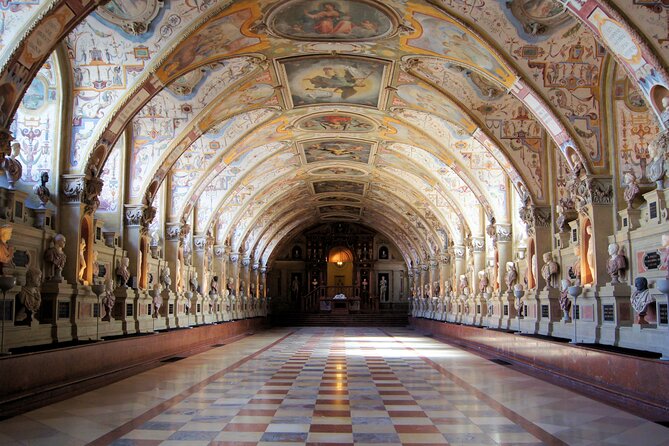
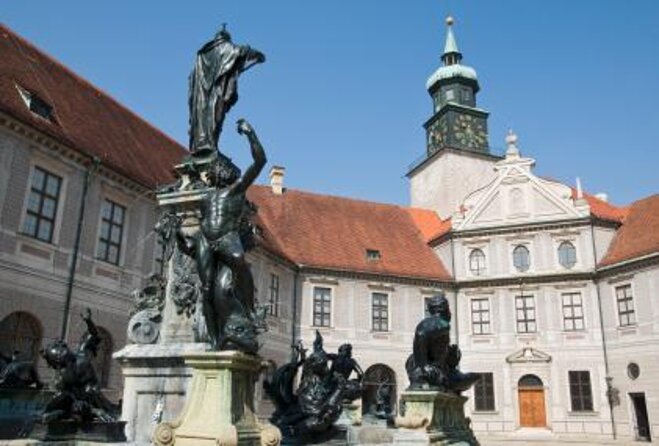
The Munich Residenz isn’t just a pretty building. It’s a timeline made of rooms, power, and taste—built up by Bavaria’s rulers from 1508 to 1918. That span matters, because you’re not only looking at one design style. You move through shifting eras like Renaissance, early Baroque, Rococo, and Neoclassicism, so the palace reads like a changing worldview.
What I like is how the guide turns those style labels into something you can actually picture. You’re standing in spaces that were meant to impress, but you also get the human angle: the Wittelsbach dynasty using art and architecture as political messaging. It’s court theater, even when the only audience is you.
And yes, the palace has a Versailles vibe. One of the best ways to enjoy it is to treat it like a story you can walk through. A good guide makes that happen, and the guides named in customer feedback—like Stéphanie, Ana, Ann, and Marianne—sound like they focus on the why, not just the what.
You can also read our reviews of more private tours in Munich



Tickets, private pace, and the guide’s role
This is a private tour, so it’s designed for your group only. That matters at the Residenz, where crowds can make looking feel like speed-walking. With a private guide, you typically get more time per room and fewer moments where you’re stuck outside while someone else decides what matters.
You also get a clean, practical package: admission tickets to the Residenz Palace, Museum, and Treasury are included. That’s a big value point because the Residenz complex is not a quick in-and-out stop. If you’re paying for a guided experience, it helps when the ticket part is handled.
The guide is a licensed history expert and speaks the language you choose (English is offered). In the best-case scenarios, you’ll hear details like why the palace was destroyed in World War II and then painstakingly reconstructed. That kind of context changes how you feel standing in rooms that look pristine today.
Maximilianstraße meeting point and the calm start
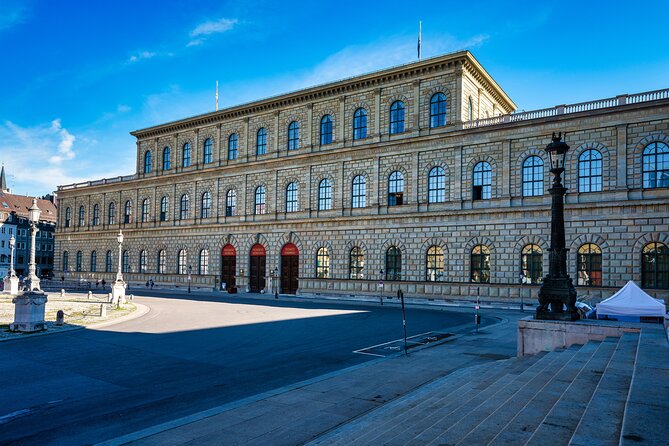
The tour begins at Maximilianstraße 6, with your guide waiting in front of the main entrance of Chanel. The tip here is simple: don’t go inside the store. Just find your guide at street level.
This start is good for orientation. Maximilianstraße is one of the city’s major showpieces, and it gets you into “Munich pace” right away—less tourist scramble, more easy strolling. If you’ve got even a small attention span for details, you’ll appreciate the contrast as you move from grand city streets toward the court complex.
One practical habit: check your email the day before the tour for important information. It can help you avoid the kind of meeting-point confusion that can derail any sightseeing morning.
Marienplatz and the church-and-hall intro to Munich
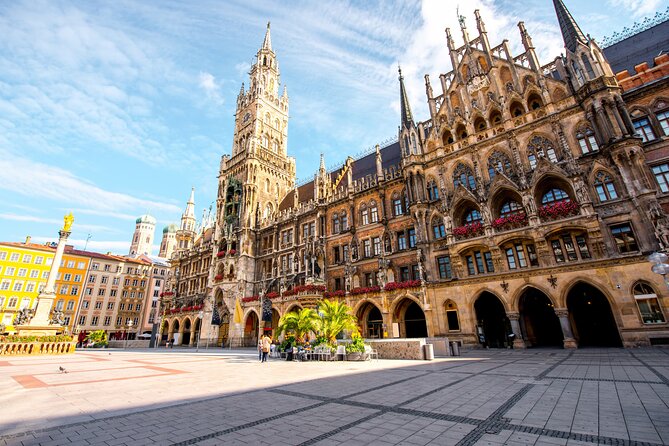
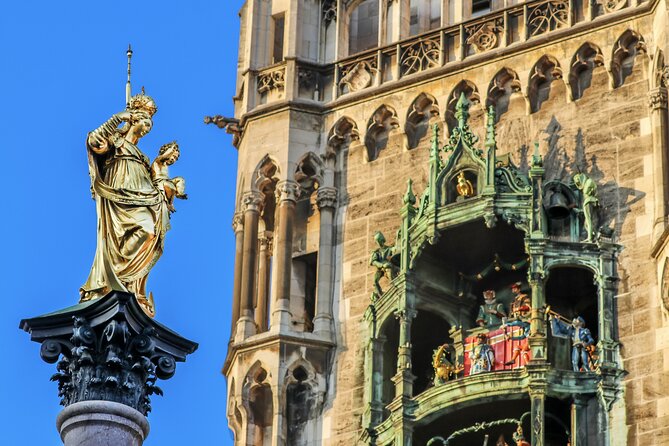
After meeting up, you head toward Munich’s city center, the area around Marienplatz. This is where the architecture does the talking. You’ll admire the New Town Hall and the Old Town Hall, plus the Fish’s Fountain and St. Peter’s Church, described as the oldest church in the city.
Even if you only get a short stretch here, it works. Marienplatz isn’t random. It’s a quick way to anchor the city’s civic identity before you step into royal spaces. The guide also helps you connect how city power and court power overlap—one governs daily life, the other performs authority.
What to expect: you’ll move at a walking pace and stop long enough to recognize the main sights. This is the kind of segment that’s ideal if you want history without turning the day into a marathon.
Cuvilliés Theatre: where opera history meets Bavarian drama
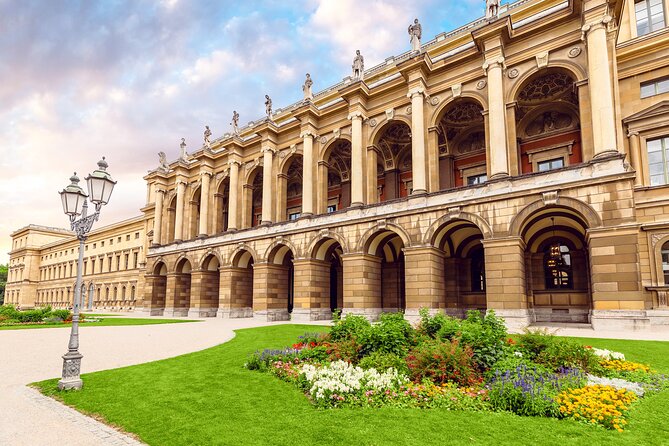
If you choose the longer versions that include it (Cuvilliés Theatre tickets are listed for the 3.5- and 5-hour tours), this stop is a standout. The Cuvilliés Theatre sits inside the Residenz complex and is famous for its opulent auditorium.
Here’s the key story the guide brings: Elector Maximilian Joseph III built it as a new opera house. You’re not just seeing theater decor. You’re seeing a political statement in velvet and gilding. The guide also shares the famous claim that the first performance of Mozart’s Idomeneo premiered here.
Why this matters to you: it’s one thing to know Mozart existed. It’s another to stand in a room tied to a specific premiere and understand why rulers cared so much about arts patronage. It gives the day a cultural high note, not just a museum pace.
What to watch for: theater interiors can feel visually dense. If you want to enjoy it fully, go in expecting the guide to point out what you’d otherwise miss—angles, ornament details, and the mood shift from palace rooms into performance space.
You can also read our reviews of more museum experiences in Munich





Frauenkirche legend and the calm weight of Hofgarten
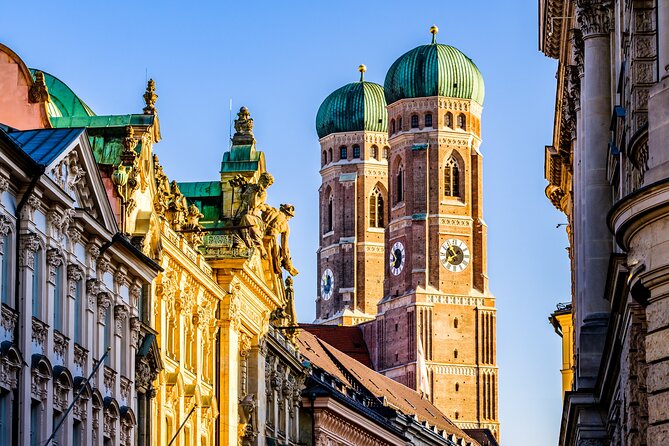
Depending on your time slot, you may also step inside the Frauenkirche (Munich Cathedral). The free entry to Frauenkirche is explicitly listed only in the 5-hour tour option.
Inside, you’ll hear the legend of the Devil’s footprint. Legends are often told in two ways: as trivia, or as a doorway into local storytelling. A good guide makes it stick because they connect it to how communities explain fear, fate, and sacred space. This stop is short, but it’s memorable because you’re entering a living religious landmark, not just admiring stone from outside.
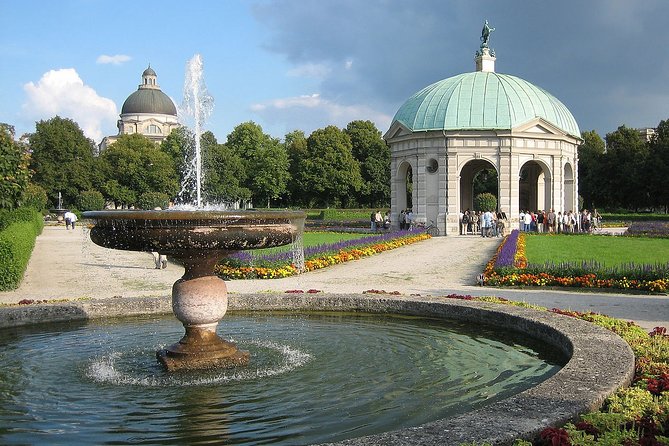
Then there’s Hofgarten, the formal court gardens tied to the royal residence. This part adds breathing room to the day. You get views of the Bavarian Government, the Marstall Theater, and the Grand State Opera.
This is also a smart timing move. After walking through ornate rooms and museum galleries, the gardens let your brain reset. It’s not only pretty. It helps you remember what’s what when you later look back and connect the palace complex to the broader institutions nearby.
Odeonsplatz and the Beer Hall Putsch story
Near the end of the walking route, you reach Odeonsplatz, which is packed with historical symbolism. You’ll see the Feldherrnhalle monument and the Theatine Church, and you’ll hear about the infamous Beer Hall Putsch that took place here.
This stop adds a modern edge to the royal-themed day. The palace story runs through centuries of rule and style changes. Odeonsplatz shifts the tone toward political upheaval. It’s a reminder that history doesn’t stay politely in the past.
A small practical point: monuments and squares can be windy and bright. If you’re doing photos, I’d plan for that. And if you’re sensitive to crowds, this is where your guide’s focus can matter—keeping you oriented so you’re not drifting while others queue for photos.
Inside the Residenz Palace, Museum, and Treasury
This is the heart of the tour. You follow in the footsteps of Bavarian kings, dukes, and electors who ran court life from 1508 to 1918. The guide helps you move through the Renaissance-to-Baroque-to-Rococo-to-Neoclassicism journey so it doesn’t feel like a random list of rooms.
Expect lavish rooms and art collections tied to the Wittelsbach dynasty’s taste and political ambition. You’re walking through spaces where the visual language is deliberate: power looks like craftsmanship. The museum side expands the theme by exploring ages and ideas like humanism, Counter-Reformation, the Enlightenment, and the divine right of kings as well as constitutional monarchy.
Now, the part many people wait for: the Treasury. It’s described as a collection of crown jewels and royal insignia, with goldsmith’s work, swords, goblets, and other expensive items. That’s not subtle. It’s luxury as statecraft.
One important reality check: the Treasury is temporarily closed until further notice. If your must-see is the crown-jewel style display, double-check your day-of plan. If it’s closed, you may end up focusing more on palace rooms and the museum sections instead.
Still, the Treasury’s reputation in the feedback is clear. One highlight mentioned was that the Treasury is especially impressive. If it’s available when you go, treat that time like the climax of your visit.
Price and value: what $280.44 per person buys you
At $280.44 per person, this tour isn’t a budget play. So you should ask what you’re really paying for.
You’re paying for three things that add up fast in a place like Munich:
- A private, licensed guide who can explain what you’re seeing while you’re inside the complex
- Admission tickets included for the Residenz Palace, Museum, and Treasury
- A route that bundles the palace with other major landmarks—so you don’t have to plan every next stop
The value improves if you care about context. If you just want photos and a quick circuit, you could save money with a self-guided visit. But if you want the story—like why rooms look the way they do, how the palace ties to Bavarian power, and how reconstruction after war shaped what you see now—then the guided portion is where your money goes.
Also consider the timing options. The tour runs 2 to 5 hours, and the longer versions add more stops and extra entries like Cuvilliés Theatre (for 3.5 and 5 hours) and Frauenkirche (for 5 hours). If you’re short on time, pick a version that matches your priorities instead of trying to cram everything in.
Transfers and timing: when you should choose the 3-hour car option
Transport matters in Munich, especially if your day includes palace time where walking lines and indoor queues can swallow your schedule.
Car transfers with pickup and drop-off are offered only in the 3-hour tour option. The vehicle is described as clean and air-conditioned. That’s a comfort upgrade if you’re staying farther out or you’d rather not negotiate trains and bus schedules on your sightseeing day.
There’s also a catch that you should plan around: the 3-hour tour includes a 1-hour transfer time between your accommodation and the Residenz. The quoted transfer time is for information and can take longer or shorter depending on where you’re staying. So you’re trading walking and logistics for convenience.
If you’re staying central, you may prefer a version without transfers and simply arrive near the meeting point. If you’re staying outside the core, the car option can make the tour feel smoother.
Who this private Residenz tour is best for
I think this works especially well if you fit one of these profiles:
- You want palace history, but you don’t want it in a textbook voice. A good guide keeps it human and clear.
- You’re curious about how art and architecture tie to politics and power—Renaissance through Neoclassicism in one connected experience.
- You love Mozart and want the theater connection, not just the music.
- You’d rather spend more time in rooms and fewer seconds in line.
It may be less ideal if you want a free-form, at-your-own-speed museum wander. This is structured, and that structure is the point. If you get restless with guided timing, self-guided might suit you better.
Should you book this Munich Residenz Palace private tour?
Book it if you want a guided, ticket-included day that focuses on the Residenz as a living political and artistic story. The biggest win is the pairing of a licensed guide with access to the Palace, Museum, and Treasury, plus optional Cuvilliés Theatre and Frauenkirche depending on time.
Skip or adjust your expectations if the Treasury closure affects your top priority. If you’re going only for the crown-jewel highlights, confirm first. And if you’re prone to missing meeting points, double-check the exact start location (in front of Chanel on Maximilianstraße 6) and plan to arrive early.
If you choose the right time slot for your interests, this is one of the smarter ways to see Munich’s royal core without turning your day into guesswork.
FAQ
How long is the Munich Residenz Palace, Museum and Treasury private tour?
The tour lasts about 2 to 5 hours, depending on the option you choose.
Is this tour private or shared?
It’s a private tour/activity, so only your group participates.
What tickets are included?
Tickets to the Residenz Palace, Museum, and Treasury are included. Tickets to Cuvilliés Theatre are included for the 3.5 and 5-hour tours.
Is pickup from my hotel included?
Car transfers with pickup and drop-off are offered only with the 3-hour tour option.
Where do we meet the guide?
The guide meets you at Maximilianstraße 6, 80539 Munich, in front of the main entrance of Chanel. Please do not enter the store.
Is Frauenkirche included?
Free entry to Frauenkirche is included only in the 5-hour tour.
Is the tour offered in English?
Yes, the tour is offered in English.
What about the Treasury if it is closed?
The information notes that the Treasury is temporarily closed until further notice. That could affect whether you can see the Treasury displays on your tour date.