REVIEW · MUNICH
Munich: Walking Tour Old Town 3D VR Tour in GERMAN
Book on GetYourGuide →Operated by Weis(s)er Stadtvogel GmbH · Bookable on GetYourGuide
A walk that changes your sense of time. This Munich Old Town 3D VR tour uses smartphone-powered VR to show 3D reconstructions alongside a live guide. I like the way it turns familiar squares into a timeline, and I also like the clear, story-driven focus on specific landmarks like Marienplatz.
My main caution is the tech setup: you’ll need a charged smartphone with internet, plus an app you download at the meeting point. And depending on how the VR gear is behaving that day, you may find the experience feels more like still images than smooth motion.
In This Review
- Key highlights you should care about
- A 3D time machine for Munich’s Old Town
- Meeting at Platzl: Orlandohaus and the big blue bag
- Marienplatz split-screen: 1570 vs about 300 years later
- Grain market, gallows, and the disgraceful donkey
- Platzl in 1895: how the area became Urmünchner
- Hofbräuhaus: past and present through the same walls
- VR glasses logistics: smartphone app and what can go wrong
- Price and value: is $37 worth two hours?
- Who should book this 3D Old Town walk?
- Should you book this Munich Old Town 3D VR tour?
- FAQ
- Where is the meeting point?
- How long is the tour?
- What language is the tour in?
- Do I need a smartphone?
- What’s included in the price?
- Is the tour wheelchair accessible?
Key highlights you should care about
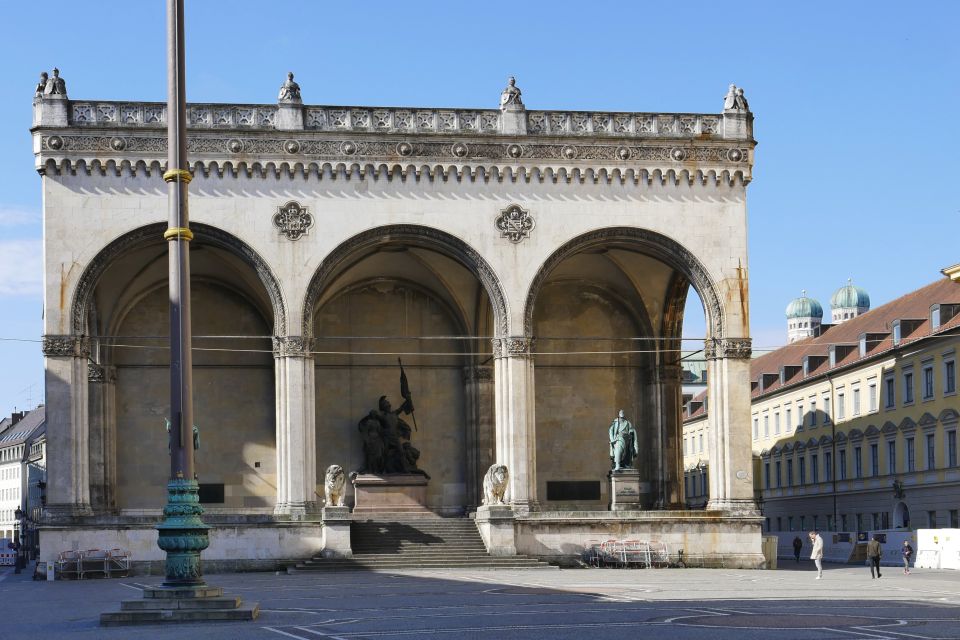
- Marienplatz split into eras: 1570 on one side and about 300 years later on the other
- Story stops, not generic sightseeing: grain market, gallows, and the so-called disgraceful donkey
- Platzl in 1895: learn how the area became the Urmünchner place you see today
- Hofbräuhaus then-and-now: compare past and present versions with VR
- Smartphone-driven VR: you insert your app into the VR glasses, so your phone matters
A 3D time machine for Munich’s Old Town
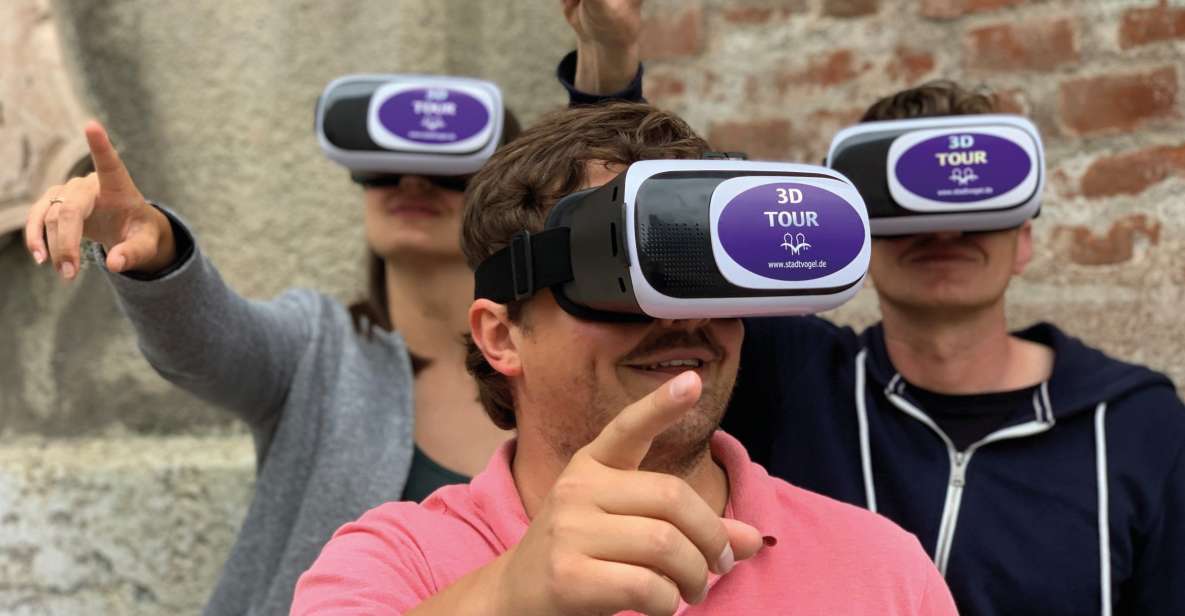
If you’ve strolled Munich’s Old Town before, you already know the landmarks. This tour adds a trick: you’re watching those same spots through 3D reconstructions tied to specific moments in time. It’s a guided walk where the guide’s stories do the heavy lifting, and the VR images give your eyes a second storyline.
What I find smart here is that it doesn’t try to turn the whole city into a theme park. Instead, it focuses on a handful of key sights in the Old Town that have 3D renderings. That makes the walking part feel purposeful, and the VR part easier to follow.
The pace is also friendly for groups. Two hours is long enough to move between squares and buildings, but not so long that you feel stuck in “tour mode” the whole time. It’s the kind of format that works well when you want history with a modern twist, not just a lecture on cobblestones.
You can also read our reviews of more walking tours in Munich



Meeting at Platzl: Orlandohaus and the big blue bag
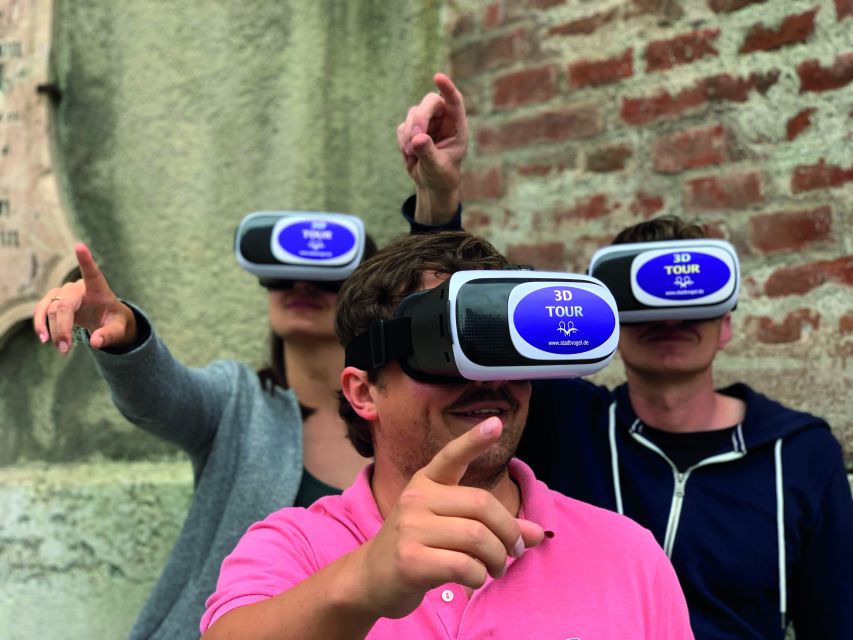
The tour starts right in the action near central sights. Meet directly in front of the Orlandohaus at Platzl 4. Your guide will have a big blue bag and a visible 3D Tour sign, with the words Weis(s)er Stadtvogel on it.
This matters because the VR experience depends on getting everything set up right away. The tour requires that all participants download an app onto their smartphone at the meeting point, and then that phone gets inserted into the VR glasses so you can see the 3D images. If you show up undercharged or without data, you’ll feel it immediately.
Also note the tour is in German, and it’s wheelchair accessible. Wheelchair access is listed as available, though you should still expect normal walking around Old Town streets and squares.
Tip: arrive with a few minutes to spare so you can download the app calmly. The setup step is part of the experience, not a side task you can rush.
Marienplatz split-screen: 1570 vs about 300 years later
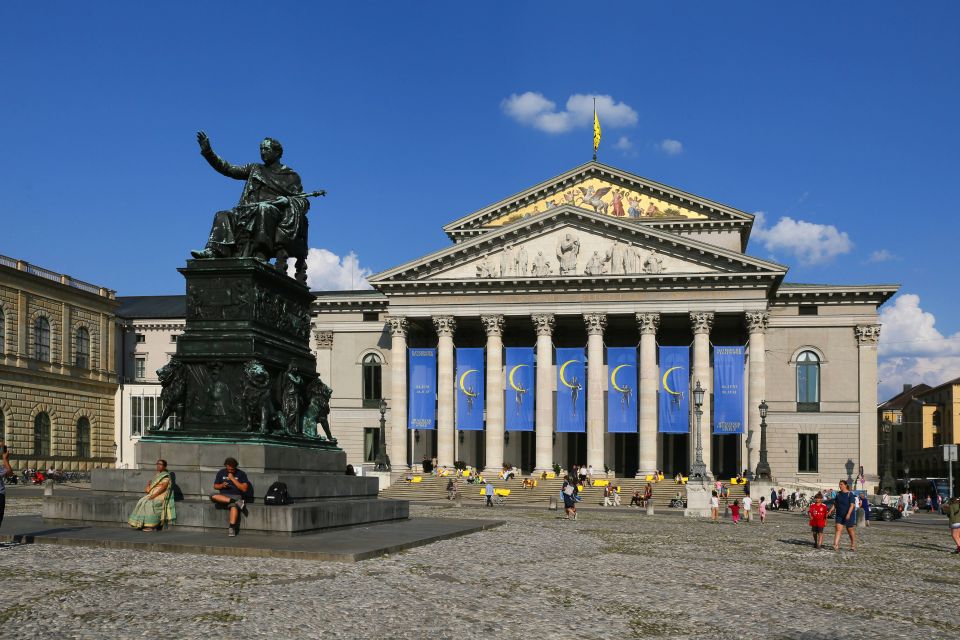
Marienplatz is Munich’s biggest “layer cake” square, and this tour treats it like one. For the tour, the guide divides the square into two parts. On the western side, you enter the world around 1570. On the eastern side, you experience the setting about 300 years later.
That split is more than a gimmick. It’s a practical way to compare eras without walking miles. You stay in one place, but you’re mentally transported, which makes the stories easier to grasp and remember.
On the 1570 side, you’ll see renderings tied to the medieval grain market on the square. The guide connects daily commerce to the way the space worked back then. On the other side, the scene shifts toward the 19th-century look of the area, including how the old town hall looked around 1870, plus details like the first completed part of the hall.
You also get the sense of life happening around the buildings. The tour description includes carriages and old professions in action during the later-era portion. Even if you’ve walked past the architecture a hundred times, this is the moment where those stones stop feeling like scenery and start feeling like a working city.
One more detail that keeps Marienplatz from feeling overly “pretty”: the tour includes darker elements tied to public punishment. That’s part of what gives the tour weight.
Grain market, gallows, and the disgraceful donkey
The Marienplatz portion doesn’t shy away from the serious side of city life. The medieval grain market helps you understand how public squares worked as practical infrastructure—people came there for food and supplies, not just photos.
Then the stories shift to punishment and public spectacle. You’ll see the gallows for special executions described as part of the historical scene. You’ll also hear about the so-called disgraceful donkey, which is exactly the kind of quirky-but-truthful detail that makes history feel human, not museum-labeled.
Is it comfortable? That depends on your tolerance for grim topics. The upside is that you get context for how authorities used public spaces. And if you like your history grounded in real-life behavior—who had power, where decisions happened—this part delivers.
The key thing for you: listen carefully when the guide points out what’s happening in the 3D scene versus what’s still physically there today. This is where the guide’s narration turns VR from “cool visuals” into “useful understanding.”
Platzl in 1895: how the area became Urmünchner
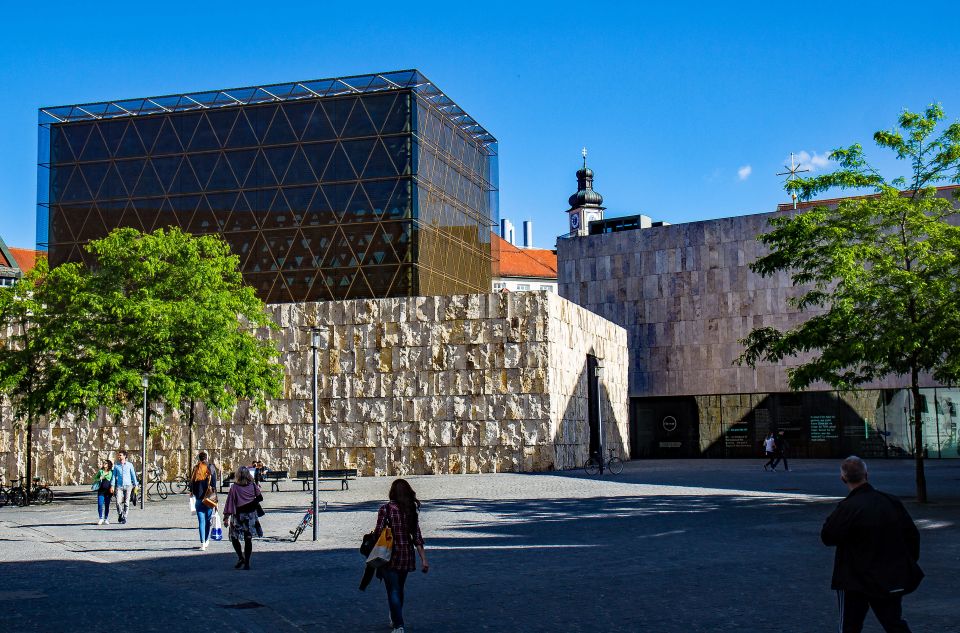
Next stop brings you to Platzl, where the VR timeline jumps to 1895. You’ll hear how this area came to be and how it changed into the Urmünchner place you see today.
This is a good reminder that old-town districts aren’t static. Even in historic cities, neighborhoods shift with commerce, crowds, and changing identities. The tour uses VR to show that transformation in a way that’s easier to picture than reading about it.
Platzl is also a nice contrast to Marienplatz. Marienplatz is Munich’s formal centerpiece; Platzl feels more like the “everyday life” zone around it. That makes the transition smoother. You get big-square history first, then a more local-feeling neighborhood story.
If you’re the kind of traveler who likes to understand how cities actually evolve, this is one of the highlights. The tour doesn’t just ask you to admire buildings—it asks you to notice how places get their character over time.


Hofbräuhaus: past and present through the same walls
The last key anchor in the VR story is Hofbräuhaus—seen in both past and present forms. This stop is particularly useful because it gives you a direct comparison point. Same building presence, different era visuals.
It’s one of the smartest choices for VR-based sightseeing. A beer hall is already part of Munich’s identity today, so seeing the building and surroundings “then” helps you understand what stayed, what changed, and what grew around it. Even if you’re not a beer-hall superfan, you’ll probably get something out of the contrast.
Also, because Hofbräuhaus is so recognizable, you can keep your bearings. When your feet are still on modern cobbles, it’s easier to trust the story you’re hearing and connect the VR overlay to real spatial cues.
The tour description suggests you’ll experience Hofbräuhaus as a time-slice. You’ll come away with a better sense of how iconic locations can look different while still functioning as social magnets.
VR glasses logistics: smartphone app and what can go wrong
Let’s talk tech plainly, because this is where experiences can differ.
You must bring a charged smartphone and have internet access. At the meeting point, you download an app onto your phone. Then the phone is inserted into the VR glasses to display the 3D images.
That setup is the tour’s biggest dependency. If your phone struggles with the download, if the connection is slow, or if the glasses don’t line up well, the experience can feel frustrating. And some people have found that what they see can feel more like photos or still images than moving footage.
So how do you protect your day?
- Keep your phone battery high before you arrive.
- Use internet that’s steady (and yes, that means your data matters).
- Be ready for the possibility that VR could feel less like “cinema” and more like “3D viewpoints.”
Here’s a practical attitude that usually helps: treat the VR as a storytelling aid, not a guaranteed action movie. If you come with that mindset, the guide’s narration and the walk itself still make the tour worthwhile, even when the headset experience isn’t perfect.
Also, if you’re comparing visibility options, some people prefer what they can see directly on their phone screen when the glasses don’t feel ideal. The tour is built around the VR system, but your own comfort with what you’re seeing is still worth prioritizing.
Price and value: is $37 worth two hours?
At about $37 per person for 2 hours, the value depends on what you want from the tour.
You’re paying for three things: a live German guide, a guided walking tour, and VR glasses (plus the required smartphone app setup). If you like guided history and you’re curious about how old squares looked at different times, that mix can feel like a good deal. Two hours is also a reasonable length for this kind of format, especially if you’re fitting it into a busy Munich day.
Where value can swing is the VR expectation. If you’re expecting full motion video or seamless VR animation, you might feel disappointed. If you’re excited to see 3D reconstructions and learn stories that make the place click, it’s easier to feel satisfied even when the VR is more “stills + viewpoint” than “full motion.”
Another value point: the tour covers landmark areas you’d likely want to revisit anyway—Marienplatz, Platzl, and Hofbräuhaus. Even without the VR element, the guide’s focus on specific historical details (grain market, gallows, and that odd-sounding donkey story) gives you something more than a standard photo walk.
Not included are hotel pickup/drop-off and food and drinks. That’s normal for city walking tours, but it matters for planning. Bring water if you’re out in warm weather, and don’t assume the tour schedule includes breaks for snacks.
Who should book this 3D Old Town walk?
This tour is a strong match for you if:
- you like guided history and want your facts tied to places you can stand in
- you enjoy modern tech when it’s used to tell a story, not just to show off
- you’re traveling with friends or family who appreciate a shared “look up, listen, then look again” experience
It’s less of a match if:
- you’re very sensitive to tech glitches or you hate smartphone-based setups
- you expect VR to be smooth, high-motion video every minute
If you’re somewhere in the middle—open-minded about VR, but you want a good guide and a great route—this is likely a fun way to see Munich differently.
And because the tour is German, your comfort with the language matters. If your German is solid or you’re fine following along with context, you’ll enjoy the storytelling layer more.
Should you book this Munich Old Town 3D VR tour?
My take: book it if you want Munich history you can see, not just read. The Marienplatz split into 1570 and about 300 years later is the kind of structure that makes learning stick. The guide-led details—grain market, executions, and the disgraceful donkey—give it character, not just visuals.
I’d hesitate only if you’re expecting VR to behave like a premium video game experience. The smartphone app + glasses setup is central, and some participants have reported issues or a more still-image feel.
If you go in prepared—charged phone, internet ready, realistic VR expectations—you’ll likely come away with a more vivid mental map of Munich’s Old Town.
FAQ
Where is the meeting point?
Meet directly in front of the Orlandohaus at Platzl 4. The guide will have a big blue bag and a 3D Tour sign.
How long is the tour?
The tour duration is 2 hours.
What language is the tour in?
The live tour guide speaks German.
Do I need a smartphone?
Yes. You must download an app onto your smartphone at the meeting point, and then insert the phone into the VR glasses to see the 3D images.
What’s included in the price?
Included are the guide, the walking tour, and VR glasses.
Is the tour wheelchair accessible?
Yes, the tour is listed as wheelchair accessible.