REVIEW · MUNICH
Munich’s 500 Years of Architecture Guided Tour
Book on GetYourGuide →Operated by Philipp's Munich Tours · Bookable on GetYourGuide
Munich’s buildings tell stories when you know where. This tour strings together 500 years of styles from Gothic to Art Nouveau, with quick, clear explanations at each stop so you can actually see the change over time. I really liked the way it starts at Frauenkirche and builds momentum citywide, and I also liked the tram shift to the Isar River where things slow down. One consideration: this is a walking tour in winter, so you’ll want solid shoes and expect standing.
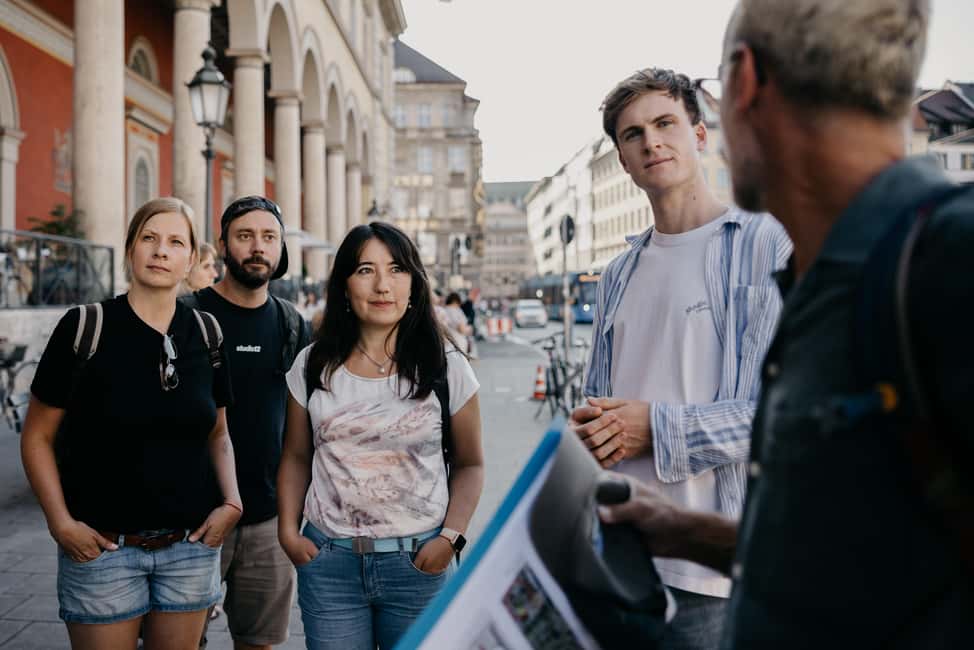
What makes it stand out is the guide, Philipp. You meet him outside Frauenkirche and you’ll spot the yellow winter hat, yellow backpack, and a large blue presentation folder. His storytelling mixes royal-era anecdotes, amused legends, and a few darker chapters—so the architecture isn’t just pretty, it has context.
At $36 for about 2 hours, it’s a focused hit of major sights without turning into a full-day grind. Also, you may get inside up to three buildings, but that depends on the day’s access and timing. If you’re in town for a short window, this is one of those “I’m glad I booked that” choices.
In This Review
- Key highlights you’ll care about
- Entering the story: Frauenplatz start, quick orientation, and Philipp’s style
- Frauenkirche to St. Michael’s: the late-15th-century to Renaissance pivot
- Trinity Church and Theatine Church: ornate faith, royal echoes, and changing styles
- Bavarian State Opera and Maximilianstraße: where power looks elegant
- St. Lukas and Müllersche Volksbad: the tour’s “Munich beyond icons” moment
- From Old Town to the Isar: tram ride, world records, and quieter air
- Christmas markets on this route: more than the obvious stalls
- Jugendstil, street art, and the modern museum ending
- Is $36 a good deal for a 2-hour architecture sprint?
- Who should book Philipp’s Munich 500 Years of Architecture tour?
- Should you book? My take
- FAQ
- How long is the Munich 500 Years of Architecture Guided Tour?
- How much does the tour cost?
- Where do we meet the guide?
- What’s the easiest way to get to the meeting point?
- What languages are available?
- Is food or drinks included?
- Is the tour suitable for wheelchair users or mobility impairments?
- What should I bring for a winter tour?
Key highlights you’ll care about
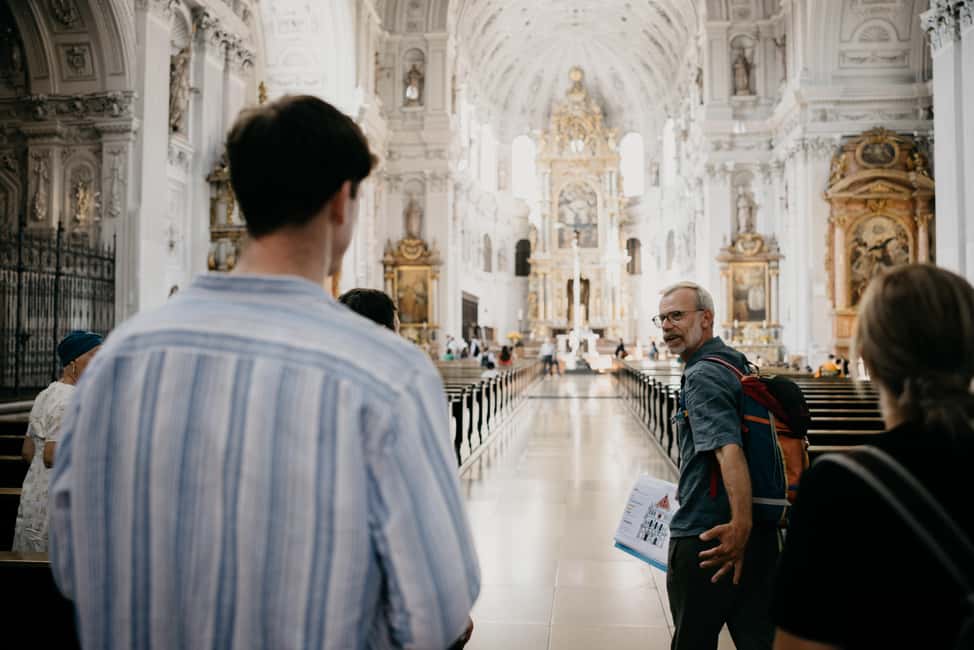
- A true timeline walk: you move chronologically from late 15th century church landmarks toward modern art and design.
- Inside access, when possible: you have a chance to go into up to three buildings instead of only staring at facades.
- Tram to the Isar: you trade Old Town congestion for a quieter riverside stretch.
- Christmas markets with a twist: you don’t only hit the obvious stalls; the route includes a unique medieval-style Christmas market setting.
- Alte Utting gets a nod: the tour points you to Alte Utting, praised by The New York Times.
- Art Nouveau plus street art energy: the ending blends Jugendstil (Art Nouveau) with modern culture cues like graffiti and a contemporary museum finish.
Entering the story: Frauenplatz start, quick orientation, and Philipp’s style
You begin at Frauenplatz 1, right outside Frauenkirche. This is a smart meeting point because it’s central, easy to find, and it’s the perfect opening image for the tour’s main promise: Munich as a living architecture timeline.
Getting there is straightforward. Use S-Bahn or U-Bahn at Marienplatz (U3/6) and walk about 5 minutes. From München Hauptbahnhof, it’s roughly a 15-minute walk. I’d plan to arrive a bit early, especially in winter, because the tour’s first stretch is about getting your bearings.
Philipp’s approach is practical. He gives you just enough background to read what you’re seeing—then he lets you look. Expect a friendly pace with lots of context that sticks, including royal family stories and legends that explain why certain landmarks matter. The vibe isn’t stiff; it’s more like someone showing you their hometown with a good sense of humor.
Warm clothing is a real must. The tour includes an Old Town walk, a tram segment, and a riverside stretch, so you’ll be outside longer than you might think when you’re staring at buildings. Comfortable shoes matter too; even when you’re not walking fast, Munich’s sidewalks add up.
You can also read our reviews of more guided tours in Munich


Frauenkirche to St. Michael’s: the late-15th-century to Renaissance pivot
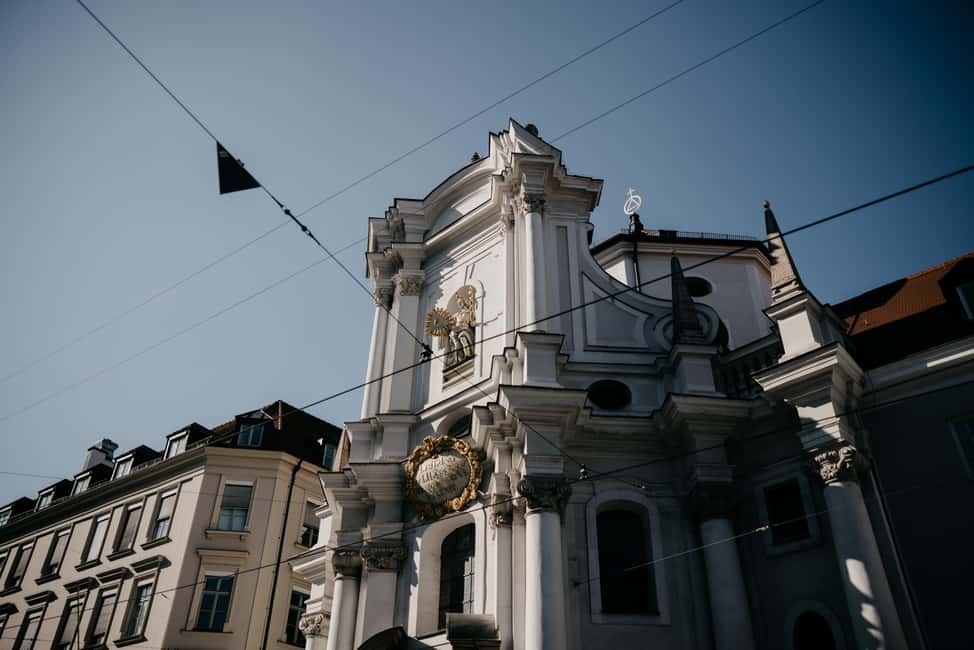
The tour kicks off in the late 15th century at Munich’s Frauenkirche. This is the classic anchor for many first-time Munich days, but here it’s not just a postcard stop. Philipp frames it as your starting point for understanding how the city’s ideas of design and power evolved over centuries.
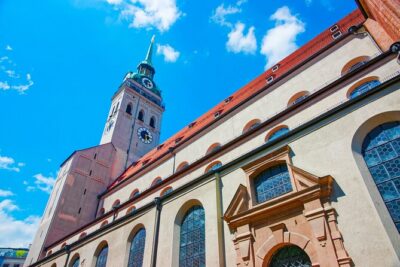
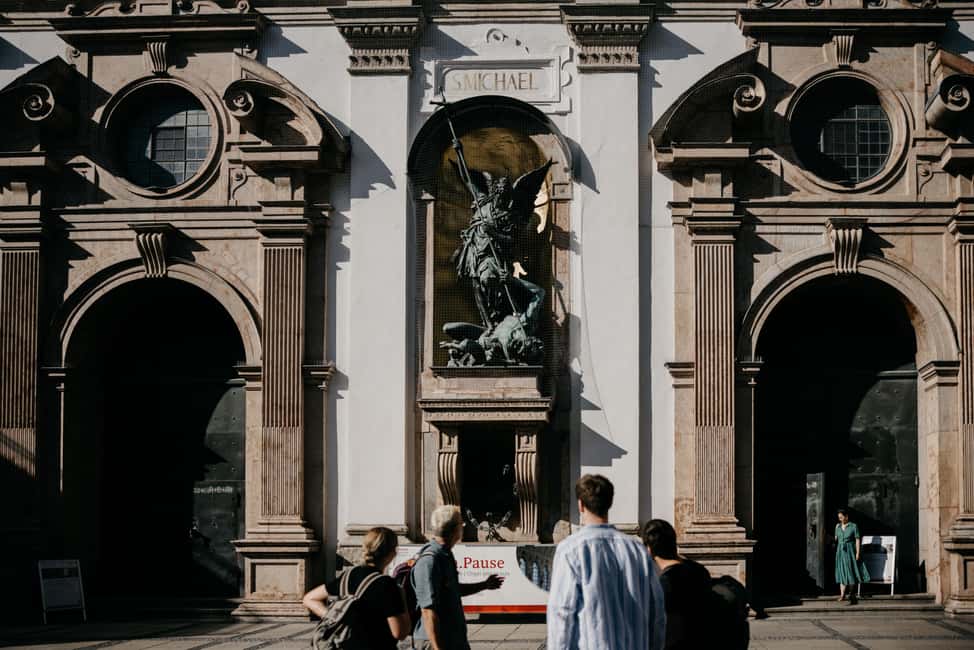
Then you move forward in time to St. Michael’s Church. The big reason this stop gets extra attention is that it’s described as a world-record-holding masterpiece. Even if you’re not chasing records for fun, it helps you focus: Philipp points you toward what makes the building special and how Renaissance sensibilities show up in the details.
This portion of the tour is valuable for one key reason: it teaches you to compare. Gothic and Renaissance design aren’t just different “looks.” They signal different approaches to scale, structure, and symbolism. When you’re listening and looking at the same time, you start to notice the shift without needing a textbook.
A small reality check: you won’t have unlimited time in every spot. This tour is structured like a guided highlight reel, with just enough breathing room between landmark clusters to keep the story moving.
Trinity Church and Theatine Church: ornate faith, royal echoes, and changing styles
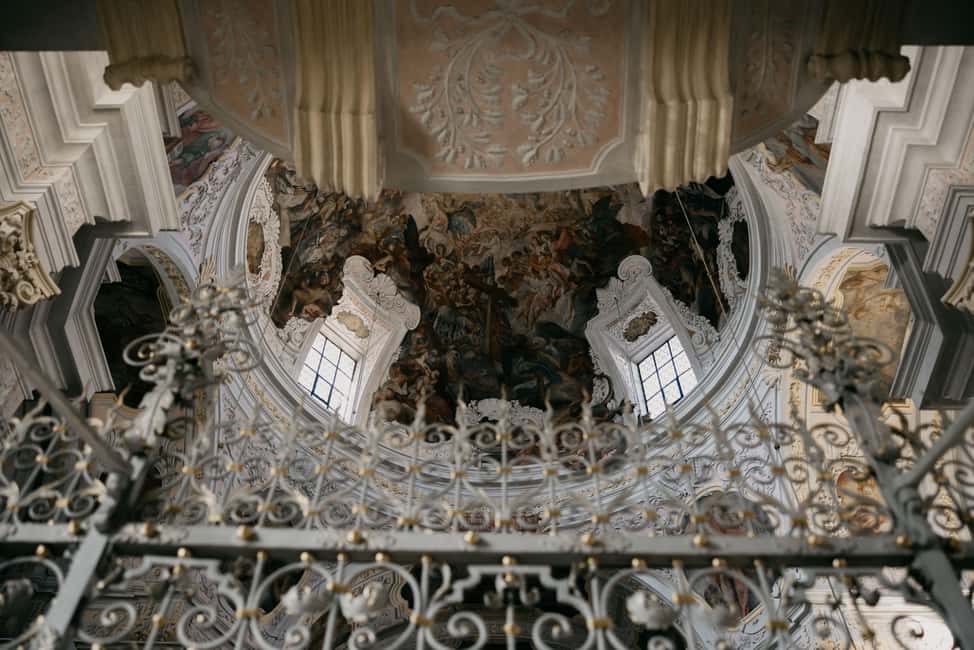
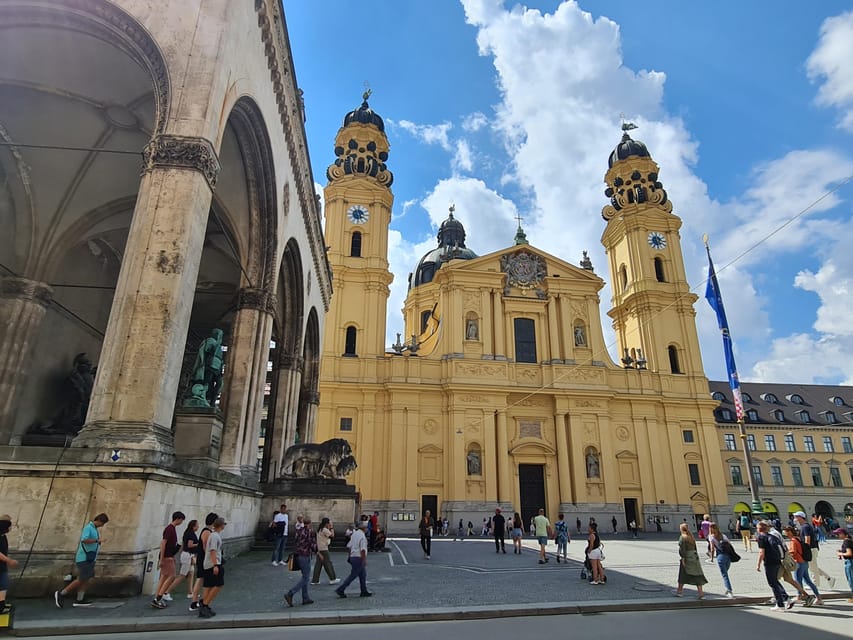
After the Renaissance beat, you continue into the era of heavy detail and grand presence. The itinerary includes Trinity Church and Theatine Church, both stops that fit naturally into the tour’s theme of shifting style—from more austere forms toward more theatrical architectural expression.
What I like about this middle portion is that it doesn’t treat churches as isolated monuments. You get stories tied to the city’s identity: royal tales, amusing legends, and occasional darker moments that give you the sense that architecture is tied to real human drama.
Even when you’re not going inside every building, these stops help you understand how style changes read on the street. Philipp’s commentary makes you look at shape, ornament, and placement. You’ll also start to connect the dots between what you see in front of you and what you’ll notice later near the river.
If you’re the type who likes to photograph facades, this section is a solid time investment. If you’re hoping for long interior time at every church, you might wish for more—this tour’s strength is the sequencing and the storytelling, not slow museum-style pacing.
Bavarian State Opera and Maximilianstraße: where power looks elegant
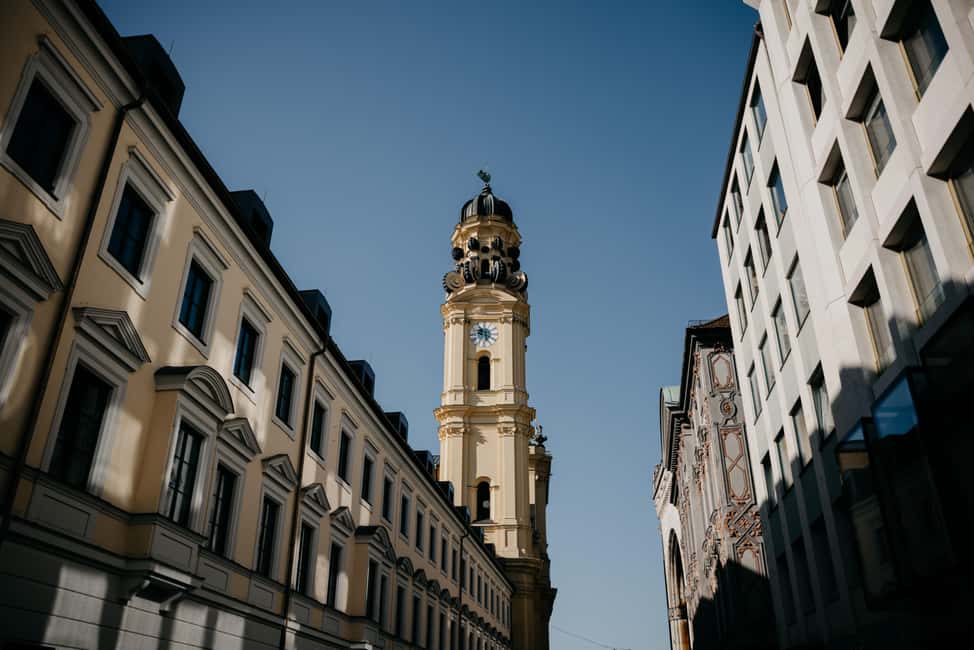
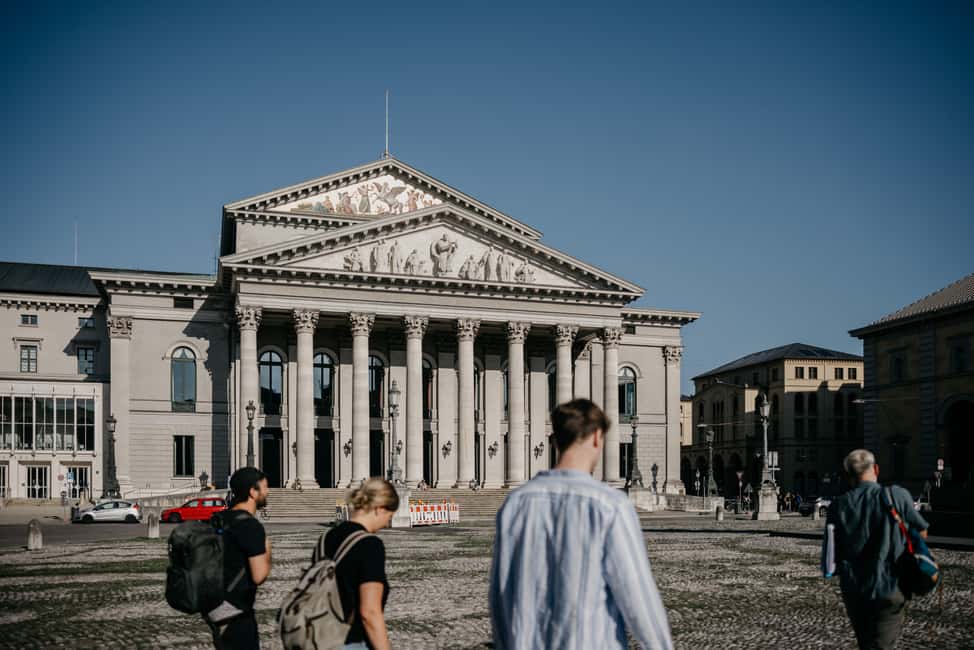
You then move into a different kind of Munich feel at Bavarian State Opera and along Maximilianstraße. This isn’t just more “beautiful buildings.” It’s about learning the city’s different face: the ceremonial, the official, and the carefully composed side of Munich.
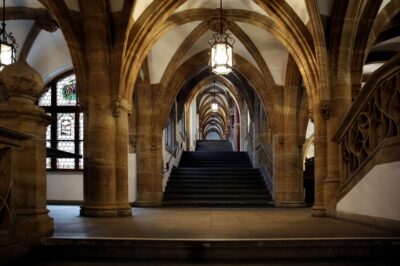
Philipp’s guided tour of Maximilianstraße helps you read the street like a design document. You start noticing how sight lines work, how building placement shapes your walk, and how the city signals status. Even if you’re not an architecture expert, you can still track the message: Munich doesn’t only have old-world churches—it also has a strong civic and cultural self-image.
And you’re not left guessing. The tour’s style timeline keeps moving, so you’re not stuck in one era. That makes this stretch more satisfying than a random sightseeing walk.
One practical tip: keep your camera ready, but don’t only shoot. Take a second to stand still and let the street “settle” in your mind. The best photos from this kind of walking tour usually come after a short pause.
St. Lukas and Müllersche Volksbad: the tour’s “Munich beyond icons” moment
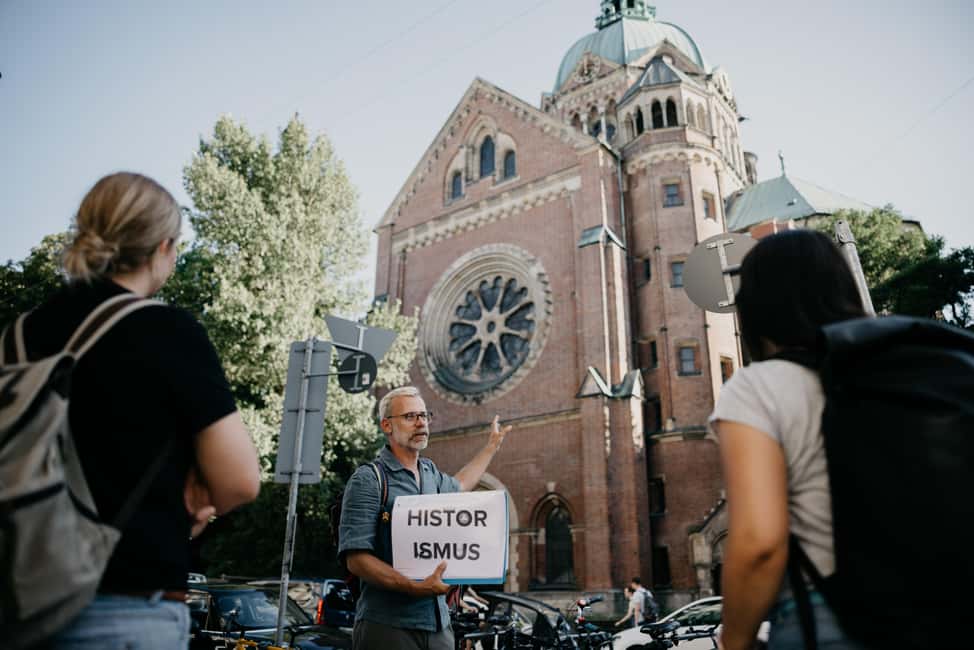
The route includes St. Lukas and Müllersche Volksbad, and this is where the tour gets especially interesting if you like architecture that serves everyday life.
These stops feel like a shift away from the big landmark narrative. Instead, you get buildings that help explain how Munich functioned—how people gathered, how civic life worked, and how architecture served more than just ceremonies.
Guided tours at these sites (as listed for the experience) help you understand why they matter. Even without going into every detail, Philipp’s stories give you a sense of texture: Munich isn’t only the dramatic skyline. It’s also the spaces where city life played out.
If you’re traveling with friends who tend to lose focus on long walking routes, this is one of the sections that can keep them interested because it feels more “human scale.” It breaks up the cathedral-heavy first half without abandoning the architecture theme.

From Old Town to the Isar: tram ride, world records, and quieter air
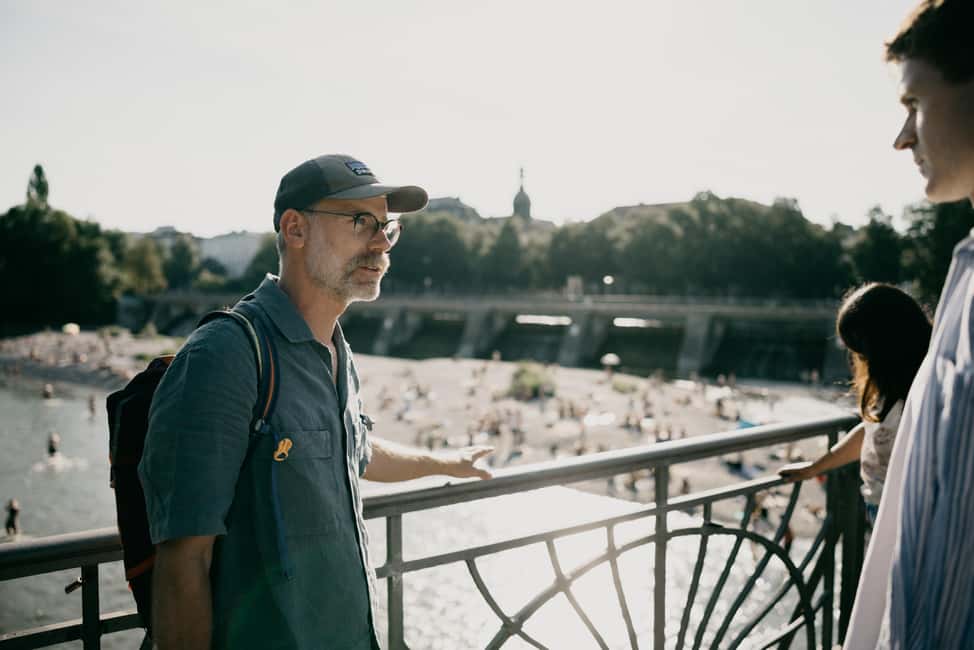
Here’s where the tour takes a clever turn. To escape Old Town congestion and Christmas-market crowds, you hop on a tram to the Isar River. In winter, this section feels like a breather. The pace changes. The air changes. Your eyes get a chance to rest after constant facades and street-level chatter.
At the Isar stretch, you’ll hear about two more world records tied to what you’re seeing. You may not remember every technical detail later, but you’ll remember the idea: Munich has claims to fame in places you wouldn’t expect, and those claims connect back to how the city builds and organizes space.
This is also where the tour brings in Alte Utting, highlighted as praised by The New York Times. The value isn’t just that a famous outlet said it’s good. It’s that the stop gives you a real reason to pay attention to the riverfront instead of treating it like background.
In the feedback you’ll get from people who love this tour, one theme shows up: the tram and river segment feels like the moment the tour stops being only about looking up and starts being about enjoying the city.
If you’re prone to motion sickness on trams in cold weather, dress accordingly and keep your gaze steady.
Christmas markets on this route: more than the obvious stalls
The tour includes multiple Christmas markets, with at least one described as a unique medieval Christmas market in a magical setting. That matters because Christmas markets in Munich can blend together if you only do the biggest name stalls.
On this route, Philipp uses the markets as story checkpoints. You’re not randomly wandering from booth to booth. You’re seeing how holiday culture sits on top of centuries of architecture—how people occupy historic spaces when the city wants to feel extra festive.
Also, markets are social energy. Even when you’re not buying anything, you get the sense of who’s in the streets and what locals and visitors are drawn to. It’s a good way to balance architecture appreciation with the atmosphere that makes Munich feel alive during winter.
Practical note: markets mean crowds. Bring patience and keep your camera accessible but not constantly in your hand. You’ll get better shots when you step aside for a clear view.
Jugendstil, street art, and the modern museum ending
The final arc shifts into Jugendstil (Art Nouveau)—a style that looks made for Munich once you know what to look for. This part of the tour helps you connect old and new. You’re not only learning history; you’re learning how design ideas keep reappearing in new forms.
You’ll also notice modern elements along the way, including street art and graffiti, which can feel surprising if you came expecting only old-world charm. I think that contrast is the point. The city evolves. The tour shows that evolution without losing the thread.
The finish is at Sudetendeutsches Museum. Ending at a museum is smart because it gives you a natural last step: after the walk, you can carry the theme into exhibits (even if you only glance at parts, depending on your time and energy).
From a planning perspective, this ending works well if you’re hungry afterward or ready to hop into your next plan near the center again. It’s a clear place to regroup.
Is $36 a good deal for a 2-hour architecture sprint?
For $36 per person and about 2 hours, this tour’s value is in its structure: you’re getting a guided timeline that hits major eras without stretching your schedule into a half-day or full-day commitment.
Also, the inclusion of visits (with a chance to go inside up to three buildings) makes it more than a photo walk. You’re paying for interpretation—someone helping you see connections between Gothic forms, Renaissance focus, ornate phases, and later design styles like Art Nouveau.
If you’re the kind of traveler who likes to “learn while you walk,” this price makes sense. If you want long interior time or an unhurried museum-style pace, you might feel the time is tight. But that’s not a flaw—it’s the format.
Bottom line: if you want the story of Munich’s architecture in one compact package, $36 buys good time with context.
Who should book Philipp’s Munich 500 Years of Architecture tour?
Book this if you:
- want a guided chronological look at Munich’s architecture instead of random stops
- like churches, city streets, and cultural landmarks with stories attached
- enjoy winter walking but still want a break, thanks to the tram and Isar segment
- want a finish that includes Jugendstil and a modern museum
Skip it if you:
- need a fully seated experience or have limited mobility (it’s not suitable for wheelchair users and people with mobility impairments)
- want lots of free time for food and wandering without structure
- dislike winter weather and don’t have warm gear
One more practical note: this tour is listed as not suitable for people over 95 years, so check your group’s needs first.
Should you book? My take
I’d book it if you’re trying to get orientation fast. This tour gives you a framework to understand what you’re seeing—especially if you plan to do other Munich sights after. Philipp’s mix of style timeline, legends, and that mid-tour switch to the Isar makes it feel varied instead of repetitive.
It’s also a great choice if you’re short on time but want more than “biggest hits.” The ending with Art Nouveau, street art, and a modern museum finish helps you leave Munich with a bigger picture than you had when you arrived.
If you like architecture that comes with human stories—and you can handle a couple hours of walking in winter—this is a smart, high-value booking.
FAQ
How long is the Munich 500 Years of Architecture Guided Tour?
It lasts about 2 hours, and starting times vary by availability.
How much does the tour cost?
The price is $36 per person.
Where do we meet the guide?
You meet outside Frauenkirche at Frauenplatz 1, in front of the main entrance.
What’s the easiest way to get to the meeting point?
Get off at Marienplatz (S-Bahn/U-Bahn station U3/6) and walk about 5 minutes. From München Hauptbahnhof, it’s about a 15-minute walk.
What languages are available?
The live tour guide offers English and German.
Is food or drinks included?
No. Food and drinks are not included.
Is the tour suitable for wheelchair users or mobility impairments?
No. It’s not suitable for wheelchair users or people with mobility impairments.
What should I bring for a winter tour?
Bring comfortable shoes and warm clothing, and consider a camera to capture the sights.