REVIEW · MUNICH
Guided Dachau Concentration Camp Memorial Site Tour with Train from Munich
Book on Viator →Operated by Alun Evans Personal Tour Guiding Munich · Bookable on Viator
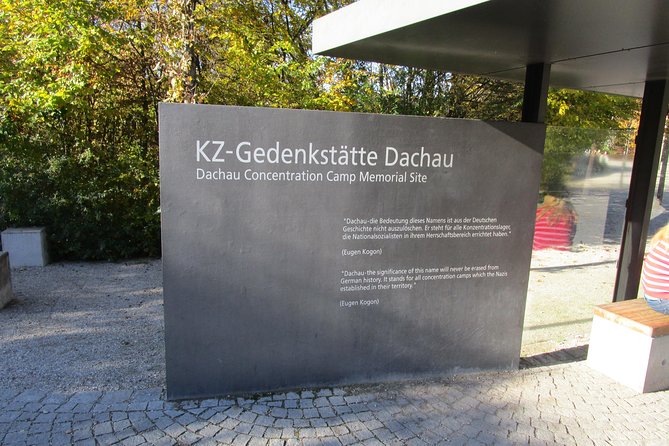
Dachau makes time feel slower. This guided trip from central Munich is a direct, small-group way to understand how the Nazi system worked and what imprisonment was like for prisoners, without getting lost in facts or crowd noise. I also love that you cover the key site areas with a Memorial-licensed guide, plus you get time at the museum so you’re not rushing through the hardest parts. The main drawback is simple: this is emotionally heavy and you’ll spend a good chunk outdoors, so dress for all weather and expect a sobering day.
You meet right at Marienplatz, spot the guide’s black-and-white placard, and then ride the modern Munich train system to Dachau. The pace is designed to keep you moving but not steamroll you, with a maximum group size of 15. If you’re looking for a quick check-box visit, this won’t be that. If you want clarity, structure, and a respectful way to learn, it’s a strong fit.
In This Review
- Key takeaways before you go
- Marienplatz to Dachau: easy start, early momentum
- What the licensed guide does (and why it matters at Dachau)
- The museum exhibition: use your time smart, not frantic
- Getting there and back: pacing, transfers, and what you control
- Price and value: does it make sense for $90.70?
- Who should book this and who might prefer something else
- Should you book this Dachau tour from Munich?
- FAQ
- How long is the Dachau tour from Munich?
- Where do I meet the guide in Munich?
- What language is the tour offered in?
- Is the tour suitable for children?
- How big is the group?
- What’s included in the price?
- What’s not included?
- Do I need to do a lot of walking?
- Can I bring a service animal?
- Is full refund possible if I cancel?
Key takeaways before you go
- Marienplatz meetup at 08:50: early start, clear meeting point, and a guide you can spot fast
- Licensed on-site guidance: the tour covers barracks, crematorium and gas chamber, punishment block, and more
- Museum time included: you get some independent viewing after the guided walk
- Small group (max 15): easier questions, easier pace control, less chaos
- All-weather operation: plan for cold rain or crisp winter air and wear real walking shoes
Marienplatz to Dachau: easy start, early momentum
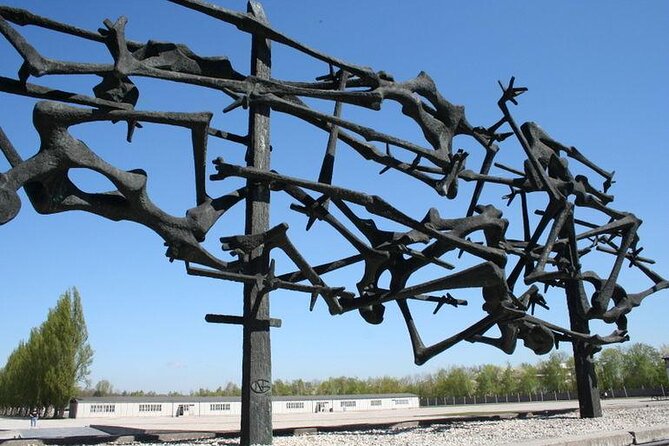
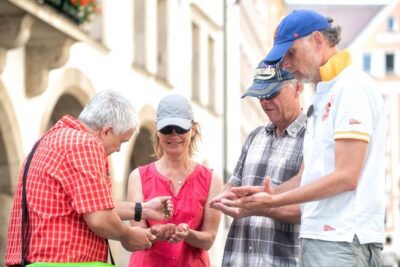
This day trip is built for convenience. You meet outside the Tourist Information office at Marienplatz at 08:50 so you can be ready for a 9:00 am departure. Your guide will carry a black-and-white placard that reads Dachau Memorial Tour, which sounds minor until you’re standing in a busy square wondering where everyone went.
Then comes the best kind of travel day: not a chaotic transfer. You’ll take the Munich train system for about 20 minutes to the town of Dachau, and that ride is part of the “getting oriented” feeling. It matters because Dachau isn’t just a museum stop. It’s a real memorial site, and being settled and briefed before you arrive helps you get more out of everything you see after.
Timing also helps you keep your head above water. The tour runs for about 5 hours total, and you’re back escorting your way to Marienplatz around 2:00 pm. You’re not stuck all afternoon in a somber bubble. Afterward, you can still enjoy the rest of Munich in daylight hours.
One more practical note: the tour requires moderate walking and stays mostly outdoors, and it operates in all weather conditions. Bring comfortable shoes that can handle uneven paths and damp ground. If you tend to wear stylish footwear, this is your reminder that suffering is optional and proper shoes aren’t.
You can also read our reviews of more guided tours in Munich


What the licensed guide does (and why it matters at Dachau)
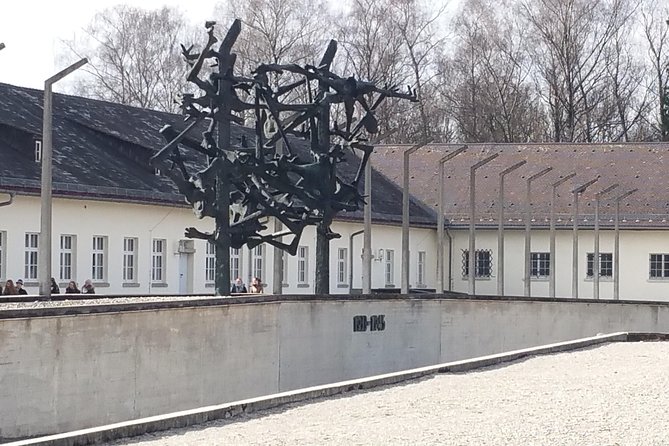
The biggest reason to take a guided tour here is what it prevents: the “I saw buildings, now what?” feeling. Dachau can be visually straightforward, but the meaning is not. This tour is led by a Memorial Licensed Guide, and the difference shows up in the way your visit is structured.
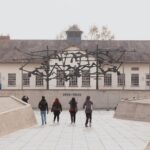
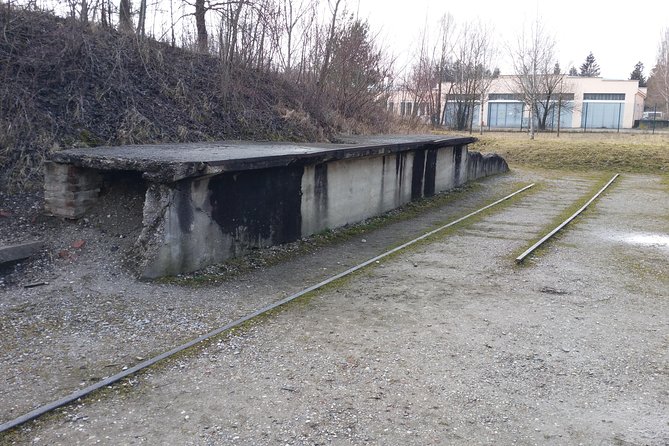
From the time you’re at the Memorial, you’ll spend about 3 hours covering the core areas, including:
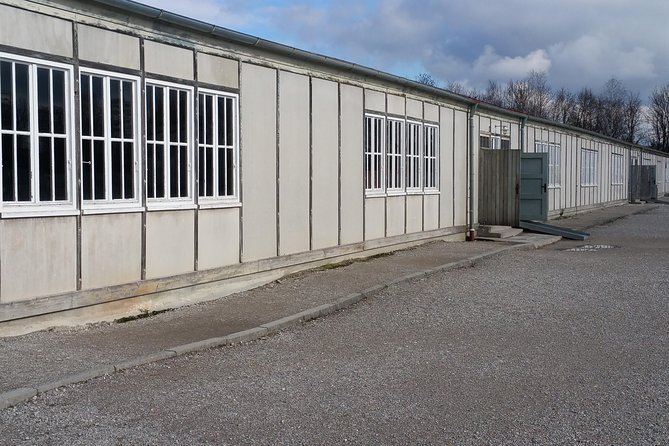
- Barracks
- Crematorium and gas chamber areas
- Bunker/punishment block
- Maintenance building
You’re not shown random spots. You’re walked through how the system was organized and how control was enforced, and your guide gives historical context as you move from place to place. That context is crucial because otherwise you’ll be left filling in the gaps on your own—usually with oversimplified answers.
In the same way, you get the site explained with a focus on prisoners’ perspective and the broader rise and fall of the Third Reich. That’s what turns a “camp visit” into an education you can actually use later when you talk with others or read more on your own.
This tour is also built to handle emotional weight with care. Expect it to be deeply moving. That doesn’t mean it’s vague or soft. It means the guide is there to keep the information clear, respectful, and connected to reality.
If you’re traveling with friends who like to stop and read everything at once, you’ll still be glad for the guide. The pace leaves room to look, but it also protects you from wandering into dead ends or missing the stories that make each location matter.
The museum exhibition: use your time smart, not frantic
After the on-site walk, you’ll get time to explore the museum exhibition. The museum is described as excellent, and that matches what this kind of memorial tends to do well: it fills in the background, the systems, the timeline, and the human impact behind what you already saw outdoors.
Here’s the simple strategy I’d use: treat the museum like a set of answer keys. Don’t try to read every sentence cover-to-cover. Instead, pick what you need most:
- the timeline
- how the camp operated day to day
- what the different areas you saw were connected to
Some visitors want more museum time, and that’s a fair instinct—this subject deserves attention. The trade-off is that the tour schedule is designed to balance guided context with time for self-exploration. That balance helps you stay oriented without burning the whole day on one room.
Also, plan for museum behavior. One reviewer noted that eating and drinking inside the memorial is frowned upon, so skip snacks-on-the-move inside. If you want water, take it discreetly before you enter where food isn’t appropriate. Your best friend here is a small bottle and patience.
If you come in thinking you’ll only need “a quick overview,” you’ll likely be surprised by how much the museum adds. If you come in ready for more than facts—ready to process—then the museum time becomes the payoff.
Getting there and back: pacing, transfers, and what you control
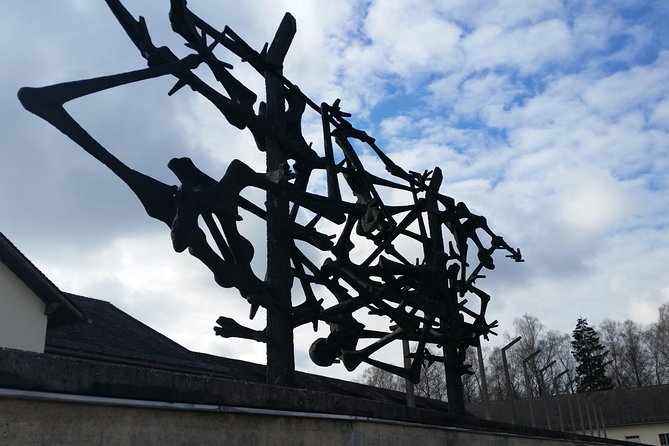
Transportation is part of the value here, not a random convenience. Your tour includes the transportation costs for the duration of the tour, which reduces the mental load. You’re not figuring out trains while your brain is already dealing with heavy material.
From Dachau back to Munich, your guide escorts you all the way back to the original starting point at Marienplatz around 2:00 pm. The tour also gives you flexibility: you can depart anywhere on the train journey back, including Munich main station.
That matters if you have dinner plans near Hbf or if you’re meeting someone else later. You get the comfort of group travel plus the option to break off naturally when you want.
What about the pace between stops? You’ll start with the on-time meetup and then do the train transfer, and once you reach the Memorial you get about 3 hours on site. In that window, your guide covers the major locations and gives context. Then you’re left with enough time to absorb the museum without feeling like you’re sprinting.
Small group size makes a real difference. With a maximum of 15 travelers, it’s easier for your guide to keep everyone together, answer questions without losing the flow, and manage where you stand so you can hear and see.
Price and value: does it make sense for $90.70?
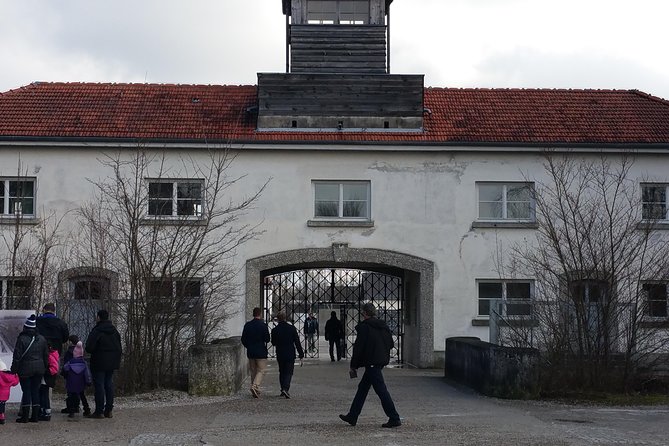
At $90.70 per person, this isn’t the cheapest way to visit Dachau. But it includes the things that usually cost you either time or stress if you go it alone:
- a Memorial licensed guide
- transportation costs for the tour day
Admission to the Memorial is listed as free in the itinerary, which means you’re paying primarily for the guide and the organized route. And the guide is the point. A self-guided visit can work, but at Dachau you’ll get far more from an experienced guide who can explain what you’re looking at and why it mattered.
The small group helps with value too. You’re not paying for a big bus tour where you hear snippets from far away. You’re paying for attention, structure, and a pace that lets you stay with the material without falling behind.
One consideration on value: the tour is short by design. If you want hours and hours of museum reading, you might feel the time limits. But the trade-off is you leave with an understanding that’s organized, not scattered.
If your goal is learning and respect—clear context, not random browsing—this price feels in line with what you’re getting. If your goal is maximum time and minimal cost, then you might compare it to a self-guided plan. But with Dachau, many people find the guide makes the difference between seeing places and truly understanding them.




Who should book this and who might prefer something else
This fits best if you want a guided, structured visit with enough time to think on your own afterward. It’s a good match for:
- first-timers to Dachau who want clarity
- history-minded travelers who still need the visit to stay human
- people who don’t want to juggle transit while carrying an emotional day
It may not fit if you:
- struggle with moderate walking or standing outdoors for long stretches
- prefer fully self-paced museum time
- want something lighthearted (this isn’t that)
There are also specific rules that affect planning: children under 14 are not permitted, so families with younger kids will need another option.
Language is another factor: the tour is offered in English, and you should expect explanations in that language. If you’re more comfortable reading at your own pace, you might still appreciate the guided framework, then use the museum time to slow down.
Should you book this Dachau tour from Munich?
I’d book it if you want the most practical form of meaning-making: clear context, the right places covered, and a guide who keeps the experience respectful and organized. The small group size, the Memorial-licensed guidance, and the included transport from central Munich all work together.
Skip it only if you’re chasing comfort over education, or if you know you need a long unstructured day inside museums. Otherwise, this is a strong “do it right” choice for anyone visiting Munich who also wants to face history with care and understanding.
If you do book it, show up early at Marienplatz, wear real shoes, and give yourself permission to feel what you’re about to learn.
FAQ
How long is the Dachau tour from Munich?
The tour runs for about 5 hours. The visit at the Memorial is about 3 hours, with travel time included from central Munich.
Where do I meet the guide in Munich?
Meet outside the Tourist Information centre at Marienplatz, address Marienplatz 8, 80331 München. You meet at 08:50 for a 9:00 am departure.
What language is the tour offered in?
The tour is offered in English.
Is the tour suitable for children?
No. Children under 14 are not permitted on these tours.
How big is the group?
The tour has a maximum group size of 15 travelers.
What’s included in the price?
Included: a Memorial licensed guide and transportation costs for the tour. The Memorial admission ticket is listed as free.
What’s not included?
Not included: food and drinks and hotel pickup/drop-off.
Do I need to do a lot of walking?
There is a moderate amount of walking. Comfortable walking shoes and refreshments are recommended, and the tour operates in all weather conditions.
Can I bring a service animal?
Yes. Service animals are allowed.
Is full refund possible if I cancel?
Yes. There is free cancellation up to 24 hours in advance for a full refund. Cancel less than 24 hours before start time, and the amount paid is not refunded.