REVIEW · MUNICH
Third Reich – Facts about WWII : Small Group Walking tour
Book on Viator →Operated by Paul Riedel · Bookable on Viator
Munich can feel like a living WWII document. This short, on-foot tour gives you a focused route through major Third Reich landmarks, with a guide who explains what you’re actually looking at, not just where it is. You’ll cover propaganda-era spaces like Konigsplatz and the NS-Dokumentationszentrum München without spending your day routing yourself.
I especially like the small group size (max 15). It makes the walk feel up close and personal, and the guide can slow down when you want to ask questions.
The biggest downside is practical: a few stops have admissions not included, so you may decide on the spot whether to pay for those indoor parts. Still, the route leans heavily on free exterior viewing points.
In This Review
- Key things you’ll notice on this Munich Third Reich walk
- A 2–3 hour Munich walking route through Third Reich sites
- Price and value: what $109.86 buys you in Munich
- Meet Paul Riedel: lively, flexible pacing for heavy topics
- Stop-by-stop: Konigsplatz to the Residenz (the Nazi city in miniature)
- Konigsplatz: book burnings and propaganda geometry
- Museum für Abgusse Klassischer Bildwerke: Nazi-era twins by Paul von Trost
- NS-Dokumentationszentrum München: the Brown House and the organizing machine
- Karolinenplatz: the Bruckmanns and how society fed the rise
- Justizpalast: trials connected to the Scholl sisters
- Briennerstrasse 7 (Haus der Deutschen Ärzte): doctors deciding life and death
- The city’s public face: Opferplatz, Residenz, and Hofgarten
- Platz der Opfer des Nationalsozialismus: Gestapo connections and the victim monument
- Residenz München: Nazi life inside a royal setting
- Hofgarten: Degenerated Art and Paul von Trost’s shadow
- Ludwig Maximilian University and Odeonsplatz: resistance and the Hitler Putsch
- Ludwig Maximilian University: sister Scholl and the White Rose
- Odeonsplatz: the Hitler Putsch and the rise that followed
- Haus der Kunst: Paul von Trost and the art story continues
- Practical tips for this Munich WWII walking tour (so you enjoy it more)
- Who should book this Third Reich walking tour?
- Should you book this Munich WWII walking tour?
- FAQ
- FAQ
- How long is the Third Reich – Facts about WWII walking tour?
- What does the tour cost?
- What’s the group size?
- Where does the tour start and end?
- What’s included in the price?
- Is admission included for all sites?
- What stops and areas will I see?
- Is service provided if I need help getting back?
- Is tipping required?
- Is free cancellation available?
Key things you’ll notice on this Munich Third Reich walk
- Konigsplatz: book burnings, plus camera positions linked to Leni Riefenstahl and the square’s granite plates
- NS-Dokumentationszentrum München: the Brown House and how Hitler organized the NSDAP, including church involvement in WWII
- Justice Palast (Justizpalast): the trials tied to the Scholl sisters and other Nazi-era trials
- Doctors and life-and-death decisions at Briennerstrasse 7 (Haus der Deutschen Ärzte)
- Odeonsplatz and the Hitler Putsch: an essential, heavy chapter of the Nazi rise
- Art under the Nazis: Degenerated Art at the Hofgarten, plus Paul von Trost references at Haus der Kunst
A 2–3 hour Munich walking route through Third Reich sites
This is a 2 to 3 hour walking tour designed for people who want the main WWII threads in a single stretch of time. You’re not just checking boxes—you’re getting a guided narrative that connects places you’d otherwise experience as isolated landmarks.
The route is paced to keep it manageable. The idea is simple: you avoid traffic stress, you get your bearings fast, and you move along mostly on foot with frequent stops.
And because it’s a small group with a maximum of 15 people, it doesn’t turn into a march where you can’t hear anything. That matters on this topic, because the guide needs a little room to explain why each location matters.
You can also read our reviews of more walking tours in Munich
Price and value: what $109.86 buys you in Munich
At $109.86 per person, this isn’t a bargain-basement tour, but it also isn’t priced like a full-day museum marathon. Where the value comes from is what’s included: a professional guide leading you from site to site with context.
You also get a mobile ticket, which makes it easier to show up and start. On top of that, the tour tends to book up: it’s commonly reserved about 24 days in advance, so planning ahead is smart.
If you only have a half-day in Munich and want to understand how the Nazi story unfolded across the city—political power, propaganda spaces, resistance, and the machinery of persecution—this price starts to make sense. If you’re hoping for long, ticketed museum time at multiple indoor exhibits, you might feel the time limit.
Meet Paul Riedel: lively, flexible pacing for heavy topics
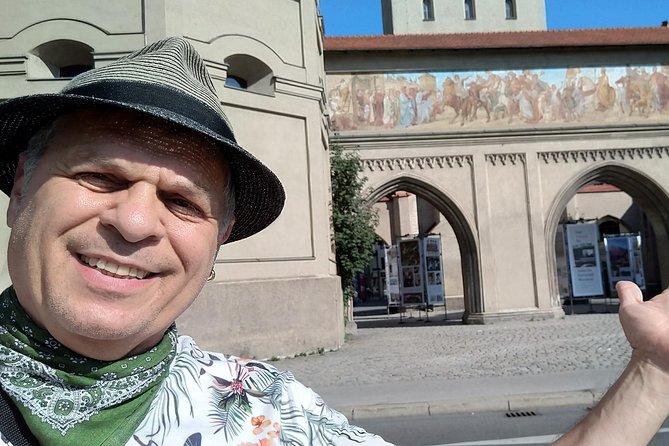
The tour is led by Paul Riedel. In the best way, he’s not just reciting dates; he brings energy and keeps the walk moving while still matching the group’s pace.
One detail that really helps: the tour doesn’t feel rigid. Paul is described as full of life and willing to adjust how the experience unfolds based on the group’s interests and needs. That kind of flexibility is especially useful when the subject is emotionally difficult and you want context rather than speed.
Language can also vary. The tour may run with a multi-lingual guide, depending on the booking. If you care about a specific language, it’s worth checking when you confirm.
Stop-by-stop: Konigsplatz to the Residenz (the Nazi city in miniature)
This route is built around a clear idea: you’ll see how Nazi power presented itself in public space, then you’ll move toward the systems that enforced it—and the resistance that pushed back.
Konigsplatz: book burnings and propaganda geometry
You start at Karlstor / Neuhäuser Str. and head toward Konigsplatz, one of the most important squares for understanding Nazi spectacle. You’ll look at details tied to the burning of books, and you’ll hear about camera positions associated with Leni Riefenstahl. Even the granit plates over the square are part of the story—how space was designed to stage ideology.
A quick stop like this can feel short, but it’s a smart way to get oriented. Konigsplatz is the kind of place where a guide’s framing helps you read the layout instead of just photographing buildings.
Museum für Abgusse Klassischer Bildwerke: Nazi-era twins by Paul von Trost
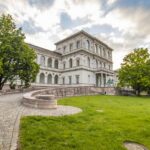
Next comes Museum für Abgusse Klassischer Bildwerke, where you’ll see the twin buildings designed by Paul von Trost for the Nazis. The point here isn’t “art history homework.” It’s about how architecture, aesthetics, and political messaging intersected.
This stop is not included for admission, so if you’re the type who likes to go inside for every stop, you may need to budget a little extra or adjust your expectations. If you’re happy with the exterior learning and a brief explanation, you’ll still get value.
NS-Dokumentationszentrum München: the Brown House and the organizing machine
At the NS-Dokumentationszentrum München, you’ll hear about the Brown House and how Hitler organized the NSDAP. You’ll also discuss involvement from the church in WWII, which adds a more complicated layer to the story than propaganda alone.
This is one of the stops that does the emotional work of the tour. It helps you connect ideology to structure—how a movement becomes an operation with real consequences.
Karolinenplatz: the Bruckmanns and how society fed the rise
At Karolinenplatz, the focus shifts to the Bruckmanns, described as significant in how Hitler rose as a charismatic figure, including introducing him into society. This stop matters because it reminds you that movements don’t grow only through speeches and marches. Social networks, patrons, and introductions can play a role.
This is also a reminder to look beyond the obvious “bad guys and good guys” framing. The story here is about influence and access.
Justizpalast: trials connected to the Scholl sisters
At the Justizpalast, you’ll connect Nazi power to law and punishment. The tour highlights the trials involving the Scholl sisters and other Nazi trials. For many people, this is a turning point: it shifts the focus from spectacle and ideology to the consequences for dissent.
Because it’s a short stop, the guide’s explanation is crucial. You’ll want to pay attention to what’s being pointed out rather than rushing ahead for pictures.
Briennerstrasse 7 (Haus der Deutschen Ärzte): doctors deciding life and death
One of the darker stops is Briennerstrasse 7, tied to Haus der Deutschen Ärzte. Here, you learn about doctors who made life and death decisions. The stop is brief, but it lands hard because it’s about institutions you might associate with care—and how they were twisted.
If you’re sensitive to grim topics, give yourself permission to take a slower breath here. The pace is still respectful, but the subject is heavy.
The city’s public face: Opferplatz, Residenz, and Hofgarten
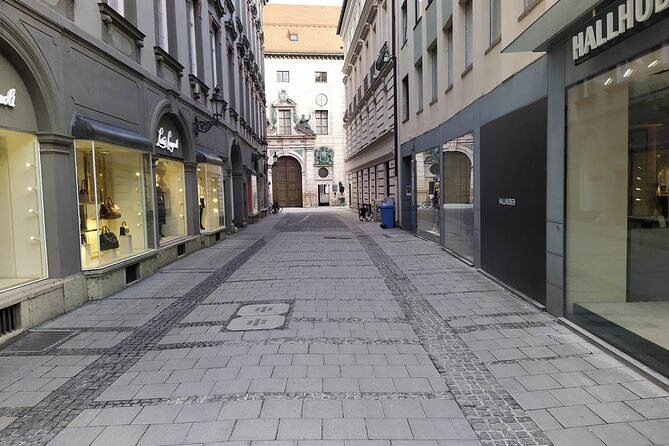
After the judicial and institutional stops, you move through spaces that show how Nazi ideology was staged alongside normal-looking city life.
Platz der Opfer des Nationalsozialismus: Gestapo connections and the victim monument
At Platz der Opfer des Nationalsozialismus, you’ll first see the early Wittelsbacher Palais, described as central for the Gestapo. After that, you’ll see the monument to victims from the NSDAP.
That sequence is powerful because it forces you to think about both sides: the machinery of repression and the memorial to those harmed by it. Even if you don’t linger long, you’ll get the meaning behind the location.
Residenz München: Nazi life inside a royal setting
At the Residenz München, the tour notes that a Nazi figure lived there in a residence of Bavarian kings and dukes. You’ll also hear about the night of the amazones.
This is another “how could this happen here?” moment. The contrast between a royal setting and a Nazi presence helps you understand how power tried to borrow legitimacy and history.
Hofgarten: Degenerated Art and Paul von Trost’s shadow
In the Hofgarten, you’ll hear about an exhibit once called Degenerated Art, connected to expressionist artists. This part gives you a different angle on control: not just arrests, but shaping what counts as acceptable culture.
Admission here is free, and the stop is long enough to connect the ideas to what you’ve already heard. If you’ve come for WWII history, this adds context for how the regime attacked ideas it didn’t like.
Ludwig Maximilian University and Odeonsplatz: resistance and the Hitler Putsch
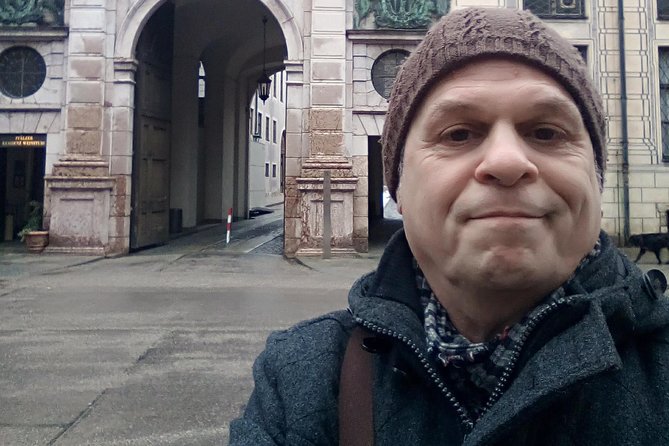
Near the end, the tour pushes toward resistance and the turning points that defined the early Nazi campaign.
Ludwig Maximilian University: sister Scholl and the White Rose
At Ludwig Maximilian University, you’ll hear about the sister Scholl and the White Rose resistance against the Nazis. This stop is a counterweight to the earlier sections about persecution, because it emphasizes people who refused to cooperate.
It also helps you understand that resistance wasn’t always a dramatic battlefield story. Sometimes it was letters, thinking, and organizing—and it was met with brutal consequences.
Odeonsplatz: the Hitler Putsch and the rise that followed
At Odeonsplatz, the story turns to the Hitler Putsch, described as an exiting chapter from tragedy. The tour also returns here again later to cover the Putsch and other major events in the Nazi campaign.
Why this matters: if you only know the end result of WWII, you miss how the Nazi rise started and how early attempts at power shaped the later system. Odeonsplatz is the setting that helps you place those events into real space.
Haus der Kunst: Paul von Trost and the art story continues
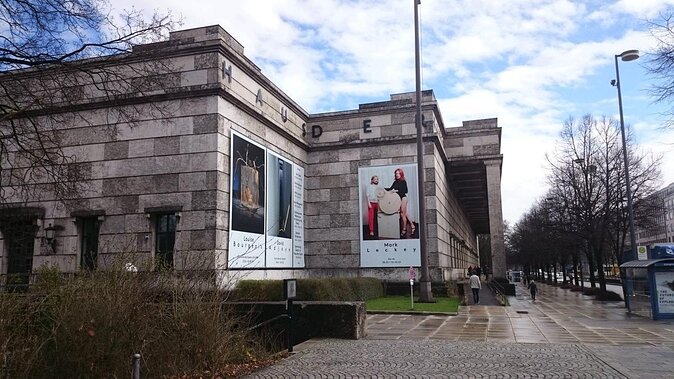
You’ll also stop at Haus der Kunst, tied again to Paul von Trost and the topic of art in the building. This stop has admission not included, so you should be ready for the learning to focus on what you see and what the guide explains rather than a long indoor program.
If you love architecture and cultural policy, this is a good place to decide whether to spend extra time with an indoor ticket (if you choose to). If you want to stay focused on the walking narrative, you can still get a lot out of the exterior parts.
Practical tips for this Munich WWII walking tour (so you enjoy it more)
First, plan for a topic that’s not light. You’ll be talking about executions, trials, propaganda, and persecution-related sites, so bring a mindset for learning—not sightseeing for fun.
Second, wear shoes you trust. The whole point is that it’s on foot with short stops. You’ll move between sites quickly, and comfort makes the experience easier to follow.
Third, keep an eye on what has admission not included. A couple locations are optional from an extra-pay perspective (based on the stop list), so decide ahead of time whether you want to add those indoor visits or prefer to stick to the guided exterior viewing.
Finally, if you’re the type who likes asking questions, this is a good setup. The small group size and flexible pacing make it easier for you to steer the conversation, like you’re walking with a knowledgeable local rather than sitting in a van.
Who should book this Third Reich walking tour?
Book it if you want an efficient Munich WWII overview without stitching together your own route. This works well for first-time visitors who want the Nazi story connected across multiple parts of the city: propaganda spaces, courts, institutions, cultural control, and the White Rose / Scholl resistance thread.
You should also consider it if you value a guide who stays energetic and adjusts the pace. The tour’s description and the lead guide’s approach point to a more personal experience, not a script read at you.
Skip it only if you’re expecting a lot of long indoor museum time. With a limited duration and some stops that do not include admission, you may not get the deep museum hours you want.
Should you book this Munich WWII walking tour?
I think it’s a smart choice if your goal is context fast. For $109.86, you get a guided, small-group walk through major Third Reich-related sites, with the narrative tied to what you’re seeing—Konigsplatz, the documentation center, the university and the resistance links, and the story of the Hitler Putsch at Odeonsplatz.
If you’re okay with short stops, some sites that may cost extra if you want to go in, and a subject matter that’s intense, you’ll likely find it worth your time. If you prefer slow, museum-heavy itineraries, you might want to pair Munich’s WWII themes with longer ticketed time elsewhere.
FAQ
FAQ
How long is the Third Reich – Facts about WWII walking tour?
It runs about 2 to 3 hours.
What does the tour cost?
The price is $109.86 per person.
What’s the group size?
The tour has a maximum of 15 travelers.
Where does the tour start and end?
It starts at Karlstor / Neuhäuser Str., 80331 München, Germany and ends at Haus der Kunst / Prinzregentenstraße 1, 80538 München, Germany.
What’s included in the price?
A professional guide is included, and you’ll receive a mobile ticket.
Is admission included for all sites?
No. Some stops have admission not included (you may need to pay separately if you want to go inside those sites). Other stops are free.
What stops and areas will I see?
You’ll visit places including Konigsplatz, NS-Dokumentationszentrum München, Justizpalast, Ludwig Maximilian University, Odeonsplatz, and Haus der Kunst, along with several other nearby locations.
Is service provided if I need help getting back?
The additional info says that sometimes guests need to be brought home, and the guide handles it.
Is tipping required?
Tips or gratuities for guides are not included, so it’s up to you to decide whether to tip.
Is free cancellation available?
Yes. You can cancel up to 24 hours in advance for a full refund.