REVIEW · MUNICH
Medieval city tour with night watchman in Munich in German
Book on Viator →Operated by schwarzgold.info · Bookable on Viator
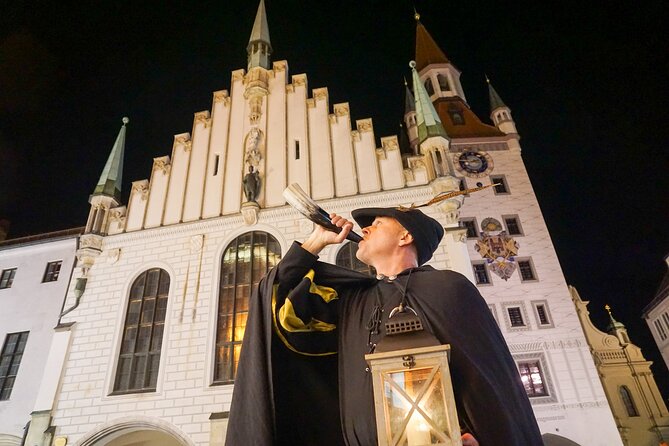
Munich turns medieval at night. This German-language walk follows Wolfram the night watchman as he guides you through places tied to power, punishment, and city defenses, using his lantern, halberd, and horn to make the Middle Ages feel physical. I especially like how the tour connects famous landmarks (like Marienplatz and the Frauenkirche) to specific medieval functions you can actually picture. I also like that you don’t just hear dates—you get concrete scenes, including an execution story and time behind bars. One possible drawback: the themes are dark, with talk of prison and torture, so if that stuff makes you squirm, plan accordingly.
This is also a practical way to see the old center without spending the whole night on research. The group stays small (up to 10), the route runs about 1 hour 30 minutes, and you meet at Rathaus Apotheke near Marienplatz at 8:30 pm, finishing near Hirmer on Kaufingerstraße. You’ll use a mobile ticket, and the whole thing runs on good weather, so bring warm layers in Munich.
In This Review
- Key points worth knowing before you go
- Munich’s Night Watchman Tour: What makes Wolfram’s walk click
- Start at Marienplatz: the night watch job, explained fast
- St. Peter’s Church and a bell tied to guilt and fear
- Petersplatz cemetery: why people wanted to be near the altar
- Viktualienmarkt and the first city wall: learning where defense actually stood
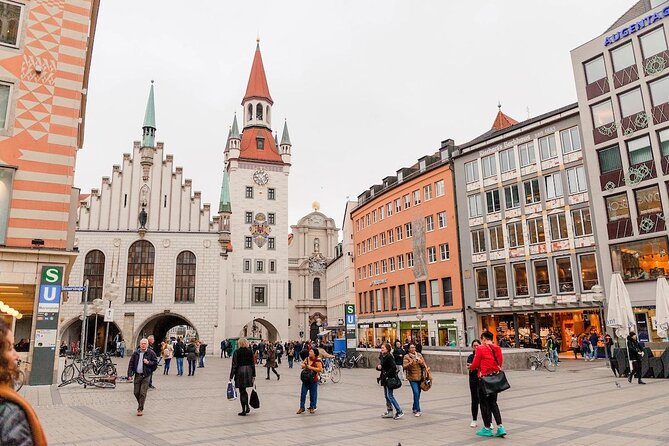
- Old Town Hall and the Talburg gate: medieval tools in real space
- Burgstraße prison and torture: when the tour gets seriously dark
- Münzstraße and Wolfram’s purse: silver pennies as proof of the era
- Alter Hof and the Wittelsbach story: a castle and a nickname
- Dienerstraße and Weinstraße gates: the city wall after the wall
- Schäfflerstraße and the tally stick: debts you could track
- Frauenkirche in 20 years: the big church as a proof of effort
- Frauenplatz and the Beautiful Tower farewell
- Price and timing: is it worth the $16-ish?
- Who will enjoy it most (and who should think twice)
- Quick logistics: keeping it easy at night
- Should you book the medieval night watchman tour?
- FAQ
- FAQ
- What language is the night watchman tour in?
- How long is the Munich medieval night watchman tour?
- Where do I meet Wolfram for the tour?
- Where does the tour end?
- What time does the tour start?
- How big is the group?
- Do I need a printed ticket?
- Is the tour admission-free at the stops?
- What happens if the weather is bad?
- Is there free cancellation?
Key points worth knowing before you go
- Wolfram’s period props do real work: lantern, halberd, and horn make the stories easier to follow.
- Medieval justice is front and center: executions, prisons, and punishment are part of the walk’s narrative.
- The route traces Munich’s old walls and gates: you’ll learn where defenses stood, even when you can’t see them today.
- You get specific local details: tally stick debts, silver pennies, and why burial near altars mattered.
- It’s short enough for a night out: about 1.5 hours, capped at 10 people, ending near central shopping streets.
Munich’s Night Watchman Tour: What makes Wolfram’s walk click
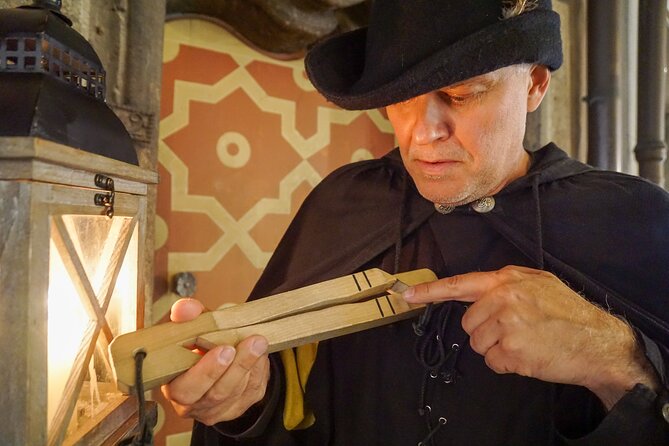
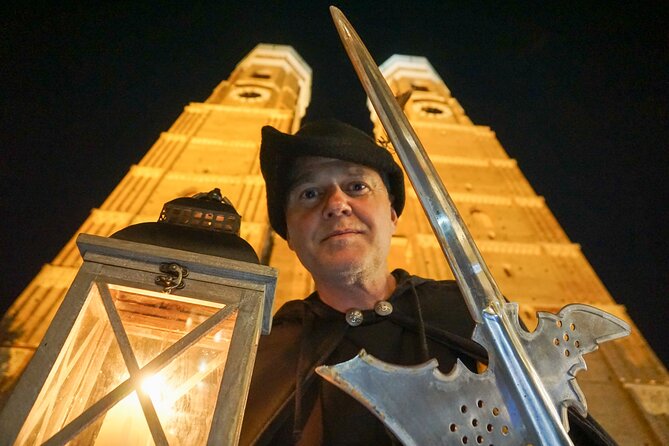
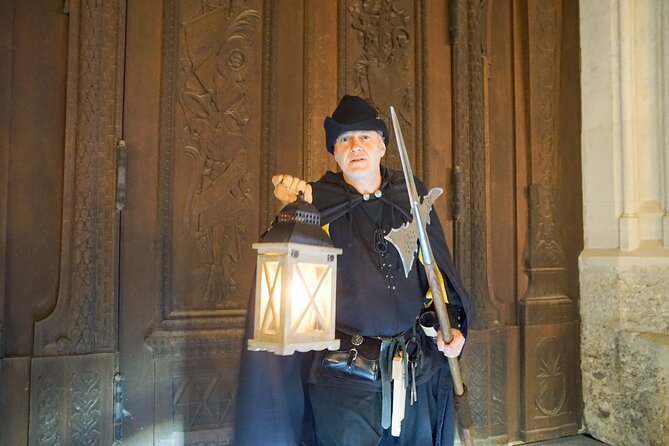
If you’ve ever wandered Munich and thought, Great buildings, but where does the story live?, this tour answers that. Wolfram is presented as an original night watchman, and the Middle Ages are not treated like a museum label. They’re treated like a job—with routines, tools, risks, and consequences.
Two things make it work particularly well. First, Wolfram’s setup (lantern, halberd, horn) gives you a visual anchor while you move. Second, the tour is built as a chain of locations that connect to roles people had: keeping order, guarding the city, carrying out sentences, and tracking money and debts.
That last part matters. Many tours sprinkle “medieval facts” around old streets and move on. Here, the facts are tied to how everyday people were managed—through gates, walls, cemeteries, and the legal system. Even the quieter stops have a point.
You can also read our reviews of more city tours in Munich


Start at Marienplatz: the night watch job, explained fast
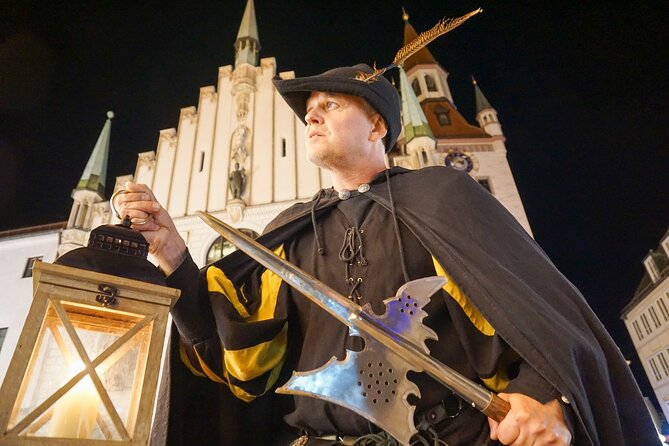
You begin at Rathaus Apotheke at Marienplatz 8, right in the heart of Munich. Meeting at Marienplatz is smart, because it’s a place most people already know in daylight. In the evening, you get a different feeling—more grounded and less postcard.
At the Marienplatz stop, Wolfram welcomes you and lays out what night watchmen were responsible for in the Middle Ages. This matters because it sets the lens for everything that follows. When you later hear about gates being closed or punishments being carried out, you’ll understand it as part of a system, not random dark theater.
A practical tip: arrive a few minutes early and take a moment to stand where you can see the guide clearly. With only about 90 minutes total, you don’t want to lose time figuring out where the group starts.
St. Peter’s Church and a bell tied to guilt and fear
Next you head to St. Peter’s Church, where Wolfram points you to the poor sinner bell. Even without going deep into theology, you can feel what the bell represents: a public sound tied to private wrongdoing.
Then comes a demonstration tied to the execution of Marco Bragadino. The tour frames these events the way the Middle Ages often did: as public lessons. This is not a tour that hides the harshness. If you want medieval life as clean and comfortable, you’ll probably dislike this section. If you want medieval life as it actually was for many people, this is one of the tour’s most memorable parts.
The upside is that Wolfram doesn’t treat it like shock value. He connects it back to night watch duties and the idea of maintaining order after dark.
Petersplatz cemetery: why people wanted to be near the altar
On Petersplatz you visit the medieval cemetery area and learn why burials near the altar were so desirable. That’s a detail you’d miss on your own, because modern cemeteries and church spaces don’t always explain the old logic.
This stop is a tonal shift from execution stories. The tour slows down and gives you a different angle on fear and control: not only punishment in life, but also the hope of being remembered and protected in death.
It’s a good moment to watch how the guide balances grim topics with clear explanations. If you’re traveling with someone who gets uncomfortable with brutality, this part can act like a pressure release.
Viktualienmarkt and the first city wall: learning where defense actually stood
At Viktualienmarkt, Wolfram shows you where Munich’s first city wall stood. This is one of those “how did I not notice that?” moments. In the middle of today’s streets and markets, you’d never guess the city once needed a hard boundary.
The value here is not just location—it’s understanding why walls shaped daily life. Gates determined movement. Walls determined safety. And safety determined economic activity, trade, and who could live where without constant risk.
Short stops like this work well on a night tour. You get a specific takeaway each time rather than a long lecture.
You can also read our reviews of more evening experiences in Munich


Old Town Hall and the Talburg gate: medieval tools in real space
Moving to the Old Town Hall area, Wolfram closes the Talburg gate as part of the tour’s storytelling. He also shows you the medieval halberd—one more reminder that a night watchman wasn’t just a watchman in name.
Then you connect gate control with the earlier explanation of night duties. When Wolfram “closes” something that looks symbolic today, it’s a way to show you how literal that control once was.
If you’re the type who loves practical history—how people moved, how cities functioned—this stop hits the sweet spot.
Burgstraße prison and torture: when the tour gets seriously dark
On Burgstraße you discover the medieval prison in Munich: the dungeon, torture, and what punishments existed in the Middle Ages.
This is the toughest section of the tour, no question. It’s where you’ll likely feel the biggest emotional contrast compared with Munich’s lighter side: beer halls, sunny courtyards, and tourist-friendly days.
But here’s why I think the tour still has value. It doesn’t keep the cruelty vague. It frames it as part of a legal and enforcement system. And once you’ve connected it to gates and night watch work, the story starts to make structural sense—how fear and punishment helped authorities maintain order.
If you’re sensitive to these topics, you don’t have to be “brave.” Just decide ahead of time what you can handle, dress warmly, and don’t push yourself through when you feel overwhelmed.
Münzstraße and Wolfram’s purse: silver pennies as proof of the era
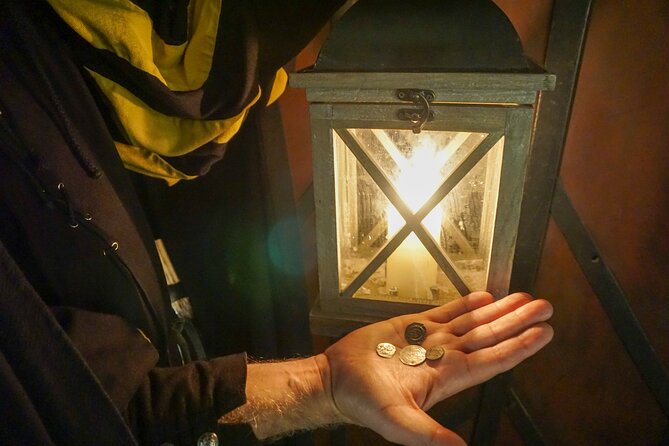
At Münzstraße, you get a look into Wolfram’s purse, with original silver pennies from the Middle Ages.
This is where the tour offers something tangible. Coins are small, but they act like historical evidence. They show you that the Middle Ages weren’t only about walls and executions—they were also about buying, selling, paying, and tracking value.
It’s also a useful break from the grimest themes. A coin-related stop gives your brain a different kind of context: money as a daily tool, not just as something linked to punishment.
Alter Hof and the Wittelsbach story: a castle and a nickname
At Alter Hof, the tour brings in the Wittelsbach family’s first castle in Munich and explains why Duke Ludwig was nicknamed the strict one.
This is a smart addition because it grounds the city’s medieval power structure. You’re not only hearing about enforcement. You’re learning who had authority and how that authority shaped the city.
It also helps you interpret what you’ll see later—especially at major religious sites like Frauenkirche. Medieval power and medieval architecture tend to march together, and this stop bridges that gap.
Dienerstraße and Weinstraße gates: the city wall after the wall
In Dienerstraße, Wolfram closes the Vorderes Schwabinger Tor and explains what remains still remind you of the first city wall. Then at Weinstraße he closes the Rear Schwabing Gate and explains how addresses used to work.
This pair of stops is excellent for turning “invisible history” into something you can actually picture. Today, city walls are often gone or partially disguised. Here you learn what to look for and how to read street layout as a historical clue.
And the address explanation is quietly useful. Even if you never think about medieval navigation, it shows how people’s identities and locations were organized differently. It’s a reminder that “where you live” is never just practical—it’s also political.
Schäfflerstraße and the tally stick: debts you could track
At Schäfflerstraße, Wolfram teaches how people in the Middle Ages could get into debt using the tally stick. He has one and explains how it worked.
This stop is a standout for me because it’s not just about violence or walls. It’s about economic pressure—something that can feel very modern once you understand it. Debts are still a way life gets complicated. The tally stick turns that into a concrete medieval tool instead of a vague concept.
Also, it’s a relief to have a story that doesn’t lean solely into fear. You learn, you make a mental connection, and you keep moving.
Frauenkirche in 20 years: the big church as a proof of effort
The tour’s final major landmark is Frauenkirche, where you’re impressed by its size. Wolfram explains how the church was possible to build in just 20 years.
That claim is powerful because it forces you to think about organization, labor, and planning. A fast build doesn’t happen by luck. It means resources were mobilized and decisions were made quickly—again tying back to the themes of authority and control you’ve been hearing from the first stop.
This is also a good place to reset your expectations. You started the evening with night watch duties and public punishments. Now you’re ending with a building that represents civic identity and religious authority.
Frauenplatz and the Beautiful Tower farewell
At Frauenplatz, you discover which medieval traces can still be found in the old town today. Then at Kaufingerstraße, Wolfram completes the Beautiful Tower and says goodbye.
Those last stops matter because they help you leave with something practical. Instead of finishing and forgetting everything, you’ll know how to look back at the old town and spot remnants that fit the story you just learned.
The ending near Kaufingerstraße is also convenient. It leaves you close to central shopping streets and an easy glide back into the normal rhythm of Munich.
Price and timing: is it worth the $16-ish?
For around $16.13 per person and about 1 hour 30 minutes, this is good value—especially because the stops are admission-free in the segments you pass through.
Where the value really comes from is how tightly the tour connects themes. You get night watch duties, gates and walls, cemeteries, executions, prison stories, coins, debt tools, and major landmarks—all within a short walk.
It’s booked on average about 12 days ahead, so if you’re traveling at peak times, don’t wait until the last minute. Still, the small group limit (maximum 10) makes early booking even more sensible.
Who will enjoy it most (and who should think twice)
This is best for you if:
- You like walking tours that explain how a city worked, not just what it looks like.
- You want an evening plan that stays focused and doesn’t drag.
- You enjoy guides who use humor to keep serious topics from becoming monotone.
It may be less ideal if:
- You don’t want to hear about executions, prison, torture, or punishment.
- You’re expecting a gentle, purely scenic history walk.
The guide’s style also seems to land well. In particular, the tone has been described as engaging, competent, and funny—so even when the subject turns sharp, the tour keeps moving.
Quick logistics: keeping it easy at night
Start: 8:30 pm at Rathaus Apotheke, Marienplatz 8.
End: at Hirmer on Kaufingerstraße 28 (open in the area near there).
You’ll use a mobile ticket. The tour is near public transportation, and service animals are allowed. Most travelers can participate, and the group stays small. One key practical note: it requires good weather. Munich nights can be cold, so dress for standing and walking outside.
Should you book the medieval night watchman tour?
Yes—if you want Munich with sharper edges and real storytelling. This tour gives you more than landmarks. It gives you a “system view” of the city: gates, enforcement, social control, burial ideas, and even financial tools like tally sticks.
If your ideal trip is only soft and sunny history, you might prefer a lighter walk. But if you can handle dark chapters and you enjoy learning how medieval Munich functioned at night, this is a strong choice for your evening.
FAQ
FAQ
What language is the night watchman tour in?
The tour is in German.
How long is the Munich medieval night watchman tour?
It lasts about 1 hour 30 minutes.
Where do I meet Wolfram for the tour?
You meet at Rathaus Apotheke, Marienplatz 8, 80331 München.
Where does the tour end?
The tour ends at Hirmer, Kaufingerstraße 28, 80331 München.
What time does the tour start?
The start time is 8:30 pm.
How big is the group?
The maximum group size is 10 travelers.
Do I need a printed ticket?
No. You use a mobile ticket.
Is the tour admission-free at the stops?
The itinerary shows admission ticket free at the listed stops.
What happens if the weather is bad?
The tour requires good weather. If it’s canceled due to poor weather, you’ll be offered a different date or a full refund.
Is there free cancellation?
Yes. You can cancel up to 24 hours in advance for a full refund.