REVIEW · MUNICH
Munich City Walking Tour, includes Third Reich & Viktualienmarkt
Book on Viator →Bookable on Viator
Three hours of Munich that makes sense fast. This small-group walking tour strings together major sights, serious 20th-century context, and the kind of food-and-beer stop that helps you understand daily Bavarian life. You also get practical directions on how to move around the city like a regular, not a spectator.
I especially like the mix of big landmarks and the quieter, weirder detours, like the German Hunting and Fishing Museum. I also like the way the guide connects places to how Munich works now, including how current affairs can shape what you notice in the city.
One possible drawback: this is a lot of outdoor walking, and on cold or snowy days you’ll want warm layers and comfortable shoes. Some people also feel the explanations can run long at certain stops, so bring a bit of patience.
In This Review
- Key Things That Make This Tour Worth It
- A Smart First-Day Plan for Getting Oriented
- How the Third Reich Part Fits Into a City-Walk
- Frauenkirche: The Iconic Start With Gothic Drama
- A Surprise Turn: German Hunting and Fishing Museum
- Hofbräuhaus and Platzl: Where the Beer-Culture Story Starts
- Isartor and Marienplatz: Old City Gate Meets the Heart of Munich
- Max-Joseph-Platz and Maximilianeum: More Than Pretty Architecture
- St. Michael, Alter Peter, and Wolfsbrunnen: Church Sights With Character
- Odeonsplatz to Karlsplatz: Squares That Tell You Where to Go Next
- Viktualienmarkt Lunch Break: The Best Reward Built Into the Route
- What the Walking Pace Really Means for Comfort
- Value and Logistics: Is $31.78 a Good Deal?
- Should You Book This Munich City Walking Tour?
- FAQ
- How long is the Munich walking tour?
- What language is the tour offered in?
- Where does the tour start and end?
- Is the tour a small group?
- Is the tour focused on Third Reich history?
- Does the tour stop at Viktualienmarkt for food?
- Is the lunch included in the tour price?
- Are admissions required for the stops?
- Is the tour suitable for most people?
- Are service animals allowed?
- Is free cancellation available?
Key Things That Make This Tour Worth It
- Third Reich context on a walk: you cover this history without turning the day into a textbook.
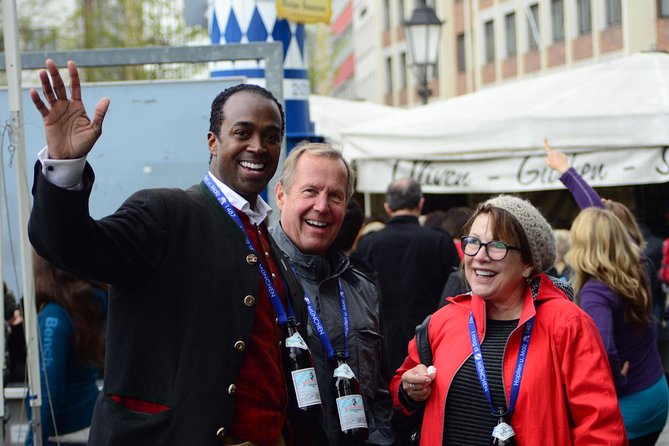
- Small group size (max 20): easier questions, less lost time, and a better pace.
- Beer hall landmark stop: Hofbräuhaus gives you the classic Munich scene, even if you don’t go inside.
- A real lunch pause at Viktualienmarkt: a break that keeps the tour from feeling like nonstop sightseeing.
- Churches + city squares, in the right order: you see Gothic, Renaissance/Baroque influences, and neoclassical architecture without hopping across town.
A Smart First-Day Plan for Getting Oriented
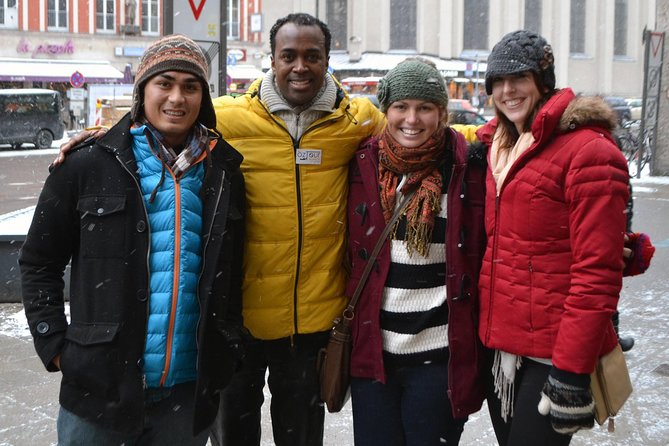
This is the kind of tour that helps you get your bearings fast. You start in the central area near Schützenstr 11 and finish at Odeonsplatz, so you end right where you can branch out for the rest of your trip.
The timing also works well: about 3 hours 15 minutes on foot. With English guide service and a small group of up to 20, it’s built for people who want structure without spending the whole day in a group bus.
Munich can feel big when you’re new. The standout value here is that you get advice on how to navigate the city, which saves you time later when you’re deciding where to go next. This is also a tour that tends to get booked ahead (it’s commonly reserved about 49 days in advance), so if your dates are flexible, booking early is a good move.
You can also read our reviews of more walking tours in Munich
How the Third Reich Part Fits Into a City-Walk
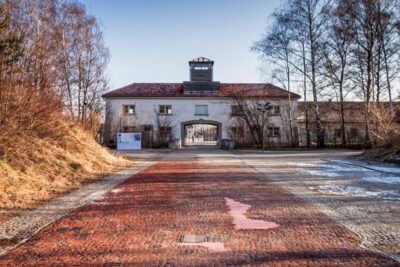
This experience includes Third Reich history, and it’s handled as context you carry with you while you walk through Munich’s central streets. Rather than isolating the topic in one place, the tour builds meaning by pairing it with squares and buildings you’ll recognize.
One reason that matters: city history doesn’t live in a single museum room. When you’re standing in front of civic spaces, old institutions, and monuments, you start to notice how the city presents itself now—and what was used to shape public life in the past. The guide also connects history to current affairs, so you’re not left with disconnected dates.
There’s also a practical benefit. If you understand the city’s layout and the role of major squares, you’ll feel less lost later when you return on your own for photos or longer visits.
Frauenkirche: The Iconic Start With Gothic Drama
You begin at Frauenkirche, Munich’s iconic twin-towered cathedral. It’s late Gothic, built in the 15th century, and it’s the seat of the Archbishop of Munich and Freising. Even if you only spend about 10 minutes here, it’s a strong anchor point because the cathedral’s silhouette is one of the first Munich images most people carry home.
What makes this stop useful is how it sets the tone for the day: religious architecture, civic power, and the idea that major institutions sit right in the center of everyday life. You’ll also get time for the interior and elements like the historic crypt and the famous Devil’s Footstep legend.
Practical note: since you’ll be walking after this, don’t treat Frauenkirche like a long “museum hour.” Use it as your orientation moment, then keep the momentum going.
A Surprise Turn: German Hunting and Fishing Museum

Next comes a detour that many people don’t expect to love: the German Hunting and Fishing Museum. It’s set in a former Augustinian church and covers about 3,000 square meters of exhibits.
The highlights you’ll hear about include stuffed wildlife, antique weapons, and the Wolpertinger—the legendary Bavarian creatures. This is the stop that can feel like a palate cleanser after big famous landmarks. It’s also a good reminder that Munich isn’t only about beer halls and councils. It’s also about craft, tradition, and how regional life shaped art and collecting.
Possible drawback: if you dislike anything that feels like a staged collection, this might be the least appealing part of the route. Still, the setting (a church converted to a museum) gives it a sense of place, not just a random indoor stop.
Hofbräuhaus and Platzl: Where the Beer-Culture Story Starts
Then you hit Staatliches Hofbräuhaus (Hofbräuhaus), one of Munich’s legendary beer halls. The building dates back to 1589, originally as a royal brewery, and today it’s known for Bavarian beer, hearty food, and traditional live music.
Even if you don’t stay for the full experience, this stop works because it teaches you how to read Munich’s “beer landscape.” You learn what to expect, what’s typical, and what to look for if you later decide to eat or drink on your own.
Right after, you pass through Platzl, a charming square in the historic center with traditional atmosphere. It’s closely associated with Hofbräuhaus and the area’s old buildings and cobblestones—useful context if you plan to return for dinner.
You can also read our reviews of more city tours in Munich


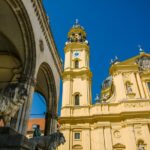
Isartor and Marienplatz: Old City Gate Meets the Heart of Munich
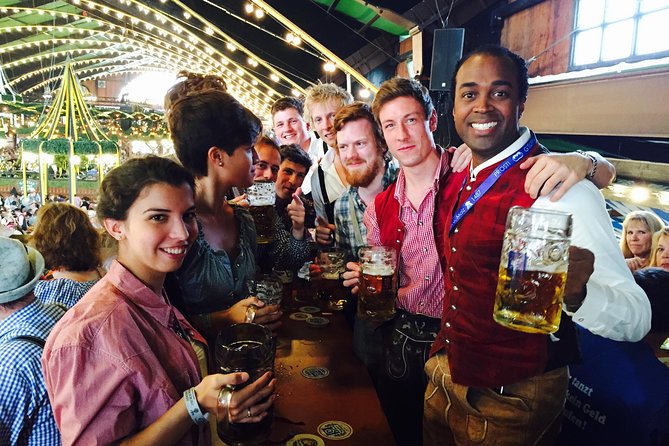
The route includes Isartor, one of Munich’s last medieval city gates, built in 1337 as part of city fortifications. It also points you toward the smaller story layers in Munich: not every view is a grand monument. Some are old passages that shaped how people moved.
From there you reach Marienplatz, the central square that dates back to 1158. You’ll spend around 25 minutes here, with time to see landmarks like the New Town Hall and its famous Glockenspiel, plus the Mariensäule nearby.
This is one of the best stops for practical learning. Marienplatz is where you understand Munich’s “center of gravity.” If you decide to explore on your own afterward, this stop makes it easier to map where streets lead and which directions match your next plans.
Max-Joseph-Platz and Maximilianeum: More Than Pretty Architecture
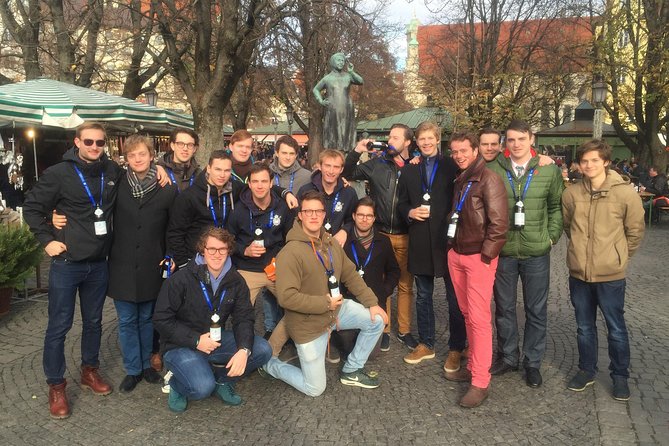
At Max-Joseph-Platz, you’ll see neoclassical grandeur around the National Theatre and the Munich Residenz area. The square is named after King Maximilian Joseph and includes a statue honoring him, so it’s civic space with personality, not just a view.
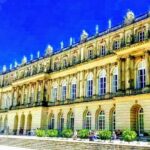
Then the walk reaches Maximilianeum, a palatial building tied to support for gifted students when it was founded. Since 1949, it’s housed the Bavarian State Parliament. It sits above the Isar River, so the setting helps you understand why Munich chooses elevated, visible locations for power.
Why I like this pairing: you don’t just get beautiful buildings. You also get the “why here” behind them—how geography and architecture work together.
St. Michael, Alter Peter, and Wolfsbrunnen: Church Sights With Character
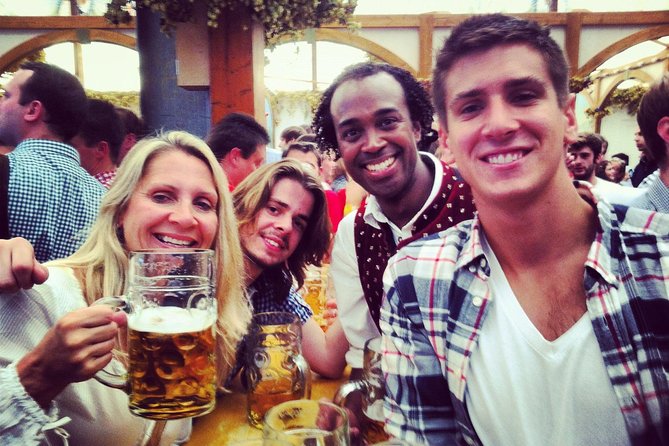
Next up is St. Michael’s Church (St. Michael München), Munich’s largest Renaissance church. You’ll get about 10 minutes here, and it’s described as late 16th century with Jesuit influence, plus an impressive barrel-vaulted ceiling. There’s also the royal crypt inside, tied to Bavarian rulers.
Then you visit St. Peter’s Church (St. Peter’s Church, also called Alter Peter). It’s Munich’s oldest parish church, with a tower listed at 91 meters. Even with a short visit window (around 5 minutes), it’s a classic “Munich skyline cue” stop because the tower is visible and it frames your sense of height in the city.
Between churches, you’ll pass Wolfsbrunnen, a striking Art Nouveau fountain from 1904 featuring a bronze scene with Little Red Riding Hood and a wolf. It’s the kind of detail that makes the walk feel lived-in. You remember it later when you spot the same design language around town.
Odeonsplatz to Karlsplatz: Squares That Tell You Where to Go Next
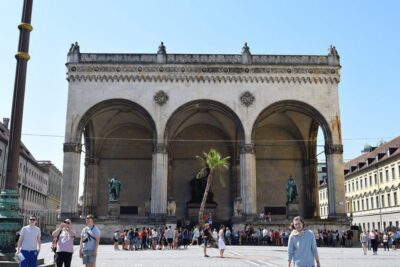
At Odeonsplatz, you get a 15-minute stop area with major institutions around it: the Theatine Church, Feldherrnhalle, and the Residenz. This square also matters because it’s where history and identity collide in visible public space, which makes it a fitting place for the tour’s historical thread.
Then the route heads to Karlsplatz (locally Stachus). This is one of Munich’s most famous squares and includes the Karlstor gate. In different seasons it changes in feel, including a fountain in summer and an ice rink in winter.
Think of Karlsplatz as your “street-life compass.” If you’re planning where to wander next, it helps you decide whether you want crowds, calmer side streets, or shopping routes.
Viktualienmarkt Lunch Break: The Best Reward Built Into the Route
The final anchor is Viktualienmarkt, Munich’s historic open-air market. You’ll spend about 30 minutes here, and the tour pauses for a freshly made Bavarian lunch.
This part is practical value, not just food. Markets teach you what locals buy, what tastes “normal” in the region, and what you can replicate later without guessing. Viktualienmarkt is also where you can slow down. The pace becomes a break you actually feel.
The market stop is described as careful about what goes into the food: no artificial flavors, colors, preservatives, additives, fillers, or GMOs among the selections. That’s the kind of detail that matters if you’re tired of tourist versions of “authentic.”
The sample lunch options include a Bavarian Bratwurst (regular, cheese, or spicy) or Bavarian potato salad with a pretzel, plus a Bavarian beer. There’s also mention of a reusable beer bottle holder as part of that lunch option.
One thing to keep in mind: the tour’s included portion is the guided tour, and the lunch itself is presented as the pause where you can pick up that meal. If you’re trying to manage your budget, eat there as planned, but expect it to be an extra cost unless the option you choose includes it.
What the Walking Pace Really Means for Comfort
This is not a “sit on a bench” tour. You’ll move between landmarks and mostly stay outdoors, which is why cold weather advice matters.
Some groups have described it as very engaging, with time feeling like it flew. Others found it could involve extended standing while the guide spoke, especially in winter. If you’re going in chilly months, pack for standing still: warm hat, gloves, and shoes with grip.
The good sign for comfort is that the guide’s style is described as attentive—people mention bathroom breaks and getting into warmer spots when needed. That kind of care makes a walking tour feel less like endurance and more like an organized day out.
Value and Logistics: Is $31.78 a Good Deal?
At $31.78 per person, this is strong value for a guided loop through major central sights plus history context. The duration is about 3 hours 15 minutes, which means you’re paying for time, direction, and someone to interpret what you’re seeing.
Also, multiple stops list admission ticket free, including major exterior or landmark areas like Frauenkirche, Hofbräuhaus, Isartor, Marienplatz, St. Michael, St. Peter, and several square stops. The route gives you a lot of “big Munich” without requiring constant paid entry tickets.
Your main extra cost is food during the Viktualienmarkt break, since the tour’s included listing focuses on the guided component. Still, the meal stop is part of the design: it keeps the tour from turning into a long, expensive day of grabbing snacks on the run.
Finally, the small-group limit (max 20) matters. For this price, you’re not just buying a map—you’re buying the ability to ask questions and adjust your own plan after you’ve learned how the city fits together.
Should You Book This Munich City Walking Tour?
If you want Munich in one organized morning/afternoon arc, I think this booking makes sense. It’s a good match when you want Third Reich context, major landmarks, and a real Munich market lunch pause in the same route.
I’d skip it if you hate walking for a few hours and would rather do shorter stop-by-stop visits at your own rhythm. Also, if your top priority is a museum-heavy itinerary, this isn’t built as a long indoor day. It’s built as a walk-plus-context tour.
A smart strategy: book this early in your trip so the directions and site meanings help you for the rest of your days in Munich. That’s when the “first orientation” payoff hits hardest.
FAQ
How long is the Munich walking tour?
It’s about 3 hours 15 minutes.
What language is the tour offered in?
The tour is offered in English.
Where does the tour start and end?
It starts at Schützenstr 11, 80335 München and ends at Odeonsplatz (Odeonspl. 3, 80539 München).
Is the tour a small group?
Yes. The maximum group size is 20.
Is the tour focused on Third Reich history?
Yes. The experience includes Third Reich content along with other central Munich stops.
Does the tour stop at Viktualienmarkt for food?
Yes. There is a mid-tour lunch break at Viktualienmarkt.
Is the lunch included in the tour price?
The tour includes a guided tour. Snacks/lunch are described as a break where you pause for a freshly made Bavarian lunch at Viktualienmarkt, so you should plan for food to be an additional cost unless the option you select says otherwise.
Are admissions required for the stops?
Many of the listed stops show Admission Ticket Free in the itinerary details.
Is the tour suitable for most people?
The information says most people can participate.
Are service animals allowed?
Yes, service animals are allowed.
Is free cancellation available?
Yes. You can cancel for a full refund up to 24 hours in advance.
If you want, tell me your travel month and your fitness level, and I’ll suggest what to wear and which sights to prioritize on your own after this walk.