REVIEW · MUNICH
Munich: Night Watchman Tour in English
Book on GetYourGuide →Operated by Weis(s)er Stadtvogel GmbH · Bookable on GetYourGuide
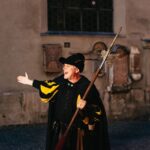
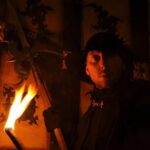
A lantern in a dark street makes medieval Munich feel real fast. This English night watchman tour brings 800-year-old stories to life with a guide in medieval costume, slipping you through small, hard-to-find alleys near Marienplatz. I like that it stays story-first, so you’re not just collecting landmarks, and I also like the pacing: it’s a short walk, about 1.5 hours, so you can still enjoy Munich afterward. The main drawback is simple: it runs at night, so expect it to be cold and you’ll be standing and walking on city pavement.
For context, the guide frames the city like it’s 400 meters across, ringed by protective walls. From dusk to dawn, gates are closed and people stay home, with the only visible light coming from the watchman’s lantern. You’ll hear about superstition, an order said to come from above, and daily life from the cradle to the grave—then you’ll connect those legends to what you see around Marienplatz. If you prefer straightforward architecture explanations or warm, indoor time, this might feel a little more theatrical than you want.
In This Review
- Key highlights you’ll feel right away
- A lantern-led night walk through 800 years of Munich
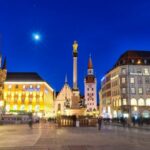
- Starting at Marienplatz: Mary’s Column and the mood shift
- From Marienplatz toward Viktualienmarkt: where the stories match the streets
- Frauenkirche area: the sacred and the everyday in the same breath
- The City of the Monks theme: why this tour feels different
- What you’ll actually see (and what you won’t)
- Cold nights, quick pace: how to prepare like a pro
- Price and value: why $22 can make sense here
- Who should book this night watchman tour
- Should you book the Munich night watchman tour?
- FAQ
- Where does the tour meet?
- How long is the Munich night watchman tour?
- Is the tour offered in English?
- How much does it cost?
- Can I get a refund if my plans change?
- Is the tour wheelchair accessible?
Key highlights you’ll feel right away
- Lantern-led medieval storytelling that makes the streets look different in the dark
- English-language guide performance (costume and showmanship are part of the point)
- Secret-feeling side streets near central sights, not just the main tourist routes
- A clear theme: life in medieval Munich from saints and monks to everyday fears
- About 1.5 hours of walking that won’t crush your evening plans
A lantern-led night walk through 800 years of Munich
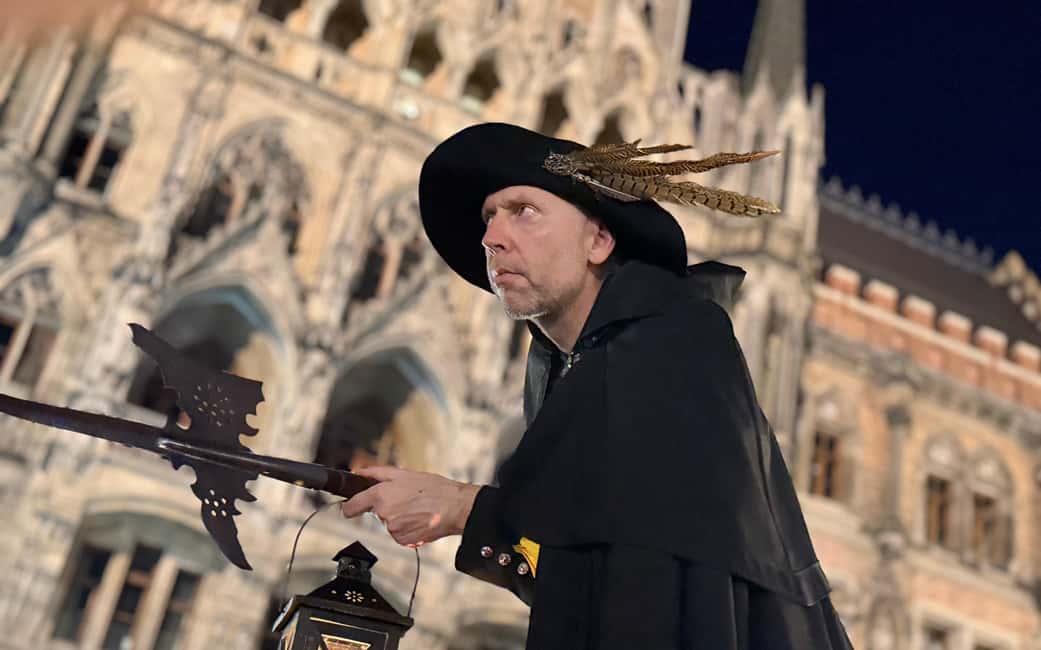
There’s something about Munich at night that makes history stop being a textbook. This tour is built around that feeling: one guide, a lantern, and a character who’s basically on duty. As you walk, the city’s past isn’t delivered as a timeline. It’s delivered as a lived-in world—small, walled, and ruled by rules people believed mattered.
The tour’s core pitch is simple: the night watchman takes you back roughly 800 years and explains what it meant to live with darkness pressing in. The guide leans into how knowledge worked back then: many people couldn’t read or write, so rumors traveled, legends grew, and superstition wasn’t a weird hobby—it was normal life. If you like stories with a purpose, you’ll appreciate how the guide uses these themes to help you interpret the city around you.
I also like that it’s not trying to cover every famous building in Munich. Instead, it focuses on the pieces of the medieval puzzle you’d miss on your own: small alleys, tucked-away sightlines, and the little “wait, how did they build this here?” moments. You get the sense that the old city wasn’t designed for speed or selfies. It was designed for survival—narrow streets, protective walls, and a rhythm shaped by nightfall.
You can also read our reviews of more evening experiences in Munich

Starting at Marienplatz: Mary’s Column and the mood shift
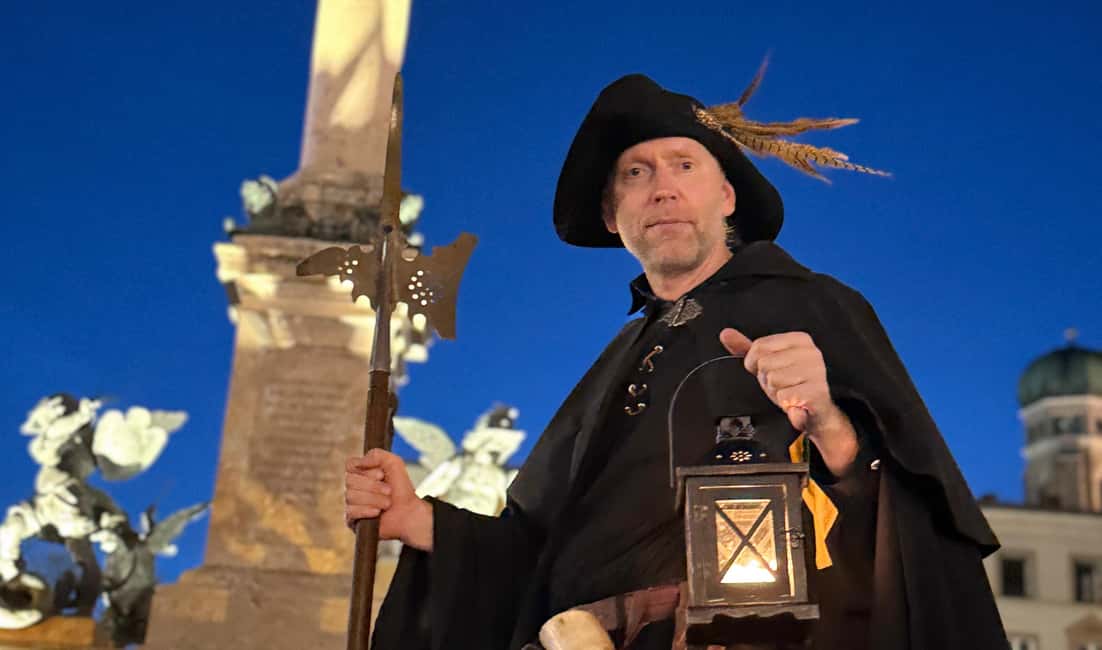
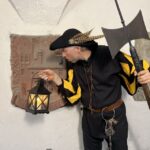
The meeting point is Mary’s Column in the center of Marienplatz. That matters because Marienplatz is already the symbolic heart of Munich—so starting there sets expectations. During the day, it’s loud and open. At night, it feels like a stage. The lantern doesn’t just light a path; it changes the whole mood of where you stand.
From there, the route works like a guided rewind. You’ll hear how medieval Munich was imagined as a compact place, surrounded by protective walls. The guide uses the idea of gates closing from dusk to dawn to frame why darkness felt dangerous and why the watchman had a job that everyone understood. It’s a clever way to make you look up at the buildings and down at the street layout instead of drifting into casual walking.
Practical note: this is a night tour with a short duration, so your best move is to arrive slightly early and be dressed for cool air. One booking specifically calls out how the guide picked up the pace at the end because everyone was cold. That’s a good reminder that the tour is outside for most of the experience.
From Marienplatz toward Viktualienmarkt: where the stories match the streets
After Marienplatz, the walk heads toward areas that feel very “old Munich.” One clear part of the route is Viktualienmarkt, which you can think of as a bridge between the medieval center and Munich’s later market life. The tour doesn’t treat it like a modern stop. It treats it like a place where you can feel how city life functioned: goods, habits, local gossip, and the kind of daily routines that made legends believable.
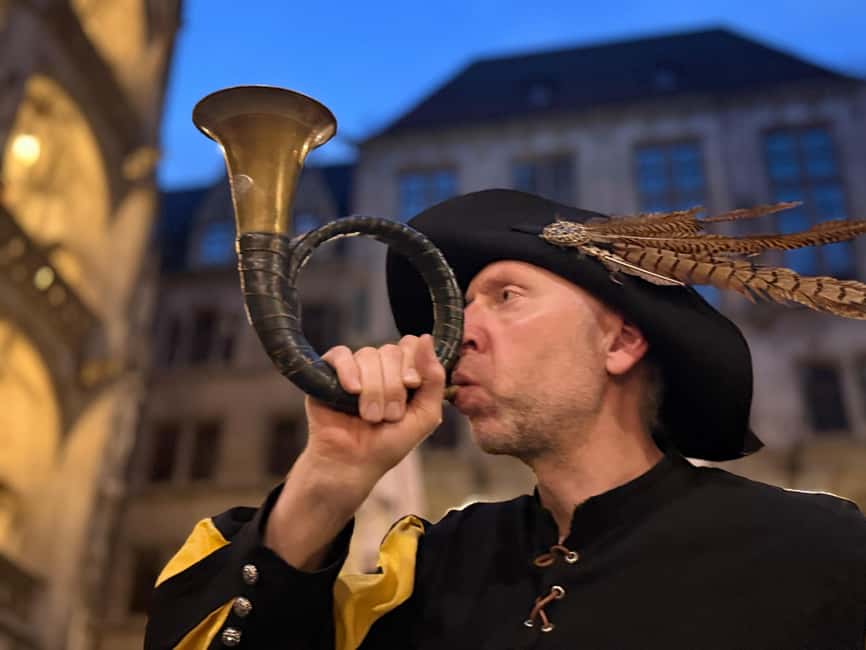
This is where the guide’s character work pays off. A performer in medieval clothes doesn’t just talk differently. They point differently. They pause at corners as if they’re scanning for trouble. They explain why people behaved the way they did, from superstition to fear of danger at night. You’ll likely hear about saints, monks, and kings—plus the smaller, human details that make medieval life feel less like a costume and more like a reality.
A big plus here is that the route includes little alleys and side streets that are hard to find on your own. That’s where night watchman tours often win. You’re not walking the same straight lines as day tours. You’re getting the “how would you actually navigate this at night?” perspective, guided by someone who’s presenting the city as if it’s still governed by the nighttime rules.
Frauenkirche area: the sacred and the everyday in the same breath
Another key landmark on the walk is the Frauenkirche area. This is useful because the guide’s medieval theme isn’t only about danger. It’s also about order—what people believed governed life, and how religion and fear of the unknown shaped daily choices.
Near sacred spaces like this, the stories tend to sharpen. You’ll hear the “divine order” idea: people interpreted the world through a framework they felt was larger than them. The tour also focuses on life from the cradle to the grave, which means the guide isn’t only talking about kings and saints in a distant way. The point is to show how beliefs and fears touched ordinary people—what they expected, what they feared, and what they hoped for.
If you’re the type of traveler who likes your history to connect to real street corners, this section is where it comes together. The guide’s lantern and the dark streets help you see how a medieval town’s center could feel both protective and unsettling at the same time.
The City of the Monks theme: why this tour feels different
The tour calls itself part of the City of the Monks experience, and that theme matters because it changes what you pay attention to. Instead of a standard walking tour that lists rulers and dates, the guide connects medieval institutions—monks, saints, and church-linked ideas—to how people understood the world.
You’ll also hear plenty of local color: legends, folktales, and humorous storytelling that keeps the hour-and-a-half moving. Guides featured here include performers like Monique, Hans, and Heinz, and multiple people highlight how the guide balances facts with anecdotes. That blend is important. If the tour were only dates, it would feel flat. If it were only myths, it would feel vague. Here, the guide uses humor and character to keep you oriented while still giving you enough context to remember what you’re seeing.
One more reason the theme works: the tour’s night setting acts like a storytelling tool. Medieval life in the dark wasn’t just a mood. It affected movement, safety, and how people communicated. In a way, the lantern is the tour’s “visual proof” that the past isn’t gone. It’s still visible in the street layout and the way the center gathers around symbolic places.

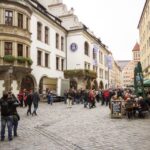

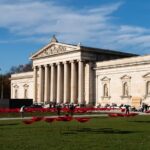
What you’ll actually see (and what you won’t)
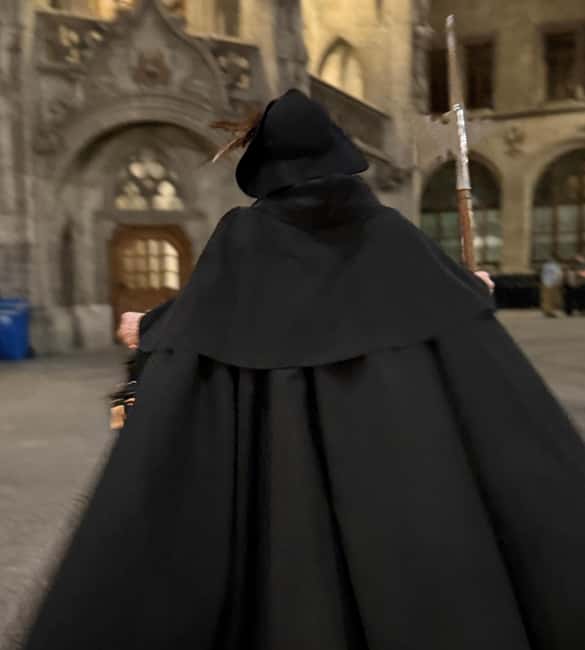
This is not a museum tour. It’s a moving story told at street level. Expect historic squares and nearby old-town streets, with the route staying within central Munich rather than sending you across town.
That short footprint is a feature. One booking notes a walk distance roughly from Marienplatz to Viktualienmarkt and toward the Frauenkirche area. That means you get a focused medieval Munich snapshot without burning your evening on long transit.
What you might not get: deep interior access to churches or buildings. The tour is built around outdoor storytelling, so the goal is to help you read the city’s shape, symbols, and atmosphere—not to ticket in and explore rooms.
Also, keep your expectations realistic. Even when the stories are lively, the tour is still outdoors and still involves walking. If you’re traveling with limited stamina, the best approach is to wear comfortable shoes and plan on short stops being brief.
Cold nights, quick pace: how to prepare like a pro
Many people note it’s chilly, and one guide reportedly sped up near the end because everyone was cold. That tells you the tour adapts to conditions, but it also means you should plan your clothing like you’re going to be outside for 90 minutes.
Here’s what will make your experience smoother:
- Dress in layers you can adjust quickly
- Bring a warm hat or something that covers your ears
- Wear shoes with grip for cobblestones or uneven pavement
If you don’t mind a bit of discomfort for a great atmosphere, this tour can be exactly the right kind of Munich evening. If you hate cold, you’ll still learn plenty, but you may not enjoy the walk as much as a person who loves the night-city vibe.
Price and value: why $22 can make sense here
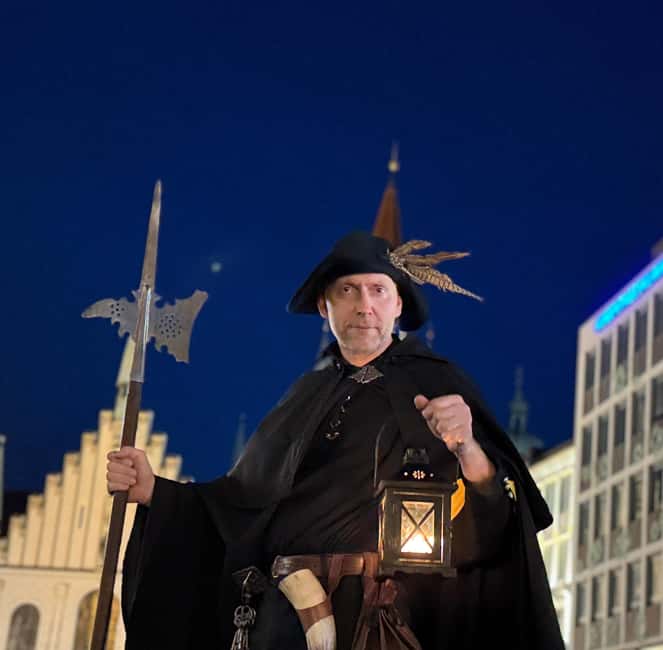
At $22 per person for about 1.5 hours, the price is competitive for an English walking tour in a prime city-center area. What you’re paying for isn’t only interpretation. You’re paying for the performance elements: medieval costume, a lantern, and a guide who uses stories to connect the city’s layout to a medieval worldview.
This is the kind of tour that can be good value because it saves you effort. You don’t have to figure out which alley to take to understand why the city feels different. The guide does that work by choosing where to walk and when to pause, so your attention stays on meaning instead of navigation.
It’s also a good deal if you’re trying to add one memorable night activity without turning your schedule upside down. For people who already plan to visit Marienplatz and nearby sights anyway, this is a way to give those familiar places a new layer.
Who should book this night watchman tour
This tour fits best if you like:
- History that comes with folktales and humor
- Seeing a city through a specific “lens,” not just a list of landmarks
- Short evening walks that keep you moving and engaged
You’ll probably enjoy it most if you’re in Munich for a weekend or a few days and you want one activity that feels different from standard daytime sightseeing. It’s also a solid choice if you like character-based guides—multiple people mention showmanship and an entertaining, relaxed pace.
You might skip it if:
- You want a quiet, academic lecture style
- You’re only interested in museum interiors
- You can’t comfortably handle cold outdoor walking
Should you book the Munich night watchman tour?
Yes, if you want a fun way to understand medieval Munich and you like story-led walking tours. The combination of English guiding, a lantern-carrying night watchman character, and central route stops around Marienplatz, Viktualienmarkt, and the Frauenkirche area makes it easy to fit into an evening. The $22 price also feels fair for what you get: a guide who turns street corners into a believable medieval scene.
If you’re deciding between this and another evening activity, choose this one when you want atmosphere and narrative over ticking off more sights. Choose something else when you want warm, indoor comfort or a purely factual, low-theater experience.
FAQ
Where does the tour meet?
The tour meets at Mary’s Column in the center of Marienplatz.
How long is the Munich night watchman tour?
The duration is 1.5 hours.
Is the tour offered in English?
Yes, it’s a live tour in English.
How much does it cost?
The price is $22 per person.
Can I get a refund if my plans change?
Yes. You can cancel up to 24 hours in advance for a full refund.
Is the tour wheelchair accessible?
Yes, the tour is wheelchair accessible.