REVIEW · MUNICH
Munich: Third Reich and World War II Private Guided Tour
Book on GetYourGuide →Operated by Rosotravel Germany · Bookable on GetYourGuide
Munich’s Nazi story starts in plain sight. This private walking tour follows the streets where the Nazi Party gained momentum, with a WWII history guide connecting the dots from Marienplatz to Hofbräuhaus.
I like how focused it is on meaning, not just monuments: you’ll hear the origin story of the National Socialist German Workers’ Party, plus how Munich fed the rise of Hitler and then paid a terrible price in WWII. One drawback to consider: the topic is heavy, and the walk covers both propaganda and atrocities, so you need mental stamina for difficult history.
In This Review
- Key points to know before you go
- A private WWII walk through Munich’s Old Town
- Marienplatz and the Neues Rathaus: where propaganda met destruction
- Hofbräuhaus and the 1920 speech that helped ignite a party
- Following the Beer Hall Putsch: Feldherrnhalle and Odeonsplatz
- The storm on the Bavarian Defense Ministry and the birth of a manifesto
- White Rose resistance and the Monument to the Victims of National Socialism
- Führerbau and the Munich Agreement in 1938
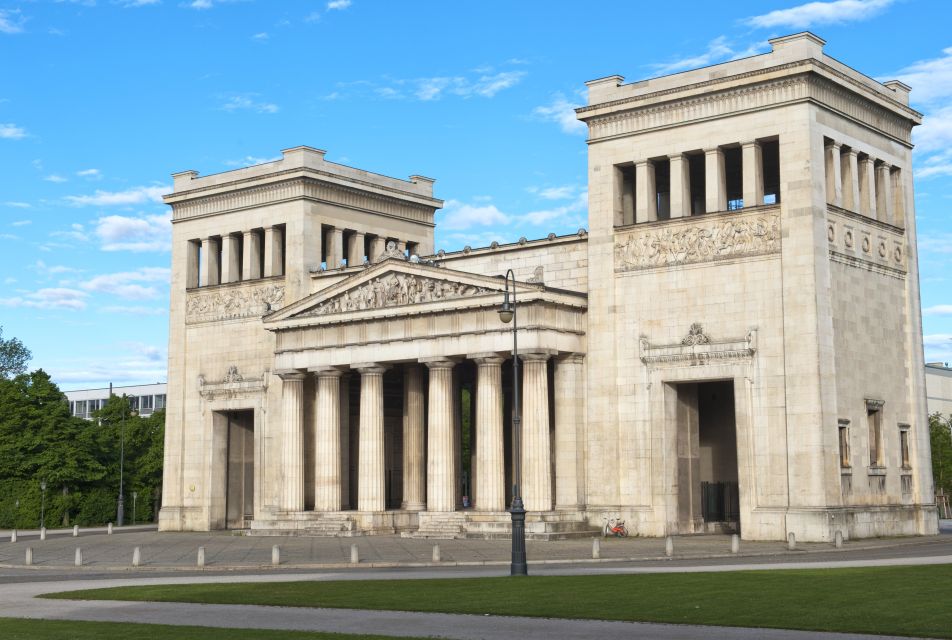
- Königsplatz: mass rallies and book burning
- NS Documentation Center option: when you want the records, not just the street sites
- Value and pricing: what $311 is actually buying you
- Who should book this Munich Third Reich private tour
- Should you book this tour?
- FAQ
- FAQ
- Where does the tour meet?
- How long is the standard tour?
- What’s included in the 4.5-hour option?
- What languages are available?
- Is this a private tour and is it wheelchair accessible?
- Can I get a refund if my plans change?
Key points to know before you go
- Start at Marienplatz, where Nazi propaganda events were held in the heart of Munich
- Follow the Beer Hall Putsch route, including Feldherrnhalle and Odeonsplatz
- See Hofbräuhaus, the beer hall where Hitler spoke in 1920 about founding the Nazi Party
- Learn about resistance in Munich, including the White Rose group led by five university students
- Visit major Nazi-linked sites, such as the Führerbau and the setting for the Munich Agreement (1938)
- Optional 4.5-hour add-on at the NS Documentation Center, with photos, documents, film projections, and media stations
A private WWII walk through Munich’s Old Town
Munich looks polished now. That is part of what makes this tour so effective. You walk through real streets and recognizable landmarks, while your guide puts them into context: how the Nazi movement took shape in the city, and what Munich’s citizens faced as the war turned and the city was bombed and liberated in 1945.
This is not a long lecture. It’s a street-level history experience with a private guide. You get to ask the awkward questions directly, and the guide keeps steering the conversation toward causes and consequences rather than simple dates.
Pricing is also worth thinking about. At $311 per person for the 3-hour walk, it’s not cheap. But you’re paying for a private historian-style guide, a concentrated route through specific Nazi-era sites, and the chance to have your questions answered in real time. If you like guided history that feels grounded and specific, this format can feel like better value than piecing together multiple museum visits on your own.
And one practical plus: the tour is offered in multiple languages (English, German, French, Italian, Spanish), and it’s listed as wheelchair accessible. That matters in a city where “self-guided” often turns into guesswork.
You can also read our reviews of more guided tours in Munich
Marienplatz and the Neues Rathaus: where propaganda met destruction
Your walking tour begins at Marienplatz, Munich’s central square, right by the meeting point at hotel BEYOND by Geisel (Marienplatz 22), across from St Peter. Your guide starts you in the exact location where many Nazi propaganda events took place. That choice changes how you read the space. Instead of just admiring the square, you start noticing how public gatherings can be used to build ideology.
From there, you move past the reconstructed New Town Hall (Neues Rathaus). It still has marks of the bombing that demolished much of downtown in 1945. That’s a powerful contrast: a rebuilt civic landmark sitting on top of wartime damage. It reminds you that the story isn’t only about speeches and slogans. It’s also about what happened after those ideas gained power.
If you’re the kind of person who likes to connect buildings to human decisions, this start will feel like you’re turning on the lights. You’re seeing the city as a stage with consequences.
Hofbräuhaus and the 1920 speech that helped ignite a party
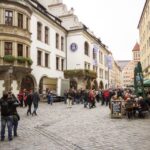
One of the most memorable stops is Hofbräuhaus am Platzl. This is where Adolf Hitler made a speech in 1920 connected to the founding of the National Socialist German Workers’ Party.
Hearing that detail while standing in the beer hall is the point. The Nazi movement didn’t grow only through laws and uniforms. It grew through persuasion, crowds, and a message people could repeat. Standing where a speech helped launch that momentum makes the origin story feel real and not like a chapter heading.
Your guide is also expected to cover Hitler’s rise to power after that early foothold, and how Nazi supporters and resistance groups interacted in Munich. That balance matters. It prevents the tour from turning into a one-note story of domination without pushback.
Following the Beer Hall Putsch: Feldherrnhalle and Odeonsplatz
After the Hofbräuhaus stop, you follow the route tied to the Beer Hall Putsch—the Nazi attempt to seize power. The walk takes you toward Feldherrnhalle and Odeonsplatz, letting you see how the movement tried to dramatize itself in the street.
This is one of the strongest parts of the experience because your guide can explain not just what happened, but why it mattered to the Nazis’ own story. The tour links the failed storm attempt to what later became political writing, including how Hitler was inspired to write Mein Kampf.
Here’s the practical value for you: you’ll come away with a clearer timeline in your head. Street route + key turning points = memory you can actually use when you keep exploring Munich on your own.
Also, because this is private, you can ask follow-ups as you go. If you want to understand the mechanics of propaganda—how people were recruited, how violence and intimidation were framed—this walk gives you the setting and the explanation in one package.
The storm on the Bavarian Defense Ministry and the birth of a manifesto
The tour route includes the attempt to storm the Bavarian Defense Ministry, tied to the same Beer Hall Putsch episode. It’s a chilling moment in the story, and your guide’s job is to keep you oriented: what the Nazis were trying to do, and what that event helped shape afterward.
The experience also connects this event to the writing of Mein Kampf, described on the tour as being inspired by the attempt. Whether you already know the book or you’re coming in cold, you’ll likely understand it differently after hearing how it grew out of real political agitation and public confrontation.
This is also where I recommend you slow down mentally. Read the buildings, but also ask yourself the bigger question your guide encourages: what roles did Munich and its citizens play in the rise and fall of National Socialism in Germany? The tour isn’t only about Nazi leaders. It points you toward the wider system that made their success possible.
You can also read our reviews of more private tours in Munich


White Rose resistance and the Monument to the Victims of National Socialism
A balanced tour doesn’t stop at the perpetrators. This one also brings you to resistance history in Munich, including the White Rose Group, led by five university students.
That inclusion matters. It shifts the focus from inevitability to agency. You start to see that even under brutal control, people tried to resist—often at enormous risk.
You also visit the Monument to the Victims of National Socialism. This stop grounds the tour in the human cost. It’s not a quick photo op; it’s where the story’s moral weight catches up with the locations you just walked.
If you tend to think history is only about rulers and battles, this section is a reminder that resistance and suffering were part of the same city, on the same streets, in the same era.
Führerbau and the Munich Agreement in 1938
One of the most significant sites on the walk is the former Nazi Party office building known as the Führerbau. The tour connects it to the Munich Agreement in 1938, when Chamberlain and Hitler signed it there.
This is where you’ll likely feel the tour’s “street evidence” approach most strongly. Agreements are usually described in documents and headlines. Here, you’re standing in the setting tied to those actions, and your guide helps you interpret what that means in context—how international decisions intersected with Nazi power on the ground.
Again, this is where a private guide is worth its price. You can ask what the site represented at the time, or how people in Munich would have perceived these events. The point isn’t to turn it into a debate; it’s to make the history legible.
Königsplatz: mass rallies and book burning
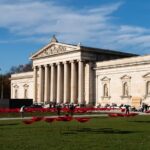
The walk finishes at Königsplatz, a major site tied to Nazi mass rallies and book burning. That’s one of those “you have to see it to believe it” history facts: a space used for propaganda and cultural destruction.
Your guide’s framing is key here. The tour is not just naming events. It explains the logic of control: rallies for unity and intimidation, book burnings for reshaping thought and narrowing what people were allowed to consider true.
For you, this end point can also serve as a navigation tool. After seeing the symbolism of Königsplatz, you’ll likely notice how other city spaces have been repurposed over time—and how difficult history is sometimes kept visible, sometimes rebuilt over.
NS Documentation Center option: when you want the records, not just the street sites
There’s a 4.5-hour option that adds a stop at the Munich Documentation Center for the History of National Socialism. In the standard 3-hour walk, you focus on key Nazi-linked locations. With the longer option, you also get the historical documentation that helps connect everything into a bigger picture.
The documentation center includes photographs, documents, and texts, plus film projections and media stations showing the origin and rise of the Nazi movement, the war, and the postwar period in Munich. It also references WWI and WWII through its exhibits.
Why this matters for your decision: walking tours are excellent for location memory. But they’re limited in how much background they can cover in a few hours. The documentation center provides the proof and the broader context—exactly what you want if you’re the type who reads more than headlines after a guided experience.
If your goal is understanding the “how” and “why,” the 4.5-hour option is the better buy. If your goal is a focused, emotionally tough route through the main outdoor sites, the 3-hour tour may be enough.
Value and pricing: what $311 is actually buying you
At $311 per person for the 3-hour guided walk, the real question is: do you want a private, guided, question-friendly experience focused on Nazi-linked Munich sites? If yes, the cost can make sense.
Here’s what your money covers based on what’s included:
- A history guide in a private group
- A walking tour that targets specific places tied to Hitler, the Nazi Party, the Beer Hall Putsch, and Munich’s wartime experience
- Access to difficult themes explained in context, with time for your questions
Also, the experience has a strong track record: it shows an average rating of 4.8 with 20 reviews. One review specifically praised a guide named Mireya, which is a good sign that the guide quality is a major part of why people rate it so highly.
Is it overpriced if you’re expecting a free-for-all photo walk? Yes. Is it a reasonable spend if you care about interpretation, context, and a direct route through the key locations? That’s when it starts feeling like good value.
Who should book this Munich Third Reich private tour
This is a fit for you if:
- You want a guided walking route that explains the story behind major Nazi sites in Munich
- You’re interested in both the movement’s rise and the resistance and aftermath
- You like being able to ask questions instead of reading plaques only
- You plan to stay in central Munich and want history that’s easy to connect to the rest of your day
It’s likely not the best fit if you prefer history told mainly through museums and you want minimal street walking, or if you’re looking for something lighthearted.
Also, if language matters to you, the tour lists English, German, French, Italian, and Spanish.
Should you book this tour?
My take: book it if you want an organized, privately guided route through the specific Munich places tied to Nazi power—ending at Königsplatz and, if you can, choosing the 4.5-hour NS Documentation Center option to round out the context.
I’d hesitate only if you know you can’t handle emotionally difficult content in a guided format, because the tour is designed to cover both propaganda and resistance, plus the consequences that struck Munich during WWII.
If your goal is to understand why Munich mattered in this era, and you want more than surface facts, this is a strong choice.
FAQ
FAQ
Where does the tour meet?
Meet your guide in front of hotel BEYOND by Geisel at Marienplatz 22, 80331 Munich, opposite St Peter. Do not enter the hotel; it’s only the meeting point.
How long is the standard tour?
The standard walking tour is 3 hours (270 minutes).
What’s included in the 4.5-hour option?
The 4.5-hour option includes a visit to the Munich Documentation Center for the History of National Socialism with your expert guide.
What languages are available?
The guide is available in English, German, French, Italian, and Spanish.
Is this a private tour and is it wheelchair accessible?
Yes, it’s a private group, and it’s listed as wheelchair accessible.
Can I get a refund if my plans change?
Free cancellation is available up to 24 hours in advance for a full refund.