REVIEW · MUNICH
Munich WWII and Dachau Concentration Camp Private Tour with Licensed Guide
Book on Viator →Operated by Sightseeing Bavaria Exclusive · Bookable on Viator
Dark history, told street by street. This private Munich WWII and Dachau tour pairs a licensed guide with smooth minivan pickup and a tight itinerary that connects Nazi-era sites to what happened afterward. I especially like how the route is built for flow—one day, lots of locations—without you having to figure out transit. I also love the guide-led explanations at each stop, including the heavy stuff at Dachau, plus small human details like the lions at Residenz Munich that help the day feel real, not like a textbook.
One consideration: it’s a long day (about 9.5 hours) with a serious memorial visit lasting roughly 1.5 to 2.5 hours, so plan your energy—and wear shoes if you’re headed to Dachau’s pebble paths.
In This Review
- Key highlights I’d plan around
- Price and logistics: what you’re really paying for
- Munich in the 3rd Reich: Marienplatz to the Hofbräuhaus meetings
- Resistance, propaganda architecture, and the White Rose at Ludwig Maximilians University
- A short break from atrocity: Eisbach surfers, then the route jumps outward
- White Rose after the arrest: Stadelheimer Straße and then onward to Königsplatz
- Dachau Concentration Camp Memorial: the part you should prepare for
- What the guide actually does (and why Max matters)
- Lunch, water, and the clothing basics
- Who this tour is best for
- Should you book this Munich + Dachau private tour?
- FAQ
- FAQ
- How long is the Munich WWII and Dachau private tour?
- Is it a private tour or shared with other groups?
- What times are pickup available in Munich?
- Do I get transportation from my hotel or address?
- How long will I spend at the Dachau concentration camp memorial?
- Is lunch included?
- Is the Dachau visit suitable for children?
Key highlights I’d plan around
- Hotel pickup + chauffeur-driven transport makes the hardest part easy: getting between sites without stress.
- Licensed guide at Dachau means you’re not just looking at plaques—you’re getting guided context.
- A full arc from Nazi power to resistance and punishment across central Munich and then outside the city.
- Many stops are ticket-free on the itinerary, so you spend time listening instead of lining up.
- Practical comfort details like A/C vehicles and mineral water help you last the pace.
Price and logistics: what you’re really paying for
At $804.18 per person for a 9 hours 30 minutes private day, this tour isn’t cheap. But you are paying for three things that usually cost time and friction on your own: a licensed guide, a driver-controlled transport plan, and a complete route that hits both Munich sites and Dachau without you bouncing between timetables.
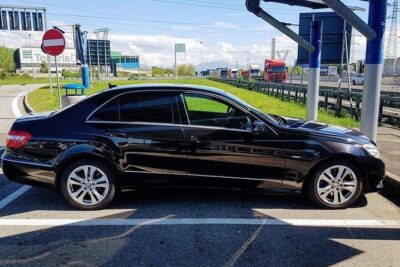
You start with pickup in Munich at 8:00 a.m., 9:00 a.m., or 9:30 a.m., and you can even request a different time. That flexibility matters if you’re juggling hotel check-in, a flight schedule, or just want a quieter start. The ride itself is in a new VW or Mercedes minivan with A/C (and for larger groups, a small coach), with a chauffeur handling the driving.
Also, it’s a true private tour: it’s only your group. That matters because on a day like this, you want your guide to slow down when something hits harder, or speed up when you’re ready to move on. The itinerary is structured as a sequence of short stops across Munich—most are around 5 to 25 minutes—so you don’t lose the day to transit gaps.
The main downside is emotional and physical, not administrative. Dachau is heavy. And the tour keeps moving. If you know you tire out fast, consider bringing snacks and building in a calm lunch plan outside the tour.
You can also read our reviews of more guided tours in Munich

Munich in the 3rd Reich: Marienplatz to the Hofbräuhaus meetings
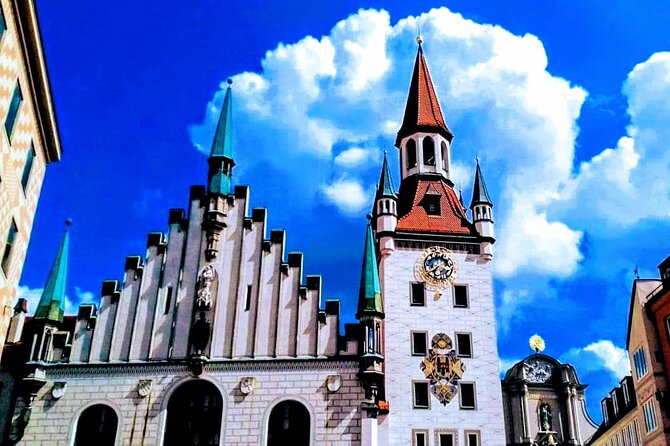
The Munich portion starts at Marienplatz, the historic civic heart of the city since the 12th century. Your guide sets the stage with an about 1-hour old-town orientation. This is a smart first move because once you learn the layout of the center, the later stops feel less random. You also get details like the square being called Schrannenplatz until 1852, and how the Nazis used the town hall setting—swastika flags on the neo-Gothic building—to fit their message into an everyday place.
From there, the tour uses major churches to show wartime destruction and reconstruction. At Frauenkirche, built quickly in the late Gothic era (the guide highlights it was completed in about 20 years), you’ll look at how Allied bombings changed the city. The guide supports it with historical images, which helps you connect what you see today with what used to be there.
Next is St. Michael, where the guide points out the second-largest barrel vault in the world. It’s another architectural anchor, this time in a later style (Mannerist), and again you’ll see how the city’s fabric took damage and then changed during rebuilding.
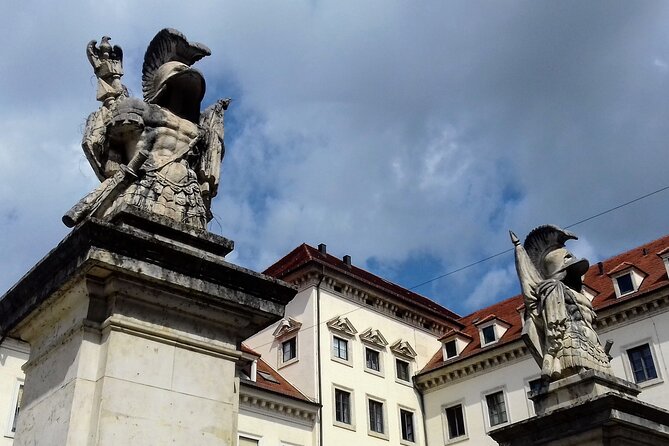
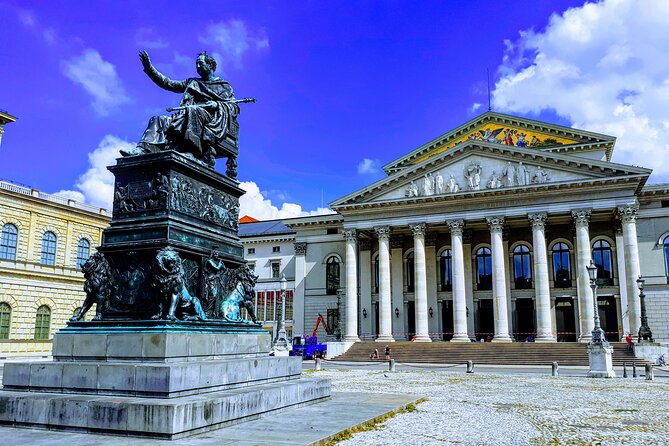
Then the route shifts from public spaces to power and influence. At Residenz München, your guide brings in Christian Weber, an SS Brigade Leader who set up residence there in 1933. The setting is huge—seven large inner courtyards—and the guide points out different stylistic epochs on the exterior. And yes, the tour includes the playful detail of the lions on the side entrances. It sounds small, but it gives your brain a tiny foothold during a heavy storyline.
After that, you get smaller, memorable street-level cues. Viscardigasse is your quick detour, with the guide explaining why it was known as Drückebergergäßchen. It’s the kind of local detail that makes the city feel lived-in rather than staged.
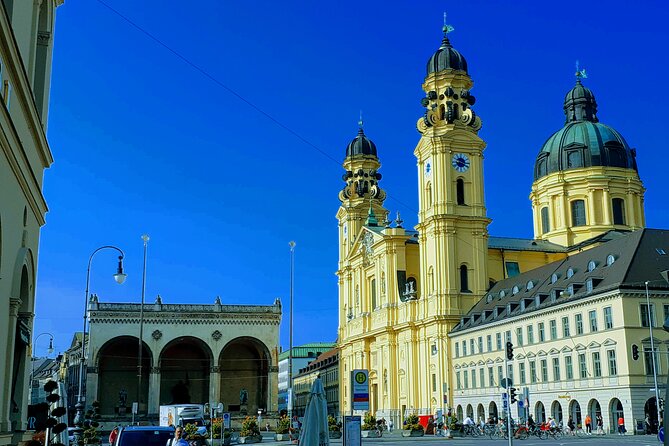
At Feldherrnhalle on Ludwigstraße, the day turns political again. This is tied to the 1923 failed Hitler putsch that ended violently. The guide also gives you the historical geography—this area was connected to Munich’s northern city gate (Schwabinger Tor) until around 200 years ago.
Right after, there’s a memorial-minded pause at Platz der Opfer des Nationalsozialismus, built in 1985 where a Schiller memorial was destroyed. An eternal flame burns as a symbol of freedom. It’s brief, but it works as a moral reset before you head into deeper education stops.
Resistance, propaganda architecture, and the White Rose at Ludwig Maximilians University
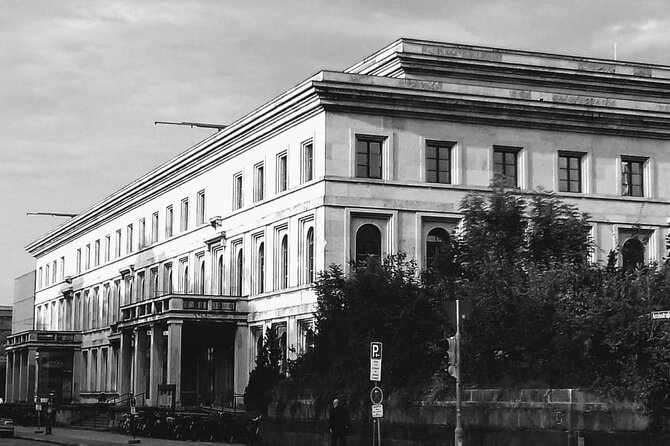
After you’ve seen how Nazis embedded themselves into prominent spaces, the tour moves into intellectual and institutional Munich. At Ludwig Maximilians University, the guide connects the city to the White Rose resistance group. The university was moved from Ingolstadt to Munich in 1826, and the story centers on Hans and Sophie Scholl, Christoph Probst, Alexander Schmorell, and Willi Graf, along with Professor Kurt Huber. The emotional weight is not abstract here—you’re told who they were and what happened afterward. You then visit the memorial with your guide, which is worth treating as the midpoint of the day, emotionally speaking.
Then the itinerary heads to Schwabing, the area the guide links to Hitler’s social life and propaganda infrastructure. You’ll hear how Hitler liked to stop at an Osteria Italiana that still exists today, and you’ll get the detail that he met Eva Braun there. You also learn that the Völkischer Beobachter and Heinrich Hoffmann Verlag National Socialist Pictures had editorial roots in the area. This is one of the tour’s best strengths: it connects power not only to speeches and uniforms, but to the media that shaped the public mind.
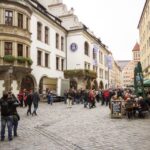
Next up is the most famous beer hall stop: Staatliches Hofbräuhaus (Hofbräuhaus). Here, the guide explains that Hitler and his entourage enjoyed meeting in a niche on the first floor. There’s also a practical tip built in: lunch isn’t included, but the tour recommends a hearty meal inside—either on the ground floor (the Schwemme) or, if weather allows, in the inner courtyard dining area. Even if you skip lunch, you still get the chance to see the place where people met and rumors spread.
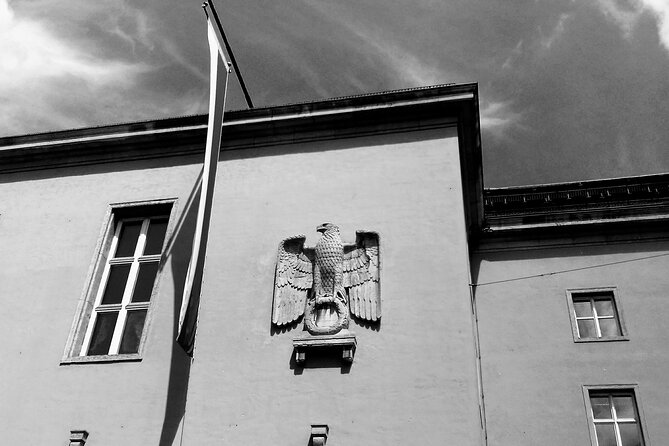
After lunch time, the tour keeps scanning Nazi-era building choices. Altstadt-Lehel brings you a monumental Nazi-era structure linked to Hermann Göring’s Reich Aviation Ministry (for the Luftgaukommando V building). The guide points out visual cues like swastikas on window grilles and steel helmets on walls.
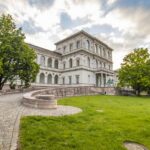
Then you go to a cultural propaganda site: Haus der Kunst. It was the first representative Nazi building in Munich, and in Hitler’s time it was called the House of German Art. The guide shows what Nazi-approved art looked like, and you’ll see the swastika decoration that remains visible today. It’s uncomfortable to look at, but it’s also clarifying: you understand how ideology got framed as taste.
A short break from atrocity: Eisbach surfers, then the route jumps outward
One of the smartest pacing choices is Eisbachwelle. After church damage, propaganda architecture, and resistance stories, you get a view of the famous Eisbach surfers—an artificially generated wave that people still ride right in the city. It’s not a distraction from history so much as a moment for your body to reset. You watch, take a breath, and then you’re back on the harder track.
Then the route shifts to Munich neighborhoods tied to residence and “normal life” under dictatorship. Bogenhausen is next, with an outside-only look at where Hitler lived: a luxurious 317-square-meter, nine-room apartment in 1929 that today is a police station. The tour also includes the story of Eva Braun living in a villa nearby, which was demolished a few years ago. You’re not getting a Hollywood reenactment—just a guided reality check on how elite housing and the machinery of repression sat side by side.
At Prinzregentenstraße, the guide points out a curious Nazi building: an apartment block designed for the upper class with flanking air raid shelters. Your guide explains that this model was intended to be copied, but due to World War II it was the only one completed.
Then there’s Ramersdorf, where the tour shows a “model settlement.” In 1934, almost 200 settlement houses with private gardens were built for German national comrades. It’s now a listed building, which makes it easier to understand how the regime sold its ideals through domestic design.
White Rose after the arrest: Stadelheimer Straße and then onward to Königsplatz
The tour then moves to the darker end of the White Rose storyline at Stadelheimer Straße. In 1943, Hans and Sophie Scholl, Christoph Probst, Alexander Schmorell, Willi Graf, and Professor Kurt Huber were guillotined in the penal institution in Stadelheim. The guide connects that moment to where their graves are located—nearby cemetery in the Perlacher Forest.
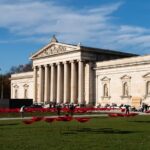
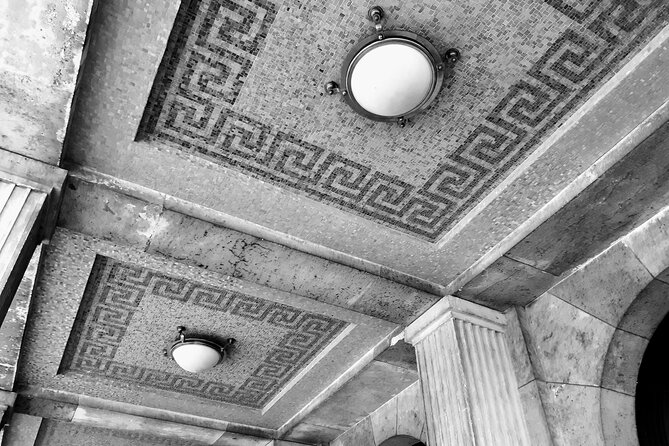
From there, you go back into political space at Konigsplatz, described as the party center area between Karolinenplatz and Königsplatz. The guide explains that many administrative buildings survived bombing attacks unscathed, and it references the NS Documentation Center (opened in 2015) built on the site of the destroyed Brown House. This is where Munich’s architecture turns into evidence. It helps you understand that the city itself was part of the propaganda system.
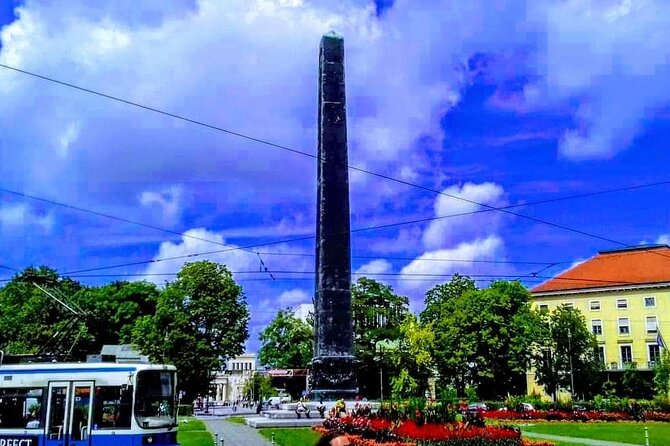
You then see Karolinenplatz, built around an obelisk ordered by King Ludwig I in 1833. Exactly a century later, it became the center of power of the NSDAP. Even if you only remember one thing here, remember the pattern: the regime used old monumental planning to define new ideological control.
Finally, in Maxvorstadt, the tour includes a more personal historical setting: where Hitler shared a shabby room with Austrian Rudolf Häusler after moving from Vienna in May 1913. The guide also covers a planned mausoleum concept by Hitler and a Hall of the Party idea linked to what the guide says he saw in Paris in 1940 at Napoleon’s sarcophagus in the Invalides.
You can also read our reviews of more private tours in Munich


Dachau Concentration Camp Memorial: the part you should prepare for
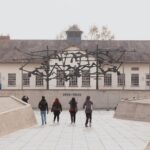
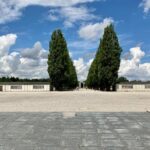
The day’s emotional centerpiece is the Dachau Concentration Camp Memorial Site, visited with a licensed guide. This is not a casual stop. In the 12 years of its existence, over 200,000 people were imprisoned there, and 41,500 were murdered. The memorial opened about six weeks after Hitler was appointed Chancellor, which the guide uses to underline how fast the system escalated.
One detail you’ll want to know before you go: before touring the memorial grounds, the guide will show you the luxurious villas on the former SS grounds. That contrast can be hard to take in person, but it matters. It shows how the people running the system lived apart from the people trapped by it.
Plan for time. The average length of stay at the memorial is 1.5 to 2.5 hours. Also, bring footwear for uneven surfaces—some footpaths use coarse pebbles. If your shoes are flexible and grippy, you’ll move easier and pay more attention to the explanations instead of fighting your footing.
If you’re bringing kids, note the guidance: Dachau is not recommended for people under 12. This isn’t about age-based curiosity; it’s about the nature of what you’ll see and be asked to process.
What the guide actually does (and why Max matters)
The best part of the tour, in my opinion, is how much weight you get from the guide’s pacing and explanations. On this kind of route, it’s easy for history to turn into a list of place names. A strong guide prevents that.
In my case, the guide was Max. I liked that Max kept us moving through every planned stop and still made time for context. He helped the day feel structured without feeling robotic. That’s rare on tours that cover both Munich and Dachau in one long stretch.
Look for three things your guide should do well:
- Connect the visible place to the historical story, not just dates.
- Adjust the pace if you look like you need a minute.
- Keep the Dachau visit respectful and guided, not informational-on-scroll.
Lunch, water, and the clothing basics
Lunch is not included, so decide ahead of time what you want your energy to do. The Hofbräuhaus stop is the obvious moment to eat, and the tour’s recommendation is a hearty meal either indoors at the Schwemme or outside in the courtyard when the weather cooperates. If you’d rather eat away from the big beer-hall crowd, you’ll still have guidance on where the meal options are in the flow of the day.
You do get mineral water, which is small but helpful on a long schedule. After Dachau, you might not want to think about food. So plan for it before that.
Clothes-wise: you’ll walk a fair bit, and Dachau has pebble paths. Wear shoes you’d be comfortable in for an extended memorial visit. Layers are smart too; Munich weather can shift even when the day looks mild.
Who this tour is best for
This works best if you:
- Want a guided, factual route that connects Munich’s Nazi-era sites to what happened at Dachau.
- Like private tours where you can ask questions and set your pace.
- Prefer being transported between locations rather than figuring everything out yourself.
It might feel like too much if you:
- Have limited stamina for a long day with many short stops.
- Know you need a calmer, less packed sightseeing schedule.
- Are traveling with kids under 12, since Dachau isn’t recommended for that age group.
If you’re visiting Munich and you want one major history day that doesn’t feel random, this is the kind of plan that gives you coherence.
Should you book this Munich + Dachau private tour?
I’d book it if you want a guided, structured day that covers both the Munich machinery of Nazi power and the consequence represented by Dachau. The biggest reason is simple: the licensed guide and the all-in-one routing reduce guesswork and turn a hard topic into something you can actually follow.
I’d hesitate only if you’re easily overwhelmed by memorial visits or you really need downtime built into the schedule. You can’t change the fact that Dachau is intense, and the tour’s design keeps you moving through many stops.
If you’re ready for that, this private setup is a strong value for what you get: transportation with pickup, a licensed guide for both city and memorial, and a route that keeps the story connected from start to finish.
FAQ
FAQ
How long is the Munich WWII and Dachau private tour?
The tour runs for about 9 hours 30 minutes.
Is it a private tour or shared with other groups?
It’s private. Only your group participates.
What times are pickup available in Munich?
Pickup is offered at 8:00 a.m., 9:00 a.m., or 9:30 a.m., and you can request another time.
Do I get transportation from my hotel or address?
Yes. Pickup is available from any hotel or address in Munich, and you travel by new A/C VW or Mercedes minivan (or a small coach for groups over 7).
How long will I spend at the Dachau concentration camp memorial?
The average length of stay at the memorial is about 1.5 to 2.5 hours.
Is lunch included?
No. Lunch is not included in the tour price.
Is the Dachau visit suitable for children?
Visiting the Dachau Concentration Camp Memorial is not recommended for people under 12 years of age.