REVIEW · MUNICH
National Socialism WWII with licensed guide – private tour
Book on GetYourGuide →Operated by schwarzgold.info - Wolfgang Brehm · Bookable on GetYourGuide
Munich gets heavier once you connect the buildings to the crimes. This private 2-hour walk is built around the places tied to National Socialism—then it explains how the movement took root, how people resisted, and how the city remembers today. I especially like the way the tour uses extensive photo material to support what you see, and I also like that it ends at the NS Documentation Centre so the story doesn’t stop at street level.
One thing to consider: this is not a casual history stroll. It’s a focused look at Nazi power, persecution, and resistance, and the provider explicitly notes it’s not for right-wing radical or Nazi fans, so you’ll want to show up with the right mindset and emotional readiness.
In This Review
- Key highlights worth your attention
- Munich’s Nazi story, explained on a private 2-hour walk
- Odeonsplatz and the Feldherrnhalle: where the coup story begins
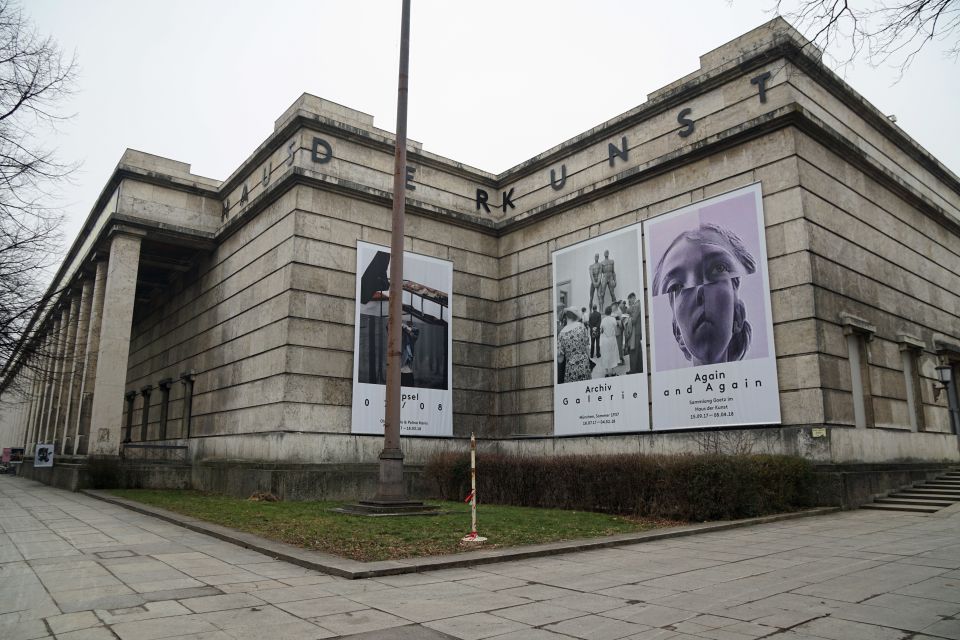
- Haus der Kunst and Galeriestraße: Nazis reshaped art and culture
- Munich Residenz, the court garden, and memorials for resistance
- The White Rose at LMU: propaganda met by paper flyers
- Königsplatz finale: Brown House, Führerbau, and the NS Documentation Centre
- What the guide and photo material add (especially if you’re German-speaking)
- Price and logistics: does $259 per group feel fair?
- Who should book this tour, and who might want something else
- Should you book the National Socialism WWII private tour in Munich?
- FAQ
- How long is the National Socialism WWII private tour?
- What does the tour cost, and how big is the group?
- Where does the tour start, and where does it end?
- Is the NS Documentation Centre included in the tour?
- What languages is the tour offered in?
- Is this a private tour?
- Is the tour wheelchair accessible?
- Is this tour suitable for Nazi fans?
- What is the cancellation policy?
Key highlights worth your attention
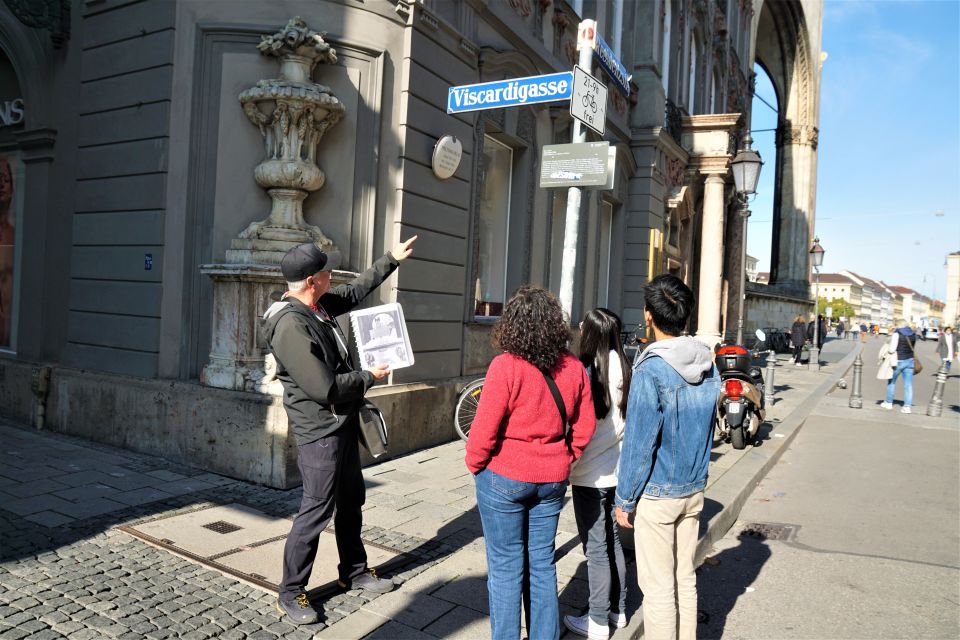
- Odeonsplatz and the Feldherrnhalle: the opening connects Hitler’s move toward Munich with the infamous coup narrative.
- Art policy made visible: at Haus der Kunst and along Galeriestraße, you see how Nazi ideas shaped culture, including the Degenerate Art exhibition location.
- Resistance is treated as real history: you’ll hear about the White Rose at LMU and visit a monument for resistance fighters.
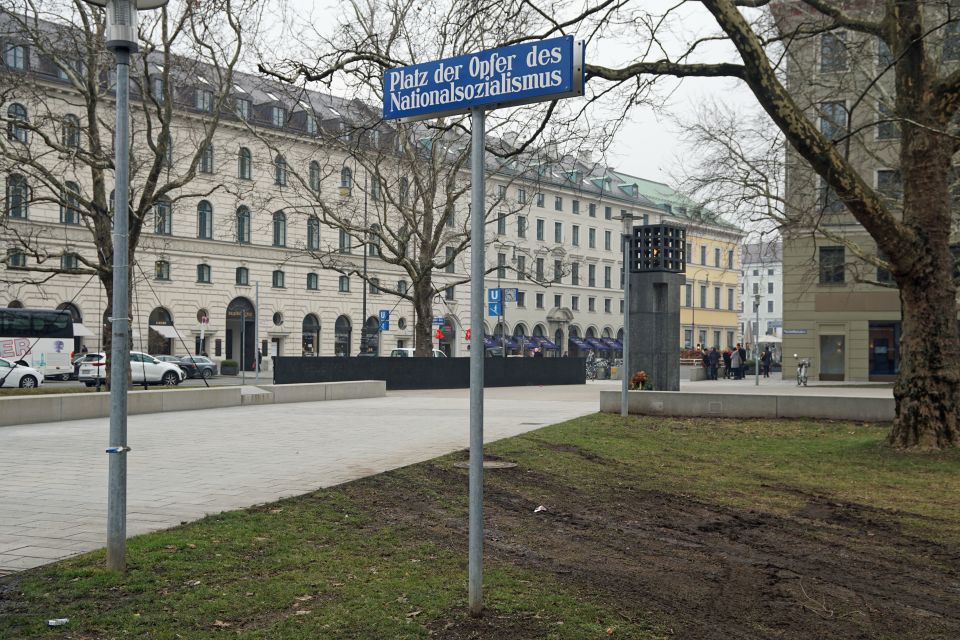
- Memorials name victims: the Square of the Victims of National Socialism guides you to who the victims were, not just vague tragedy.
- Königsplatz in context: the route finishes at the party center area, with the Brown House and the Führerbau area explained.
- Photo support throughout: the tour doesn’t rely only on plaques; it uses large sets of photos to connect past and present.
Munich’s Nazi story, explained on a private 2-hour walk
This tour is for people who want to understand Munich as the place where National Socialism started, then grew into a political movement with real-world buildings, institutions, and propaganda. It’s short enough to fit into a busy itinerary, but it’s not skimpy. You cover multiple major sites tied to the Third Reich while a licensed guide keeps the timeline and themes straight.
The format matters for value. It’s a private group (up to 30), so the guide can tailor the pace to your questions. The guide is professional and certified, with more than 10 years of experience. In the real world, that usually means fewer awkward pauses and more clarity—especially when the topic is emotionally heavy.
Price is $259 per group. That may sound high if you’re thinking only in per-person terms, but for a private group it can work out well. If you’re traveling with family, friends, or a small history-focused group, you’re essentially buying guided interpretation for the whole party rather than paying separately for each traveler. With a 2-hour route, you also avoid the common “I paid for a tour but it felt too slow” problem.
And yes, it’s wheelchair accessible. You’re still outside for a walking tour, so bring the usual outdoor-comfort basics (weather layers and comfortable shoes), but the route is designed to be accessible.
You can also read our reviews of more guided tours in Munich

Odeonsplatz and the Feldherrnhalle: where the coup story begins
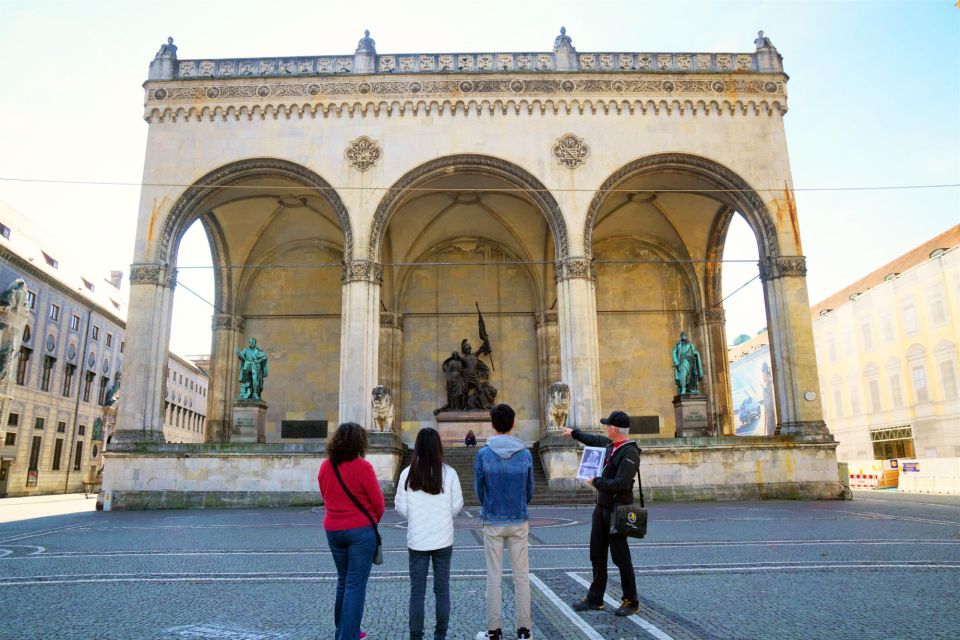
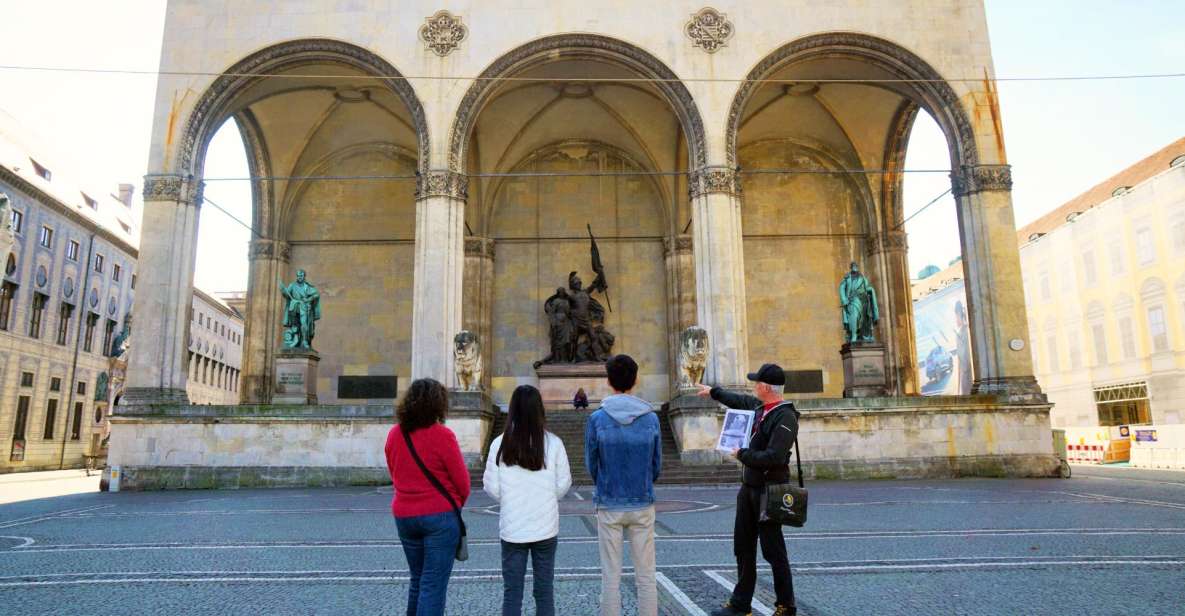
You start at the steps at the Feldherrnhalle at Odeonsplatz, with the tour set up to explain why Hitler came to Munich and how he lived and worked there. That opening is important. You’re not just staring at stone; you’re learning how a political movement took shape around specific places and moments.
At the Feldherrnhalle, the guide points out where the Hitler coup ended and explains the significance of the former monument erected for the deceased putschists. This is one of those moments where you’ll notice how quickly public spaces can be repurposed. A monument and a square can be turned into a political stage, and learning that before you move on makes the rest of the tour easier to follow.
The Feldherrnhalle stop is also where the tour’s tone becomes clear: the aim isn’t to sensationalize. It’s to explain what happened and why people were drawn in, while also holding space for the victims and the later resistance.
Practical note: this first segment sets expectations. If you’re traveling with teens or students, it’s a great starting point because it frames the questions you’ll be answering by the end—how it started, how it spread, and what pushed back.
Haus der Kunst and Galeriestraße: Nazis reshaped art and culture
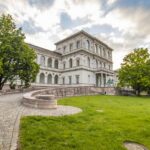
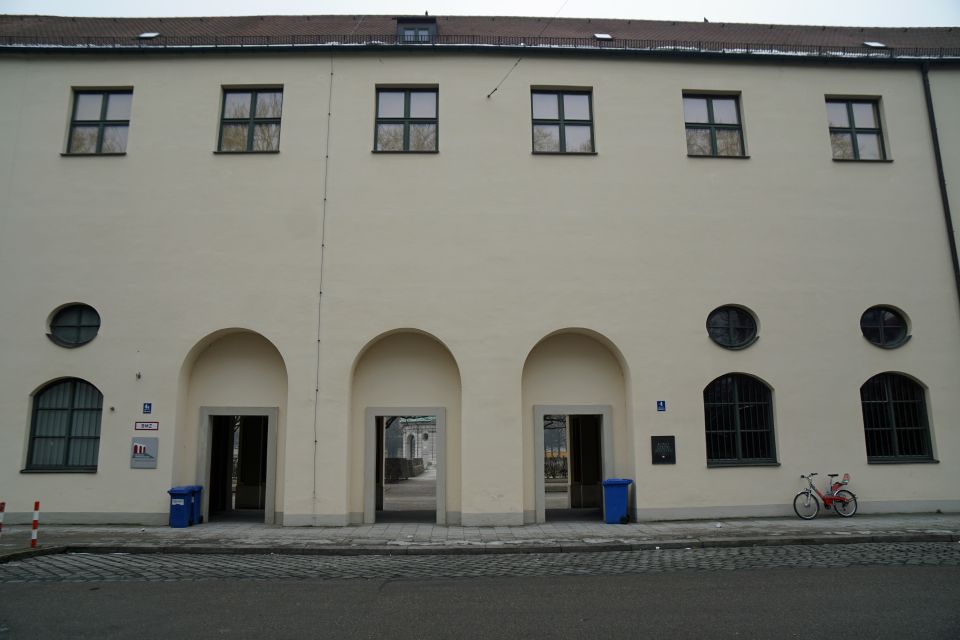
Next comes Haus der Kunst, a key stop for understanding how the Nazis used culture as propaganda. You’ll learn how they influenced art—then you’ll connect that to what you can still spot in the street environment.
One of the tour’s most specific and memorable details is the reference to Galeriestraße. You’ll be shown where the exhibition Degenerate Art took place. That’s a phrase many people know, but seeing the location (and hearing how the Nazis framed art as a political weapon) gives it context beyond the soundbite.
This section is valuable for two reasons. First, it shows that Nazi control wasn’t limited to politics and policing. It also moved into what people were allowed to value, display, and celebrate. Second, it helps you understand how propaganda can operate through taste and cultural labels—not just through speeches and slogans.
If you’re the kind of traveler who likes to read a city like a document, this is a strong stop. The guide ties the physical sites to the ideology you’re hearing about, so the connections feel grounded.
Munich Residenz, the court garden, and memorials for resistance
From the art-policy angle, the tour shifts toward the city’s broader political theater—where power lived, where it performed, and where it left traces even after the regime fell.
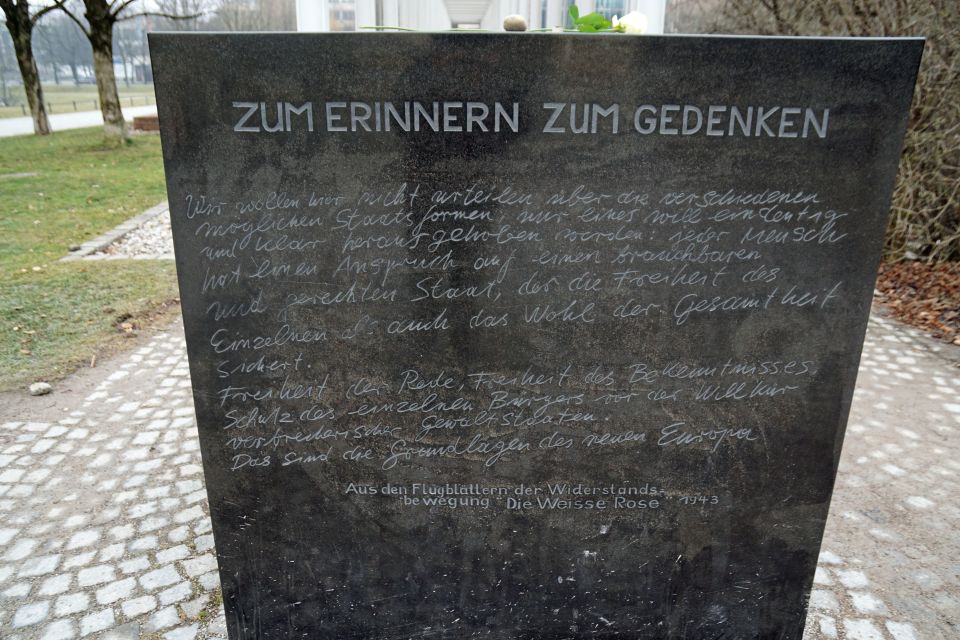
You’ll pass through the Munich Residenz area and spend time around key courtyards and gardens. Then you’ll walk through the court garden and explore a monument erected for resistance fighters. That’s a key pivot. Nazi-era Munich often gets remembered through rallies and authoritarian architecture, but the tour makes sure resistance is part of the same physical narrative.
You’ll also reach the Square for the Victims of National Socialism. This stop is set up to help you understand who the victims were, not just that there were victims. That kind of specificity helps keep the story human.
One potential drawback here: this segment can feel heavy. If you tend to feel overwhelmed by memorial spaces, plan to slow down your breathing and let the guide’s structure carry you. The guide’s job is to keep the facts and meaning clear; your job is to stay present enough to absorb it.
The White Rose at LMU: propaganda met by paper flyers
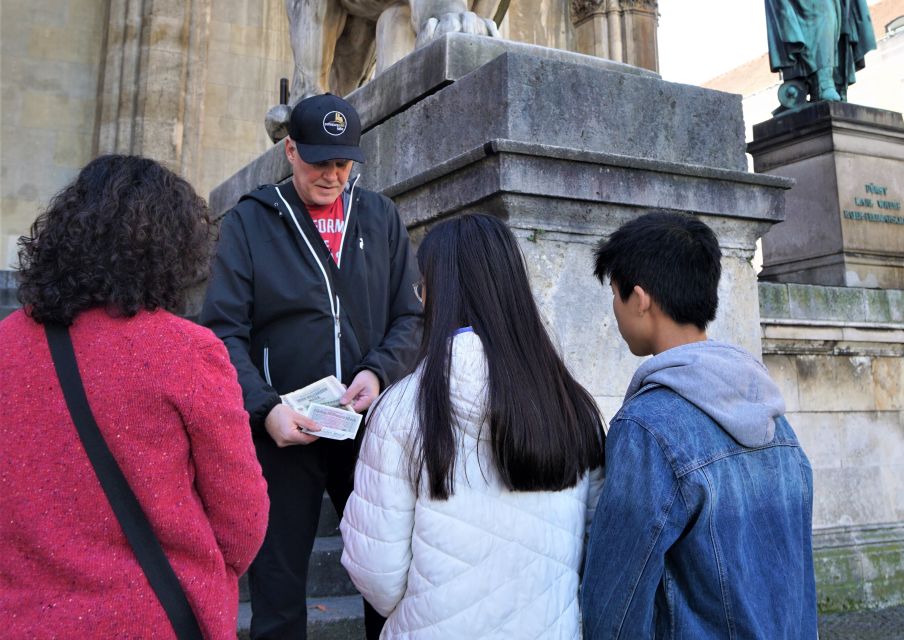
A standout part of the route is the visit connected to LMU, the largest university in Germany. Here you’ll hear about the White Rose, a resistance group that created flyers and faced deadly consequences at the end.
The tour’s structure is clever. By the time you reach LMU, you’ve already seen Nazi institutions, propaganda art policies, and memorial frameworks. So when the guide explains the White Rose, it lands as more than a footnote—it becomes a counter-story placed directly into a place where young people were learning and questioning.
This section also benefits from the tour’s photo material approach. Visual context makes it easier to understand how resistance circulated ideas in a controlled environment where the regime wanted to control information.
If you’re traveling with a student (GCSE-level history and similar), this is the section that tends to pay off. It’s the point where abstract classroom topics turn into something you can point to on the map.
You can also read our reviews of more private tours in Munich


Königsplatz finale: Brown House, Führerbau, and the NS Documentation Centre
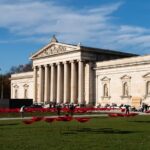
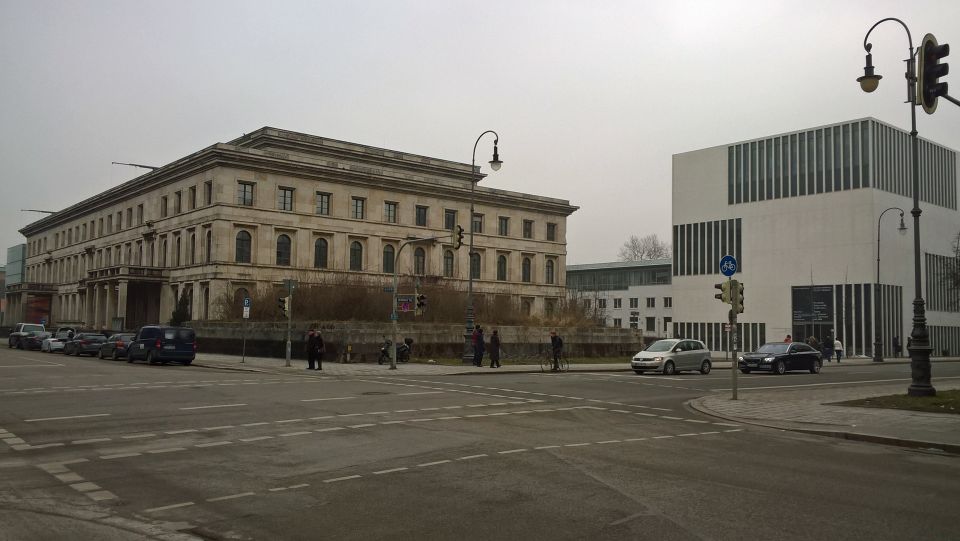
The tour finishes at Königsplatz 1, in the area that served as a party center of the Nazis in Munich. This is where the tour transitions from “how it started” to “how power ran the show.”
You’ll discover key locations connected to the Nazi headquarters in the Brown House area, the Führer building (Hitler’s office), and the NSDAP administration. The scale of these spaces can be intimidating, but the guide keeps it readable by explaining what each area represented in the system of control.
Then you reach the NS Documentation Centre. You’ll have a guided introduction during the tour at this stop, and it’s also noted that the NS Documentation Centre opened in 2015. After the guided portion, you have the opportunity to visit more on your own—admission is not included, but the timing is built so you can decide whether you want more depth once you’ve got the framework.
This is one of the best design choices of the whole experience. The tour gives you the street-level map of Nazi power, and the NS Documentation Centre gives you the deeper documentation to support it. You avoid the common problem of ending a tour with only vague impressions.
Also, because the tour includes the NS Documentation Centre, it works well even if you don’t know Munich’s Nazi history ahead of time. You’re not expected to arrive fluent. You’re expected to leave with a clearer set of questions and more accurate answers.
What the guide and photo material add (especially if you’re German-speaking)
A big part of why this tour gets strong ratings is the guide’s ability to explain without turning the topic into noise. People mention that the tour never feels boring, which is hard to do with such a dark subject. One review specifically named Wolfgang Brehm as the guide, and that kind of detail usually points to a consistent strength: clear explanations and steady pacing.
The tour uses extensive photo material. That matters more than you might think. Buildings can look similar across decades, but photos show you what changed, what disappeared, and what the regime wanted people to see. It also helps you connect what you’re standing next to with what existed during the era.
The guide also structures the walk around the big questions most travelers have:
- When and why Hitler came to Munich
- Where he lived and how he made a living
- How the NSDAP started
- What the Hitler coup was about in this Munich context
- What resistance looked like, including the White Rose
- Who the victims were, as remembered in the memorial spaces
If you like history that connects politics, ideology, and real locations, this tour fits that style. If you prefer only museums with indoor exhibits, you might find the outdoor walking parts demanding, but the documentation stop at the end balances it out.
Price and logistics: does $259 per group feel fair?
Let’s translate the price into real-world value. You’re paying $259 per group for a private, 2-hour guided walking tour covering multiple major sites. The group size can be up to 30, so the cost structure is built around sharing the guide’s time rather than paying per head for each person.
That makes it a good deal when:
- you’re traveling as a group of friends or family
- you want a guided narrative rather than self-guided reading
- you plan to visit the NS Documentation Centre anyway and like the idea of arriving already oriented
It may feel less ideal if you’re traveling solo or as a couple and don’t find it worth paying for a private guide. In that case, you’d compare the price to the cost of independent transport plus an audio guide or museum tickets. But since this is private and time-efficient, it can still be worth it if you want a focused route and Q&A.
The languages offered are English and German, which helps for mixed-language groups.
Who should book this tour, and who might want something else
This is best for travelers who want accuracy, a clear narrative, and a route built around both Nazi sites and resistance. It’s also a strong choice if you’re traveling with older teens and want a history lesson that fits into a normal sightseeing day without turning into a full-day museum marathon.
It may be less fitting if:
- you want a light, entertainment-based city walk
- you’re not ready for memorial spaces and discussions of persecution
- you only want museum time and would rather not mix street walking with heavy subject matter
The provider’s note about the tour not being for right-wing radical or Nazi fans is also telling. This is meant to be educational and respectful, with a guide who keeps the focus on victims, context, and historical explanation.
Should you book the National Socialism WWII private tour in Munich?
If you want your Munich sightseeing to make sense—why these buildings matter and how the ideology connects to real institutions—this tour is a strong pick. The route hits major sites you’d otherwise struggle to interpret, and the ending at the NS Documentation Centre gives you a place to keep learning beyond what you can absorb on the sidewalk.
Book it if you like guided structure, photo-supported storytelling, and a clear focus on both Nazi power and resistance. Skip it or consider alternatives if you’re hoping for a casual walk, or if you know you’ll struggle with memorial and persecution topics.
FAQ
How long is the National Socialism WWII private tour?
The tour duration is 2 hours.
What does the tour cost, and how big is the group?
The price is $259 per group up to 30.
Where does the tour start, and where does it end?
It meets at the steps at the Feldherrnhalle at Odeonsplatz, and it finishes at Königsplatz 1, 80333 München, Germany.
Is the NS Documentation Centre included in the tour?
The tour includes a guided stop at the NS Documentation Centre, but admission is not included. You also have the opportunity to visit after the tour (admission not included).
What languages is the tour offered in?
The tour is offered in English and German.
Is this a private tour?
Yes, it is a private group tour.
Is the tour wheelchair accessible?
The tour is wheelchair accessible.
Is this tour suitable for Nazi fans?
The provider notes that this tour is not for right-wing radical or Nazi fans.
What is the cancellation policy?
Free cancellation is available up to 24 hours in advance for a full refund.