REVIEW · MUNICH
Third Reich & WWII Walking Tour
Book on Viator →Operated by munich walk tours Ralph Luenstroth · Bookable on Viator
Hitler’s rise can feel uncomfortably close.
This Third Reich & WWII walking tour traces how Munich’s streets helped shape Nazism, moving you through landmarks tied to early rallies, propaganda, and the failed seizure of power. I love that it’s anchored to specific places you can see today, including Königsplatz and Hofbräuhaus, so the story isn’t just abstract dates.
You also get a tour that aims to handle the topic with care. The guides are repeatedly praised for factual, sensitive delivery and for building in space to ask questions or reflect, with names like Michael, Alex, Josh, Danielle, Joel, Ulrich, and Bridget coming up in feedback.
One possible drawback: it’s a lot to absorb in one go. Plan on several hours of walking/standing, and some people found the guide harder to hear in noisy sections, so come ready with patience and comfortable cold-weather gear.
In This Review
- Key things I’d watch for on this Munich tour
- Munich’s Nazi sites are close enough to make history feel personal
- Getting oriented: Marienplatz start and an end near Hitler’s former HQ
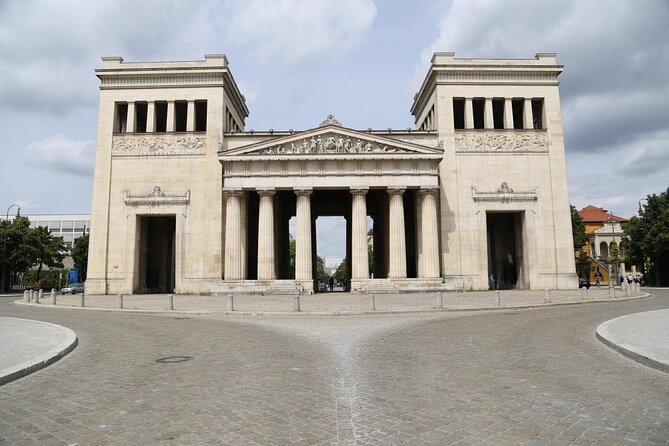
- Stop at Königsplatz: where rallies turned politics into spectacle
- Hofbräuhaus: the early mass-meeting era, beer halls to public power
- Feldherrnhalle: the failed coup that still shaped history
- Hofgarten and the White Rose: resistance as a key chapter
- How the tour ends near Hitler’s former headquarter
- Timing and pacing: walking for 2.5 to 3.5 hours
- Price and value for a focused small-group walk
- Who this tour suits best (and who should skip it)
- Should you book this Munich Third Reich & WWII walking tour?
- FAQ
- Where does the tour start and end?
- How long is the Third Reich & WWII walking tour?
- What’s the price and ticket format?
- Is admission included?
- What languages is the tour offered in?
- Is it suitable for children?
- Is there free cancellation?
Key things I’d watch for on this Munich tour
- Small-group feel with a limit of 10 people (and a stated maximum of 30), which helps the guide manage questions.
- Königsplatz to Königsplatz route: it starts in the center at Marienplatz and finishes near the former Nazi leadership area.
- Clear Nazi timeline in real locations, connecting Hofbräuhaus mass meetings to the attempted coup at Feldherrnhalle.
- White Rose stop in the Hofgarten area, adding resistance context instead of only focusing on propaganda.
- Serious subject, paced respectfully, with moments intended for group processing during the walk.
- No included admission, so you’ll want to decide in advance if you want any extra museum time on your own.
Munich’s Nazi sites are close enough to make history feel personal
Munich is one of those cities where the past sits right beside the present. That can be useful for learning, and also a little unsettling. This tour leans into that reality by tying the Nazi story to the exact public spaces where people gathered, marched, argued, and believed.
What I like about the approach is how it connects cause and effect. You start with the chaos after World War I, when Germany was humiliated and inflamed with political violence. Then you watch how the Nazi movement took hold through rallies and street-level momentum. It’s not just “what happened,” but “how it happened.”
You’ll also get resistance in the mix, not as an afterthought. The tour includes a discussion of the White Rose movement in the Hofgarten area, which helps balance the narrative beyond the men who won power.
You can also read our reviews of more walking tours in Munich
Getting oriented: Marienplatz start and an end near Hitler’s former HQ
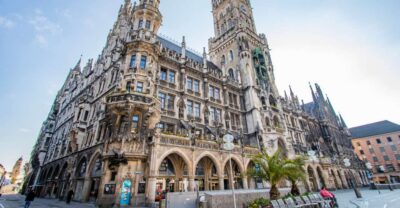
The tour begins at Marienplatz (80331 München) and ends at Königsplatz 1 (80333 München). That matters because the route moves you across the city, not in little circles around one stop.
Marienplatz is central and easy to find, which reduces stress before you start. Ending near Königsplatz also sets you up well if you want to keep walking or add time at nearby sites on your own, since you’re finishing where a lot of the Nazi-era monumental architecture sits.
Two practical notes. First, this is a walking tour with limited time to pause. Second, the format is offered in English, with a mobile ticket. That’s straightforward, but do make sure your phone battery is healthy before you leave your hotel.
Stop at Königsplatz: where rallies turned politics into spectacle
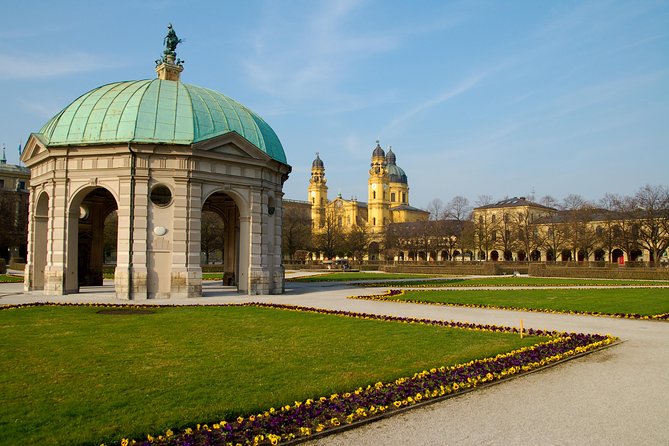
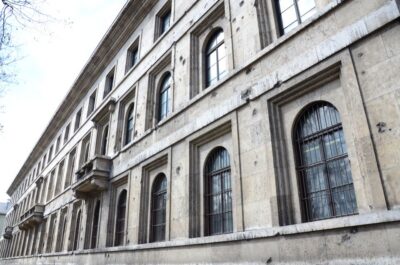
If you only remember one place from this tour, make it Königsplatz. This square is where the Nazi movement staged mass gatherings, turning ideology into something people could physically feel through crowd energy and choreography.
Your guide sets the scene with the post–World War I atmosphere: Germany stumbling out of defeat, hyperinflation and instability, and a climate where political violence felt normal. Then the story pivots to Munich as the birthplace of the movement, and to how Adolf Hitler rose from agitation to power.
This stop is also where the tour earns its weight. It’s not just a photo opportunity. You’re guided to understand how propaganda worked through public space—how certain buildings and open areas were perfect for big gatherings and for the kind of symbolism Nazis wanted to project.
Hofbräuhaus: the early mass-meeting era, beer halls to public power
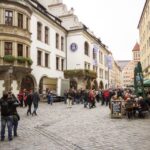
From the first rally era, the tour connects you to Hofbräuhaus, a site tied to the Nazis’ early mass-meeting phase. Hofbräuhaus isn’t treated as a quirky side note; it’s part of the mechanics of how the movement built momentum.
Here’s what I think you’ll find valuable: the tour shows the path from initial public meetings to attempts at seizing power. If you’ve ever wondered how a movement grows from fringe politics into something mainstream enough to dominate events, this is where you start seeing the steps.
There’s also an important emotional angle. Learning about propaganda is one thing. Standing in places that were associated with that messaging is another. The guide keeps the focus on facts and context, and you don’t get the vibe of treating it like entertainment.
Feldherrnhalle: the failed coup that still shaped history
Next up is Feldherrnhalle, a place linked to the failed attempt to take power in the early 1920s. This stop gives the story tension: the Nazi movement tried for direct control, it didn’t land the way it wanted, and yet it still moved forward afterward.
This is one of the parts where the tour’s structure helps. You’re seeing a line of events rather than disconnected stops. Mass meetings at Hofbräuhaus connect to political ambition, and Feldherrnhalle represents the moment when ambition met resistance and failure.
If you’re new to WWII-era history, this stop can also be clarifying. You’ll come away understanding that Nazism wasn’t inevitable from day one. It was a plan, it was a strategy, and it was pushed forward through both attempts and recalculation.
Hofgarten and the White Rose: resistance as a key chapter
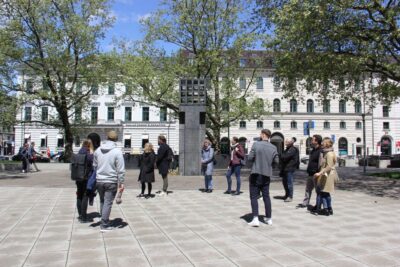
The tour doesn’t leave you only with the machinery of Nazi power. In the Hofgarten area, you’ll talk about the White Rose resistance movement. Including resistance here is smart, because it keeps the story human and multi-sided.
It also helps you avoid a common trap when walking through dark sites: just collecting facts without letting it mean something. The White Rose discussion reframes the timeline by pointing out people who refused the group-think and propaganda pressure of the era.
In practice, this stop tends to slow down the tone of the tour. Even when the guide is moving briskly, the subject matter gives you a chance to think beyond how the regime gained control and toward what opponents tried to do.
How the tour ends near Hitler’s former headquarter
The tour finishes at Königsplatz 1, and the experience information notes it ends at Hitler’s former headquarter area. That ending matters. You start in a square tied to mass rallies, and you finish in the kind of location where authority concentrated.
I’d treat this last stretch as a “no rushing” moment. Many people find these endings emotionally heavy, and the tour format is designed for respectful handling of that. If your mind starts moving fast, take a breath and look around—because that’s part of what makes place-based history hit.
If you want a powerful follow-up, some guides suggest adding additional indoor time nearby. One person in the feedback mentioned being glad the guide encouraged them to go into a document-focused museum finish area for photos and films. Even if you don’t add extra museums, staying in the area for a short while after the tour is often worth it.
Timing and pacing: walking for 2.5 to 3.5 hours
The experience is listed at about 2 hours 45 minutes, but real-world pacing can vary with group needs and the pace of discussion. Several people noted it can feel like roughly three to three-and-a-half hours when you include standing and transitions.
That means you should plan for: limited seating, frequent movement, and short breaks only. In cold weather, that’s the difference between a fun history walk and a miserable one. I’d pack accordingly—warm layers, gloves, and shoes that handle cold sidewalks.
Also, one practical heads-up: some participants said the guide was hard to hear at times. That’s not always a dealbreaker, but it is a reason to choose a spot where you’re close enough to the guide and not stuck behind taller shoulders.
Price and value for a focused small-group walk
The tour costs $35.09 per person for a major historical theme in one city center route. For that price, you’re paying for a professional guide, a structured route through multiple key sites, and an experience built around interpretation—how events connect and why Munich matters.
Is it “worth it” only if you’re already a WWII fan? Not necessarily. If you’re curious and want a clearer framework than you’d get from a self-guided stroll, this format helps a lot. You’re not just walking past buildings; you’re getting the story of how a political movement grew in real space.
Where the value really shows is in the small-group setup. A maximum of 30 is stated, but it’s marketed as a small-group tour limited to 10. In practice, that kind of size makes it easier for the guide to control pace, handle questions, and keep the tone respectful.
Who this tour suits best (and who should skip it)
This is a strong fit if you want a structured introduction to Munich’s role in the Third Reich and WWII era. It’s especially good for people who like learning through places—squares, halls, and iconic streets—rather than only reading about events.
The tour is also not recommended for children under 12, which tells you the level of seriousness. It’s presented in a straightforward way, and the subject matter is heavy. If you’re bringing younger kids, you’ll likely find it less suitable than other lighter history walks.
Also consider your walking comfort. It’s a walking/standing experience with little time to fully rest, so if you struggle with long standing, you might want to plan breaks in your day before or after.
Should you book this Munich Third Reich & WWII walking tour?
Book it if you want a place-based, guided timeline that connects Munich’s Nazi-era landmarks to the rise of the movement and the context around it. The route hits major named sites like Königsplatz, Feldherrnhalle, and Hofbräuhaus, and it includes White Rose resistance so you don’t leave with only one side of the story.
Skip it if you want a casual stroll, lots of sitting, or a topic that feels light. Also skip it if long standing and cold weather will spoil your day.
If you do book, come ready with warm layers, water/snacks on hand, and an open mind. This is history you can see. That’s exactly why it’s worth doing carefully.
FAQ
Where does the tour start and end?
The tour starts at Marienplatz, 80331 München, Germany, and ends at Königsplatz 1, 80333 München, Germany.
How long is the Third Reich & WWII walking tour?
It runs for approximately 2 hours 45 minutes.
What’s the price and ticket format?
The price is $35.09 per person, and you’ll receive a mobile ticket.
Is admission included?
Admission tickets are not included.
What languages is the tour offered in?
The tour is offered in English.
Is it suitable for children?
The tour is not recommended for children under 12 years old.
Is there free cancellation?
Yes. You can cancel for a full refund up to 24 hours in advance of the experience start time.