REVIEW · MUNICH
Munich: Highlights Walking Tour with a Guide
Book on GetYourGuide →Operated by Guydeez Tours · Bookable on GetYourGuide
Munich’s clocks set the pace for you. This 3-hour Old Town walk turns Marienplatz into a guided “what am I looking at?” experience, with major sights linked together in a logical route you can follow on your own later.
I love the way it mixes landmark wow with street-level clarity, especially at Frauenkirche and the Rathaus-Glockenspiel, where the guide explains the scenes rather than just naming them. I also like the swing into Bavarian culture at Staatliches Hofbräuhaus, with quick context on the beer purity law and the annual Oktoberfest that makes the beer hall feel like part of Munich’s brain, not just a backdrop.
The main drawback to consider is focus. This is a highlights walk that spends real time on churches and big monuments, so if you’re not into religious interiors, tell your guide up front and ask for more time where you want it—otherwise you may feel the schedule leaning too “church-heavy.”
In This Review
- Key things that make this tour worth your time
- Meeting in Marienplatz: where the walk actually starts
- Marienplatz and the Glockenspiel: more than a pretty clock
- Frauenkirche: Munich’s largest church, explained for real visitors
- Rathaus-Glockenspiel: the local favorite you’ll recognize instantly
- Staatliches Hofbräuhaus: beer hall storytelling with purpose
- Odeonsplatz: beautiful squares with a hard historical layer
- Residenz: Wittelsbach power, told through the biggest inner-city palace
- Viktualienmarkt: the smart finish if you want snacks afterward
- Price and value: $53 for a focused highlights route
- Timing: how to avoid the most common let-downs
- What you’ll probably love (and who should book)
- Should you book this Munich Highlights Walking Tour?
- FAQ
- What is the duration of the Munich highlights walking tour?
- How much does the tour cost per person?
- Where do we meet the guide?
- Is this tour private?
- What major stops are included on the route?
- When can I see the Glockenspiel performances?
- What languages are the guides available in?
- What’s included in the price?
- Is food or drink included?
- Is there free cancellation?
Key things that make this tour worth your time
- Marienplatz Glockenspiel windows you can plan around (11:00, 12:00, and 17:00 from March until October)
- Frauenkirche gets explained in context, not just as a check-the-box stop
- Rathaus-Glockenspiel history and significance at one of Munich’s most visited photo points
- Hofbräuhaus connects Munich beer culture to the beer purity law and Oktoberfest
- Odeonsplatz includes 1930s–40s rally history, so you see more than postcard architecture
- Residenz highlights Wittelsbach power as the ancestral palace story of Bavaria
Meeting in Marienplatz: where the walk actually starts
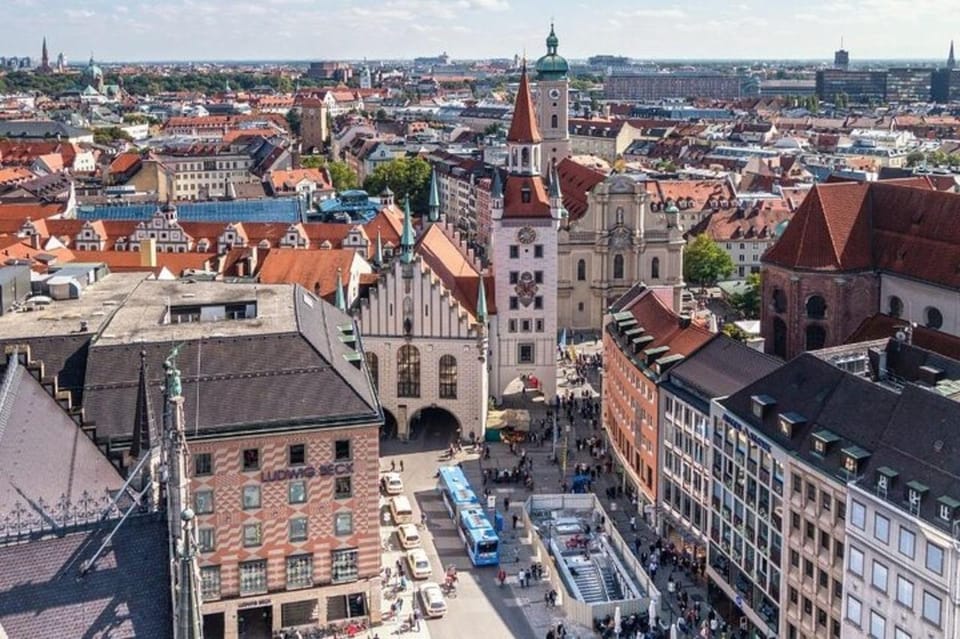
The tour begins at Marienplatz 15, in front of the Julia-Capulet-Statue. That matters because Marienplatz is where Munich’s Old Town “feels” most like one continuous neighborhood, so you’re not starting from some random transit stop far away from the action.
From that starting point, you’ll be guided through the center in a way that’s easy to mentally map. You’ll also get a guide who can point out what’s important today, not just what was important centuries ago.
If you’re traveling with limited time, the 3-hour format is a sweet spot. It’s long enough to cover the core highlights, but short enough that you can still build the rest of your day with your own choices afterward.
You can also read our reviews of more walking tours in Munich
Marienplatz and the Glockenspiel: more than a pretty clock
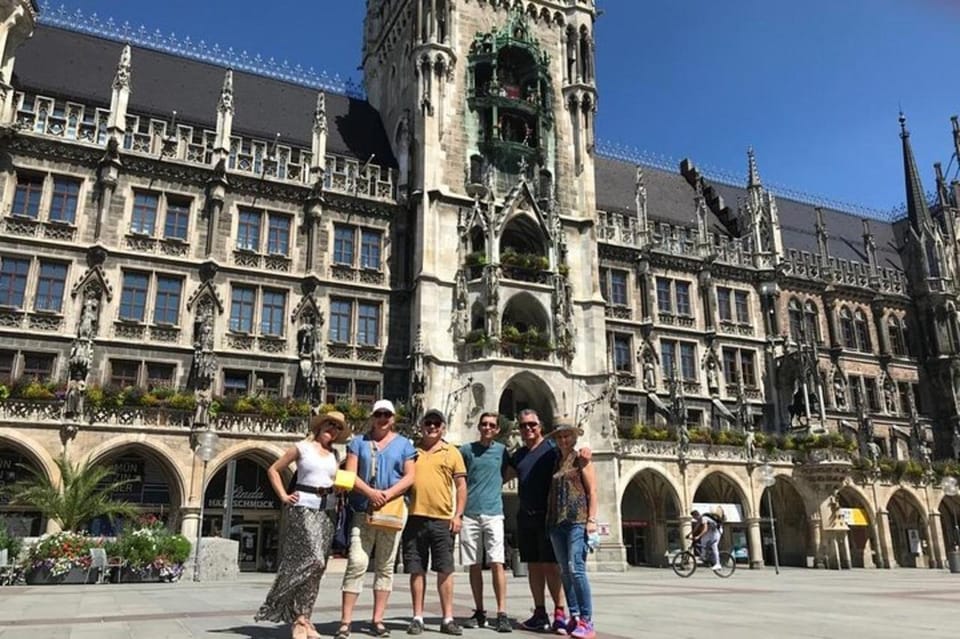
Marienplatz is Munich’s main square, and it’s the kind of place where you’ll notice details only after someone points them out. This tour guides you right through the square’s most famous feature: the world-famous Glockenspiel performances.
From March until October, the Glockenspiel runs at 11:00, 12:00, and 17:00. If your timing lines up, you’ll be standing in the right spot with someone who can explain what the scene is about and why it’s such a signature moment for the city.
Even if the show isn’t running when you arrive, the tour’s value stays high because you’ll still understand how the square functions as a civic center. Munich is serious about public space, and Marienplatz is a perfect example.
Frauenkirche: Munich’s largest church, explained for real visitors
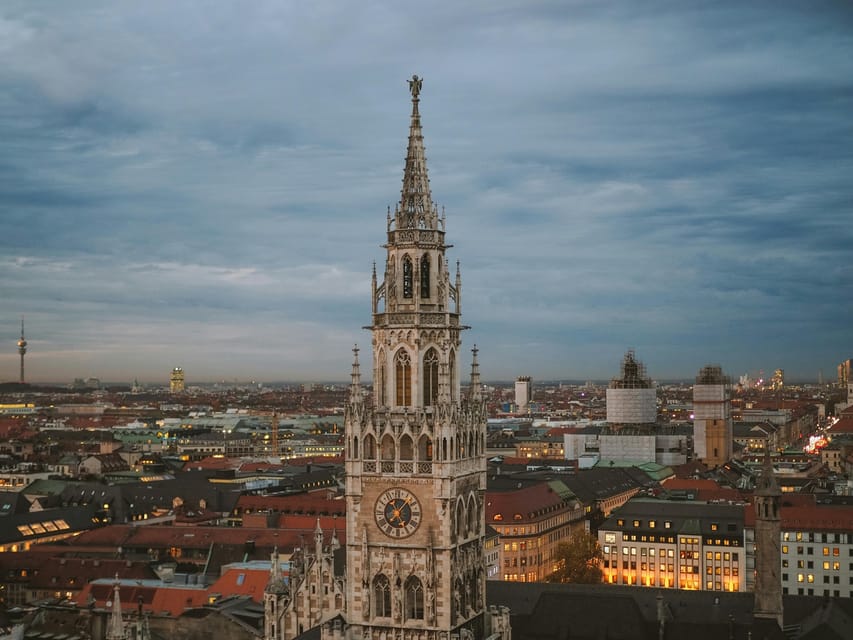
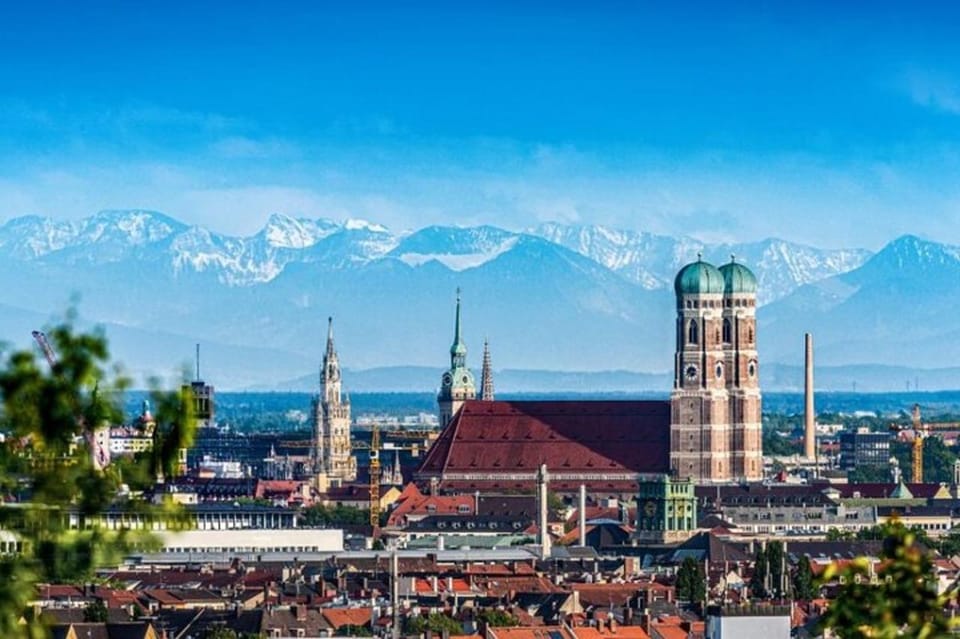
Next up is Munich Frauenkirche, the city’s largest church and a major cathedral. When you’re at a landmark this big, it’s easy to think you’ve “seen it” just by looking up at the exterior and snapping a few photos.
Here, the guide helps you get more out of the stop by turning the building into a story you can follow. You’ll get a guided look that makes the church feel less like a museum rulebook and more like part of how Munich moved through history.
One practical note: churches can be time-heavy stops. If you’re sensitive to that—or you’re traveling with someone who’s less interested—say so at the beginning so your guide can pace the discussion where it matters most to your group.
Rathaus-Glockenspiel: the local favorite you’ll recognize instantly
From Frauenkirche, you move to the Rathaus-Glockenspiel area, one of Munich’s most visited attractions. This is the spot where the city’s “clock culture” becomes obvious: you’ll see how Munich celebrates history with sound, timing, and spectacle.
The guide’s job here isn’t just to point—it’s to explain history and significance in a way that sticks. That’s what turns this stop from a quick stare into a real understanding of what makes Munich’s Old Town feel distinctive.
If you like architecture and symbolism, you’ll probably enjoy the way the tour connects civic buildings to everyday life. Munich didn’t grow into grandeur by accident, and this is a good place to see how that connects.
Staatliches Hofbräuhaus: beer hall storytelling with purpose
Then you get a big mood shift: Staatliches Hofbräuhaus in München, the world-famous beer hall. This stop is ideal for two reasons: you’ll learn how locals frame Munich’s beer culture, and you’ll understand why the hall is tied to more than just one night out.
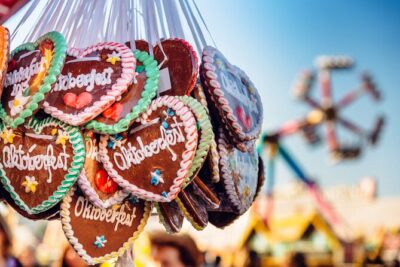
Your guide shares fun facts about the beer purity law and the annual Oktoberfest. That turns a classic “let’s sit and drink” atmosphere into something more interesting: you start hearing beer history as part of Munich’s identity and economy.
Even if you don’t plan to eat or drink during the tour, the guide’s context helps you navigate the place with less confusion. You’ll know what to watch for, what people are referencing when they talk about Munich beer, and what to prioritize if you come back later on your own.
You can also read our reviews of more guided tours in Munich




Odeonsplatz: beautiful squares with a hard historical layer
Odeonsplatz is one of Munich’s most beautiful squares, and the tour doesn’t treat it like a purely aesthetic stop. You’ll learn about its history, including its use for Nazi rallies in the 1930s and 1940s.
That’s important. If you only see the architecture here, you miss a key part of how Munich’s public spaces were used. A good guide keeps the focus balanced: appreciating the square while still acknowledging the darker chapter tied to it.
This is the moment in the tour where I think the guide’s communication style matters most. You want factual clarity, not drama. If your group is sensitive to this topic, it’s the kind of stop where good phrasing keeps things respectful and useful.
Residenz: Wittelsbach power, told through the biggest inner-city palace
After that, you’ll pass along to the Residenz, described as the largest inner city palace in Germany and the ancestral home of the Wittelsbach Royal family of Bavaria. Even if you don’t spend hours inside, the palace stop helps you understand Munich’s core theme: power, prestige, and the political theater of royal life.
The tour’s value here is framing. The guide can connect the palace story to the rest of your route, helping you see how the city’s major buildings connect to each other across time.
If you’re the type who likes “why this matters” more than “look at this ceiling,” you’ll probably enjoy the Residenz stop. It gives you a political context you can carry into later museum visits or self-guided wandering.
Viktualienmarkt: the smart finish if you want snacks afterward
Near the end, the tour passes by Viktualienmarkt, the largest inner-city fresh food market in Germany. This is an easy, low-pressure way to wrap up the walk because it’s the kind of place where you can decide what to do next without committing to a sit-down plan.
If you want a snack, coffee, or something local to carry around, this market stop is a friendly pivot point. It’s also a great place to observe everyday Munich life after you’ve been zoomed in on “major sights.”
Even though the tour itself is only 3 hours, leaving with the market in your mental map helps you extend the experience in a casual way.
Price and value: $53 for a focused highlights route
At $53 per person for about 3 hours, the real question isn’t whether it’s cheap. It’s whether it saves you time and confusion in the exact area where you’ll benefit most from a guide: central Old Town.
This tour includes a guide and is designed as a walking highlights route with multiple major sights clustered close together. If you’re trying to cover Marienplatz, Frauenkirche, Rathaus-Glockenspiel, Hofbräuhaus, Odeonsplatz, and the Residenz area in one short morning window, doing it solo usually means either: (1) lots of navigation time, or (2) you read guidebooks on your phone while you’re standing there.
You also have an option for a private and customizable tour. Customization doesn’t mean the tour stops being a highlights walk—it means you’re more likely to get a guide who can adjust pacing based on what you care about. That’s worth money, especially if you’re traveling with mixed interests.
One more value point: you get help from the team to book tickets for desired visits. Since not everything in central Munich is always free or always easy to fit into a tight schedule, this kind of assistance is practical.
Timing: how to avoid the most common let-downs
Timing is where short walking tours can make or break the experience. Here, you have a clear anchor: Glockenspiel performances at 11:00, 12:00, and 17:00 (March–October). If you’re aiming for one of those showtimes, plan your schedule so you can arrive with a little buffer, not at the last second.
Also, be honest about your interests at the start. This route includes multiple church and monument elements, so if you’re not religious-site curious, your best move is to say it early and ask for your guide’s help shaping the balance.
A final timing tip: since the tour ends back at the Marienplatz 15 area, make sure you know what that means for your next plan. In a city like Munich, a 10-minute “how do I get there again?” delay can eat your whole afternoon.
What you’ll probably love (and who should book)
I think this tour is ideal if you want a fast, guided orientation to Munich’s Old Town without doing everything the hard way. You’ll like it if you enjoy mixing architecture, civic history, and Bavarian culture in one single walk.
It’s also a good fit if you want a guide who gives valuable advice about other things to do in the city. Those are the recommendations that help you stop relying on luck later.
If you’re traveling with people who love clocks, palaces, and beer halls, this is a strong match. The Glockenspiel timing, the Rathaus-Glockenspiel area, the beer hall stop, and the Residenz story all give your group multiple “threads” of interest in one route.
If you want to spend minimal time on churches or you only care about outdoor views, tell your guide up front. You can still do this tour—but set expectations so the guide can keep the balance aligned with your day.
Should you book this Munich Highlights Walking Tour?
Book it if you want a well-structured 3-hour orientation to the center of Munich: Marienplatz, the Glockenspiel, Frauenkirche, Rathaus-Glockenspiel, Hofbräuhaus, Odeonsplatz, and the Residenz area, all connected by context from your guide.
Consider skipping (or at least requesting a different balance) if churches and long monument stops don’t fit your travel style. And if you care about catching a specific Glockenspiel show, double-check your timing so you’re not sprinting across the city afterward.
One last tip: when you meet your guide at Marienplatz 15 by the Julia-Capulet-Statue, share what matters most to you—clocks, beer culture, palaces, or history. This tour is private-option customizable, and getting that conversation right is where the best value usually shows up.
FAQ
What is the duration of the Munich highlights walking tour?
It lasts 3 hours.
How much does the tour cost per person?
The price is $53 per person.
Where do we meet the guide?
Meet your guide in front of the Julia-Capulet-Statue at Marienplatz 15.
Is this tour private?
A private option is available, and the tour is described as private and customizable if that option is selected.
What major stops are included on the route?
The tour includes Marienplatz, Frauenkirche, Rathaus-Glockenspiel, Staatliches Hofbräuhaus in München, Odeonsplatz, the Residenz area, and it passes by Viktualienmarkt.
When can I see the Glockenspiel performances?
From March until October, performances are scheduled at 11:00, 12:00, and 5:00.
What languages are the guides available in?
English, French, Spanish, Italian, and German.
What’s included in the price?
A guide and the walking tour are included, along with help from the team to book tickets for desired visits. Private and exclusive tour is included if you select that option.
Is food or drink included?
No. Drink or food is not included.
Is there free cancellation?
Yes, free cancellation is available up to 24 hours in advance for a full refund.