REVIEW · MUNICH
Munich Macabre Group Walking Tour
Book on Viator →Operated by Dark History Tours · Bookable on Viator
Medieval Munich can get dark fast. This is a small, English-language walk led by archaeologist and historian Taff Simon that mixes shocking city stories with hands-on archaeology props and medieval beer samples. I love the way the facts come with physical objects you can examine, and I also love the guide’s humor that keeps the mood from turning into a lecture. The main drawback is that some scenes and burial-material examples are not ideal for very young kids or for anyone with an overly vivid imagination.
You’re not doing guesswork here. The guide leads you turn by turn, and you’ll spend about 2 hours 30 minutes to 2 hours 45 minutes moving through central Old Munich sites while learning how the city built itself in good times and bad.
One more thing to know up front: the route includes uneven surfaces, so good shoes matter. If bad weather hits, the operator may adjust the route to keep the same historical themes, which is often a win for flexibility but can mean you won’t see every exact spot as first planned.
In This Review
- Key things to know before you go
- Starting at Fischbrunnen (6:00 pm): the walk’s pace and route
- Taff Simon’s archaeologist approach: props you can actually touch
- Marienplatz: the market square that shaped Munich
- Landschaftstraße: the Medieval Jewish quarter and the politics of blame
- St. Peter’s Church: reading gravestones and handling coins given as alms
- Viktualienmarkt: why markets were dangerous, plus medieval beer samples
- Alter Hof: Wittelsbacher drama, sword theories, and WWII archaeology
- Old Town Hall: Munich’s witch trial, the Pappenheimers, and cruel “evidence”
- Why the medieval beer tasting fits the story (and not just your palate)
- Value check: $42.24 for 2.5 hours, artifacts, and samples
- Who should book, and who should sit this one out
- Should you book Munich Macabre with Dark History Tours?
- FAQ
- What time does the Munich Macabre Group Walking Tour start?
- How long is the tour?
- Where do we meet, and where does the tour end?
- What does the tour cost?
- Is it offered in English only?
- How many people are in the group?
- Is it okay for kids?
- What happens if weather is bad?
Key things to know before you go
- Archaeologist-led storytelling from historian Taff Simon, not a script-reading guide
- Hands-on moments with coins and artifacts, plus replica medieval arms and armor
- Medieval beer sampling with historical context about brewing and penalties
- A careful balance of dark topics (plague, blood libel, witch trials) with a lighter edge of humor
- Small group size (maximum 15 travelers) for more interaction
- Meet at Fischbrunnen in Marienplatz and finish back at the same place
Starting at Fischbrunnen (6:00 pm): the walk’s pace and route
This tour starts at 6:00 pm at Fischbrunnen in Marienplatz (Marienplatz 8). That timing is a smart fit for visitors because daylight is fading, the center is lively, and you’re less likely to feel rushed through indoor viewing days.
The whole experience runs about 2 hours 30 minutes to 2 hours 45 minutes. It’s not a sprint. The pace is built around short stops (typically 15–30 minutes each) so you get time to understand what you’re seeing without standing around too long.
The route is centered on key Old Town locations, and the guide handles the navigation. You’ll still want comfortable, grippy shoes because some surfaces are uneven, and a few stretches will be more about footing than sightseeing photos.
Also keep in mind that seating availability varies by stop. If you need to rest more often or mobility is an issue, the operator says they can adjust the route slightly to help, based on what you request at booking.
You can also read our reviews of more walking tours in Munich
Taff Simon’s archaeologist approach: props you can actually touch
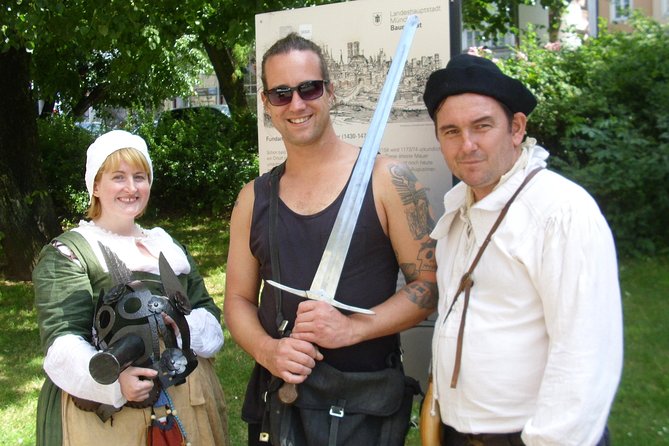
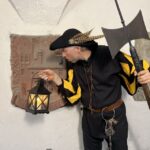
The biggest reason this tour feels different is the way it uses objects, not just descriptions. Taff Simon is an archaeologist and historian, and the structure is designed so you’re constantly connecting stories to material evidence.
You’ll get chances to handle original ancient items (at least coins and other archaeological finds described for specific stops). You’ll also see replica medieval arms and armor, and even get hands-on moments with replica weapons tied to medieval combat theory.
That touch matters for two reasons. First, it turns history from abstract to physical. Second, it teaches you how archaeologists interpret things—broken pottery, coins, and everyday materials can say more than a polished monument ever will.
One more practical point: the tour includes alcohol samples. The operator targets at least two historical beverage samples, but they note that supply issues can sometimes mean substitutions with more modern styles. So plan on sampling, not full servings, and don’t treat it like a long beer crawl.
Marienplatz: the market square that shaped Munich
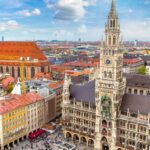
You begin at Marienplatz, which is Munich’s ancient market square—the kind of place where commerce and power always overlap. The tour kicks off with a city origins overview and a quick explanation of why the square and its surroundings look the way they do today.
This first stop is useful even if you already know Munich. It gives you a framework for the rest of the night, so later themes—plague fears, religious institutions, court politics, and public trials—feel like they belong to a single timeline instead of random “dark history” facts.
When you stand there, take a minute to look at the mix of old and new architecture around the square. You’ll get the sense that Munich’s layout isn’t just pretty; it’s been shaped by centuries of trade, disputes, and rebuilding.
Landschaftstraße: the Medieval Jewish quarter and the politics of blame
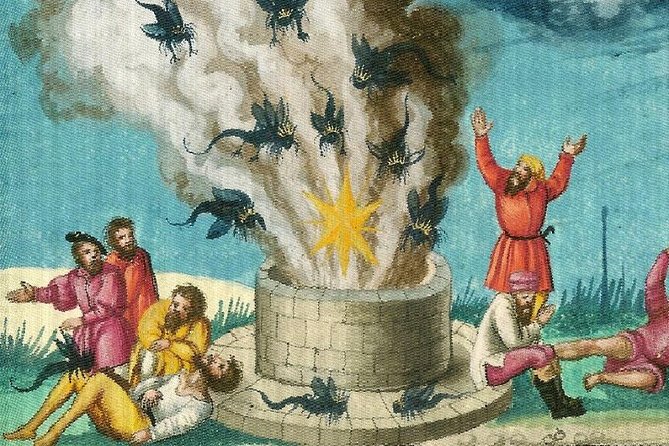
Next you move to Landschaftstraße, which today looks fairly ordinary but historically ran alongside the Medieval Jewish quarter. This is where the tour shifts from general city origins to how communities shaped Munich—and how that same community was later targeted.
You’ll learn how Jewish life contributed to the city’s economic and cultural world. You’ll also hear about baseless accusations tied to the Black Death, including the harmful idea of blood libel—accusations that were invented, repeated, and used to justify cruelty.
A big value here is the archaeological angle. The tour discusses how newer excavations connected to a U-Bahn project helped improve understanding of this area. That’s a reminder that history is still being uncovered in Munich, not sealed in a museum case.
This section can be emotionally heavy. The tour includes major topics that are not “light entertainment,” even though the guide keeps the tone from becoming grim by using humor carefully.
St. Peter’s Church: reading gravestones and handling coins given as alms
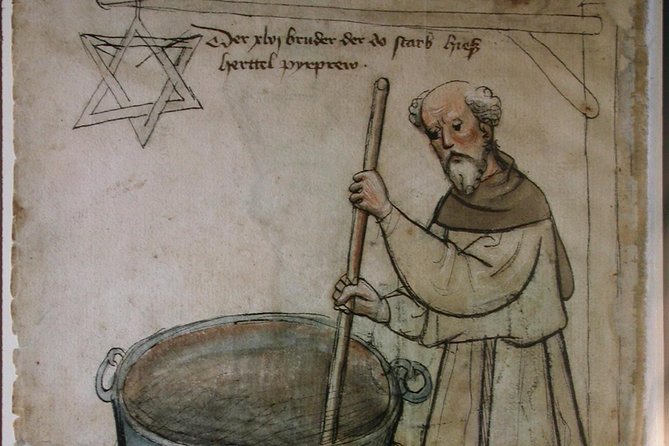
St. Peter’s Church is the oldest church in Munich, and the tour uses that fact to talk about burial culture and how we decode what people left behind. The stop focuses on how to read the symbols on gravestones and how burial rites changed over time.
One of the tour’s clever tricks is turning a church visit into a history seminar on what “rest” meant to people back then. You’ll hear about how early burial meanings could look very literal, and about how later phrasing might have translated into a more physical reality—rest in pieces rather than just rest in peace.
You’ll also explore how class, trade, and guild life can appear through gravestones and church features. That turns the church from a landmark into a readable record of social organization.
A rare and memorable element at this stop is the handling of original ancient coins, described as items that would have been given as alms. It’s one of those moments where you can almost feel the distance between eras shrinking, because you’re holding something people once used for a real purpose.
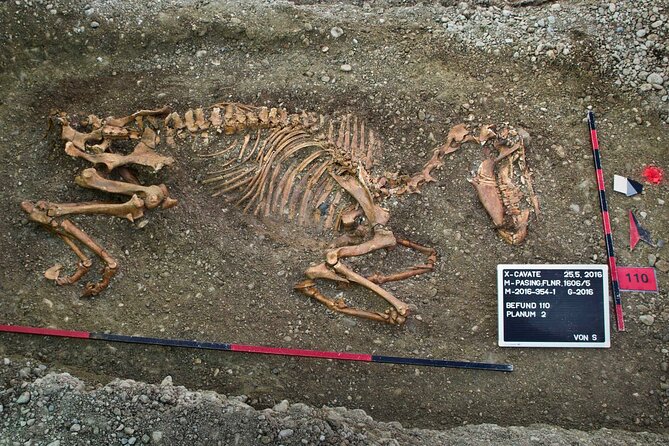
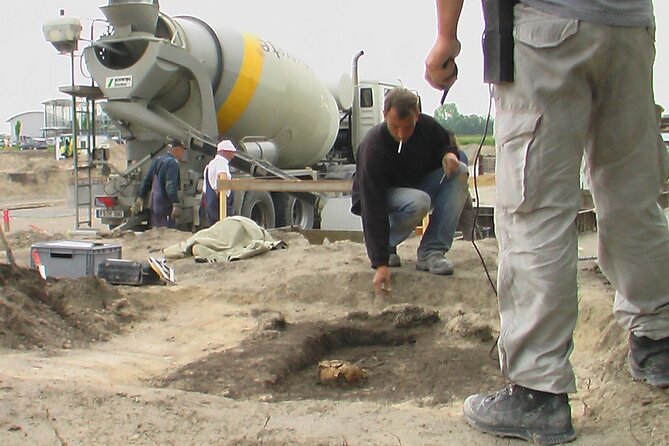
There’s also a sensitive note you should take seriously. The tour uses examples—photos of burial-related excavations, often tied to construction sites. The guide frames it as educational: showing how ancient societies treated their dead and what burial materials suggest about belief systems and social structure. Discussions include whether grave goods (like jewelry or weaponry) appear in burials.
If you’re bringing kids, you’ll want to know that the operator says some content is not really suitable for particularly young children, and they aim to temper descriptive parts. For certain families, this stop may still be a lot—so it’s worth deciding based on your group.

Viktualienmarkt: why markets were dangerous, plus medieval beer samples
The tour reaches Viktualienmarkt next. Today it’s a popular market, with locals buying pretzels and cheese and heading to beer gardens. The tour flips that modern comfort by asking what could go wrong there in medieval times.
You’ll hear a story about how being in the wrong place could mark you as an outcast—because markets were not just shopping; they were public spaces where social control and punishment played out.
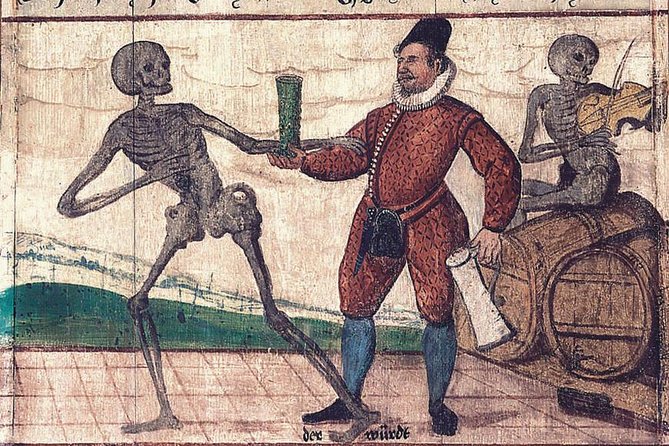
Then you’ll get the brewing side of the evening. You’ll try authentic medieval beer samples (the operator is clear they’re samples, not full pours). The tour also covers penalties for making bad beer and pretzels—so the humor and the tasting connect to real rules behind real brewing.
This stop works well because it interrupts the heavy topics with a sensory reset. Even if your stomach wants something more than a small sample, you’ll finish with a clearer sense of why beer mattered in medieval Munich beyond just taste.
Alter Hof: Wittelsbacher drama, sword theories, and WWII archaeology
Alter Hof begins the late-evening “power and violence” segment. This area was originally associated with a castle for the Wittelsbacher family, the Bavarian royal line. The tour uses that context to talk about a murder that shocked medieval Europe and how its repercussions reached far beyond the immediate event.
You won’t get random violence for shock value. The story is tied to how political consequences move through generations, which makes the darker history feel connected rather than sensational.
After the court politics, the tour brings in medieval combat theory through Hans Talhoffer, a legendary late medieval sword master. You’ll learn about some of his theories, and you may get to handle replica swords and perhaps some armor as well.
Then comes a history twist that feels very Munich: the stop discusses an archaeological discovery made in 1944 when an Allied bomb inadvertently unearthed ancient artifacts. You’ll get to handle and compare types of ancient pottery and other artifacts connected to that find.
This stop is especially satisfying if you like history that explains itself through evidence. It ties the medieval world to the modern one, showing how war and rebuilding have repeatedly reshaped what archaeologists can study.
Old Town Hall: Munich’s witch trial, the Pappenheimers, and cruel “evidence”
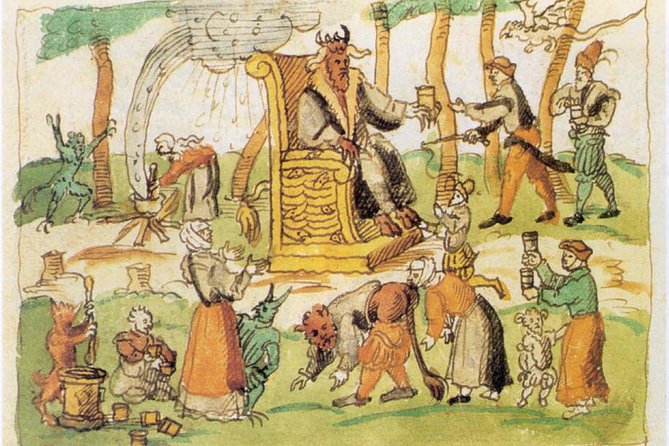
The Old Town Hall stop goes straight to one of German history’s harshest witch-trial stories. You’ll learn about the background to the trial, the charges, and how evidence was gathered and used to make accusations stick.
A major focus is the methods—how evidence could be assembled in a way that was never really about truth. The tour describes the fate of the Pappenheimers family, and it connects the events here to wider consequences reaching far away, including a mention of colonial Massachusetts.
This is the heaviest theme on the walk. The guide’s job is to keep it factual and clear while still managing the group’s attention and emotional bandwidth. If you prefer historical detail without graphic description, this is still a worthwhile stop because it explains how systems worked: fear, authority, and flawed logic.
Why the medieval beer tasting fits the story (and not just your palate)
Beer isn’t just a snack here. The tour frames it as part of how people survived and organized daily life.
You learn why beer was so important historically, including the idea that brewing quality mattered enough to have penalties. That turns the tasting from a fun add-on into another way to understand Munich’s past through daily habits.
The operator also aims to offer at least two historical beverages during the tour. If supplies cause substitutions, you’ll still get the historical explanation about brewing in Munich, even if one sample ends up more modern than you expected.
One of the best side effects of a tasting element is pacing. When you finish the witch-trial material and court-murder stories, the beer sampling gives you a different kind of focus—smell, taste, texture—while still staying inside the tour narrative.
Value check: $42.24 for 2.5 hours, artifacts, and samples
At $42.24 per person, this tour is priced like a premium themed guide, not a generic walking tour. What makes it feel fair is the inclusion of hands-on archaeology objects and replica medieval arms and armor, plus multiple beverage samples.
Many “special interest” tours charge extra because you sit and listen. This one charges because you’re asked to look closely, handle items, and connect evidence to stories. That can be a real value for visitors who like learning through more than just photos and plaques.
There’s also practical value in the small group format. With a maximum of 15 travelers, you’re more likely to get answers to questions and more interaction around the props.
If you plan to go, book early. The tour is on average booked about 40 days in advance, and with limited group size, earlier tends to mean better odds.
Who should book, and who should sit this one out
This is a strong fit if you:
- want Munich history beyond the standard sightseeing highlights
- like archaeology and how evidence gets interpreted
- enjoy a tour guide who can mix humor with darker topics
- have older kids who can handle plague, antisemitism history, or witch trials in a guided educational setting
It may not be your best choice if you:
- want light, cheerful history only
- are sensitive to burial-related imagery and excavation photos
- have very young children, since the operator says some content is not really suitable for particularly young kids (they do temper descriptive parts, but it’s still a macabre theme)
- have an over vivid imagination, since the tour is designed around shocking historical events
Should you book Munich Macabre with Dark History Tours?
If you’re curious about Munich’s darker medieval layers—plague accusations, antisemitism history, burial practices, court power, and witch-trial logic—this tour is a smart use of an evening. The best reason to book is the combination of hands-on artifacts plus story-driven context plus a small-group guide who leads without making you do navigation work.
If your perfect Munich night is all upbeat monuments and zero uncomfortable facts, skip it. But if you like history that explains how ordinary places became stages for fear and control, this is one of the more memorable ways to see central Munich after sunset.
FAQ
What time does the Munich Macabre Group Walking Tour start?
The tour start time is 6:00 pm.
How long is the tour?
It runs about 2 hours 30 minutes to 2 hours 45 minutes.
Where do we meet, and where does the tour end?
You meet at Fischbrunnen, Marienplatz 8, 80331 München, Germany, and the activity ends back at the same meeting point.
What does the tour cost?
The price is $42.24 per person.
Is it offered in English only?
Yes. This tour is only offered in English.
How many people are in the group?
The tour has a maximum group size of 15 travelers.
Is it okay for kids?
Some of the content is not really suitable for particularly young children, but you can bring children and the guide will try to temper more descriptive elements. The tour is also described as not recommended for travelers with an over vivid imagination.
What happens if weather is bad?
The experience requires good weather. If it’s canceled due to poor weather, you’ll be offered a different date or a full refund.