REVIEW · MUNICH
Nuremberg Private Guided Tour from Munich by Rail
Book on Viator →Operated by Nuremberg City of Empires Tours · Bookable on Viator
Nuremberg history tells its story fast, on purpose. The round-trip train from Munich is handled for you, and your guide keeps the day moving without killing the conversation. One possible drawback: many stops are short, so if you want serious time inside museums, you’ll need to prioritize what’s most important (and budget for a paid exhibition).
I also like how this tour braids together the old city and the darker WWII sites, from the walled medieval core of the Altstadt to the Documentation Center at the Nazi Party Rally Grounds area. It’s a long day, but it feels focused, not frantic, and it gives you enough context to understand what you’re actually looking at.
In This Review
- Key things I’d mark on your map
- Munich to Nuremberg by rail: the value of a built-in route
- Private guide + custom priorities: what “private” changes in the day
- Stop 1: Altstadt, the walled medieval core that gives you bearings
- Handwerkerhof, Hauptmarkt, and Der Schöne Brunnen: quick stops that pay off
- Kaiserburg (Imperial Castle): when power looks physical
- Albrecht Dürer House: art stop with a ticket caveat
- St. Sebaldus Church: oldest church stop for atmosphere and context
- Congress Hall and the Nazi Rally Grounds: reading architecture with care
- The Nuremberg Trials courthouse exhibition fee (and when it matters)
- Lunch and downtime: keep hunger from stealing your best hours
- Price and logistics: is $474.09 per person worth it?
- Who this private rail tour fits best
- The booking decision: should you do this one?
- FAQ
- How long is the Nuremberg private guided tour from Munich?
- What is the price per person?
- Where do we meet in Munich?
- Is hotel pickup offered?
- Does the tour include train tickets to Nuremberg and back?
- Is this tour private?
- Are guide services included?
- Is food and drinks included?
- Are any entrances included or extra?
- What is the cancellation policy?
Key things I’d mark on your map
- Rail day-tripping made easy: round-trip train transport is included, with pickup options in Munich.
- Private guide, real pacing control: you can steer priorities within the day.
- Altstadt orientation first: you start in the walled medieval core before branching out.
- Iconic visuals, not just names: the Beautiful Fountain, Imperial Castle views, and the unfinished Congress Hall.
- WWII sites with context: the rally grounds area and documentation-focused visit help you read the meaning of the architecture.
Munich to Nuremberg by rail: the value of a built-in route
This is one of those day trips where the hardest part is solved up front: you’re not wrestling with train schedules or trying to figure out transfers while you’re excited (and tired). The day runs about 8 to 9 hours, and the round-trip train transport is included. Add in optional hotel pickup and drop-off, and you can start the day without doing the logistics dance.
The meeting point is Munich Hauptbahnhof (80335 Munich). If you’re staying near the station, that’s simple. If not, you can ask about pickup, since hotel pickup is offered. Either way, the “get on, get off, go” rhythm matters because you’ll spend a real chunk of time on the rail. One practical tip: before the day starts, think like a guide would. Decide what you want most: medieval streets, WWII sites, or a balanced split. It helps your guide tailor the order.
This is also offered in English, with a mobile ticket. That means less paper, fewer handoffs, and more time walking when you reach Nuremberg.
You can also read our reviews of more guided tours in Munich

Private guide + custom priorities: what “private” changes in the day
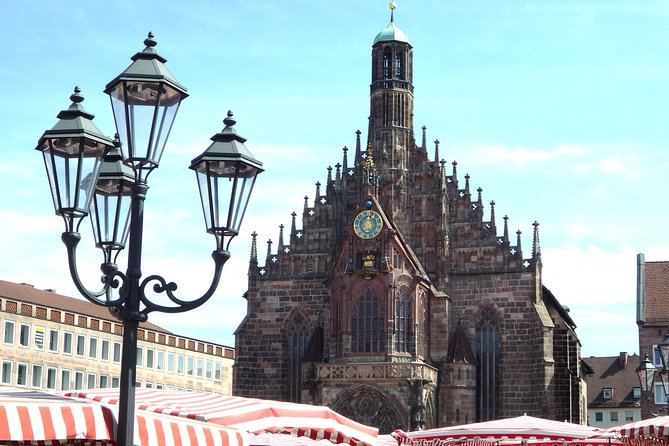
“Private tour” isn’t just marketing here. It affects how smoothly the day runs and how much you can talk. With only your group participating, your guide can adjust pace on the fly and answer the exact questions you’re carrying.
In the field reports I saw, guides like Susanne and Jason were praised for being ready with their own visuals and info, and for staying responsive to questions rather than doing a scripted monologue. Other guides, such as Paul, Nick, Chris, and Akim, were noted for flexibility and clear English. And at least one guide pair, Paul and Curt, was specifically singled out for sharing context through stories and examples.
You’ll also notice a subtle advantage: on a rail-and-walk day, a guide can handle the “how do we get from here to there” part. One guest described a guide who managed trains and connections so they didn’t have to translate routes in their head. That’s a big deal if you’d rather spend your mental energy on what you’re seeing.
One consideration: if you really want commentary during the train ride, don’t assume it will happen automatically. There’s at least one account where the guide sat separately and the ride stayed quiet. Your best move is simple: ask early if your group wants history context on the train, or if you prefer a slower start and a walking-and-talking pace once you arrive.
Stop 1: Altstadt, the walled medieval core that gives you bearings
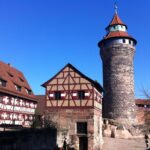
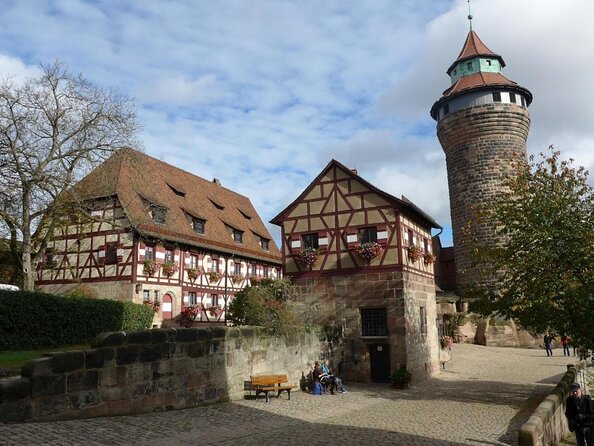
Your first anchor is the Altstadt, the walled medieval city center. You’ll get about 1 hour here, and it’s the right opening move. Old Nuremberg isn’t just pretty buildings. The walls and street pattern help you understand why the city mattered and how it grew.
This is where you start spotting the human scale of the place. Markets, churches, and landmarks all connect back to this core. If you come in cold, you can leave the area feeling like you just walked through a postcard. With a guide steering you, the Altstadt becomes a map of meaning: where people gathered, where power showed up, and where later history left its scars.
Admission at this stop is listed as free (no ticket required for the general visit).
Handwerkerhof, Hauptmarkt, and Der Schöne Brunnen: quick stops that pay off
After Altstadt, the tour keeps feeding you street-level detail. These next stops are short by design, but each one gives you a different lens on the city.
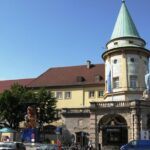
Handwerkerhof (about 10 minutes) is a reproduction of a traditional craftsman’s court. You’re not going to spend half a day here, but it’s useful for understanding how craft and daily life used to cluster. Shops and restaurants are part of the setting, so it also feels like a living street space rather than a pure museum zone.
Then you hit Hauptmarkt (about 15 minutes), the main marketplace. It’s been a city center since the 1300s. That’s the kind of fact that becomes real when you stand in the square and realize how long people have used this exact space to trade, talk, and organize their day.
Next is Der Schöne Brunnen (about 10 minutes). This one is a visual crowd-pleaser: a golden Gothic tower and the famous wishing ring of Nuremberg. It’s brief, but it’s also a good mental pause. You’ll see it, take photos, and move on with a clear sense of where you are in the city.
All three of these stops list free admission.
Kaiserburg (Imperial Castle): when power looks physical
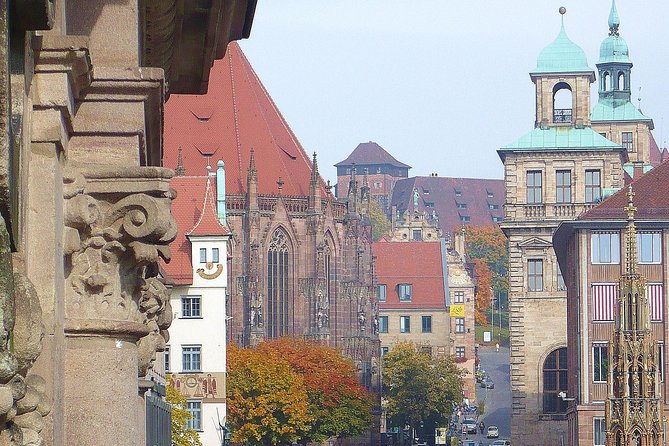
Kaiserburg Nuremberg is an Imperial Castle dating back to at least the year 1050, with about 15 minutes set aside. Even with a short visit, the value is in the scale and the feeling of authority attached to the stone.
This is where the medieval city stops feeling like background and starts feeling like a system of control. Castles were not decorative. They were defense, administration, and statement. Standing in this space helps you link the medieval city’s structure to later centuries, including the way Nuremberg became important on the national stage.
If you like architecture, this is one of your best time-per-minute stops. If you’re hoping for a long museum-style visit here, you may feel it’s brief, but the tour format is built for breadth rather than deep single-site time.
You can also read our reviews of more private tours in Munich


Albrecht Dürer House: art stop with a ticket caveat
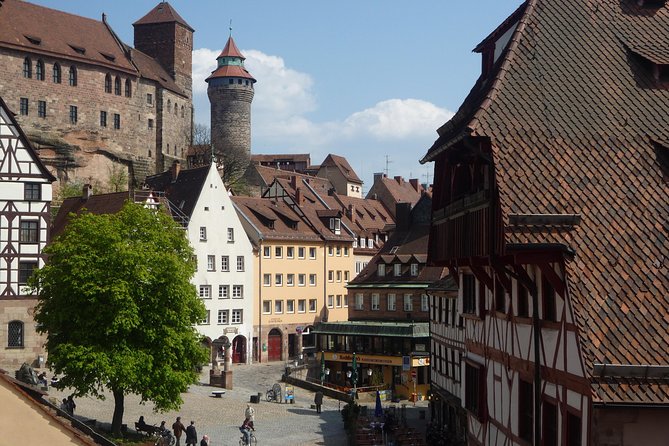
The Albrecht-Dürer-Haus (about 5 minutes) is the original house of the famous Renaissance artist Albrecht Dürer. This stop is short, which can frustrate you if you love art museums and want to soak in details.
The bigger practical point: admission is not included. So if you think you’ll want to go in, plan your expectations and budget. A shorter exterior view is still valuable because it anchors the city’s identity in creativity, not just politics. But if you want the interior experience, you’ll need to treat this as a decision point.
Also, one account noted that this kind of house visit can be closed on certain days. That’s not guaranteed, but it’s worth keeping in mind if this stop is your top priority.
St. Sebaldus Church: oldest church stop for atmosphere and context
St. Sebaldus Church is about 15 minutes and is described as the oldest church in Nuremberg. The patron saint element matters too. Churches like this aren’t only religious buildings. They’re also landmarks of continuity and civic identity.
Like the Dürer house, admission is not included. That means you may or may not go inside depending on your priorities, your time, and what your guide suggests. Either way, the payoff is the atmosphere: stone, history, and the sense that the city’s story wasn’t only interrupted by twentieth-century events.
If you’re balancing your day between WWII sites and older Nuremberg, this is a good counterweight stop.
Congress Hall and the Nazi Rally Grounds: reading architecture with care
Now the tour turns into the heavier portion: Kongresshalle Nürnberg and the rally grounds area.
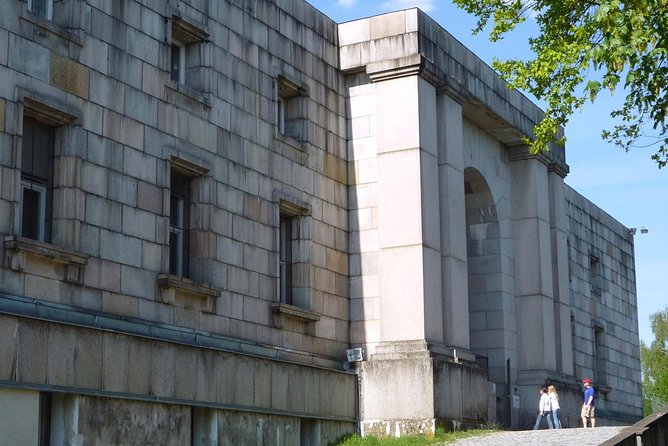
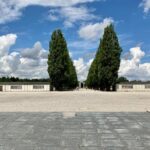
Kongresshalle Nürnberg is described as the unfinished Congress Hall of the Nazi Party. You’ll spend about 15 minutes there, and it’s one of those places where the buildings do some of the explaining. The unfinished state is part of the story. It gives you a clearer sense of how grand political plans were meant to project power.
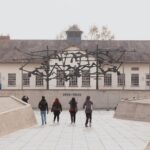
Then comes the Documentation Center Nazi Party Rally Grounds area, set for about 1 hour. Admission at this stop is listed as free in the stop overview, but the tour’s “not included” section lists an entrance fee of €7.50 per person for the Documentation Center Nazi Party Rally Grounds (and for a courthouse exhibition). So treat €7.50 as the likely cost you may want to plan for if you go into the paid exhibitions.
One important reality check from visitor notes: the rally grounds themselves are not always visually dramatic in the way people expect. The space can feel repurposed in parts, including uses like sports fields and outdoor events. That doesn’t make the area unimportant. It just means your guide’s context and the documentation visit matter more than chasing the most famous angles for photos.
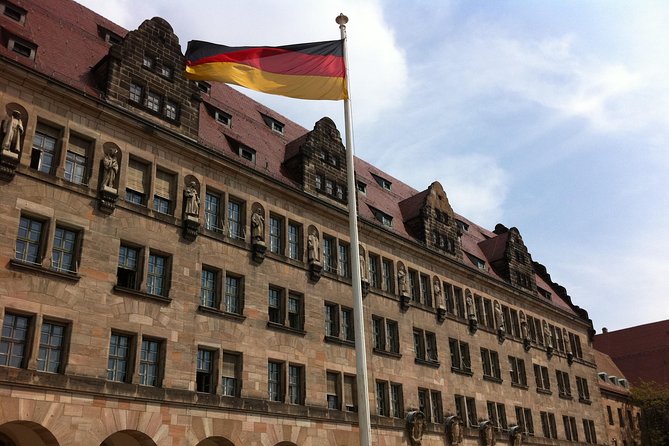
The Nuremberg Trials courthouse exhibition fee (and when it matters)
The tour’s “not included” list mentions an entrance fee for the Courthouse exhibition tied to the Nuremberg Trials. Even if your day focuses more on old town landmarks and the rally grounds, you may have time slotted for this related component depending on how your guide shapes the day.
If you care about the legal aftermath of WWII as much as the political architecture, this is the part where that €7.50 might turn into the best use of your money. The fee is modest relative to the overall tour cost, and it changes your understanding from “here’s what happened” to “here’s how it was processed.”
Lunch and downtime: keep hunger from stealing your best hours
Food and drinks are not included, so you’ll want a lunch plan. The good news is you’re in Nuremberg’s city-center areas during prime times, so you can usually find something close to where you’ll be walking.
In one described day, a guide helped a group pick a beer garden nearby and handled getting them seated and back onto the trains on schedule. That’s the sort of small service that makes a long day feel manageable.
My practical suggestion: decide if you want quick and easy or slow and scenic. If you’re aiming for more history stops, go for a lunch that won’t swallow your time. If you’re more art-and-city-focused, pick a place where you can actually rest for 30 to 45 minutes and reset.
Price and logistics: is $474.09 per person worth it?
At $474.09 per person, this isn’t a “cheap day trip.” You’re paying for three big things:
- Private guide time across multiple major areas
- Hotel pickup and drop-off (when you use it)
- Round-trip rail transport from Munich
If you tried to replicate this on your own, you’d likely end up paying for trains, then paying separately for a guide (or sacrificing time and accuracy). Also, the private format is what lets the day feel like a conversation rather than a checklist.
Where the cost can feel less fair is if you only want one or two sites. Because the tour is designed to cover both old Nuremberg and WWII landmarks, it’s strongest when you’re interested in the full arc: medieval city core, Renaissance ties, then the twentieth-century shadow.
Also note what may add small extras. The tour lists a €7.50 entrance fee for the courthouse exhibition or the Documentation Center Rally Grounds. That’s not a dealbreaker, but it’s part of the real budgeting.
Finally, the tour is noted to offer group discounts and uses a mobile ticket, which can make the cost feel slightly more reasonable if you’re traveling with friends or family. Still, it’s priced as a premium private day, not a budget stroll.
Who this private rail tour fits best
You’ll like this tour if you want a day that balances two things that don’t always get balanced well: the beauty and civic feel of the old town, plus the hard WWII material that deserves clear context.
It’s a strong match for:
- History-minded travelers who want expert guidance on what you’re seeing
- Small groups or couples who value pace control
- People who want the convenience of rail included and pickup handled
It may not be your best choice if:
- You want to spend lots of time inside multiple museums (many stops are short)
- You’re extremely sensitive to WWII topics and prefer a lighter day elsewhere
- You need guaranteed long stops for specific interiors unless your guide can adjust
The booking decision: should you do this one?
Yes, if your goal is a well-organized day that connects old Nuremberg to the WWII story in real places. The included train transport and pickup are the backbone. The private guide is the reason it feels human instead of rushed.
Before you book, I’d do two quick checks:
- If Albrecht Dürer House or a church interior matters most to you, ask your guide ahead how they’ll handle time and tickets since admission is not included for those stops.
- Decide what you want from the WWII sites: architecture impressions at Congress Hall and the rally grounds area, or a deeper documentation/courthouse exhibition experience where the €7.50 fee may apply.
If you show up with a priority list and let your guide steer the pace, this is the kind of trip that leaves you understanding more than you came in knowing.
FAQ
How long is the Nuremberg private guided tour from Munich?
It runs about 8 to 9 hours.
What is the price per person?
The price is listed as $474.09 per person.
Where do we meet in Munich?
You meet at Munich Hauptbahnhof (80335 Munich, Germany). The tour also ends back at the meeting point.
Is hotel pickup offered?
Yes. Hotel pickup and drop-off is included, and meeting at the Munich train station is also possible.
Does the tour include train tickets to Nuremberg and back?
Yes. Round-trip train transport from Munich is included.
Is this tour private?
Yes. It’s a private tour, so only your group participates.
Are guide services included?
Yes. The tour includes a private guide.
Is food and drinks included?
No. Food and drinks are not included.
Are any entrances included or extra?
Some sights are listed as free in the stop overview, but entrance fees may apply for a Courthouse exhibition or the Documentation Center Nazi Party Rally Grounds (€7.50 per person). Albrecht Dürer House and St. Sebaldus Church are listed as not included for admission.
What is the cancellation policy?
Free cancellation is available if you cancel up to 24 hours in advance for a full refund.