REVIEW · MUNICH
Munich: City Highlights Guided Segway Tour
Book on GetYourGuide →Operated by Seg-to-rent Segway München · Bookable on GetYourGuide
Two wheels makes Munich click. I love the hands-on Segway training that helps you get balanced quickly, and I love how the route strings together major sights like the English Garden and the Angel of Peace. One key drawback to consider is the strict fit requirements: no one under 14, and you must fall in the 45 to 118 kilogram weight range.
A 3-hour highlight loop like this is built for seeing distance without turning the day into a knee test. If you want a fast way to understand Munich’s “center of gravity” landmarks—royal buildings, parliament-era architecture, and river-side classics—this is a strong format.
Just note that the tour takes place in all weather and pauses only for extreme conditions, so your clothing matters. Also, drinks aren’t included, so plan a water break if you get thirsty on the move.
In This Review
- Key highlights worth feeling on a Segway
- Why Munich works so well for a Segway highlight loop
- Training at Artur-Kutscher-Platz: confidence first, sightseeing second
- English Garden and the Angel of Peace along the Isar
- Maximilianeum and Museum Island: power and science on the river
- Odeonsplatz to Theatine Church: Feldherrnhalle and monumental Munich
- Munich Residenz, Hofgarten, and the Eisbach break in the route
- Siegestor finish: closing the loop back to where you started
- Price and value: is $99 worth a 3-hour Segway tour?
- Practical tips before you roll
- Who should book this Munich Segway highlight tour
- Should you book this Munich Segway Highlights Guided Tour?
- FAQ
- How long is the Munich Segway Highlights tour?
- What does the tour cost?
- Where do I meet for the tour?
- What transportation should I use to get to the meeting point?
- Do I need a driver’s license to ride the Segway?
- How old do you have to be to join?
- What is the weight range for riding?
- What languages are offered by the guide?
- Is the Segway training included?
- Does the tour run in bad weather?
- Are drinks included?
Key highlights worth feeling on a Segway
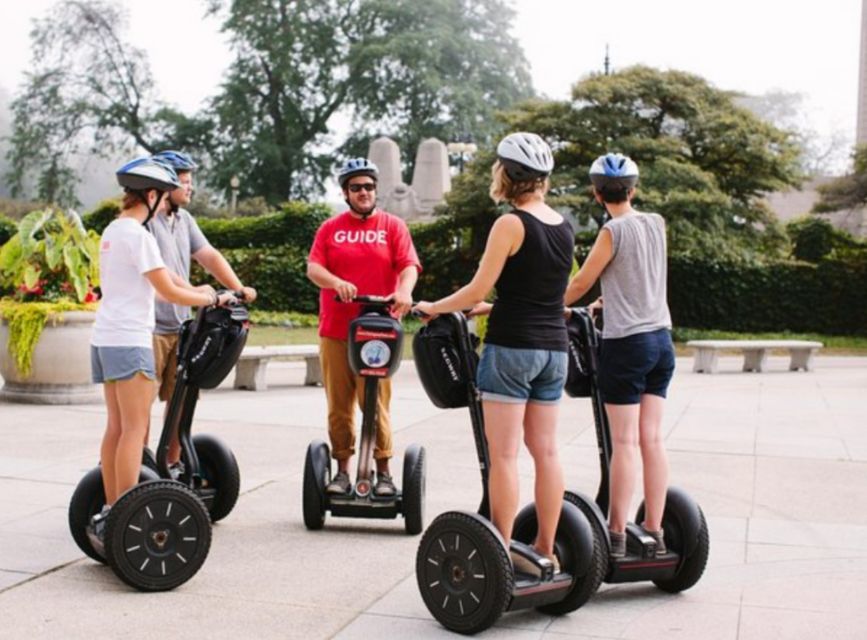
- Training that gets you riding before the sightseeing starts at Artur-Kutscher-Platz
- English Garden + Angel of Peace along the Isar River corridor
- Maximilianeum and Bavarian State Parliament with real context for what you’re seeing
- Odeonsplatz landmarks including the Residenz Theatre, Feldherrnhalle, and the Theatine Church
- Eisbach and Siegestor to close the loop with Munich’s famous river energy
- Headset + guide to keep explanations clear while you’re gliding
Why Munich works so well for a Segway highlight loop
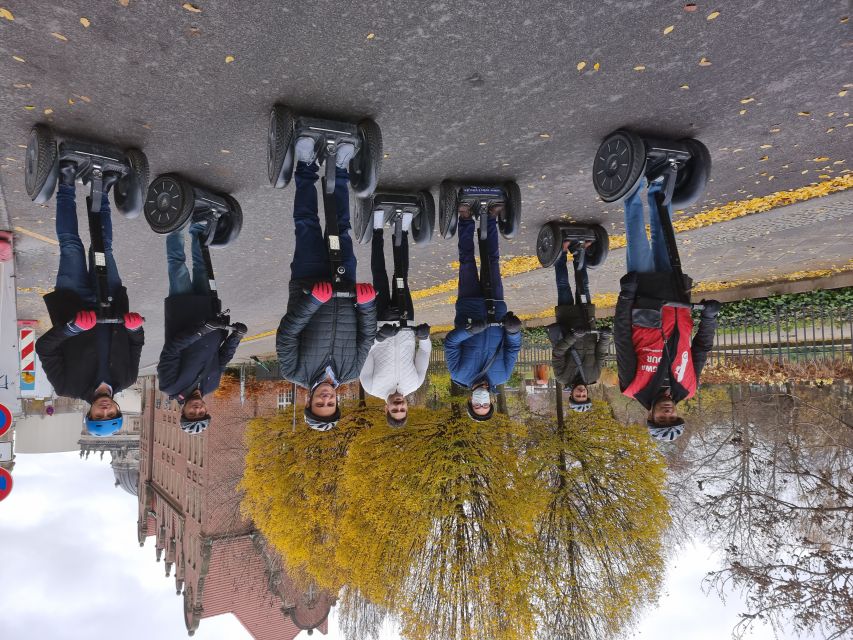
Munich is the kind of city where the best parts are spread out, but not far enough to require constant buses. In about three hours, you can cover a lot—if you’re not stuck walking every block. A Segway tour is a practical shortcut: less fatigue, more looking, and you still get commentary instead of just transportation.
The route also makes sense thematically. It moves from the park-and-river side of Munich toward political and monumental architecture, then back through classic central highlights. You end up with a cleaner mental map of the city—where the river shapes daily life, and where civic power shows up in stone.
And for a $99 per person price point, the value comes from what’s bundled: Segway rental, instruction, a helmet, a live guide, and a headset. You’re not paying extra for the “ability to ride” portion, which is often the biggest make-or-break factor for Segway tours.
You can also read our reviews of more guided tours in Munich


Training at Artur-Kutscher-Platz: confidence first, sightseeing second
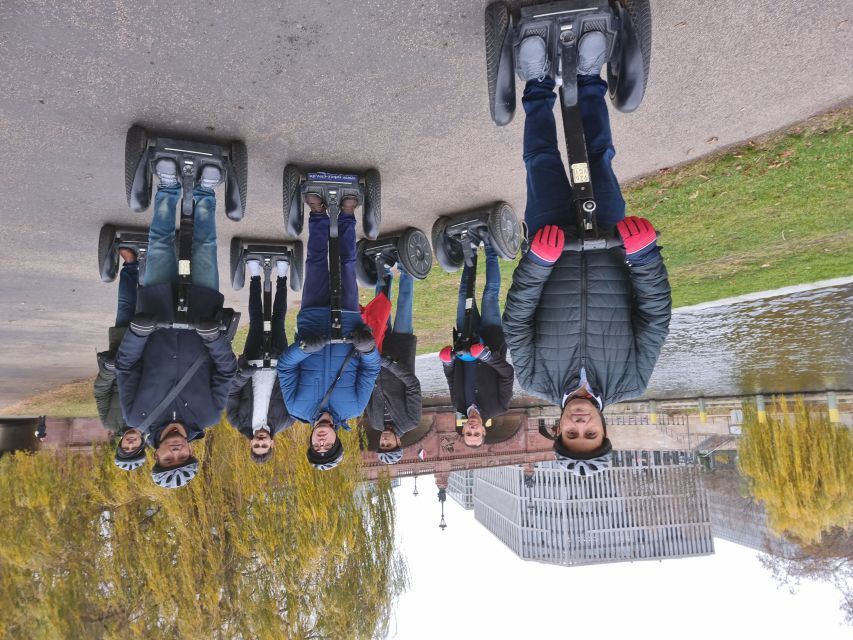
Your day starts at Artur-Kutscher-Platz 2a (80802 Schwabing). Before you go anywhere scenic, you get personal instruction on how to ride. This matters more than people expect. The biggest reason Segway tours feel smooth is that they don’t throw you onto traffic on day one.
You’ll practice enough to learn basic control—how to start, stop, and turn—so the sightseeing parts don’t turn into a stress test. The tour is designed so the total ride time includes both the training and the actual tour, and the timing can shift depending on group size and your driving skills.
Two guide qualities come up again and again in the way people talk about this experience: clear English and patience. Names that have been specifically mentioned include Rouen and Christian, with credit given for helpful explanations. Other names like Paula and Christine are also cited for making the center of Munich easier to understand. Even with solid instruction, a good guide helps you feel comfortable faster and gives you the “why it matters” layer as you glide.
One practical note: you’ll be wearing a headset, which helps keep commentary clear while you ride. Still, if you’re sensitive to audio clarity (for example, you rely on hearing every word), choose the language you’re most comfortable with—English or German.
English Garden and the Angel of Peace along the Isar
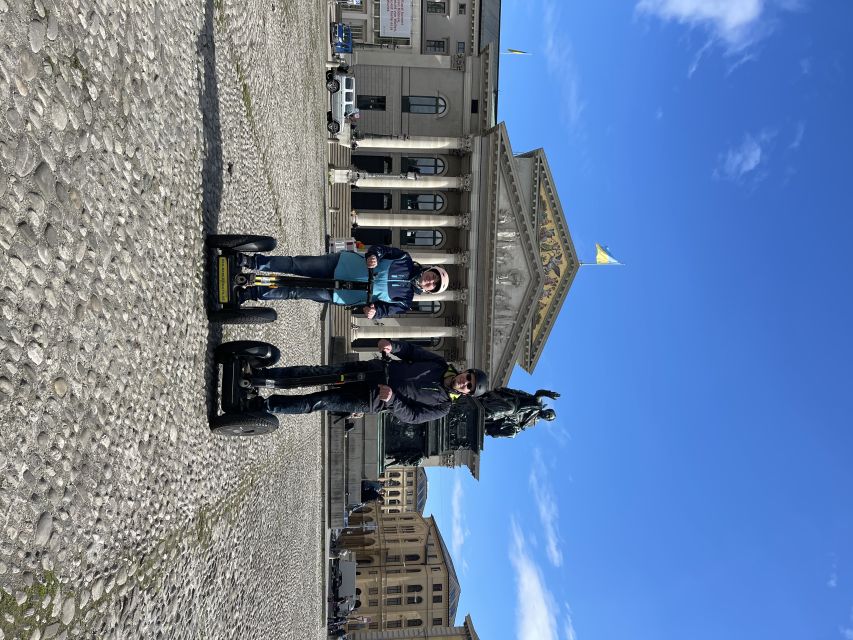
The tour heads toward the English Garden and then follows the Isar River toward the Angel of Peace. This is one of those Munich moments that makes the city feel livable, not just photogenic.
Why it works: the English Garden isn’t simply a park. It’s a statement about how Munich uses green space and water as part of everyday culture. When you ride past it, you’re seeing the city’s scale without losing the feeling that you’re outdoors for real.
Then comes the Isar segment, which is where the route earns its “new perspective” promise. Riding along the river gives you a moving viewpoint: buildings and monuments appear in relation to the water rather than as separate stop-and-start photos. The Angel of Peace is a good anchor point for that story—both a landmark and a reminder that Munich’s city center includes meaning beyond the obvious royal structures.
If you’re wondering what kind of pace to expect here: it’s more glide-and-look than race-around. It feels like sightseeing with momentum, not sightseeing with constant braking and starting.
Maximilianeum and Museum Island: power and science on the river
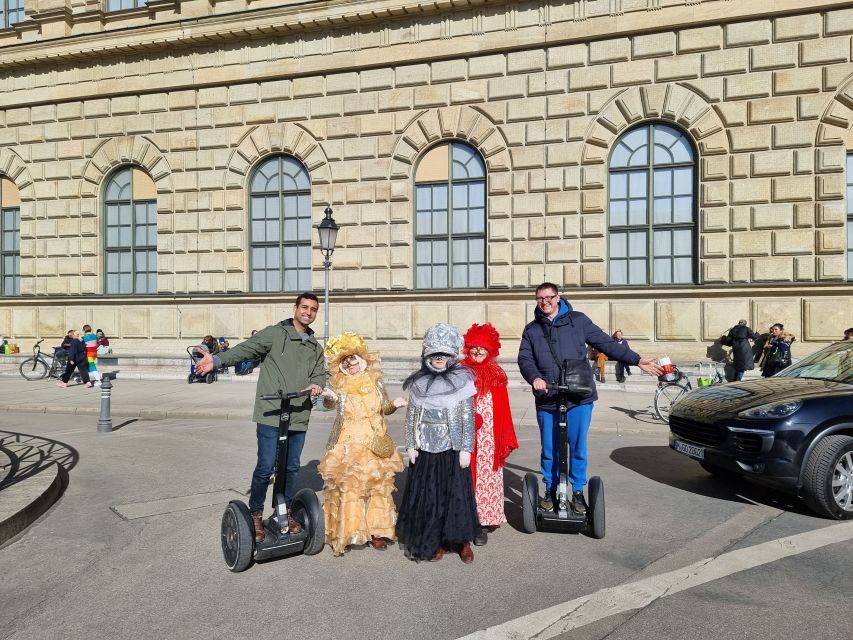
From the river-and-park area, the tour continues to the Maximilianeum, the seat of the Bavarian State Parliament. This building is not just “pretty architecture.” It’s a specific kind of monument—civic power translated into a formal structure.
The Maximilianeum was constructed between 1857 and 1874, designed by Friedrich Bürklein. The key idea here is location: it fits with the Isar River surroundings, so you see how nineteenth-century Munich tried to balance authority with the natural setting. When your route includes the why behind the look, the stop stops feeling like a quick glance and starts feeling like understanding.
Up the river, you pass Museum Island, including the Deutsches Museum and the parish church of St. Maximilian on the west bank. This is a nice change of pace from politics and churches, because it adds a layer of Munich as a place of public learning and civic institutions.
Practical perk of the Segway format: you’re not forced to choose between river views and “important buildings.” You get both in the same loop.
Odeonsplatz to Theatine Church: Feldherrnhalle and monumental Munich
Next, the tour shifts back into central landmark territory. You glide along Maximilianstraße, passing Residenz Theatre near Odeonsplatz, then onto the Feldherrnhalle and the Theatine Church.
This is where the city’s big “picture postcard” architecture shows up. The Feldherrnhalle and the Theatine Church aren’t just stops; they’re parts of a larger Munich narrative about state identity and religious art.
The Residenz Theatre area is also a helpful way to orient yourself. Even if you’re not going inside, the building and square context makes Munich’s center easier to navigate later on foot. In other words, the Segway doesn’t just show you things; it teaches you where things are.
If you care about photography, this segment tends to be especially useful because the monuments create strong sightlines from the moving viewpoint. You get angles that you wouldn’t get from the sidewalk unless you’re constantly walking backward or hunting for the right corner.
You can also read our reviews of more city tours in Munich






Munich Residenz, Hofgarten, and the Eisbach break in the route
The tour then moves through the zone around the Munich Residenz, with the Hofgarten and the Bavarian State Chancellery in the mix, before heading toward Eisbach.
This part matters because it connects several “must-see” names into a single story. The Residenz area is about royal power and palace life. The Hofgarten adds the controlled greenery side of Munich’s identity. Then the state chancellery keeps the civic thread going.
And then there’s the Eisbach—a standout because it’s not just pretty scenery. It’s famous, and it gives the route a modern, slightly cheeky vibe compared to all the formal buildings. Watching the river activity from a moving ride gives you a sense of how Munich’s water features operate as public space.
If your day includes time for a snack or a quick sit-down, this is also a stretch where people have found a good chance for food stops near the route. Drinks aren’t included on the tour, so you’ll want to be ready to handle your own hydration and any extras.
Siegestor finish: closing the loop back to where you started
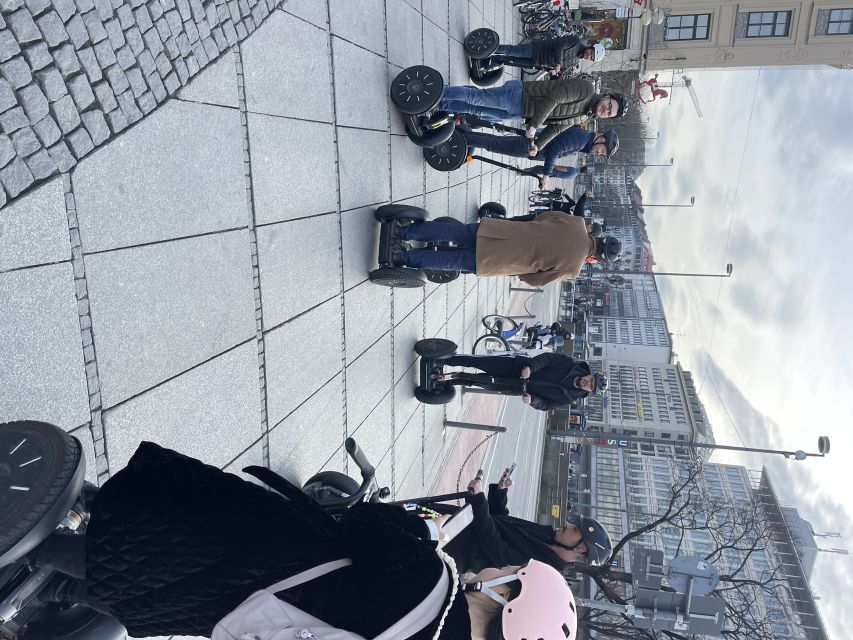
You end the ride by swinging around the Siegestor and returning to the starting area. The Siegestor is a satisfying capstone because it feels like a “Munich skyline moment” even from street level.
Finishing with a recognizable landmark helps a lot. It makes the tour feel like more than a set of unrelated sights. It becomes one loop that gives you a coherent tour story: park and river life, parliament and institutions, monumental squares and churches, then back to a classic city gate-like perspective.
For first-timers, this closing section is also where the city clicks. You suddenly understand the geometry of the center and why Munich feels orderly compared to some older European cities.
Price and value: is $99 worth a 3-hour Segway tour?
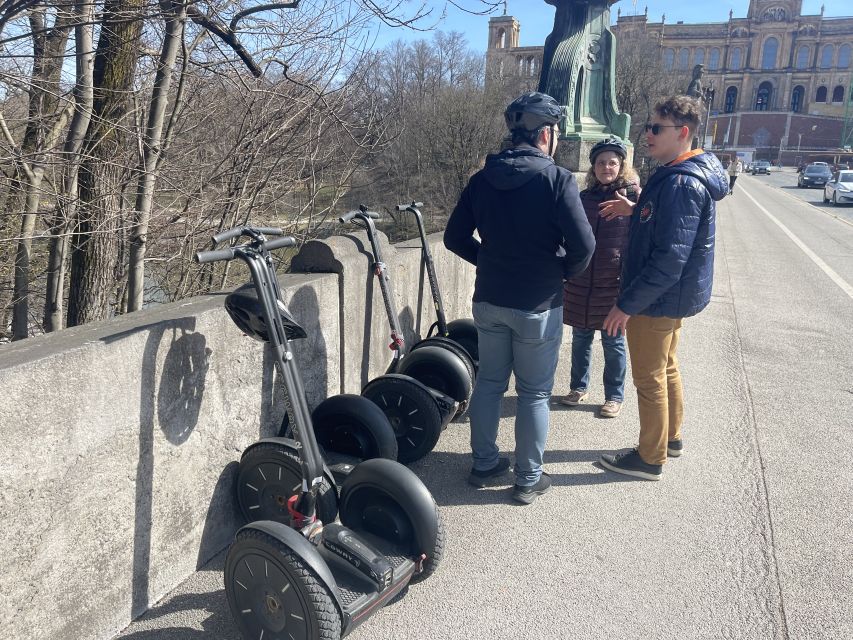
At $99 per person for 3 hours, the price makes sense if you compare it to two competing options:
1) A traditional walking tour that covers fewer blocks (so you see less)
2) Renting a Segway without a guide (so you ride, but you miss context)
This tour bundles the stuff that usually costs extra or takes time: training, helmet, guide, and headset. That’s not a small detail. The instruction session is part of what you’re paying for, and it directly determines how enjoyable the sightseeing will be.
Also, the stop list is heavy on Munich “big names”: English Garden, Angel of Peace, Maximilianeum, Feldherrnhalle, Theatine Church, Hofgarten, Eisbach, and Siegestor. For a first pass at the city, that density is hard to beat.
You should still consider one value reality: if you already love slow city wandering and you don’t mind walking, you might prefer a purely on-foot route. But if you want distance, context, and less fatigue in one tidy package, this is a good deal.
And yes, the quality signal is strong: the experience is rated 4.6 out of 5 with 266 reviews. The high scores aren’t just about fun. They’re tied to instruction quality and clear guiding.
Practical tips before you roll
These small choices can make the ride feel smooth instead of annoying:
- Wear comfortable, closed-toe shoes you can stand and balance in for the training portion.
- Dress for weather. The tour runs in all weather conditions, with suspension only in extreme weather.
- Bring a plan for hydration. Drinks aren’t included, so decide if you want to carry water.
- Pick the language you’ll understand best. The guide speaks English and German, and clarity matters when you’re moving.
Fit rules also matter for comfort. You must be at least 14 years old, and you must weigh between 45 and 118 kilograms. The tour is listed as not suitable for pregnant women and for people above 260 lbs (118 kg). If you’re unsure, it’s worth checking before you book so you don’t end up with a disappointing mismatch.
Finally: no alcohol and no drugs is required. That’s not just a policy checkbox. It helps keep the ride safe and sane for everyone.
Who should book this Munich Segway highlight tour
Book it if you:
- Want a fast, fun way to see major Munich sights in about three hours
- Prefer riding to walking and like a guided explanation while you glide
- Are comfortable following rules and training instructions before you start moving at speed
- Want your first Munich orientation to come with practical landmarks and river context
Skip it if you:
- Don’t meet the age or weight requirements
- Are pregnant
- Get very anxious about balancing on a new device (even with training)
Should you book this Munich Segway Highlights Guided Tour?
If you’re heading to Munich for the first time and you want a one-session overview that actually covers distance, I think this is an easy yes. The combination of Segway training, headset-guided commentary, and a route that hits both river scenery and major monuments makes the time feel well spent.
At $99 for 3 hours, it’s also priced like an experience, not a gadget rental. You’re paying for guidance and confidence, not just a ride.
If you meet the fit requirements and you’re ready to dress for the weather, this tour is a smart way to turn Munich’s highlights into a map you can carry around in your head.
FAQ
How long is the Munich Segway Highlights tour?
It lasts 3 hours, including the Segway instruction and training. The exact duration can vary based on group size and individual driving skills.
What does the tour cost?
The price is $99 per person.
Where do I meet for the tour?
Meet at Artur-Kutscher-Platz 2a, 80802 Schwabing, Munich.
What transportation should I use to get to the meeting point?
You can take tram line 23, bus lines 53, 54, or 144, or metro lines U3 or U6 to Münchner Freiheit station. From there, exit toward Feilitzstraße/Leopoldstraße, walk down Feilitzstraße, then turn left onto Occamstraße. After about 5 minutes, you’ll reach Artur-Kutscher-Platz.
Do I need a driver’s license to ride the Segway?
No. No drivers license is required.
How old do you have to be to join?
Participants must be at least 14 years old.
What is the weight range for riding?
You must weigh between 45 and 118 kilograms (including the load).
What languages are offered by the guide?
The live guide speaks German and English.
Is the Segway training included?
Yes. Segway rental and instruction are included, along with a helmet and a headset.
Does the tour run in bad weather?
The tour takes place in all weather conditions, but it will be suspended in extreme weather conditions. You should dress appropriately for the weather.
Are drinks included?
No. Drinks are not included.