REVIEW · MUNICH
Paul’s Private Tour in Munich old City
Book on Viator →Operated by Paul Riedel · Bookable on Viator
Old Munich in two hours. You’ll cover the big sights while a local guide connects the dots between churches, markets, royal power, and war-era reminders. It’s a private walk with flexible pacing, so you can slow down for photos or spend more time where you care most.
I especially like the way the guide keeps it personal. You’re not stuck with a scripted group rhythm, and you can nudge the route toward churches, architecture, or shopping streets. I also like the practical suggestions you’ll leave with, including places to eat and shop (plus a copy of the guide’s book, Loving Munich).
One watch-out: you’ll hit a lot of stops in a short time, and the chance to go inside depends on service hours. In other words, it’s excellent for orientation, but it’s not a slow, lingering tour of one building at a time.
In This Review
- Key things to know before you go
- A two-hour private walk that gets you oriented fast
- Starting at Karlstor, ending at Odeonsplatz (and what that means)
- Price and pacing: what $127.72 per person really buys you
- Stop-by-stop: churches, markets, royal streets, and the reminders of darker chapters
- Why the guide style matters (and who you might meet)
- Tips for making the most of the route
- Who this tour suits best (and who might want something else)
- Should you book Paul’s Private Tour in Munich’s Old City?
- FAQ
- How long is Paul’s Private Tour in Munich’s Old City?
- Where do we meet and where does the tour end?
- Is pickup included?
- What’s included in the price?
- Are there any places where we can go inside buildings?
- Does the tour have free admission to listed sights?
- What if we add more people than we booked?
Key things to know before you go
- Private, just your group: no herding, no waiting for stragglers.
- Flexible route: you can steer toward churches, markets, or shopping streets.
- Major landmarks in one loop: Frauenkirche, Marienplatz, town halls, and royal sites.
- Inside access is time-dependent: some entries depend on church service schedules.
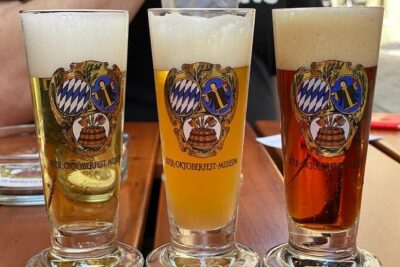
- Picture-ready detours: a Biergarten stop built around the best photo spots.
- Guide style matters: the team includes guides like John and Martin, praised for humor and getting you talking.
A two-hour private walk that gets you oriented fast
If Munich feels intimidating on arrival day, this is the antidote. In about two hours, you get a route that threads through the Old Town’s most important landmarks in a way that makes the city start to “click.” Instead of staring at a map later, you’ll understand how squares connect, why certain streets matter, and where key buildings sit in relation to each other.
Because it’s private, the guide can adapt to your questions in real time. If you want more architecture and less politics, you can ask. If you want to understand what certain sites meant in the 20th century, the guide will explain that too. That flexibility is one of the biggest reasons people love doing this early.
You’ll also get a steady flow of context—construction details at major churches, how Munich grew from a market into a town, and how power showed up in buildings, operas, and plazas. The goal is not to overwhelm you with facts. The goal is to give you a framework so the rest of your trip is easier.
You can also read our reviews of more city tours in Munich

Starting at Karlstor, ending at Odeonsplatz (and what that means)
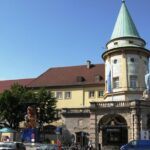
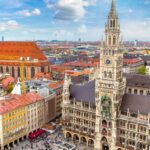
The walk starts at Karlstor (Neuhauser Str.) and ends around Odeonsplatz. Ending near Odeonsplatz is handy because it’s central for moving on to museums, beer halls, or an evening meal. Starting near Karlstor also keeps you close to the parts of the center that connect quickly to public transport.
Pickup is offered, which helps if you’ve just landed, are traveling with limited time, or you don’t want to fuss with the first couple of blocks. If you don’t use pickup, you’ll still have a clean meeting point with an easy-to-find start.
You’ll likely be on your feet the whole time. Even though each stop is short, the total number of sights is high for a two-hour window. Bring comfortable shoes and keep expectations realistic: you’re collecting highlights and context, not doing slow museum-style time inside every stop.
Price and pacing: what $127.72 per person really buys you
At $127.72 per person, the headline number looks like a lot—until you think about what’s included. This is a private tour, not a shared group shuffle. That matters because the guide can adjust the pace and the focus to your group, which saves time you’d otherwise spend figuring out where to go next.
You also get:
- A guided walk with background on buildings and landmarks
- Restaurant and shop suggestions for the rest of your stay
- A book, Loving Munich
- Mobile ticketing
And you’re covering a lot of ground without planning your own route. For many first-timers, that “time saved + orientation gained” is the real value.
Two more practical notes:
- Some sites show free admission ticket status in the tour plan, but inside access can still depend on timing and service hours.
- If the group size changes and someone is added beyond the booked number, that extra person pays 35 € to the guide at the start of the tour.
Stop-by-stop: churches, markets, royal streets, and the reminders of darker chapters
Here’s what you can expect as the route unfolds. Each stop is brief, but the guide uses each one to teach you something, not just point at a building.
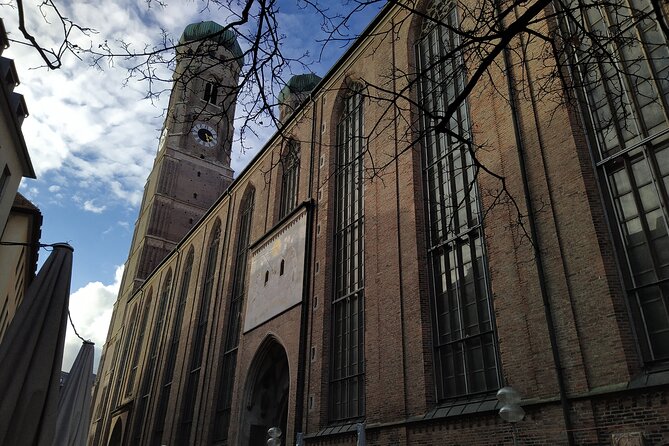
Frauenkirche (5 minutes)
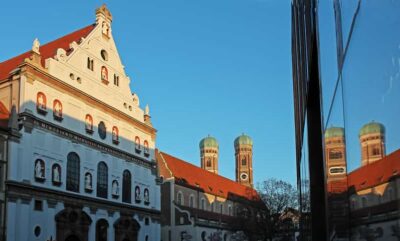
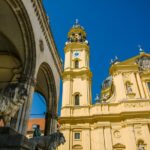
You’ll get an overview of the church’s construction and design, and if conditions allow, you can go inside. The time for inside access depends on service hours, so don’t assume it’s guaranteed—but even without entry, the exterior explanations are built to make the landmark make sense. It’s one of the fastest ways to understand why this building matters.
Biergarten photo stop
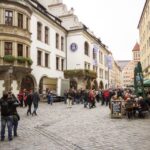
This is a fun break built around memorable picture spots. The guide knows where the angles work and where the scene looks best, which is more useful than hunting around on your own. If you like quick photo opportunities, this is one of the more enjoyable segments.
Heilig Geist at Viktualienmarkt (5 minutes)
This stop connects church history with the famous market area. You’ll see and hear the story of how the place developed and how it was transformed into a church. Entry is optional, and the guide helps you decide based on what you want to prioritize.
St. Peter’s Church (10 minutes)
Often described as the first church in Munich, this stop looks at how early Munich history anchors the later city. If you want, you can go inside to see baroque works and reliquaries. Again, access depends on timing, but this is where the tour can shift from overview to “wow, that’s specific.”
Maximillianstrasse (5 minutes)
You’ll get a feel for the grand scale of the buildings here and the shopping energy along the street. This is where the tour lightly pivots from “what happened” to “what the city chose to look like,” especially in the luxury-shopping stretch.
Marienplatz (5 minutes)
This is the emotional center of Old Town. The guide explains how Munich grew from an unimportant market to a major town. It’s a quick stop, but it frames everything you’ll see next by giving you the big-growth story behind the square.
Residenz München (outside; 10 minutes)
You’ll visit the royal palace from the outside for context. If you want to go inside, another special palace visit can be offered, but it depends on what the guide can arrange and what time allows. Even outside, this is a powerful contrast point: Munich’s political and cultural weight shows up in stone.
Bayerische Staatsoper (10 minutes)
You’ll learn about King Ludwig II and Richard Wagner’s connection to the opera house. The guide focuses on facts across time—history from the 1800s through the Second World War and then to today. It’s not gossip; it’s the timeline that explains why those names show up again and again in Munich stories.
Odeonsplatz (10 minutes)
This is a Bavaria showcase in architecture and monuments, with stories about kings and the consequences of the World War. It’s one of those stops where you can feel the city’s layered identity quickly: royal grandeur side by side with reminders of what happened after.
Funf Hofe (5 minutes)
The tour passes by Elyasson Sculpture and the Five Courts shopping complex. It’s a modern contrast built into the middle of Old Munich. If you’re not shopping, you still get a useful “this is how the center evolved” note.
Promenadeplatz (10 minutes)
This stop is practical: the guide discusses places to eat and where to spend your time after the tour. There’s also a pop-culture note mentioned in the tour plan about Michael Jackson visiting the area, but the main value is restaurant and café suggestions for your stay.
Platzl and a medieval reconstruction (5 minutes)
You’ll pass through a reconstructed medieval city area. Even if you’re not a history nerd, it’s a helpful visual reset. You see how Old Munich tries to recreate itself, which makes the older layers feel more understandable.
Rathaus-Glockenspiel (5 minutes)
This clock showpiece is explained as engineering and storytelling, not just a decorative tower. You’ll hear the most current and fascinating history behind the mechanism, including why it became such a signature of Marienplatz.
New Town Hall / Neus Rathaus (5 minutes)
You’ll look at the building’s architecture and learn about personalities shown on the façade. It’s a short stop, but the guide uses it to teach you how civic pride is “written” on the exterior.
Old Town Hall (5 minutes)
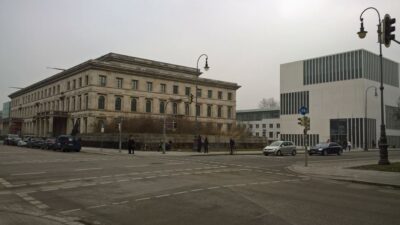
This stop is heavier. The guide explains how Goebbels once signed an order tied to the Reichspogromnacht. Expect respectful, factual framing rather than sensational presentation. If your group wants more context, ask; if you want to keep moving, the guide can pace the depth.
Mariensaule (10 minutes)
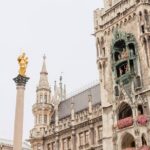
You’ll finish the walk with the history behind the Holy Mary column and the connection to the Thirty Years’ War. It’s a fitting ending because it pulls the theme back toward how faith and political shifts shaped Munich’s public spaces.
Viscardigasse (5 minutes)
The final thematic turn addresses Hitler’s Putsch and the way the Nazi era brought terror and war. This is brief but direct. If you’re sensitive to this topic, it helps to know it’s included in the route so you can mentally prepare for the emotional tone shift.
Why the guide style matters (and who you might meet)
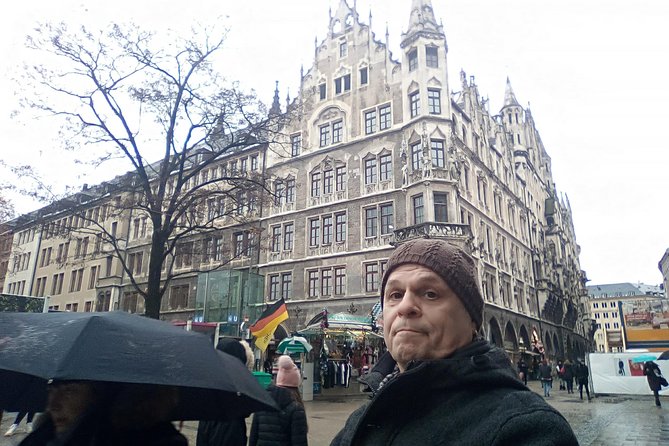
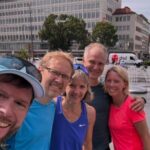
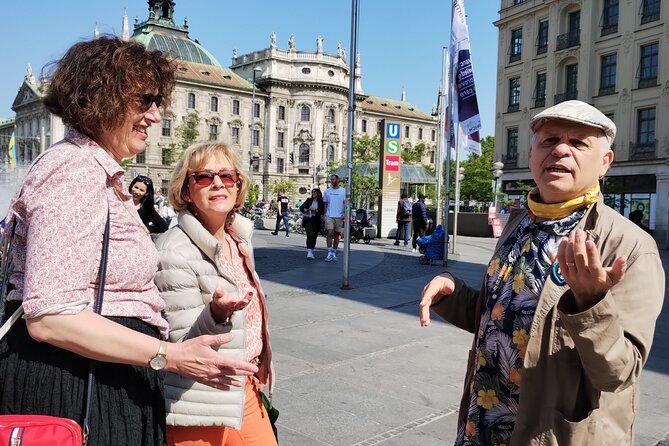
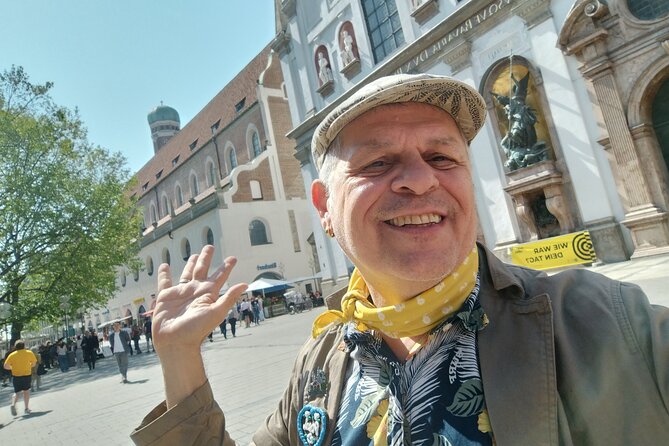
A huge part of the tour’s value is how the guide runs it. The tour team includes guides like John, Martin, Genny, Sybille (and Paul Riedel as the provider). Based on what’s described for their tours, the common thread is energy plus room for your interests.
For example:
- John is highlighted for being on time, funny, and good at turning the walk into a conversation, not a lecture.
- Martin is praised for major attractions plus extra practical value, like food tasting ideas at local markets.
- Genny is praised for steering the tour toward the group’s interests and keeping a lively approach to facts.
- Sybille is noted for adapting the tour to visitors’ needs and keeping the atmosphere friendly and educational.
So the big takeaway for you: you’ll do better if you speak up during the walk. If you want more inside time, ask early. If you want architecture, say so at the start. Private tours work best when you treat the guide like your personal Munich translator.
You can also read our reviews of more private tours in Munich



Tips for making the most of the route
Here are a few smart moves that match how this tour is designed.
Wear shoes that forgive quick stops
You’ll cover many sights in a short window, which means lots of walking between points and frequent short pauses.
Ask what is possible inside at each church
Inside visits at Frauenkirche, Heilig Geist, and St. Peter’s depend on service hours. If entry matters to you, ask right away and adjust your expectations on the spot.
Use the food and shopping suggestions the same day
The guide’s recommendations for restaurants and shops aren’t just generic. They’re meant to help your rest of the day go smoothly. If you like a plan you can act on immediately, this tour sets you up well.
Bring your curiosity about Munich’s 20th-century sites
A few stops include Nazi-era history (and the tour treats these topics as facts tied to specific locations). If you’re unsure how to handle heavy history on vacation, tell the guide your preference for how much detail you want.
Who this tour suits best (and who might want something else)
This is ideal if:
- You’re on arrival day and want major orientation fast
- You prefer a private pace over group logistics
- You want a guided route that mixes churches, squares, royal sites, and practical stops like markets and shopping streets
- You like your history explained through the actual places, not just museum captions
It might not be ideal if:
- You want a long, slow deep-dive into one building (the route is efficient, not leisurely)
- Your group needs lots of inside time at churches because entry depends on schedules
- You dislike walking between many points in a condensed time frame
If you’re traveling as a family or with mixed interests, it usually works well because you can steer the guide toward what matters most to each person.
Should you book Paul’s Private Tour in Munich’s Old City?
Book it if you want a strong first “mental map” of Munich’s Old Town with a guide who can tailor the focus. At this price, you’re paying for private attention, a tightly planned sight loop, and practical guidance for eating and shopping afterward—plus a takeaway book.
Skip it only if you’re looking for a slow, museum-style experience or you specifically need guaranteed inside access for every church stop. Otherwise, this tour is a smart way to get your bearings quickly and understand what you’re looking at while you’re still fresh in the city.
FAQ
How long is Paul’s Private Tour in Munich’s Old City?
The tour runs about 2 hours.
Where do we meet and where does the tour end?
The start is KarlstorNeuhauser Str., 80331 München, and the tour ends at Odeonsplatz, Odeonspl., 80333 München.
Is pickup included?
Pickup is offered, and you’ll start from the meeting point if you don’t use pickup.
What’s included in the price?
Included are the guided tour with building and city background, restaurant and shop suggestions, and the guide’s book Loving Munich. Tips for your guide are not included.
Are there any places where we can go inside buildings?
There are optional inside visits at several stops (depending on timing), including Frauenkirche, Heilig Geist, St. Peter’s Church, and an inside option for Residenz München. Access depends on service hours.
Does the tour have free admission to listed sights?
For the stops listed in the plan, the tour indicates Admission Ticket Free for those sites. Inside access can still depend on service hours.
What if we add more people than we booked?
If someone is over the booked number, the additional person pays 35 € to the guide at the tour start.